
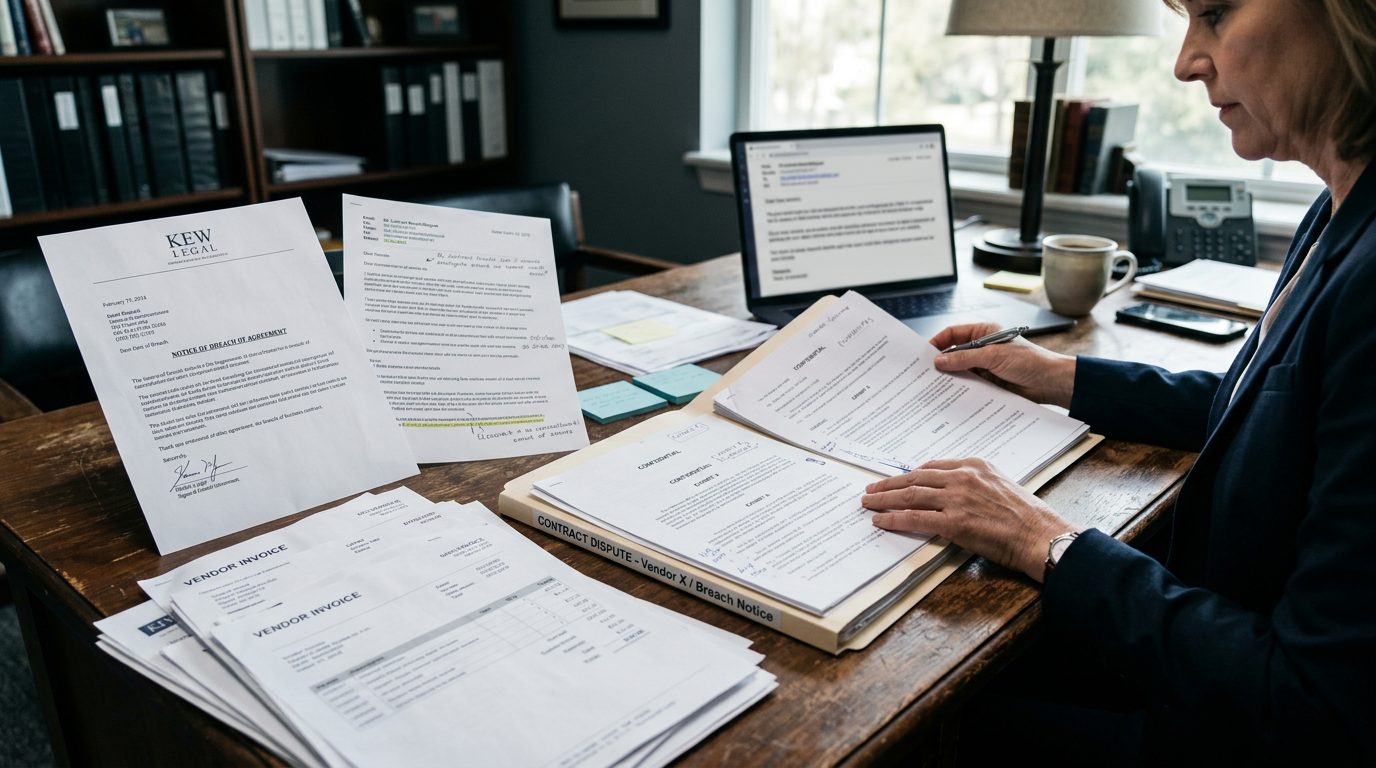
Business Contract Disputes | Coral Gables & Sunny Isles Beach
Received a Notice of Breach? Respond With Counsel at Your Side
KEW Legal helps Florida business owners and investors review the contract, assess the notice, and decide how to respond to an alleged breach. Start with a free, confidential first consultation with no obligation to continue.
By Kristina E. Wilson · Published October 25, 2026
A notice of breach is a written statement that one party has not done what a contract requires. Most Florida business contracts also give the other side a cure period, a set window to fix the problem. Miss a notice step or a cure deadline and you can lose rights you were counting on. This guide explains what a valid notice contains, how cure periods work, and what to do next.
What a Notice of Breach Is and Who It Is For
A notice of breach business contract in Florida is a formal written demand. It tells the other side it has failed to perform a duty and asks it to fix the problem within a set time.
Business owners see these notices in several common settings:
- Partners in a joint venture or shared company
- Owners who buy from a vendor that misses delivery or payment terms
- Landlords and tenants on commercial leases
- Buyers and sellers after an acquisition, when a promise in the purchase agreement is not kept
- Employers and contractors who disagree over performance under a service agreement
Read a notice promptly. The notice can start the cure window and decide whether termination is possible. Florida law generally starts the time for a claim when the last element of that claim occurs (Fla. Stat. § 95.031).
Not sure what your next step is?
Talk it through with our team — the first consultation is free, confidential, and carries no obligation.

What a Valid Notice Should Contain
A valid notice follows the contract’s notice clause first, then names the breach, the facts, the cure period, and the cure required.
- Delivery. Use the method the contract requires, such as certified mail, courier, or email with confirmation.
- Recipient. Send it to the person and address the contract names, and copy any counsel it lists.
- Provision. Cite the section of the contract that was breached.
- Facts. State what was due, when it was due, and what happened instead.
- Cure. State the cure period and exactly what will fix the problem.
- Rights. Say whether you reserve the right to terminate or to seek damages.
Entity recipients need extra care. You can confirm a company’s registered agent and status on Sunbiz.
Common defects include the wrong address, the wrong delivery method, a missing cure period, and vague facts.
How Cure Periods Work Under Florida Contracts
A cure period is the window a contract gives the breaching party to fix the problem before the other side uses its remedies.
The contract sets the cure period, so its wording controls. Count days the way the contract says, whether calendar or business days. Start from the delivery date the contract recognizes.
A cure can take different forms. It may mean full performance, partial performance, or a written plan. The contract wording and the type of breach decide which one counts.
The answer depends on the contract language and the timing of each side’s performance. Review that question early.
Step-by-Step: What to Do When You Receive or Send a Notice
Read the whole contract, preserve your records, respond in writing inside the cure window, deliver any notice exactly as required, then choose your next move.
- Read the full contract. Check the notice clause, cure period, termination rights, dispute resolution, and any attorney’s fees provision.
- Preserve your records. Keep emails, invoices, purchase orders, delivery receipts, and payment history. For goods you already accepted, timing matters. A buyer who accepted goods must notify the seller of any breach within a reasonable time after discovering it or after it should have been discovered, or be barred from any remedy (Fla. Stat. § 672.607). The buyer also bears the burden of proving breach on accepted goods.
- Respond in writing inside the cure window. Dispute the breach, confirm a cure, or propose a plan.
- Send any notice exactly as the contract requires. Keep proof of delivery.
- Choose the next move last. Options include negotiation, a formal demand letter, termination under the contract, or a lawsuit. Offers to compromise a claim disputed as to validity or amount, and statements made in those negotiations, generally cannot be used to prove liability (Fla. Stat. § 90.408).
Timeline and What to Expect
Expect a sequence: notice, cure window, response, negotiation or demand, then termination or a lawsuit if the matter stays unresolved.
- Day zero: the notice is delivered, and the clock starts under the contract’s terms.
- Cure window: it runs as the contract states. Write down the last day.
- Response: you dispute the breach, cure it, or propose a plan.
- Negotiation or demand: a formal demand letter may follow.
- Termination or suit: these come only if the contract allows termination or the cure fails.
The statute of limitations sets the outside time to sue. Written contracts fall under a different period in the same statute, so confirm which one fits your agreement. A contract cannot shorten that time. A clause that fixes a shorter period to begin an action is void (Fla. Stat. § 95.03).
Remedies If the Breach Is Not Cured
If a breach stays uncured, the usual remedies are termination when the contract allows it, damages for the loss, and attorney’s fees when the contract provides for them.
Termination depends on the contract. Damages depend on the contract terms, the proof of loss, and the facts of the relationship.
Fee clauses can cut both ways. If a contract allows fees to a party that must enforce it, a court may also allow reasonable fees to the other party when that party prevails. This applies only to contracts entered into on or after October 1, 1988 (Fla. Stat. § 57.105). Check the fee terms before you decide to sue.
A notice of breach can also open talks on a payment plan or a corrected performance schedule. Many disputes end there, without litigation.
Not sure what your next step is?
Talk it through with our team — the first consultation is free, confidential, and carries no obligation.
Why Work With KEW Legal on Notice and Cure Issues
KEW Legal is a Florida business law firm with offices in Coral Gables and Sunny Isles Beach. The firm focuses on business contract and vendor disputes.
Our team acts as outside general counsel for business owners and investors across Miami-Dade and South Florida. That work can include reviewing the contract, drafting or answering the notice, tracking the cure window, and planning the next step with you.
Kristina E. Wilson is the responsible lawyer for this page and is one of the firm’s lawyers. The firm’s lawyers also handle partnership disputes, commercial leases, employment matters for employers, and business succession planning.
For more background, see contract breach remedies for Florida business owners.
Frequently Asked Questions
What are the rules for damages for breach of contract in Florida?
The amount depends on the contract terms and the proof of loss.
How hard is it to prove a breach of contract?
Every contract dispute turns on the wording of the agreement and the facts of the particular situation. How strong the proof is depends on the records you have.
Is it worth suing for breach of contract?
That depends on the amount at stake, the contract’s fee and remedy terms, the cost of proceeding, and whether a cure or settlement is possible. A consultation is a good place to weigh those factors together.
Do I have to respond to a notice of breach?
The contract’s cure and notice terms set the deadlines. Missing a cure window can affect your rights, so respond in writing on time.
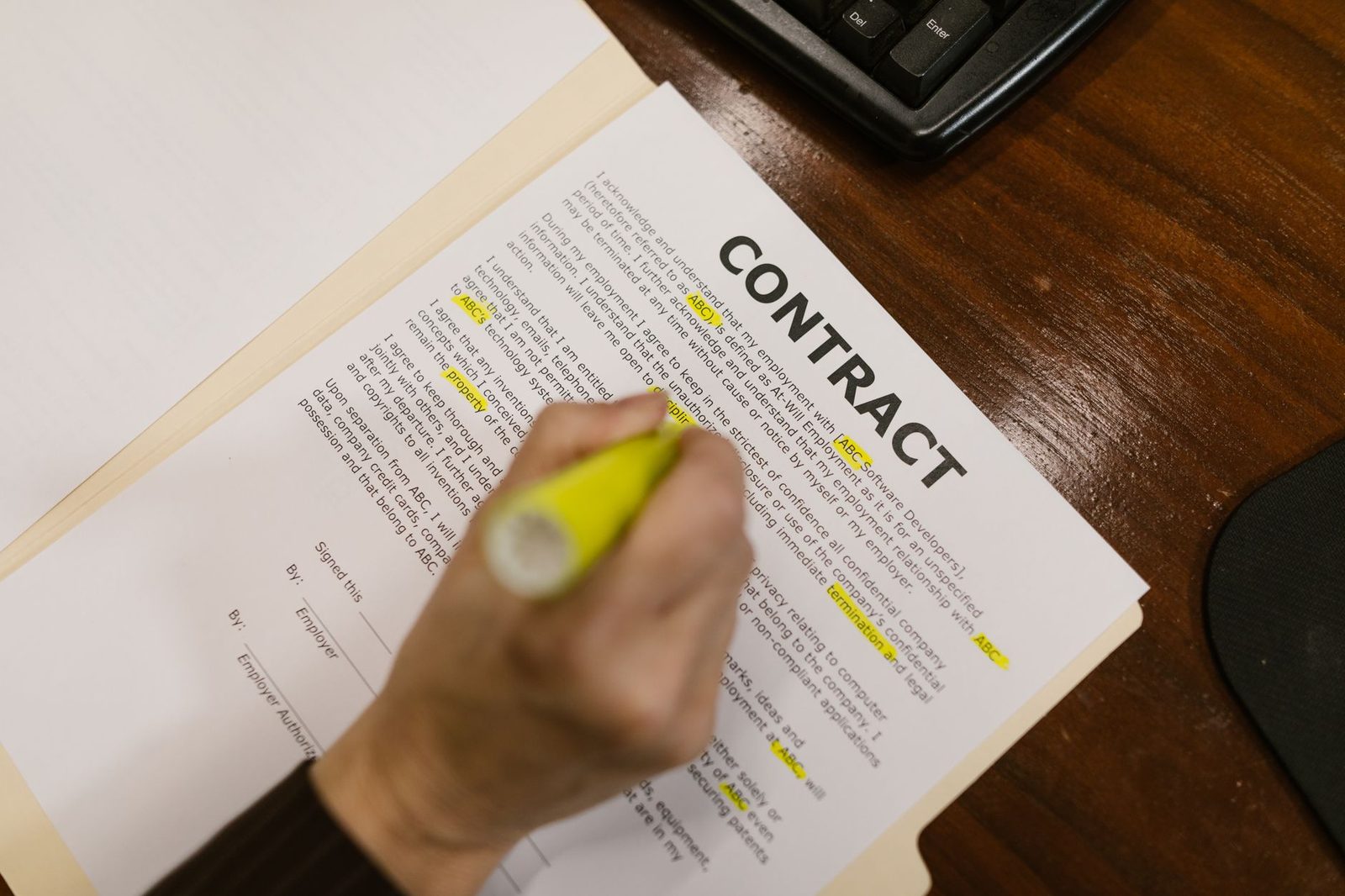
Next Step: Talk Through Your Notice
If a notice has reached you, or you’re weighing whether to send one, the exact contract language and dates matter. KEW Legal offers a free, confidential initial consultation with no obligation to continue. Schedule a consultation at kewlegal.com/contact-us, call 305-990-2300, or send us a message from that page. Our offices are in Coral Gables and Sunny Isles Beach.
How We Help With a Breach Notice
Contract Review
We read the full agreement, including definitions, notice provisions, cure language, and dispute resolution terms, before anyone responds.
Options Assessment
We walk through the possible responses with you, from a written reply and cure plan to negotiation or other steps the contract allows.
Protection of Your Position
We help you avoid statements or actions that could weaken your position while the dispute is being evaluated.
Clear Communication
You receive plain-language guidance on what is happening, what we need from you, and what comes next.
Do Not Ignore a Notice of Breach
A notice of breach can carry consequences under the contract. Do not ignore it, and do not respond in writing before the agreement and the underlying facts have been reviewed.
Steps to Take Right Away
1. Keep the Notice and the Contract
Save the notice, the full signed agreement, all amendments, and any related correspondence in their original form.
2. Gather Your Records
Collect invoices, payment history, delivery records, emails, texts, and performance reports that relate to the obligations in question.
3. Limit Your Communications
Avoid informal admissions or heated replies. Route substantive responses through counsel whenever possible.
4. Schedule a Consultation
Bring the notice and documents to a confidential first consultation so we can review the matter with you.
Get Clear Guidance on Your Breach Notice
Related practice areas
- Business Contract And Vendor Dispute Attorney
- Cross-Border Vendor and Overseas Supplier Contract Dispute Attorney Miami
Request a Consultation
Fill out the short form and we will take it from there.