

Personal Liability Release Attorney Florida | KEW Legal
By Kristina E. Wilson · Published November 3, 2026
Every business agreement is different, so questions about personal liability on a contract should be reviewed against the specific documents involved. Verbal assurances are risky. This page explains how a personal liability release attorney in Florida reviews these clauses and what to do when a demand arrives.
Maybe you signed the clause yourself. Maybe you’re a spouse or partner trying to understand a document someone else signed. Either way, this guide walks through your choices in plain terms.
What a Personal Liability Promise on a Business Contract Means
A personal-liability clause means the signer agrees to pay the business’s obligation personally if the business doesn’t pay. The promise sits on top of the company. It doesn’t disappear just because the company is the one that owes the money.
Owners, co-owners, investors, and sometimes spouses sign these clauses. They show up in vendor agreements, commercial leases, and business loans.
Florida’s LLC law says a member isn’t personally liable for company debts just because they are a member or manager. A separate personal promise is judged by the document the signer actually signed.
Florida also requires a special promise to answer for another person’s debt to be in writing and signed by the person to be charged. The same writing rule covers a lease of real property longer than one year.
The clause’s exact terms decide what happens next. Once a certified copy of a judgment is recorded in a county, it can become a lien on real property there.
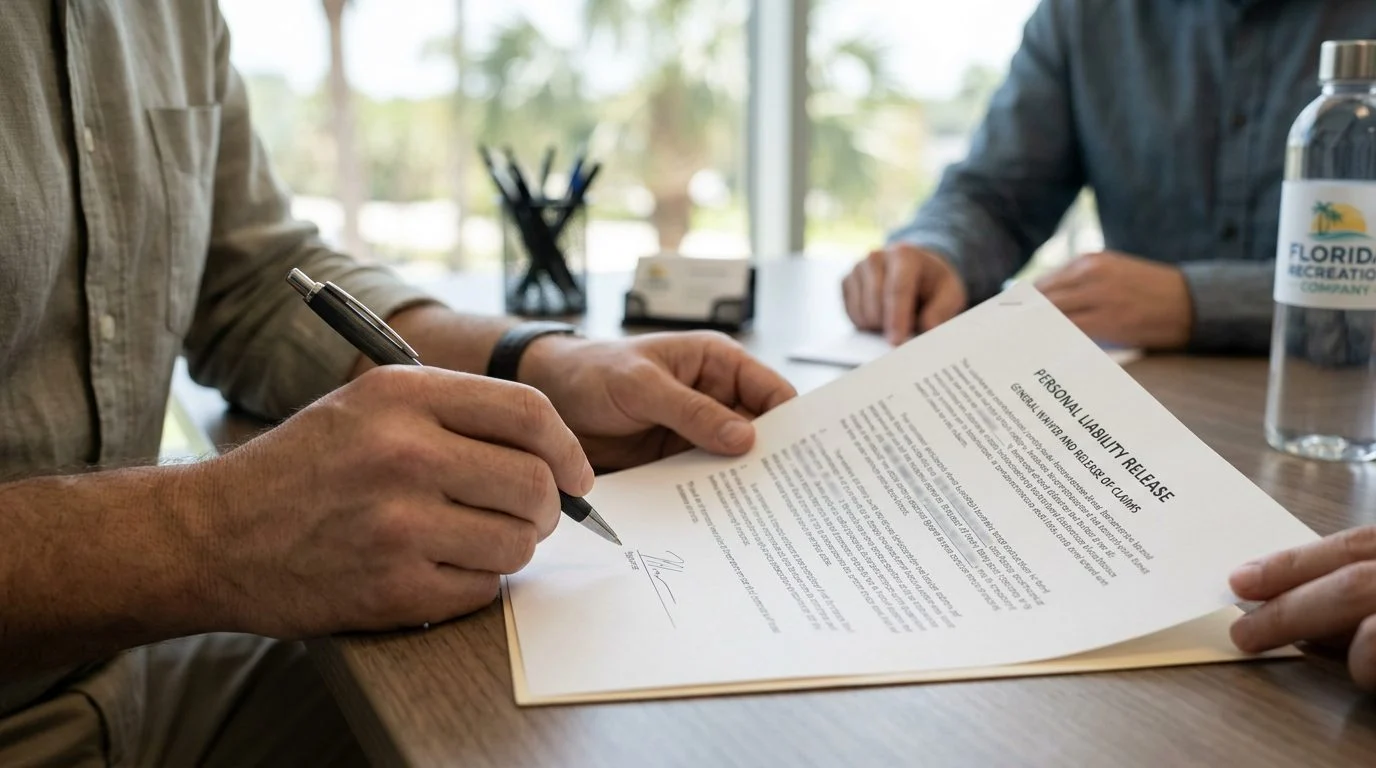
What the Clause Covers: Scope, Amount, Duration, and Waivers
The wording of the clause sets the limits of your exposure. Read it closely before you assume anything about it.
Check these points first:
- One debt or many. Does the clause cover a single obligation or a continuing one, such as a lease that renews?
- Full amount or a cap. Some clauses limit the signer’s exposure. Others reach the full balance, plus costs.
- Time limits and burn-off. Look for a schedule that shrinks or ends the promise.
- Waivers. Many documents include notice rights or defenses the signer gave up.
- Default and notice terms. The timing and form of a demand can matter.
- Attorney’s fee terms. If a contract lets a party recover fees for enforcing it, the court may also award reasonable fees to the other side when it wins.
Florida voids a contract term that shortens the time to sue below the statute’s period.
Unclear wording often becomes a central issue later. Flag vague terms early, before a dispute starts.
Ways to Remove Personal Liability from a Business Contract
Most routes need the other side to agree in writing, or the debt to be paid. A promise you made personally usually can’t be undone on your own.
Common options include:
- A signed release. The other side agrees, in a written amendment, to take your name off the clause.
- A replacement signer. A stronger co-signer or added capital from the business can stand in for you.
- A cap or burn-off. The clause can be narrowed or set to shrink over time.
- A payoff, refinancing, or assignment. Paying the obligation or moving it to a new party can end your exposure.
Put every agreement in writing. Informal promises from a landlord or vendor don’t reliably release a clause you signed.
Check the company’s registration and status with the Florida Division of Corporations (Sunbiz). Its records show the official filing and status of Florida business entities.
Whether a release is possible turns on the other party’s willingness. Our team can assess the leverage you have. A personal liability release attorney in Florida will help you weigh each path against the documents.
How to Respond When a Demand or Lawsuit Arrives
Respond early. Calendar every deadline in the demand letter or court papers, and never ignore a served lawsuit.
Before you pay or sign anything, work through these checks:
- Default and notice terms. Confirm the contract’s conditions were met before the clause was triggered.
- The amount. Compare the number claimed with the contract, including fees, interest, and any credit owed to you.
- Possible defenses. Florida courts examine both procedural and substantive unconscionability when deciding whether to refuse to enforce a term, as discussed in Basulto v. Hialeah Automotive. Mutual mistake turns on whether the mistake is mutual and goes to the essence of the contract, as discussed in the Waterside at Boynton ruling.
- Preserve records. Keep the signed agreement, amendments, payment history, and all messages with the other side.
For commercial leases, Florida’s Chapter 83 rules include Part I, which applies to nonresidential tenancies and to all tenancies not governed by Part II of this chapter.
Business Bankruptcy and Personal Liability for the Signer
Timing matters more than most people expect.
Keep these points in mind:
- Two separate questions. The company’s financial status and the signer’s personal promise are not the same issue. Review the signed promise on its own terms.
- Household and credit effects. The impact on your household, assets, and credit varies with the filing and each person’s situation.
- Transfers after a demand. Florida treats a transfer made with actual intent to hinder, delay, or defraud a creditor as fraudulent. Courts may consider whether the debtor had been sued or threatened with suit before the transfer. Claims on these transfers have time limits under Fla. Stat. § 726.110.
Moving property to avoid a claim can create a second problem. Talk through any transfer before you make it.
What to Expect When You Work with KEW Legal
The process starts with a review of the signed documents and any demand. We explain your options, and you decide each next step.
- Initial review. We review the signed contract, lease, or loan papers and the default or demand notice.
- Options and defenses. We explain release options, possible defenses, and the trade-offs for you and the business.
- Response. We communicate with the other side or answer the demand, with your approval at each decision point.
- Litigation or resolution. If a lawsuit is filed, we handle it or work toward a resolution, based on the facts and your goals.
The timeline varies with the document, the other side’s response, and whether a court is involved. We’ll give a realistic estimate after the review.
KEW Legal has offices in Coral Gables and Sunny Isles Beach. We serve business owners across Miami-Dade, Broward, and South Florida.
Kristina E. Wilson is the responsible lawyer for this page. Our team includes lawyers Kristina E. Wilson and Natalie Martinez.
Common Questions About Personal Liability on Business Contracts
Short answers to common questions are below.
Can I remove my name without the other side’s agreement?
Usually not. A signed release, a replacement signer, or a valid legal defense is the typical path.
Does closing my LLC end my personal liability?
Not automatically. The signed clause and its terms control.
What if I signed without reading the clause?
Review it promptly.
Will my spouse be liable too?
It depends on who signed and what the document says. Each signer’s papers need a separate review.
What does a free first consultation include?
The initial consultation is free, confidential, and has no obligation to continue.

Talk With KEW Legal About Your Contract
If a personal-liability clause has you facing a demand or a lease default, you don’t have to sort it out alone. Bring the signed contract, lease or loan papers, and any demand letter.
Call 305-990-2300, send us a message through our contact page, or schedule a consultation there.
Ready to take the next step?
Related practice areas
- Business Contract And Vendor Dispute Attorney
Request a Consultation
Fill out the short form and we will take it from there.