

Business Contracts & Vendor Disputes | Coral Gables and Sunny Isles Beach
Purchase Order or Vendor Invoice: Whose Terms Control Your Deal?
Businesses often exchange conflicting forms without noticing. Here is how to spot the mismatch and how KEW Legal helps owners review it before a dispute starts.
By Kristina E. Wilson · Published November 7, 2026
Your vendor sent an invoice with payment terms that don’t match your purchase order. Which terms will likely control before you pay or push back?
In Florida, which terms control depends on the facts of the deal, including the order of the documents and how both sides acted. For sales of goods, Chapter 672 of the Florida Statutes sets the starting framework.
Short Answer: Why Purchase Order and Invoice Terms Often Conflict
A purchase order and a vendor invoice are separate documents, and each can carry its own terms. The buyer’s purchase order usually sets the item, quantity, price, and delivery date. Many POs also print general terms on the back or link to them online. The vendor’s invoice asks for payment and often adds footer terms, such as due dates, late charges, and caps on liability.
When the two sets disagree, the core question is whether the vendor’s terms became part of the contract. The sections below cover the framework, the common clash points, and the steps to take before you pay.
Not sure what your next step is?
Talk it through with our team — the first consultation is free, confidential, and carries no obligation.

What a Purchase Order and a Vendor Invoice Each Do
A purchase order records what the buyer committed to buy. An invoice records what the seller says is owed. Keeping those two roles separate makes disputes easier to sort out.
The purchase order sets quantity, price, and delivery. In many deals it works as the buyer’s offer, and it may bring in the buyer’s general terms.
The invoice is the vendor’s request for payment. It states the amount, the due date, and sometimes late fees, interest, or shipping charges. Some vendors also use invoices to say their own terms apply.
A PO number on an invoice ties the two documents together. It shows the bill relates to that order. It does not, by itself, decide which terms win. An invoice that cites PO 1042 can still carry net 60 payment terms the PO never mentioned.
Florida’s Default Rule for Sales of Goods: UCC Article 2
The chapter applies to transactions in goods, per Fla. Stat. § 672.102.
The main rule for conflicting forms sits in Fla. Stat. § 672.207. A definite acceptance generally works as an acceptance, even when it adds or changes terms. The exception applies if the acceptance is expressly made conditional on the other side agreeing to those terms.
Between merchants, added terms become part of the contract unless the offer expressly limits acceptance to its terms, the terms materially alter it, or notice of objection to them has already been given or is given within a reasonable time after notice of them is received (Fla. Stat. § 672.207). The offer expressly limits acceptance to its own terms. The new terms materially alter the deal. Or the other side has objected, or objects within a reasonable time after notice of them.
Who counts as a merchant? Fla. Stat. § 672.104 covers people who deal in those goods, or who by occupation hold themselves out as having special knowledge of them, or to whom that knowledge may be attributed through an agent or broker or other intermediary.
Conduct matters too. Under § 672.207(3), conduct by both parties that recognizes a contract can establish one, even if the writings do not. The key point is that conflicting terms get analyzed under the statute. Neither side’s paperwork wins automatically.
Common Points Where PO and Invoice Terms Clash
Payment timing, late fees, delivery, warranties, liability, and venue cause most of the friction. Run each one side by side:
- Payment timing: the PO says net 30, but the invoice says payment on receipt.
- Late fees and interest.
- Who pays shipping and who handles damaged goods.
- Warranties and return rights.
- Limits on liability and indemnity.
- Governing law and where a suit would be filed.
Warranty language is a common trap. Subject to the exceptions in subsection (3), to exclude the implied warranty of merchantability, Fla. Stat. § 672.316 requires the language to mention merchantability and, in a writing, to be conspicuous. Phrases like “as is” generally exclude implied warranties unless the circumstances indicate otherwise.
Governing law needs a look too. Under Fla. Stat. § 671.105, when a transaction bears a reasonable relation to Florida and also to another state or nation, the parties may agree that the law of Florida or of that other state or nation will govern their rights and duties.
Reviewers often check amounts and quantities, then skip the back of the form and the invoice footer. Those clauses still matter to the analysis.
Can a Supplier Invoice Exist Without a Purchase Order?
Yes, a vendor can invoice without a purchase order when the parties made the deal another way. Examples include an earlier oral agreement, a standing arrangement, or a steady course of dealing. In that case, the invoice and related emails may be the main written record.
Florida law lets a contract for goods form in any manner that shows agreement, including conduct by both parties. Open terms do not defeat the deal if the parties meant to make one.
The statute of frauds adds a hurdle. Under Fla. Stat. § 672.201, a contract for the sale of goods for the price of $500 or more is not enforceable by way of action or defense unless there is a record sufficient to indicate that a contract for sale has been made between the parties and signed by the party against whom enforcement is sought or by the party’s authorized agent or broker.
Between merchants, a vendor’s confirmation can satisfy the signed-record rule against you. That happens unless you object in a record within 10 days after you receive it. That 10-day window is a checkpoint worth calendaring.
Services, Mixed Contracts, and Partial Deliveries
Florida’s chapter on sales of goods applies to transactions in goods, so a deal that is mostly services may not fit the same analysis (Fla. Stat. § 672.102). Under Fla. Stat. § 672.102, if the sale-of-goods aspects of a hybrid transaction predominate, this chapter applies to the transaction. Other law can still reach the non-goods parts. If goods do not predominate, only the goods-related provisions apply.
A pure services invoice may fall outside Chapter 672, so other areas of Florida contract law may apply instead.
Partial deliveries cause many disputes. A vendor ships part of an order and bills the full PO amount. Match received quantities against each PO line. Check that the invoice lines match what arrived. Note any short shipment or rejected goods in writing before paying the balance.
Acceptance carries a deadline. Under Fla. Stat. § 672.607(3)(a), where a tender has been accepted, the buyer must, within a reasonable time after he or she discovers or should have discovered any breach, notify the seller of breach or be barred from any remedy. Otherwise the buyer may be barred from any remedy.
Not sure what your next step is?
Talk it through with our team — the first consultation is free, confidential, and carries no obligation.
Steps to Take Before Paying or Disputing a Vendor Invoice
Start by putting the PO, invoice, delivery records, and vendor replies side by side. Then work through these steps:
- Mark every term that differs between the PO and the invoice.
- Confirm who signed or accepted the PO for your company, and whether that person had authority.
- Confirm the vendor’s legal name and entity status. Florida business entities must meet official registration and filing requirements.
- Keep emails, order confirmations, shipping records, and invoice versions in their original form.
- When a vendor confirmation arrives, object in writing within 10 days if § 672.201(2) applies.
Two alternative arguments can come up. The first is mutual mistake. Rescission requires that the mistake be mutual and go to the essence of the contract.
The second is unconscionability.
Both arguments rise or fall on the specific facts. For a broader view, see our business contract and vendor dispute page.
Do I have to pay an invoice with different payment terms?
Not automatically. Review them before you pay.
How long do I have to object to a vendor’s confirmation?
Act quickly, because exceptions apply.
Does Article 2 apply to service contracts in Florida?
Chapter 672 covers transactions in goods. Mixed deals are analyzed by which side predominates.
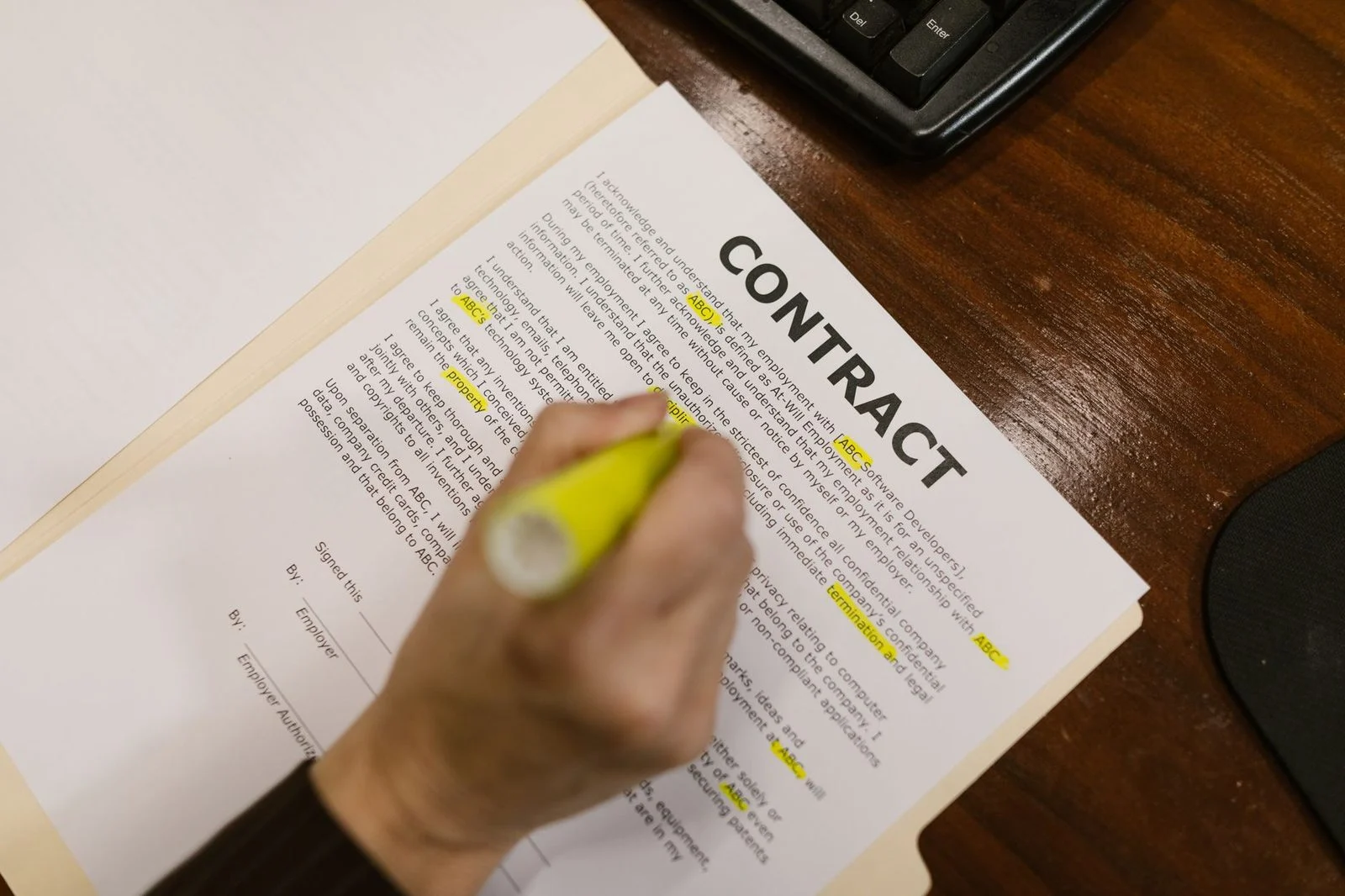
Talk Through Your PO and Invoice Conflict with KEW Legal
When a vendor’s invoice conflicts with your purchase order, you have to decide whether to pay, dispute, or hold payment. KEW Legal helps business owners and managers in Miami-Dade County and South Florida work through that choice. Our offices are in Coral Gables and Sunny Isles Beach. Kristina E. Wilson is the lawyer responsible for this page.
The first consultation is free, confidential, and carries no obligation to continue. Call 305-990-2300 or send us a message. Bring your purchase order, the invoice, delivery records, and the email chain, and we’ll walk through where the terms differ.
How KEW Legal Helps Business Owners
Side-by-side document review
We compare your purchase order, the vendor's acknowledgment, and the invoice terms so you can see where they agree and where they conflict.
Practical risk assessment
We explain what each conflicting term could mean for payment, delivery, and liability in your specific transaction.
Protective drafting
We help you update your order forms and vendor agreements so that the terms you intend are the ones that apply.
Outside general counsel
For ongoing vendor relationships, we serve as outside general counsel, reviewing terms as your purchasing activity grows.
Do Not Pay or Sign on Assumption
Before you pay an invoice or accept delivery, read the terms printed on each document. If the purchase order and the invoice say different things about price, payment timing, warranties, or disputes, ask a lawyer to review the conflict first.
Terms That Commonly Conflict
Payment terms
Due dates, discounts, late fees, and who must pay shipping or taxes often differ between a purchase order and an invoice.
Warranties and disclaimers
Vendors frequently add warranty disclaimers or limits on remedies to the back of an invoice, which may not match the terms you requested.
Dispute resolution and venue
Forum selection, arbitration clauses, and attorney fee provisions can appear on one form and be absent from the other.
Delivery, acceptance, and returns
Shipping terms, inspection windows, and return conditions are common sources of disagreement when forms do not align.
Free, Confidential First Consultation With No Obligation to Continue. Call 305-990-2300 or Send Us a Message.
Related practice areas
Request a Consultation
Fill out the short form and we will take it from there.