
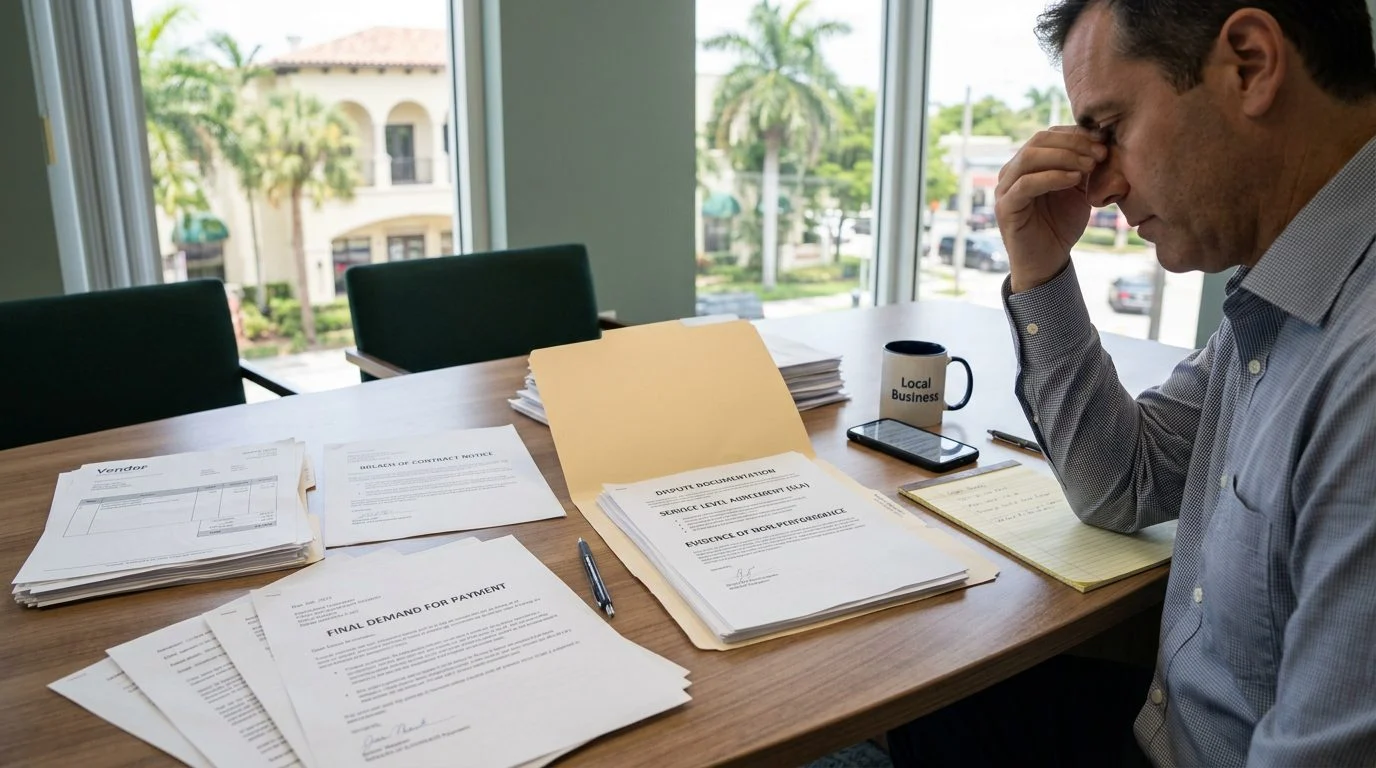
Business Contract & Vendor Disputes | Coral Gables and Sunny Isles Beach
When a Vendor Misses Its Service Commitments, Get Clear Answers
KEW Legal works with business owners across Miami-Dade and Broward on vendor disputes, from missed uptime targets to unmet response times, and helps you choose the next step with your contract in view.
By Kristina E. Wilson · Published November 11, 2026
Your software or hosting vendor keeps missing the uptime or response times it promised. You need to know what you can do next. In Florida, the answer starts with your contract. Here is how to think through a service level agreement breach in Florida, one step at a time.
What a Missed Service Level Means for Your Business Contract
A service level agreement (SLA) is the part of a vendor contract that lists measurable commitments. Common examples include uptime percentage, response time, resolution time, delivery dates and staffing levels.
If the vendor agreed to a number in writing and doesn’t meet it, you have a starting point. The next question is what the contract says happens next. Many SLAs also set credits, notice steps and exit rights.
Some vendors place key terms in an order form or an online terms page. Check every document that is part of the deal, not just the main agreement.
This guide is for business owners and managers who use software, SaaS, hosting, staffing or logistics vendors in Miami-Dade and South Florida. A contract review is the step that answers the question for your agreement, because each SLA is written differently.
If your software or hosting vendor missed the service levels in your contract, our team can review the agreement and talk through your options with you. Talk it through with our team — the first consultation is free, confidential, and carries no obligation.
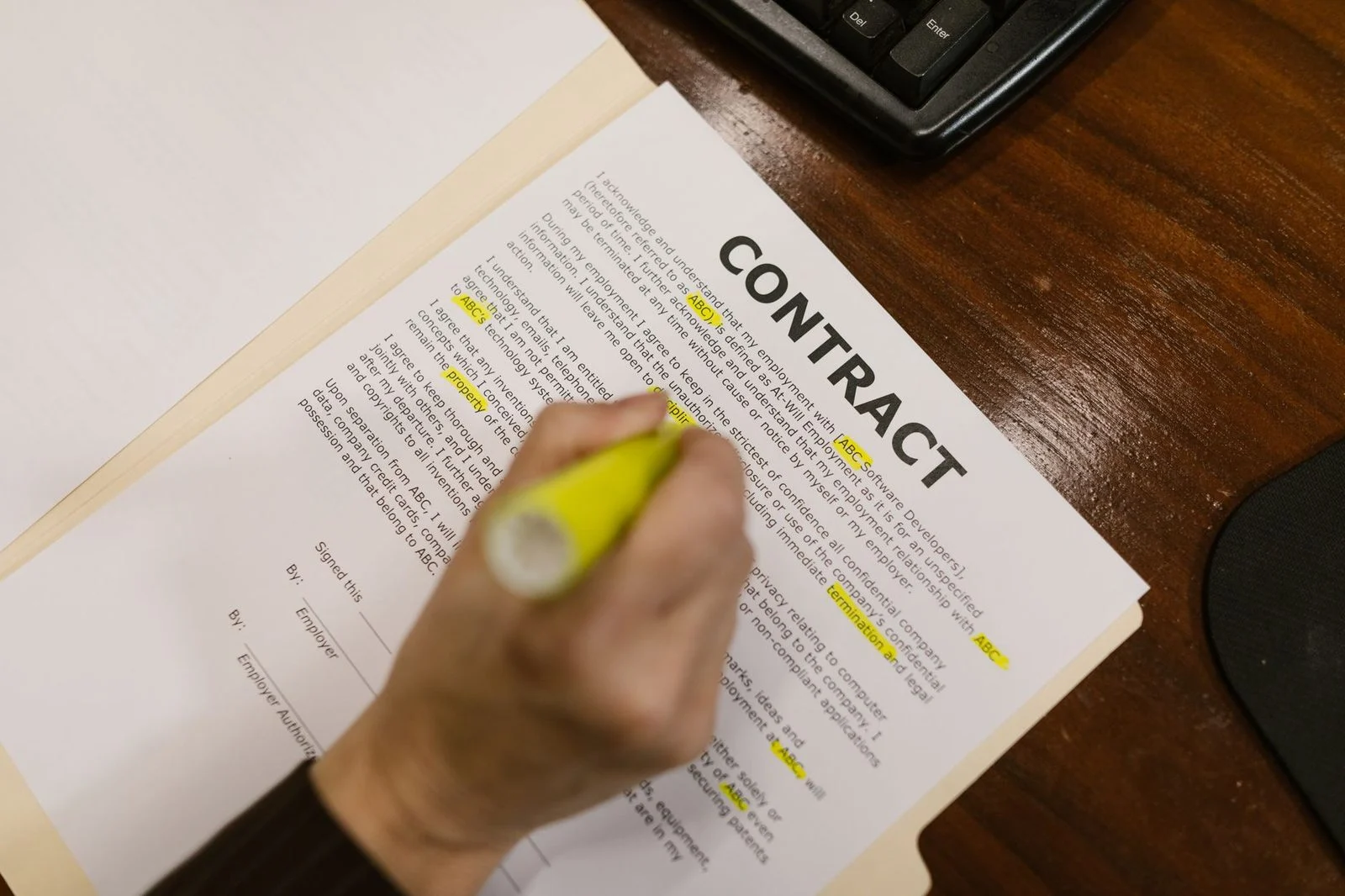
The SLA Terms That Decide Your Options
Six terms in an SLA usually decide what you can do after a miss. Check each one before you send anything.
- How uptime is measured. Look at the period (monthly or annual), the monitoring tool, and who keeps the logs.
- Exclusions. Scheduled maintenance windows and certain outages may be removed from the count.
- Response versus resolution time. Find out whether the clock starts when you report a problem or when the vendor acknowledges it.
- Service credits. Check how they are calculated, whether they are the only remedy, and whether a cap limits them.
- Notice duties. Note what you must send, to whom, by what method and by what deadline.
- Chronic failure language. Repeated misses may give you a right to end the contract, even when no single miss is severe.
Florida law also limits how a contract can cut short your time to sue. Under Fla. Stat. § 95.03, a contract clause that sets a shorter time to sue than the statute allows is void. A clause like that won’t control, even if you signed it.
Your Options When a Vendor Misses Service Levels
You can usually claim credits, send a breach notice, withhold disputed payment or end the contract. Which option fits depends on what your agreement allows.
- Claim service credits when the agreement provides them. Confirm they land on the correct billing period.
- Send a written breach notice and demand a cure plan within the time the contract sets.
- Withhold or dispute payment only where the contract gives you that right. Withholding without contract support can put you in default yourself. Some owners pay the undisputed amount and reserve their rights in writing.
- Terminate for material breach or chronic failure. Then check what the contract requires for data return, transition help and final invoices.
- Pursue damages the contract allows, subject to any limit on liability.
- Negotiate a fix, such as a rate cut, extra credits or a migration plan. Put the agreement in a signed amendment.
Florida courts test unfair contract terms by looking at both how the deal was made and how unfair its terms are. Basulto v. Hialeah Automotive states that both the procedural and substantive aspects of unconscionability must be present, although not necessarily to the same degree, and that both should be evaluated interdependently rather than as independent elements. That matters when a vendor’s liability cap looks one-sided.
Contract Clauses That Shape the Outcome
Liability, notice, fee, venue and dispute clauses shape how a dispute plays out. Read them together, not one at a time.
- Limitation of liability and consequential damages. These clauses often decide whether lost revenue is recoverable.
- Notice-and-cure periods. They set the timeline before you can terminate or sue.
- Attorney fee clauses. Under Fla. Stat. § 57.105, if a contract lets one party recover fees for enforcing it, the court may also allow fees to the other side when that side prevails. The cost of a dispute can run either way.
- Venue and dispute resolution. Under Fla. Stat. § 47.011, actions are brought where the defendant resides, where the cause of action accrued, or where the property in litigation is located. This section does not apply to actions against nonresidents. Arbitration agreements are generally enforceable under Fla. Stat. § 682.02. Under Fla. Stat. § 44.102, on one party’s request a court must refer a filed civil action for monetary damages to mediation, provided the requesting party is willing and able to pay the costs or they can be equitably divided between the parties, unless an exception applies.
- Entity type. Under Fla. Stat. § 605.0304, an LLC’s debts belong to the company. Its members are not personally liable just for being members.
Chapter 672 covers sales of goods. For accepted goods, Fla. Stat. § 672.607 requires the buyer to notify the seller of a breach within a reasonable time after he or she discovers or should have discovered it, or be barred from a remedy. Many SLAs cover services, so the contract’s own terms usually matter most.
How a Florida Service Level Dispute Typically Proceeds
Most disputes move from document review to a formal notice, then to negotiation, and finally to the forum the contract names. Timelines vary with the contract and the vendor’s response.
- Collect the record. Gather the agreement, amendments, order forms, SLA reports, your monitoring logs, support tickets and payment records.
- Map each miss. Match every missed commitment against the measurement method, exclusions and notice terms.
- Send the required notice. Use the form, address and delivery method the contract requires, and keep proof of delivery.
- Negotiate a cure, credit or settlement. Put every agreement in writing.
- Choose the forum if needed. Compare mediation, arbitration, small claims and a civil suit in the venue the contract names. A written contract generally has five years to sue under Fla. Stat. § 95.11, but check the contract’s own time limits early.
Why Businesses Bring Vendor and SLA Disputes to KEW Legal
KEW Legal is a Florida business law firm with offices in Coral Gables and Sunny Isles Beach. We serve business owners and investors across Miami-Dade and South Florida.
Our lawyers act as outside general counsel for business owners and investors. That means a vendor dispute can be reviewed alongside your contracts, leases, employment questions and entity issues. Kristina E. Wilson is the responsible lawyer for this page.
Our team focuses its business work on contracts and vendor disputes. That includes reviewing SLA terms, drafting notices and cure demands, negotiating credits or exit terms, and handling disputes when a fix doesn’t work. We aim to be clear about the contract terms and your options, so you can decide with the facts in front of you.
Not sure what your next step is?
Talk it through with our team — the first consultation is free, confidential, and carries no obligation.

Frequently Asked Questions About Service Level Breaches
Can I stop paying a vendor that misses its uptime commitment?
The answer turns on the contract. Withholding is safest only when the agreement gives you that right.
Are service credits my only remedy?
Only if the contract says so. Some agreements make credits the exclusive remedy, while others keep claims for damages or termination.
What if the vendor’s report disagrees with my logs?
Keep your monitoring data and support tickets. The contract’s measurement method usually decides which record controls.
Do I need written notice?
Usually, yes. The notice form, address and deadline often protect your rights.
How long do I have to sue?
Florida sets limitation periods by statute. A contract clause that shortens the time to sue is void under Fla. Stat. § 95.03.
If your software or hosting vendor has missed the service levels in your contract, you may be weighing payment, credits or termination. Call 305-990-2300 or send us a message about your agreement. The first consultation is free, confidential and carries no obligation to continue.
Contract Terms We Review First
Uptime and Availability Targets
We look at how availability is defined, how it is measured, and which systems or periods the commitment covers.
Response and Resolution Times
We examine the severity levels, the clock that starts a response obligation, and what the contract says about missed timeframes.
Service Credits and Exclusive Remedies
We check whether credits are the only remedy or whether damages, termination, or other claims remain available.
Notice, Cure, and Termination Rights
We review what written notice must say, how the vendor may fix a problem, and whether termination is allowed for repeated failures.
Read Before You Act
Withholding payment, cutting off a vendor, or switching providers can trigger the vendor's own claims if your contract does not allow it. Review the notice, cure, and termination language before you take any step.
How KEW Legal Supports Your Business
Contract-First Review
We start with the agreement itself, including the SLA, order forms, amendments, and any incorporated policies.
Clear Options in Plain Language
We explain the choices available to you, from written demands and negotiated fixes to formal dispute resolution.
Protection for Your Operations
We focus on keeping your business running while a disagreement is addressed, with attention to continuity and customer impact.
Outside General Counsel Support
Many clients bring vendor issues to us as part of ongoing outside general counsel work across contracts, employees, and commercial property.
Have a Vendor Problem? Talk to KEW Legal
Related practice areas
Request a Consultation
Fill out the short form and we will take it from there.