
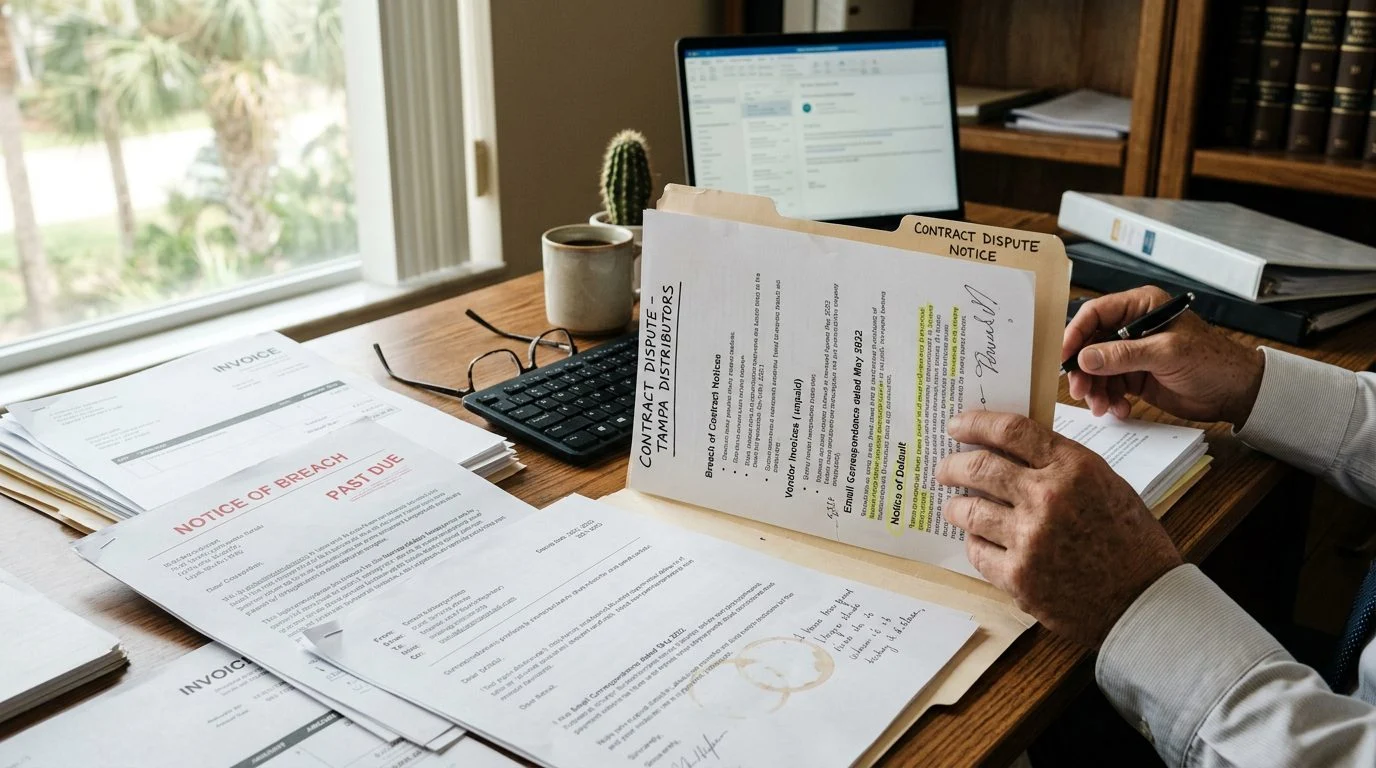
Business Contracts · Coral Gables and Sunny Isles Beach
Understanding How Time Limits Apply to Written Contracts in Florida
Owners and investors often assume a broken agreement can wait. Here is how Florida law approaches the question and why early review matters.
By Kristina E. Wilson · Published November 6, 2026
Maybe you found an old supply agreement, an unpaid invoice, or a partner who stopped doing their part. Now you need to know how much time is left. For an action on a contract founded on a written instrument in Florida, the short answer is five years.
That period comes from Fla. Stat. § 95.11. It is a deadline for filing a lawsuit. It is not a promise about how a dispute will end, and the facts of your agreement decide how the rule fits your case.
The Short Answer: Five Years for a Written Contract in Florida
Florida generally allows five years to bring an action on a contract founded on a written instrument, under § 95.11(2)(b). This is the rule most people mean when they ask about the statute of limitations for enforcing a written contract in Florida.
Two parts of that rule matter. The word “generally” signals that other statutes and exceptions can change the answer. The phrase “founded on a written instrument” ties the period to the document that sets out the deal. The paper matters, not only the business relationship behind it.
Many business owners assume a contract is either enforceable or it isn’t. In practice, two questions come first. What kind of agreement is it? And when did the failure happen? The answer to the second question starts the clock.
This page covers the general rule only. It does not cover every commercial dispute. A lease, a vendor order, or a partnership buy-out can raise related questions, and each one needs review against the actual documents.
If you're not sure whether an old vendor, partner, or lease agreement can still be enforced, we can talk through your dates with you. Talk it through with our team — the first consultation is free, confidential, and carries no obligation.

When the Five-Year Clock Starts
The clock generally starts when the last element of the claim occurs. Fla. Stat. § 95.031(1) says a cause of action accrues at that point. For a contract claim, that last element may be a missed payment or a delivery that never arrived.
The date you signed the contract is not automatically the start date. A deal can sit for years before anything goes wrong. Take a vendor who delivered part of an order and then stopped. The missed delivery may be the event that matters, not the date the price was first quoted.
Installment and recurring payments need extra care. Track each default on its own timeline, and keep dated invoices, notices, and payment records.
A common mistake is assuming the clock started when the dispute got serious. Another is waiting for talks with the other side to finish before checking the date. Pull out each failure date and write it down. That list is the first thing to review.
Written vs. Oral Contracts: Why the Period Can Be Shorter
In a dispute, a written deal is usually easier to organize. Oral deals often lead to arguments about who said what and when.
Figure out what your agreement actually is. A signed purchase order, a signed lease, or an email exchange that sets out agreed terms may count as a written instrument. A phone agreement with no record is an oral contract. Whether a particular email or order counts is a question to review against the facts.
Oral promises can be hard to enforce in some cases.
Does a Written Contract Hold Up in Court?
A written contract generally makes its terms easier to prove. A deadline can run out even on a strong paper agreement, so the date matters from the start.
Signed documents, emails that confirm terms, invoices, and payment records all help. They show what was agreed and when a payment came due or was missed. Keep originals in a safe place. Keep copies of every key notice you send.
Written contracts also limit other claims. Where an express contract covers the same subject, a claim for unjust enrichment arising out of that relationship generally will not succeed, although the outcome depends on the facts. This matters when a claim tries to recover outside the terms of the deal the contract covers.
Before you rely on any argument, gather the full set of documents. A single email can change how a timeline reads, so review them together.
Promissory Notes and Written Instruments
A promissory note is a written promise to pay money. Because it is a written instrument, the five-year rule in § 95.11(2)(b) is the starting point for a claim on it.
Sealed documents cause a common mix-up. The twenty-year number belongs to a different category. Under § 95.11(1), an action on a judgment or decree of a court of record in Florida must be started within twenty years. That rule is about court judgments, not ordinary private contracts.
Check the document type first. A promissory note, a court judgment, and a signed agreement can each lead to a different analysis. The label on the paper can change the deadline, so read the title, signatures, and any court stamps.
Lenders, landlords, and vendors sometimes hold several papers for one debt. Read every related document together so no date gets missed.
What Can Pause or Restart the Period
Several events can pause the clock. Lawyers call this tolling, which means the running of time stops for a while. Florida’s tolling rules appear in § 95.051.
A payment of any part of the principal or interest on a written obligation tolls the period, under § 95.051(1)(f). This is why a partial payment on a debt can matter. Get the payment dates in writing.
A pending arbitration over the same dispute also tolls the period, under § 95.051(1)(g). Absence from Florida by the person to be sued can toll the period too, under § 95.051(1)(a). Those paragraphs do not apply when the other side can be served in a way that gives the court power over them.
A disability or other reason generally does not pause the period. The exceptions are the ones the statute names, under § 95.051(2), along with those in s. 95.091, the Florida Probate Code, and the Florida Guardianship Law. Phone calls, friendly emails, and demand letters are not on that list. Don’t count on them to stop the clock.
Waiting can also cost a right.
Not sure what your next step is?
Talk it through with our team — the first consultation is free, confidential, and carries no obligation.
Where the Statute Comes From
Chapter 95 contains the limitation periods discussed on this page. The links above go to the section pages on the Florida Legislature’s website.
Read the current text before you rely on a deadline. Older articles and summaries sometimes cite old section numbers or older periods.
Court opinions also show how these rules work in practice. Some disputes turn on narrower points, such as unjust enrichment or the Statute of Frauds.
Frequently asked questions
How long do I have to sue on a written contract in Florida?
Florida generally allows five years for an action on a contract founded on a written instrument, under § 95.11(2)(b).
Does a partial payment pause the clock?
Yes, a payment of part of the principal or interest on a written obligation tolls the period under § 95.051(1)(f).
Is the statute of limitations twenty years for a contract?
No, the twenty-year period in § 95.11(1) applies to actions on a judgment or decree of a court of record.
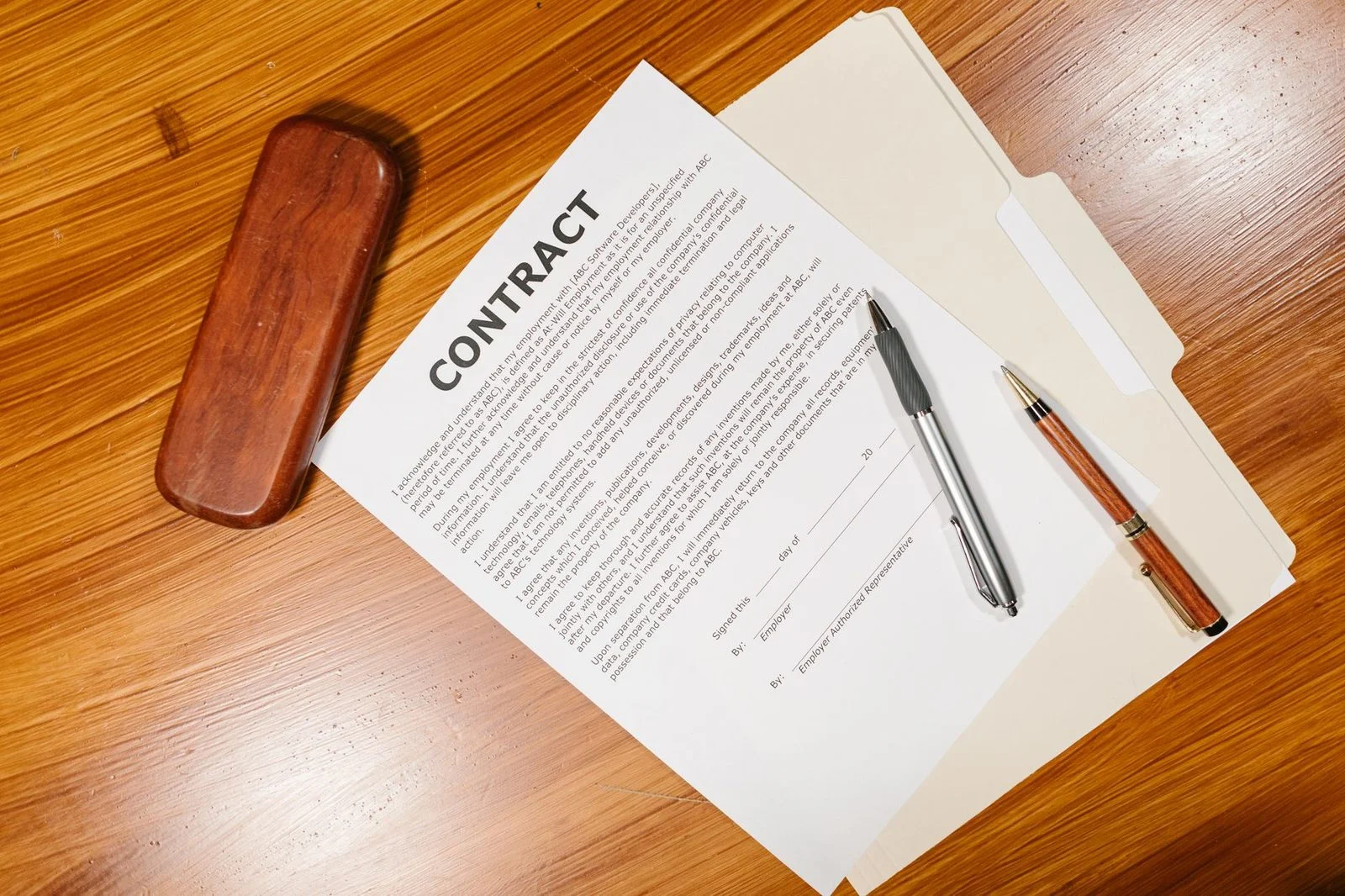
Talk Through Your Contract Deadline With Kristina E. Wilson
Kristina E. Wilson is the responsible lawyer for this page, and she can review your contract dates with you. You may be reading this for a business you run or a partner you’re worried about.
KEW Legal has offices in Coral Gables and Sunny Isles Beach. The firm advises business owners and investors across Miami-Dade and South Florida on contracts, vendor disputes, leases, and partnerships. The first consultation is free, confidential, and comes with no obligation to continue.
To talk about your agreement and its dates, call 305-990-2300 or send us a message.
How KEW Legal Works With Business Owners
Contract review
We read the written agreement, its amendments and related correspondence to identify the terms that control the dispute.
Outside general counsel
We serve as ongoing legal counsel for business owners and investors across Miami-Dade and South Florida.
Practical strategy
We focus on protecting your position, whether the goal is negotiation, a demand letter or litigation.
Early attention
Acting promptly after a dispute arises helps preserve evidence and keeps your options open.
Do not assume the clock is not running
Deadlines for contract claims depend on the type of agreement, its terms and the facts of your situation. Waiting to ask for advice can limit your choices, so review the documents with a lawyer as soon as a dispute begins.
Business Matters We Handle
Business contract and vendor disputes
Breach claims, payment disagreements and vendor conflicts resolved through negotiation or court action.
Partnership disputes
Guidance on operating agreements, ownership disagreements and the exit of a partner.
Commercial leases and evictions
Lease drafting and enforcement, plus commercial eviction matters for owners who live abroad.
Acquisition, sale and succession
Business purchase and sale transactions and succession planning for owners who want continuity.
Have a written agreement in dispute? Talk with KEW Legal.
Related practice areas
- Business Contract And Vendor Dispute Attorney
- Does a Business Contract Have to Be in Writing to Be Enforceable in Florida?
Request a Consultation
Fill out the short form and we will take it from there.