
Vendor & Contract Disputes | Coral Gables & Sunny Isles Beach
When a Vendor Cuts Off One Venue, Your Other Locations Still Need Protection
KEW Legal works as outside general counsel for business owners across Miami-Dade and Broward who need one problem handled without disrupting everything else they run.
By Kristina E. Wilson · Published November 17, 2026
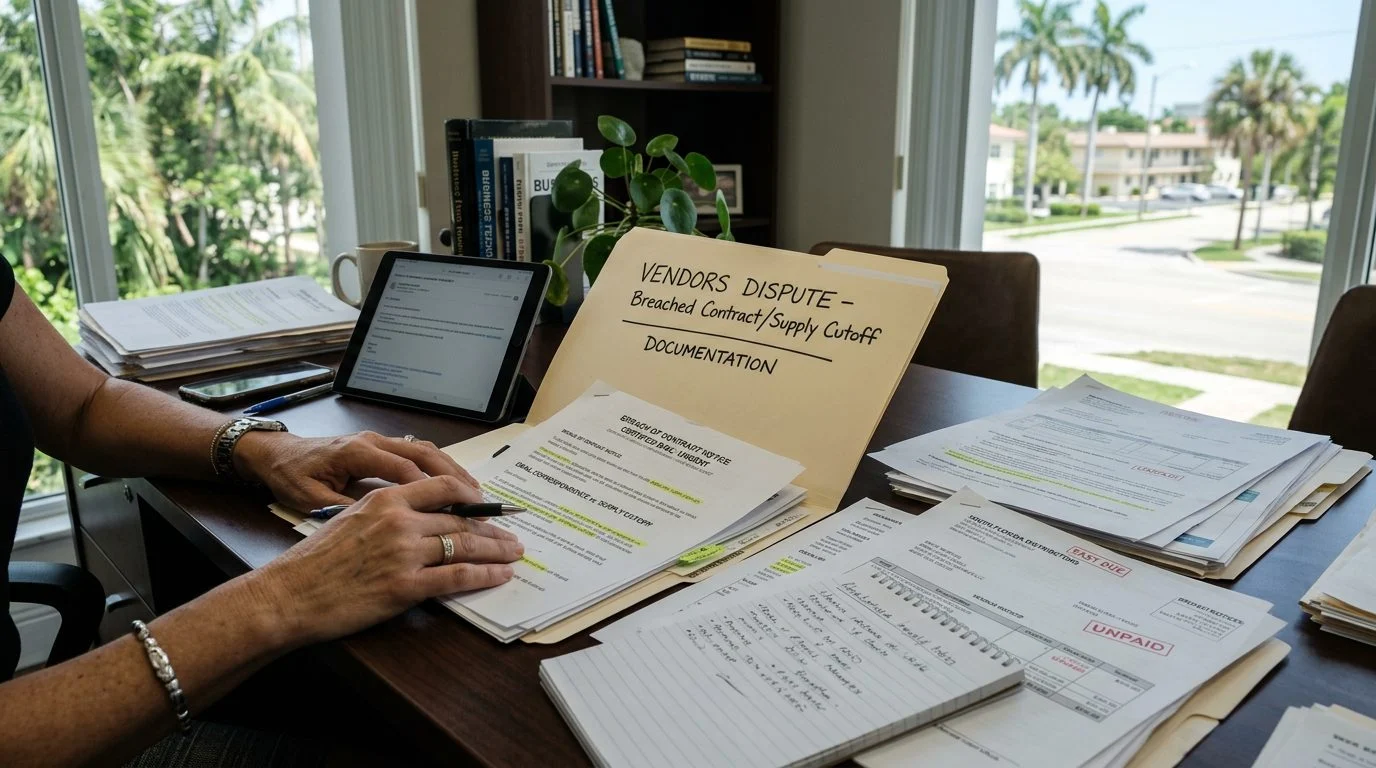
You own several venues, and one vendor has stopped delivering to one of them. Your other locations may still rely on that same supplier. Keeping this dispute at one venue comes down to two things: what your contracts say, which entity signed them, and how you respond in writing from the start.
Florida’s sales-of-goods rules often apply to supply disputes. Your company structure can either help or hurt you. The steps below show what to check first and what to avoid.
What a supply cut-off at one venue can do to your other locations
A cut-off at one venue can reach your other locations in three ways. The vendor may tie the locations together through shared paperwork. It may treat your accounts as one relationship. Or it may pull the dispute into your wider business structure.
Shared paperwork is the most common link. One master agreement that covers several sites can make every site part of the same argument. Separate contracts for each location can keep disputes apart, if the documents support that.
Your business structure matters too. A lender, buyer, or partner reviewing your deals will ask which company owes what. If the answer is unclear, that question gets harder to settle, even when the vendor’s claim is weak.
The first days matter most. The notices you send, the records you keep, and who speaks for you now will shape how the dispute looks later.
Pull the contract and find out which entity actually signed it
The company named on each agreement is the one that owes performance under it. Start there.
Look at each signature block. The contracting party might be your operating company, a property-holding entity, a management company, or you personally. Each one carries different exposure.
Next, check the term, termination rights, notice requirements, cure periods, and any minimum purchase or exclusivity terms. A cure period gives the other side a set chance to fix a problem before termination takes effect. Missing a notice step can cost you a right you would otherwise have.
Finally, look for any personal promise to pay. A signature on a personal promise can make you answerable even when your company signed the main agreement.
Florida law gives LLC members real protection. Under Fla. Stat. § 605.0304, a company’s debt is solely the company’s. A member or manager is not personally liable just for being one. The same section says a failure to follow formalities is not a ground for imposing that liability. That protection does not cover a personal promise you signed.
Check whether your other locations share the same agreement
Your other venues are tied to the cut-off only if their agreements, or the way those agreements read together, connect them.
Sort your paperwork into two groups. One group is a single master supply agreement covering several locations. The other is separate contracts for each location. The two work very differently once a dispute starts.
Then look for cross-default language. Cross-default terms can let a breach under one agreement count against another. Check shared-account pricing and volume commitments too. If several venues share a purchase minimum, a shortfall at one site can affect the others.
Gather every agreement that touches the affected venue before you respond. A vendor’s position often rests on how the documents fit together. Responding with only part of the picture can leave you arguing from the wrong starting point.
Keep the dispute inside one entity and one line of communication
Keep the dispute with the entity that signed the contract. Send every vendor message through one designated person.
Resist the urge to move money, inventory, or staff from another company to cover the gap. Florida law can treat some transfers as fraudulent. Under Fla. Stat. § 726.105, a transfer can be fraudulent as to a creditor if it is made with actual intent to hinder, delay, or defraud any creditor.
The same section lists factors a court may weigh in determining actual intent. Those include whether the transfer went to an insider, whether it covered substantially all of the debtor’s assets, and whether the debtor had been sued or threatened with suit before the transfer. Pause before shifting assets during a dispute. A move that looks like a rescue can read as a transfer meant to keep value away from the vendor.
When several people speak to the vendor, they can say different things about the same delivery. Route all communication through one person or through counsel so every statement matches.
Keep a clean record for each delivery. Note which entity placed the order, which entity paid, who received the goods, and which entity was invoiced.
Respond in writing without conceding a breach
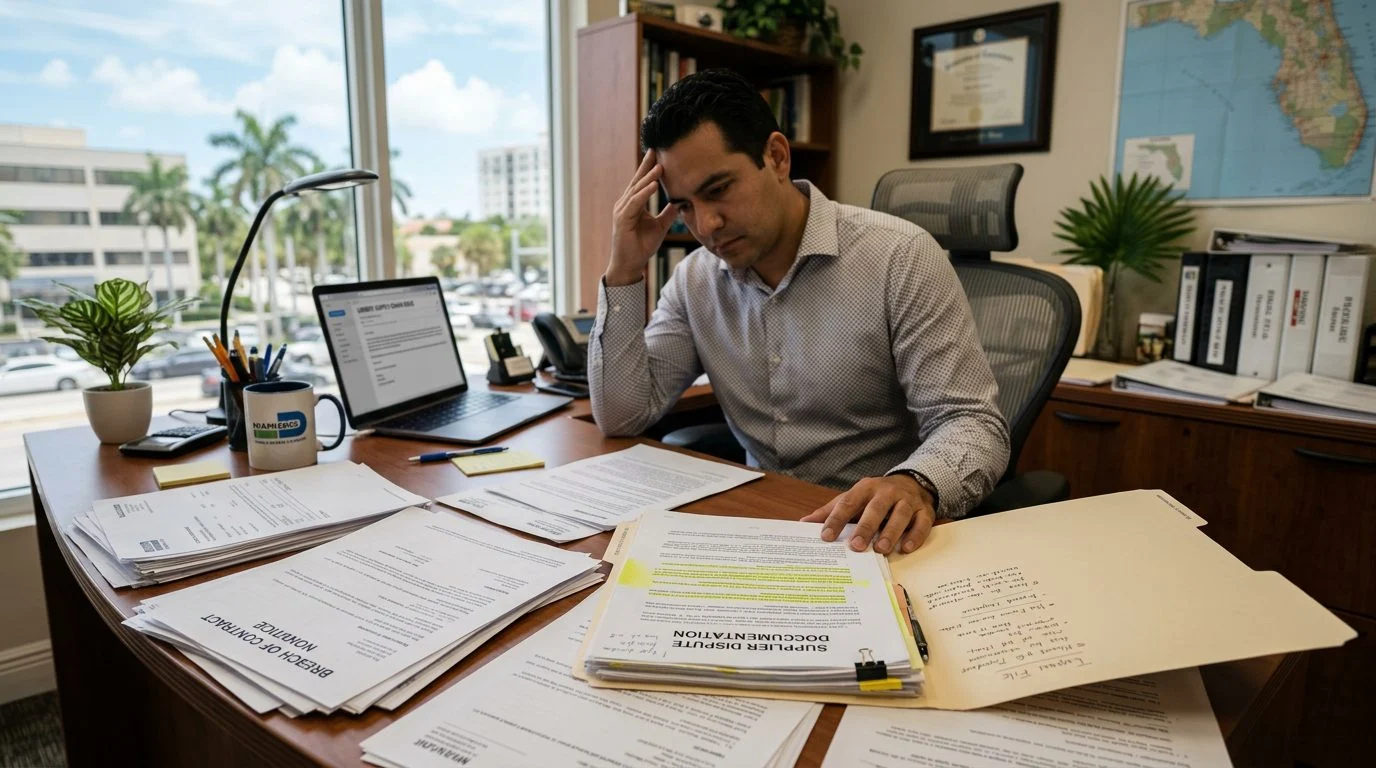
Respond in writing. State your position, identify the contract terms you rely on, and reserve your rights.
Avoid anything that admits fault, accepts termination, or agrees to a payment schedule before you review the full contract history. A phone call can become a record the vendor later quotes. Keep calls brief, and follow up with a written summary of your position.
Watch the timing too. If you have accepted goods, Florida law requires you to notify the seller of a breach within a reasonable time after you discover it or should have discovered it. Otherwise you can be barred from any remedy. See Fla. Stat. § 672.607. You also carry the burden of proving any breach for goods you accepted.
Preserve everything in its original form. That includes emails, texts, purchase orders, invoices, delivery logs, and notices. Do not edit or re-save them.
Florida rules that often come into play
Florida’s sales-of-goods rules often govern supply disputes, because beverages, food, equipment, and merchandise are goods.
- Adequate assurance. If you have reasonable grounds to doubt a vendor’s performance, you may demand adequate assurance in writing. Under Fla. Stat. § 672.609, failing to give adequate assurance within a reasonable time, not exceeding 30 days, after a justified demand is a repudiation.
- Vendor says it will stop. If a vendor repudiates a performance not yet due, the loss of which will substantially impair the value of the contract to you, you may await performance for a commercially reasonable time or pursue a remedy for breach. See Fla. Stat. § 672.610.
- Written confirmations. For goods priced at $500 or more, a written confirmation between merchants can satisfy the writing requirement against you if you receive it within a reasonable time and have reason to know its contents. Object in writing within 10 days after you receive it. See Fla. Stat. § 672.201. Object in writing within 10 days after you receive it. See Fla. Stat. § 672.201.
- Mediation. Once a lawsuit is filed, a Florida court must refer a damages case to mediation on a party’s request, provided the requesting party is willing and able to pay the costs of the mediation or the costs can be equitably divided between the parties, unless an exception applies (for example, a landlord and tenant dispute without a personal injury claim, a suit to collect a debt, or a case governed by the Florida Small Claims Rules). Exceptions apply, so check the statute. See Fla. Stat. § 44.102.
- Auto-renewal. If the vendor says the agreement renewed, review the renewal clause and any notice deadline before you accept that position.
Quick answers
Can a vendor cut off one location if the contract covers several?
It can, depending on the wording. Read every agreement that names that venue, and check for cross-default terms first.
Does a separate LLC keep my other venues safe?
Generally, an LLC’s debts belong to the company alone. A personal promise you signed is separate and can reach you.
Bring the contract and notices to KEW Legal
Deciding how to answer a cut-off is a business decision. It should rest on the full set of contracts.
You make the calls on notices, entity separation, and what the vendor hears from you. Those calls can reach your other venues. If a vendor has stopped supplies to one location while the rest still depend on it, contact KEW Legal to review the agreements, entity records, and notices before you send another word.
KEW Legal handles business contract and vendor disputes for owners in Miami-Dade, Broward, and South Florida. Kristina E. Wilson is the responsible lawyer for this page, and the firm’s office is in Coral Gables. The initial consultation is free, confidential, and carries no obligation to continue.
How we approach a multi-location supply dispute
Review every agreement
We read each contract that names the affected venue, along with any master agreement or shared purchasing terms that may connect it to your other locations.
Check for cross-default terms
We look for clauses that let a dispute at one location trigger consequences at another, so you understand the full exposure before you respond.
Look at your entity structure
We review how each location is organized and whether any personal promises you signed could reach you beyond the company's debts.
Plan your response
We help you communicate with the vendor in a way that protects your position at every location while the issue is being addressed.
Do not respond to a cutoff notice before reviewing your contracts
A written message to the vendor can shape what happens at your other locations. Gather every agreement tied to the affected venue, and speak with counsel before you sign anything or make new commitments.
What we review first
Contract wording
The scope of each agreement, who the parties are, and which locations it actually covers.
Cross-default and linked terms
Provisions that connect one venue's contract to the rest of your operations.
Company structure
How each location is held, and where the company's debts end and personal obligations begin.
Ongoing operations
Supply continuity, staffing, and lease obligations at the locations that are still running.
The first consultation is free, confidential, and carries no obligation to continue. Talk with KEW Legal before a dispute at one venue reaches the others.
Related practice areas
Request a Consultation
Fill out the short form and we will take it from there.