
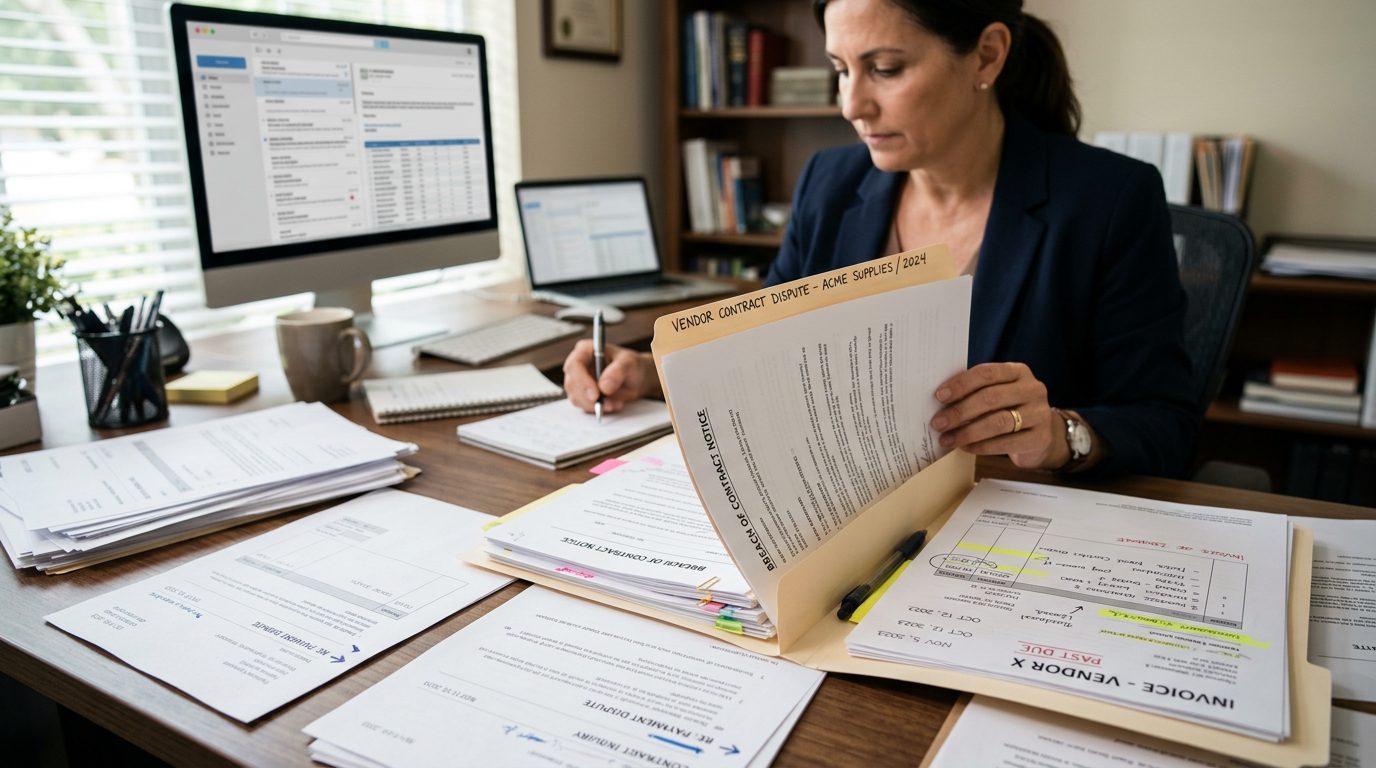
Business Contracts | Coral Gables and Sunny Isles Beach
Review Your Vendor Contract Before You Sign
KEW Legal helps business owners in Miami-Dade and Broward counties review vendor agreements for liability, payment, scope, and termination terms. Start with a free first consultation, which is confidential and carries no obligation to continue. Responsible attorney: Kristina E. Wilson, KEW Legal, Coral Gables, Florida.
By Kristina E. Wilson · Published October 27, 2026
A vendor contract review is a lawyer’s close read of an agreement before you sign it. The goal is to find risks, gaps, and terms worth negotiating while changes are still possible. KEW Legal is a Florida business law firm with offices in Coral Gables and Sunny Isles Beach. The firm reviews vendor, supply, service, and software agreements for business owners and investors across Miami-Dade, Broward County, and South Florida.
What a vendor contract review covers
A vendor contract review is a lawyer’s read of an agreement before you sign. It identifies risks and terms to negotiate while changes are still possible.
This review fits owners, operators, and investors who are about to commit to a supply, maintenance, service, or software agreement. It also fits anyone handed a vendor’s standard form and asked to sign it as written.
Timing matters. The terms you sign usually control what happens when delivery is late, a product fails, or payment stops. Changing a clause before signing is usually easier than changing it after a dispute starts.
Goods and services follow different rules. For a sale of goods priced at $500 or more, the contract generally must be in a record signed by the party against whom enforcement is sought, under Fla. Stat. § 672.201. There are exceptions, such as a merchant’s written confirmation not objected to within 10 days, specially manufactured goods, an admission in court, or goods already paid for and accepted or received and accepted. Many service and software agreements fall under general contract principles instead. The review checks which rules fit your deal.
If a vendor sent you an agreement with a signing date, send it to us before you commit to its terms, and we will review it with you. Talk it through with our team — the first consultation is free, confidential, and carries no obligation.
The clauses we check line by line
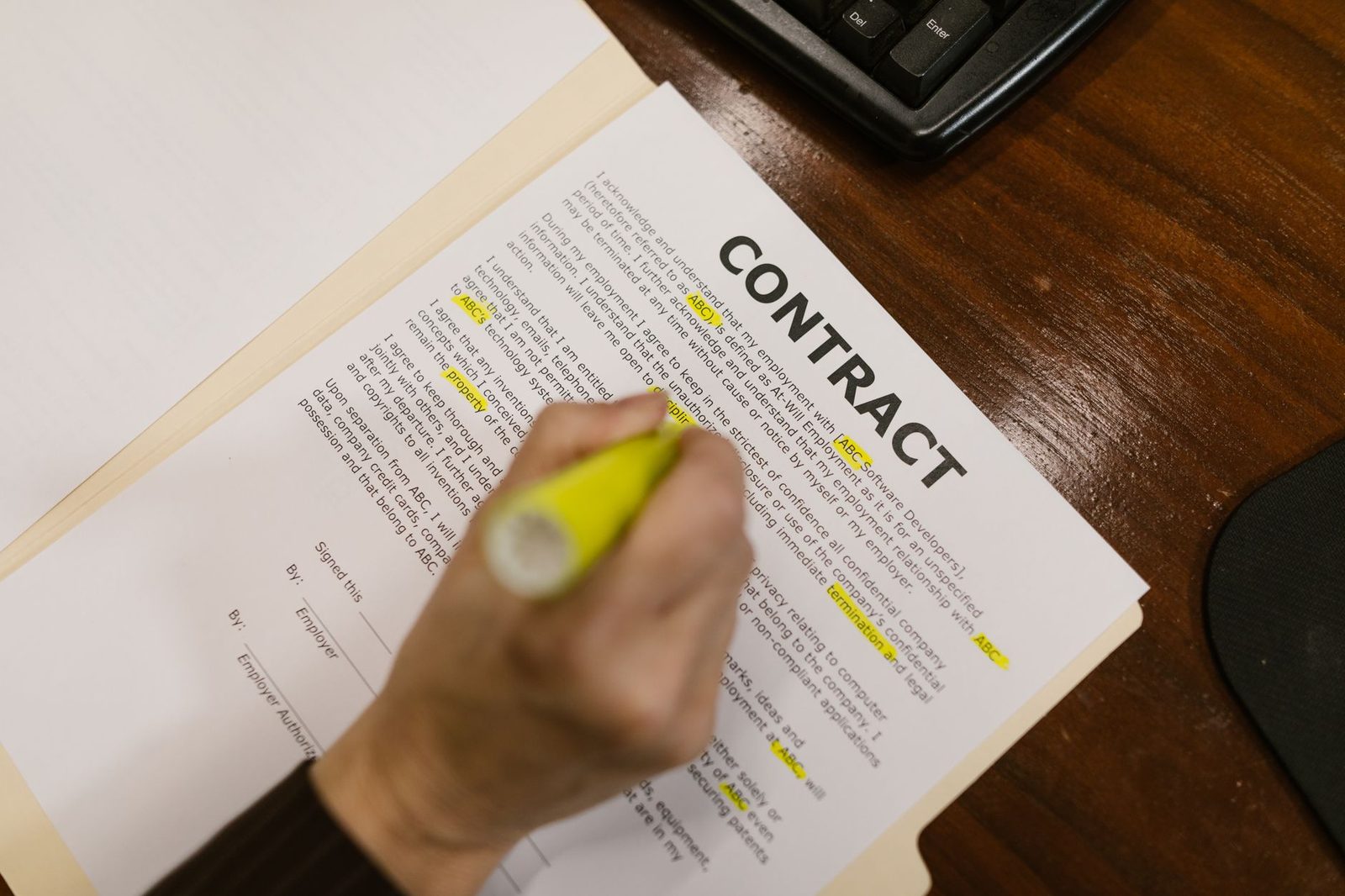
The clauses that decide money, timing, and exit routes get the closest read. A review covers these terms:
- Scope and deliverables: what the vendor must provide, in what amount and quality, and whether every attachment is included.
- Payment: invoicing, late fees, and any right the vendor has to change prices.
- Delivery and acceptance: due dates, performance standards, and what counts as accepted work.
- Termination, cure periods, and renewal: how either side can exit, how long a fix period lasts, and whether the deal renews automatically.
- Liability, indemnity, and insurance: caps on what the vendor pays, who covers third-party claims, and what coverage is required.
- Confidentiality and data: who owns the work product and how your data is handled.
- Arbitration clauses: under Fla. Stat. § 682.02, the court decides whether an agreement to arbitrate exists or whether a controversy is subject to an agreement to arbitrate. A written agreement to arbitrate is generally valid and enforceable under Fla. Stat. § 682.02, except on grounds that exist to revoke any contract.
- Attorney’s fees and assignment: whether a fee clause applies and whether the vendor can hand the contract to someone else or subcontract the work.
Warning signs in vendor-drafted agreements
Vague promises, one-sided exit rights, and missing attachments deserve a second look in any vendor form. These are the signs we check first:
- “As needed” or “reasonable efforts” with no measurable standard.
- Termination or suspension rights for the vendor only, with no matching right for your business.
- Liability caps far below the value of the work, or clauses that exclude the losses you are most likely to face.
- Auto-renewal terms with short notice windows that are easy to miss.
- Order forms, specifications, or policies that the contract refers to but that are not in the signing copy.
- Online terms that can change without notice to you.
Short phrases can carry weight. Words such as “as is” or “with all faults” can exclude implied warranties under Fla. Stat. § 672.316, unless the circumstances indicate otherwise. A court may also refuse to enforce an unconscionable clause. Under Basulto v. Hialeah Automotive, the Florida Supreme Court requires both unfair dealing and unfair terms, weighed together.
How the review works, step by step
The review moves from a free first consultation to a written issues list, then to negotiation or signing. Here is the process:
- Free first consultation. Contact our office through the KEW Legal contact page. The first consultation is free, confidential, and carries no obligation to continue.
- Send the full package. Include the agreement, every attachment, and any emails or term sheets that shaped the deal.
- Clause-by-clause review. The attorney reads the document and flags each risk in plain English.
- Written issues list. You receive the risks in writing, with proposed replacement language where a change makes sense.
- Negotiation, if you choose. The firm can propose changes to the vendor and track each revision.
- Signing. You sign once the terms match what was agreed. Timing depends on the length of the agreement, the number of attachments, and how quickly the vendor responds.
If you have already signed or a dispute has started
A signed contract can still be reviewed, and its notice and deadline terms matter most. After accepting goods, a buyer must notify the seller of a breach within a reasonable time after discovering or should have discovered it, or be barred from any remedy, under Fla. Stat. § 672.607.
Under Fla. Stat. § 95.03, a contract provision that fixes a period for beginning an action arising out of the contract at a time shorter than the applicable statute of limitations is void. If the contract allows attorney’s fees to one party for enforcing it, Fla. Stat. § 57.105 lets a court also allow reasonable fees to the other party when that party prevails, whether as plaintiff or defendant. This applies to contracts entered into on or after October 1, 1988.
For delivery failures, see our vendor failed to deliver page. Some agreements are oral. An oral contract still needs an offer, acceptance, consideration, and enough detail on essential terms, as St. Joe Corp. v. McIver explains.
Why clients work with KEW Legal
KEW Legal is a Florida business law firm that focuses on contracts, vendor disputes, commercial leases, and business acquisitions. The firm serves owners and investors with offices in Coral Gables and Sunny Isles Beach, and works with clients across Miami-Dade, Broward County, and South Florida.
Kristina E. Wilson is the responsible attorney for this page. The firm’s lawyers include Kristina E. Wilson and Natalie Martinez. Support staff help with scheduling and document handling.
Under an outside general counsel arrangement, the firm can review one agreement or stay involved as contracts come up over time. Our team explains each risk in terms a business owner can act on before signing.
Not sure what your next step is?
Talk it through with our team — the first consultation is free, confidential, and carries no obligation.
Common questions about vendor contract review
Short answers to the questions we hear most often follow below.
Do I need an attorney to review a short vendor agreement?
A short agreement can still shift liability, payment, or termination rights. A review can still be useful for that reason.
Can the attorney change terms the vendor refuses to negotiate?
The firm can propose changes and advise which terms are worth pressing. The vendor decides whether to accept them.
What if I already signed and the vendor is not performing?
Review the notice, cure, and remedy terms as soon as possible. Deadlines in the agreement can affect your options.
Does the review include a new agreement?
If your business needs its own form of agreement, the firm can draft one as part of the engagement.

Send us the agreement before you sign
If a vendor sent you a contract with a signing date, and the liability, delivery, or renewal terms are unclear, send it to us before you sign. Send the full agreement through the KEW Legal contact page or call 305-990-2300. Our team will walk through the terms with you and show you what needs changing.
Why Review a Vendor Agreement First
Liability Limits
Indemnity and liability clauses decide who pays when something goes wrong. Reading them before signing shows where your business is exposed.
Payment Terms
Pricing, invoicing, late fees, and payment deadlines can affect your cash flow for the life of the contract.
Term and Exit Rights
Renewal terms, notice periods, and termination rights determine how easily you can end the relationship if the vendor underperforms.
Proposed Changes
Our lawyers can suggest revisions and advise which terms are worth pressing. The vendor decides whether to accept them.
Terms Are Easiest to Change Before Anyone Signs
A short vendor agreement can still shift liability, payment, and termination rights. Bring the draft to us before you sign, while your options for changes are still open.
What We Look at in a Vendor Agreement
Scope of Work
We compare the deliverables, service levels, and acceptance standards against what your business actually needs from the vendor.
Liability and Indemnity
We review caps on damages, indemnification obligations, insurance requirements, and who bears responsibility for losses.
Payment and Pricing
We examine fees, price increases, invoicing, late-payment charges, and any obligations tied to milestones.
Termination and Disputes
We look at how the contract ends, notice requirements, governing law, and how disagreements are resolved.
Have a Vendor Agreement Waiting for Your Signature? Let's Talk Before You Sign.
Related practice areas
Request a Consultation
Fill out the short form and we will take it from there.