

Business Contracts | Coral Gables and Sunny Isles Beach
Understand the Notice and Cure Clause Before a Contract Dispute Starts
A short provision with long reach: learn how it shapes what happens when one side falls behind on its obligations.
By Kristina E. Wilson · Published November 13, 2026
You may have just opened a letter saying a vendor, landlord or business partner claims you broke the contract. Or you may be drafting a deal and want to know what protects you. A notice and cure clause in a Florida business contract is the term that governs that moment.
A notice and cure clause requires written notice of a breach and gives the other side a set period, called the cure period, to fix the problem. Many clauses stop the other party from ending the deal until that period passes. The exact wording in your signed contract controls.
What a Notice and Cure Clause Does
A notice and cure clause gives a party a fair chance to fix a problem before the other side takes action. It is a rule the parties agree to in advance.
The clause serves two purposes. It lets both sides correct a problem that can still be fixed. It also creates a dated record of when a breach was raised and how it was answered.
Florida partnership law works the same way at a higher level. Under Fla. Stat. § 620.8103, relations among partners are governed by the partnership agreement, except for certain duties and rights listed in the statute that the agreement may not vary. The statute fills in only where the agreement is silent.
A clause is only as strong as its words. Vague language invites an argument about what the parties meant. That is why the signed language matters more than any general description, including this one.
If a default notice has reached you, you don't have to work out the cure deadline alone, so talk with our team about the clause before the window closes. Talk it through with our team — the first consultation is free, confidential, and carries no obligation.

The Core Elements to Look For in the Clause
Most cure clauses answer four questions. How is notice given? Where does it go? How long is the cure period? What counts as a cure?
Start with the notice itself. A proper notice should identify the breach and the section of the contract that was broken. A vague notice invites a fight over whether valid notice was ever given.
Next, check delivery. The contract may name certified mail, a specific email, or a specific address. Some also require a copy to counsel.
Under Fla. Stat. § 605.0117, notice or a demand on a Florida limited liability company under Chapter 605 may be given to a member of a member-managed company, a manager of a manager-managed company, the registered agent at the registered office, or another in-state address that is in fact the company’s principal office, and the section does not affect other methods of giving notice or making a demand that the law provides. Under Fla. Stat. § 605.0117, notice may be given to a member or manager, to the registered agent at the Florida registered office, or to a Florida address that is really the LLC’s principal office. Florida’s Department of State maintains the Sunbiz business filing records.
Finally, read the time terms. Check whether the period counts calendar or business days. Find out whether it starts on receipt or on sending. Confirm whether an extension must be in writing.
How Cure Periods Usually Appear in Vendor Agreements, Leases, and Partnership Contracts
The same phrase can mean different things in each setting, so the document type matters.
Vendor agreements often tie cure rights to late or defective deliveries and payment problems. For sales of goods, Florida’s commercial code has its own rules. Under Fla. Stat. § 672.508, where a seller’s nonconforming tender is rejected and the time for performance has not yet expired, the seller may seasonably notify the buyer of its intent to cure, then make a conforming delivery within the contract time. That rule covers goods under chapter 672, not every service contract.
Buyers have a duty too. Under Fla. Stat. § 672.607, after a tender is accepted, the buyer must notify the seller of breach within a reasonable time after he or she discovers or should have discovered it, or be barred from any remedy.
Commercial leases often set separate cure periods for rent and for other duties, such as maintenance or use. Read the lease itself. Florida’s nonresidential tenancy statute applies to these tenancies.
Partnership and operating agreements use notice and cure for capital contributions, reporting duties and a partner’s conduct. For vendor-specific timing, see vendor contract cure period in Florida.
How Notice and Cure Works With Termination Rights
Termination for cause usually depends on notice. Many contracts allow ending the deal only after the cure period runs out with no cure.
Termination for convenience usually does not depend on a breach. The cure clause may not control it, though the notice terms may still apply. Automatic termination can end a contract on a stated event, with or without notice. Whether the cure clause applies depends on the wording.
Each situation depends on its own facts, so the details matter. First, a contract cannot shorten the time to sue. Under Fla. Stat. § 95.03, a contract term that sets a shorter period to begin an action than the statute of limitations is void. A cure clause cannot quietly cut your deadline to sue.
Second, if the contract requires arbitration, Fla. Stat. § 682.02 says an arbitrator decides whether a condition precedent to arbitration has been met. If the cure period is written as a condition before arbitration, Fla. Stat. § 682.02(3) provides that an arbitrator shall decide whether that condition precedent to arbitrability has been fulfilled.
Read the termination and cure provisions together. That shows which exit route is actually open.
After You Receive a Notice: Your Options
The first step is to find the cure deadline and test the notice against the contract. Don’t wait for the other side to tell you the date.
Start the calendar from the date the contract says the period begins. That may be the day the notice arrived, or the day it was sent. Check the notice for required content, address and delivery method. Write down any gaps.
You then have a few paths. You can cure the breach. You can dispute it in writing. You can ask for an extension and get the agreement in writing. Keep every response on paper or email.
Don’t ignore the notice. Silence can leave the cure period running while the other side acts.
If a clause seems unfair, Florida law gives courts some power. Under Fla. Stat. § 672.302, part of Florida’s sales-of-goods rules, a court that finds as a matter of law that a contract or clause was unconscionable at the time it was made may refuse to enforce it, enforce the rest without that clause, or limit its application. In Basulto v. Hialeah Automotive, a case about an arbitration agreement, the Florida Supreme Court discussed both procedural and substantive unconscionability.
After You Send a Notice: What the Cure Window Means
After you send a notice, check that it followed the contract exactly. A notice sent to the wrong address or by the wrong method may not count.
Keep proof of delivery. A tracking record, a signed receipt or a sent email to the contract address can show what you did. Note both the date you sent it and the date it arrived, since a contract may start the clock from either.
Don’t terminate or take other steps before the window expires, unless the contract clearly allows it. Acting early can give the other side an argument that you broke the contract.
Watch what the other side does. Partial performance or a written promise to fix the problem may matter. Write down what was fixed and what was not, and reply in writing.
Not sure what your next step is?
Talk it through with our team — the first consultation is free, confidential, and carries no obligation.
Common Mistakes That Can Affect a Cure Period
The most common problems are wrong addresses, miscounted days and vague notices. Slow responses can also cost people their options.
Sending notice to the wrong address, or by a method the contract doesn’t list, is a frequent error. Another is counting calendar days when the contract says business days, or starting the clock from the wrong event.
A vague notice carries its own risk. If it doesn’t identify the breach or the section violated, the other side can later argue no valid notice was given.
Your conduct during the cure window can matter too. Keep your responses in writing so the record shows what you said and when.
Buyers under the sales-of-goods rules face a related trap. Where a tender has been accepted, waiting too long to report a breach can bar a remedy under § 672.607, as noted above.
Florida-Specific Considerations and Drafting Tips
Draft the cure clause with a day count, a start date, notice addresses and a rule for extensions. Clear terms leave less room for dispute later.
Good drafting covers the basics. State the cure period in days. Name the start date. List each notice address and method. Add a non-waiver clause, and say whether an extension must be in writing.
Coordinate the cure clause with the termination and dispute terms. If one clause says one thing and another says something else, a court or arbitrator has to sort it out. Partners should also know that a partnership agreement may not eliminate the obligation of good faith and fair dealing, under Florida’s partnership statutes in chapter 620.
Can a cure period be extended?
Yes, if the contract allows it or both sides agree. Check whether the contract requires the extension in writing.
Does a cure clause apply to termination for convenience?
Usually not, because that exit does not depend on a breach. Check the notice terms to see whether they still apply.
Can a contract shorten the time to sue?
No. Under Fla. Stat. § 95.03, a shorter contract deadline to begin an action is void.
Kristina E. Wilson, an attorney at KEW Legal, is the lawyer responsible for this page; the firm has offices in Coral Gables and Sunny Isles Beach, Florida. La abogada responsable de esta página es Kristina E. Wilson, de KEW Legal, firma con oficinas en Coral Gables y Sunny Isles Beach, Florida.
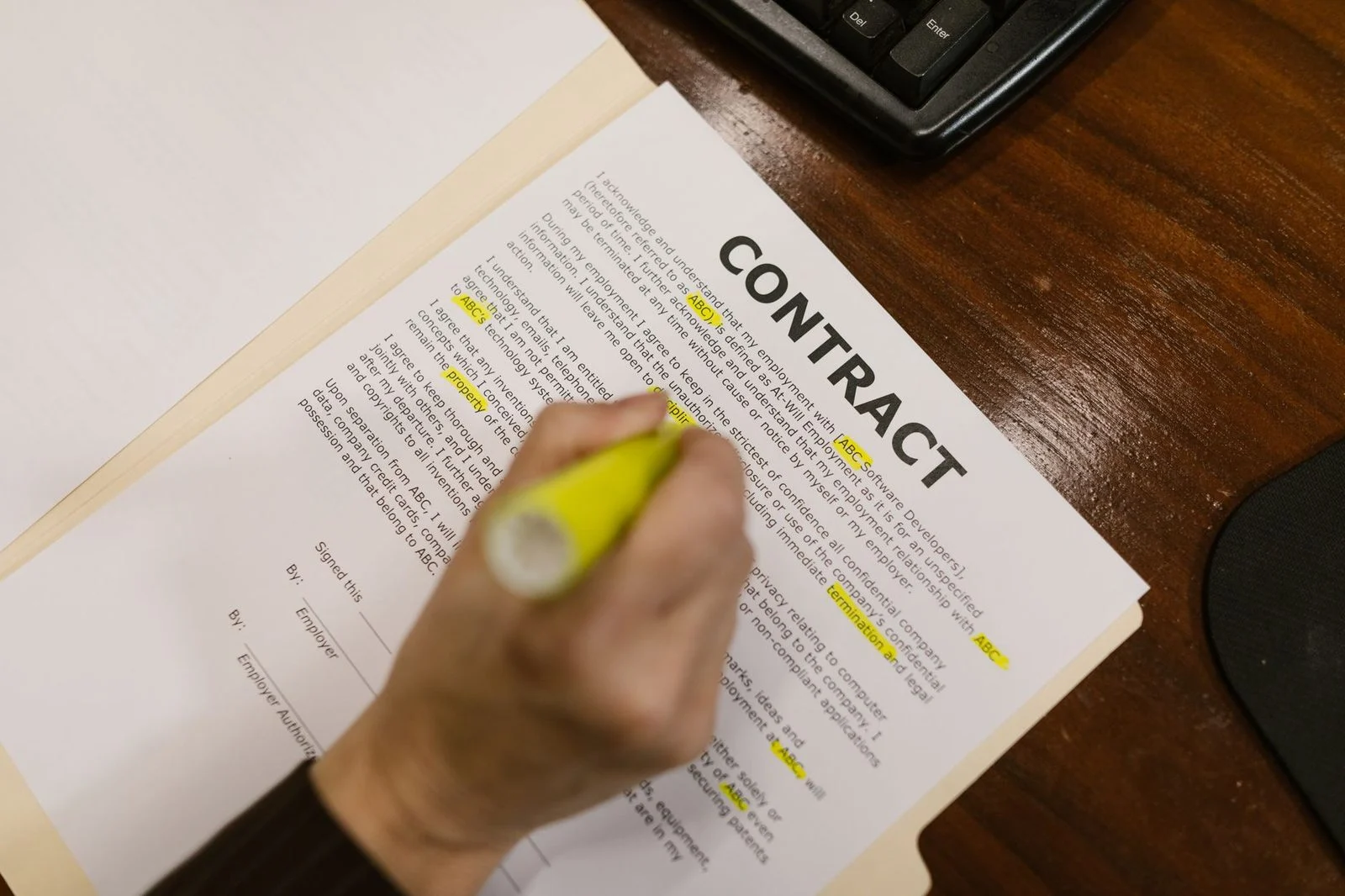
If You Already Have a Notice in Hand
If you hold a default or termination notice, the cure deadline may be short. You don’t have to sort out the clause, the calendar and your options alone.
Getting a default letter is stressful. So is sending one for a business you co-own or manage. Notices like these often set tight dates, so reviewing the contract early helps.
Your first consultation is free, confidential, and comes with no obligation to continue. Call 305-990-2300 or reach out through our contact page to talk through the clause and the cure window.
Why this clause deserves attention
Defines the steps
A notice and cure clause sets out how a breach must be described in writing and what the other party is asked to do in response.
Sets the timing
The contract states the period given to fix a problem, so both sides know how the process is supposed to run.
Protects both sides
Clear notice terms reduce confusion over whether a problem was raised properly and whether it was addressed.
Shapes your options
How the clause is written can influence whether a dispute stays a simple fix or moves toward termination or litigation.
Review the notice terms before you act
Before you send or respond to a breach notice, have the contract's notice and cure language reviewed. Small details about delivery, wording and timing can matter.
Questions we help business owners work through
Extending a cure period
Find out what the contract says about extensions and whether any change needs to be put in writing.
Termination for convenience
Understand how an exit that does not depend on a breach may relate to the notice terms in your agreement.
Written notice requirements
Check how the contract requires notice to be sent, to whom, and by what method.
Drafting before a dispute
Build clear notice and cure language into new vendor, partner and lease agreements from the start.
Talk with KEW Legal about your business contract
Related practice areas
- Business Contract And Vendor Dispute Attorney
- A Subcontractor Walked Off Our Condo Project
- My Brand Assets Are Held by a Former Vendor
Request a Consultation
Fill out the short form and we will take it from there.