
Commercial Contracts | Coral Gables and Sunny Isles Beach
A Hurricane Hits. Does Your Contract Still Hold?
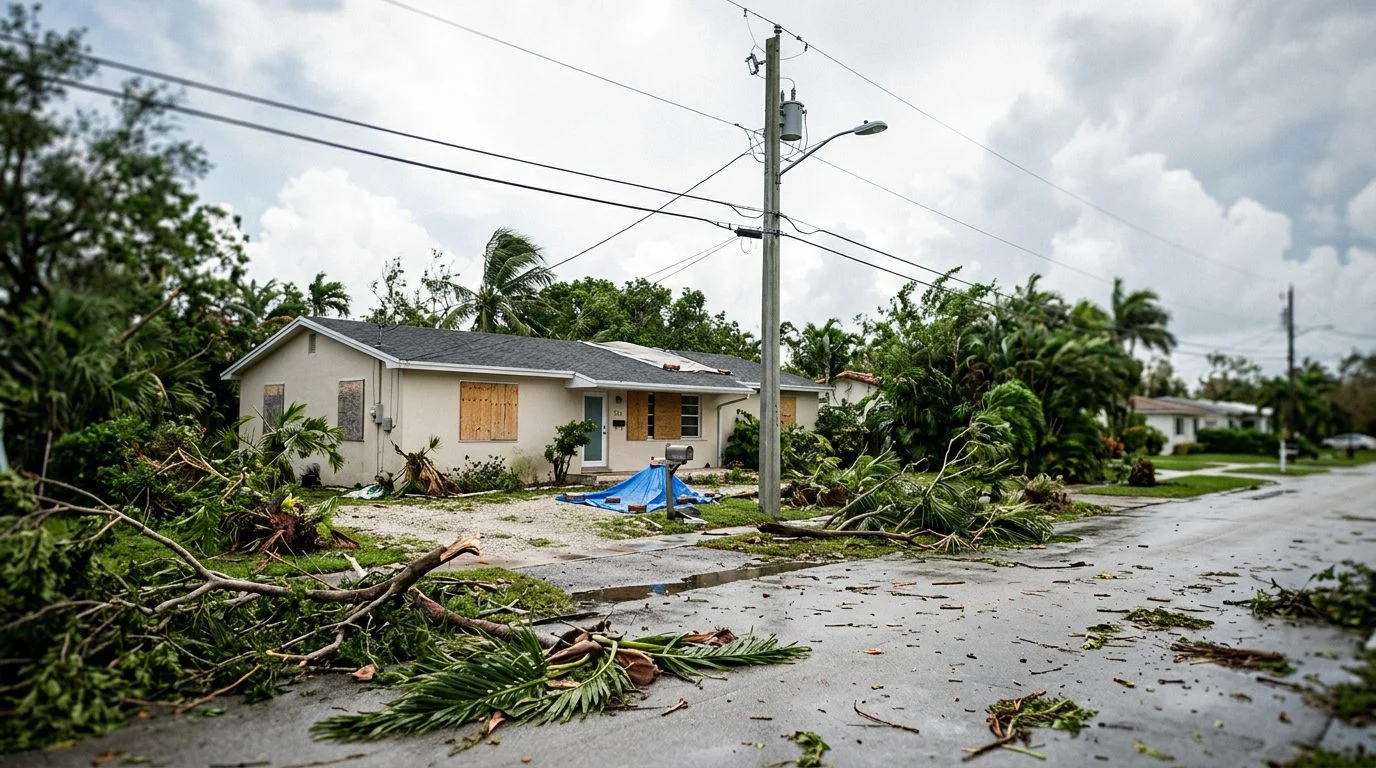
Storm damage can stall a lease, a vendor order or a partnership obligation overnight. Here is how business owners can start sorting out their options with counsel.
By Kristina E. Wilson · Published November 16, 2026
A storm has left you unable to deliver, pay, or finish work a contract requires. Your first question is probably whether the contract excuses you, and the force majeure clause answers that question.
Notice steps and what you do after the storm can also decide the result.
The Short Answer: The Contract Wording Controls
The starting point is the language the parties signed.
Enforceability is not automatic. Three questions usually matter:
- Does the clause cover this event, by name or through broader wording?
- Did the event actually prevent you from performing?
- Did you take the steps the clause requires, such as written notice?
Missing one of these can leave you exposed, even when the storm was severe. Florida courts usually treat a required step as a condition only when the contract’s words plainly require it. In a Florida Fourth District Court of Appeal decision, the court, quoting an earlier decision, explained: “As a general rule, conditions precedent are not favored, and courts will not construe provisions to be such, unless required to do so by plain, unambiguous language or by necessary implication.”
If a storm has left your vendor, tenant, or project stalled, you don't have to read the clause alone, so talk it through with KEW Legal. Talk it through with our team — the first consultation is free, confidential, and carries no obligation.
What Is a Force Majeure Clause and What Does It Cover?
The phrase is French for “superior force.”
Typical lists name hurricanes, floods, fires, government orders, and labor disruptions. Some clauses use broader words, such as “acts of God,” “natural disasters,” or events “beyond reasonable control.” The list decides what the clause excuses. An event that is not named, and not covered by broad wording, may fall outside it.
The clause also decides what kind of relief you get. Some clauses only pause performance until the event passes. Others let a party end the contract. Check which one your contract describes before you act.
A clause may cover delivery deadlines but not payment duties. Read which obligations it names. For a broader look at vendor problems, see our business contract and vendor disputes page.
Acts of God and Hurricanes: How the Language Is Read
Many clauses use “act of God” or “natural disaster” instead of the word hurricane. A storm then falls under that phrase, and the words around it shape how the phrase is read.
Foreseeability is a common argument. A party may argue that a storm was foreseeable when the contract was signed, so the risk should have been planned for. A contract written with storms in mind may be read differently from one that never mentions weather.
A common mistake is assuming “act of God” covers any storm. The phrase still has to match the event and the effect it had on your performance. Write down what the clause says and what the storm did, side by side.
Is Bad Weather Considered Force Majeure?
A named storm with documented damage is far more likely to be argued as a qualifying event.
A few days of rain, heat, or wind may slow a job. Slowing down is not always the same as being unable to perform. Whether a particular storm qualifies turns on the facts and the clause’s words.
Compare what the storm actually did with the clause’s terms. Look at a flooded site, a closed road, damaged inventory, or an evacuation order. Keep records from the start. Save dated photos, damage reports, closure orders, and messages from suppliers and tenants. These records show what the storm did and when. They don’t settle the question on their own.
Drafting Issues That Change the Result
Small word choices can change the answer. “Due to” and “as a result of” may look alike, but a clause may require that the storm cause the failure.
A clause may excuse performance that is prevented, not performance that is only more costly. Words like “prevented,” “delayed,” and “hindered” set different limits. Read them closely.
“Reasonable control” and “foreseeable” wording also matter. The other side can argue that your problem was within your control or should have been foreseen.
Watch “shall” and “may.” A clause that says a party “may” end the contract gives a choice. A clause that says “shall” can set a required path. Also check whether the excuse lasts only as long as the event does.
Notice Requirements: The Deadline That Is Easy to Miss
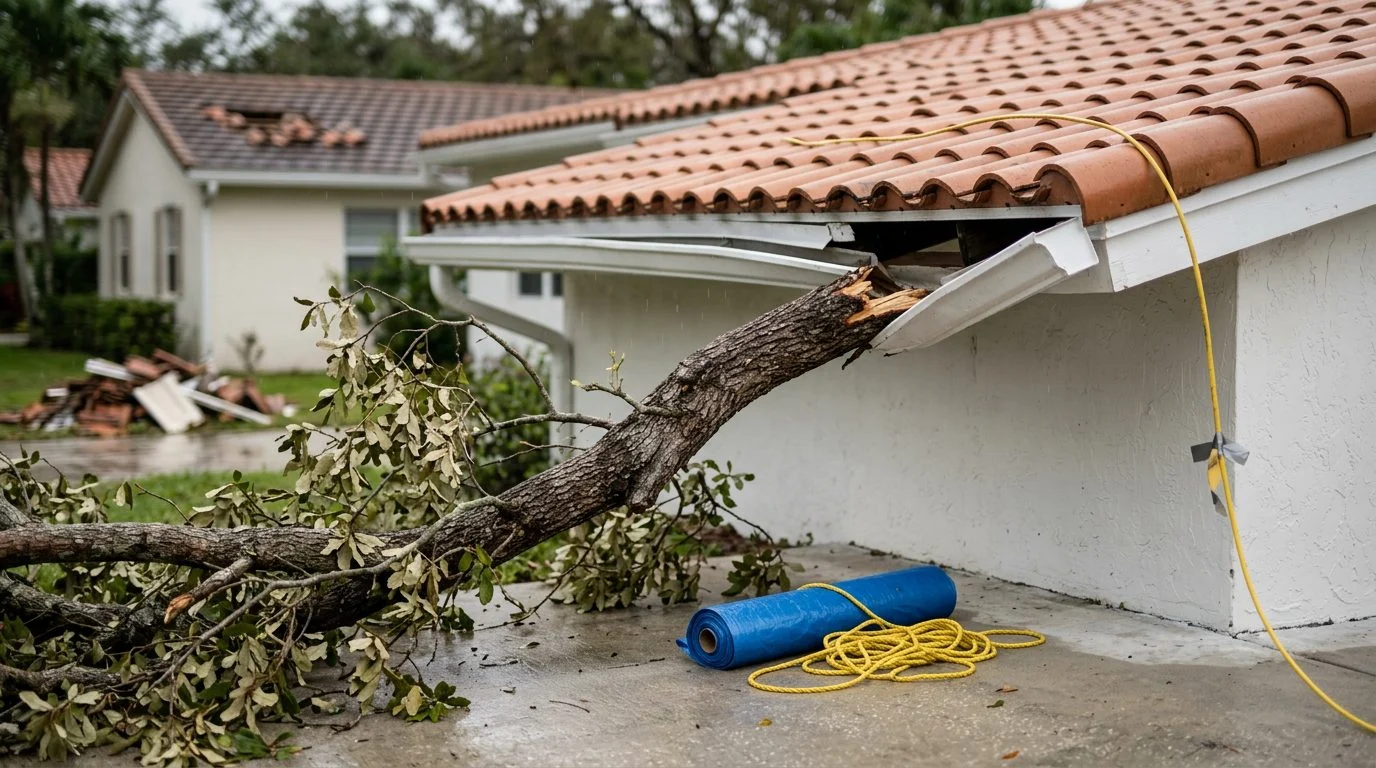
Many force majeure clauses require written notice within a set time after the event. The notice often must describe the event and its expected effect on your work.
Missing that step can cost you the clause’s protection, even when the hurricane itself qualifies. Florida defines a condition precedent as an act or event that must occur before there is a right to immediate performance and before there is a breach. See Land Co. of Osceola County. If the clause makes notice a condition, the timing matters to whether a breach exists.
Goods contracts have their own notice rule. A buyer that accepted goods must notify the seller of a breach within a reasonable time after discovering it or should have discovered it, or it may be barred from any remedy. See Fla. Stat. § 672.607. See Fla. Stat. § 672.607.
Review the notice section as soon as storm effects are known. Mark the deadline. Keep a copy of every notice you send and proof it was delivered.
Not sure what your next step is?
Talk it through with our team — the first consultation is free, confidential, and carries no obligation.
The Duty to Mitigate and Resume Performance
Many contracts expect a party relying on force majeure to limit the disruption. Examples include finding an alternative supplier, renting temporary space, or moving work to a site that is still open.
Once the event ends, many clauses require you to resume performance. Continuing to rely on the excuse after the storm has passed can weaken your position. Keep a written timeline showing when the event started, when it ended, and when you resumed.
Partial performance can matter. Some clauses excuse only the affected part of an obligation, so you may still owe the rest. Document what you did deliver.
Goods contracts also address a party that signals it won’t perform. Under Fla. Stat. § 672.611, the repudiating party can retract until its next performance is due, unless the other side has already canceled or materially changed position or otherwise indicated that it considers the repudiation final.
If there are reasonable grounds for insecurity about whether either party to a contract for sale will perform, you may demand adequate assurance of due performance in writing under Fla. Stat. § 672.609. After a justified demand, failing to give adequate assurance within a reasonable time not exceeding 30 days is a repudiation of the contract.
When the Contract Has No Force Majeure Clause
Without a clause, the answer falls back on general contract rules, and those rules turn on the facts.
Start by identifying the type of contract. If the deal is mainly about goods, Article 2 of the Uniform Commercial Code applies. A service or project contract may follow different rules.
Part I of Chapter 83 governs nonresidential tenancies and all tenancies not governed by Part II of Chapter 83. A landlord or tenant facing a storm-related default should review that part along with the lease.
Don’t assume a doctrine applies just because a storm occurred. The contract’s terms and the specific facts still decide the question.
Talk Through Your Contract With KEW Legal
A hurricane may leave a vendor, tenant, or project unable to perform, and the contract still decides what each side owes.
Does a hurricane excuse performance under a Florida contract?
You need both.
Do I have to give notice to invoke a force majeure clause?
Check the clause. If it requires notice, a missed step can matter, because Florida treats a condition precedent as an event that must occur before a breach exists.
Does a force majeure clause end the contract or only pause it?
It can do either, depending on its wording. Some clauses only suspend performance, while others let a party end the contract.
Does the UCC apply to a service contract in Florida?
Article 2 covers transactions in goods.
If a storm has left you unable to perform, or waiting on a party that can’t, you shouldn’t have to read the clause alone. Bring the contract, every notice you sent or received, and your storm records to Kristina E. Wilson, the attorney responsible for this page, at KEW Legal’s Coral Gables office. KEW Legal also has an office in Sunny Isles Beach and serves Miami-Dade and South Florida businesses. The initial consultation is free, confidential, and carries no obligation to continue. Call 305-990-2300 or contact us.
Before You Stop Performing
Read the force majeure wording and any notice requirement in your contract before you stop performing or send a notice, because a missed step can change the outcome.
Questions to Review in Your Contract
Does the clause name the event?
Find out whether the language covers hurricanes, storms, flooding or government closures, or only general 'acts of God.'
What notice is required?
Some clauses require written notice within a set period. Check the procedure and who must receive it.
What happens next?
Look for suspension, termination, cost-sharing or renegotiation terms that may apply while the disruption lasts.
How KEW Legal Works With Business Owners
Outside General Counsel
We act as ongoing outside general counsel for business owners and investors, so storm-related questions get handled by a lawyer who already knows the company.
Commercial Focus
Our practice centers on partnership, vendor, contract, lease and investment property matters across Miami-Dade and South Florida.
Coral Gables and Sunny Isles Beach
Our offices in Coral Gables and Sunny Isles Beach serve clients throughout Miami-Dade and Broward County.
Free First Consultation
The first consultation is confidential and free, with no obligation to continue.
Talk Through Your Contract Before the Next Deadline. The First Consultation Is Free, Confidential and Carries No Obligation to Continue.
Request a Consultation
Fill out the short form and we will take it from there.