
Selling a commercial property in Florida is not just a real estate transaction. It is a business decision that affects your timeline, tax exposure, liability, and net return. In today’s market, deals fall apart less because of price and more because of legal gaps, unclear documents, or poorly managed risk.
According to National Mortgage Professional, nearly 15% of real estate transactions fail to close. Commercial deals are even more vulnerable because they involve contracts, entity ownership issues, financing contingencies, and extended due diligence. One issue can derail the sale late in the process.
That is where preparation makes the difference.
At KEW Legal®, we approach commercial property sales with a business-first mindset. The goal is not to over-lawyer the deal, but to remove friction, protect your interests, and make sure the legal structure supports a clean closing. Clear answers, tight contracts, and no unnecessary delays.
This guide walks you through how to sell commercial property in Florida in 2026, step by step, with a focus on valuation, risk management, contracts, and closing the deal without surprises.
Key Takeaways
- Verify ownership authority and entity documents before listing the property.
- Clear title issues and organize due diligence materials early to avoid delays.
- Strong contracts and written disclosures reduce deal-breaking risk.
- Financing, interest rates, and fraud concerns make legal precision more important than ever.
- A business attorney helps protect your position from LOI through closing.
How Selling Commercial Property in Florida in 2026 Looks Different
Florida’s commercial real estate market remains active in 2026, but the way deals get done has changed. Investor interest is still strong, especially in multifamily, industrial, and mixed-use assets. At the same time, buyers are more selective, lenders are cautious, and transactions are taking longer to close.
Market data from CBRE shows that a large share of commercial investors plan to continue acquiring assets, but underwriting standards have tightened. Buyers are scrutinizing financials, leases, and legal structures more closely than in prior years. That means sellers need to be precise, not just competitive on price.
Interest rates are still elevated compared to pre-2022 levels, which affects financing timelines and deal certainty. More contracts now include detailed financing contingencies, longer diligence periods, and stricter termination rights. If these provisions are not clearly drafted, sellers can face delays late in the process.
Risk management is also front and center. Wire fraud, title defects, unresolved liens, and incomplete disclosures are common reasons commercial deals stall or fail. Florida sellers must stay alert, verify instructions independently, and use secure closing procedures.
In this environment, successful sales come down to preparation. Clean entity records, organized due diligence materials, and well-structured contracts reduce friction and increase the chances of a clean closing. In 2026, selling commercial property in Florida is less about speed and more about precision.
How to Know What Your Commercial Property Is Worth in 2026
Valuing a commercial property in Florida still starts with fundamentals. Most buyers focus on three core factors.
1. Income and Operating Performance
Net operating income, rent rolls, expense statements, and lease terms drive value. Buyers want to see consistent income, realistic expenses, and leases that are enforceable and documented. Incomplete or outdated financials raise red flags.
2. Market Conditions and Cap Rates
Cap rates continue to reflect higher borrowing costs. Even well-located properties may be priced more conservatively than in prior years. Sellers who understand current cap rate ranges for their asset class are better positioned to price and avoid negotiations.
3. Legal and Ownership Structure
How the property is held matters. If the asset is owned by an LLC, partnership, or trust, buyers will review entity documents closely. Missing agreements, expired registrations, or unclear writing can delay valuation approval or cause lenders to pause the deal.
8 Steps for Selling Commercial Property in Florida in 2026
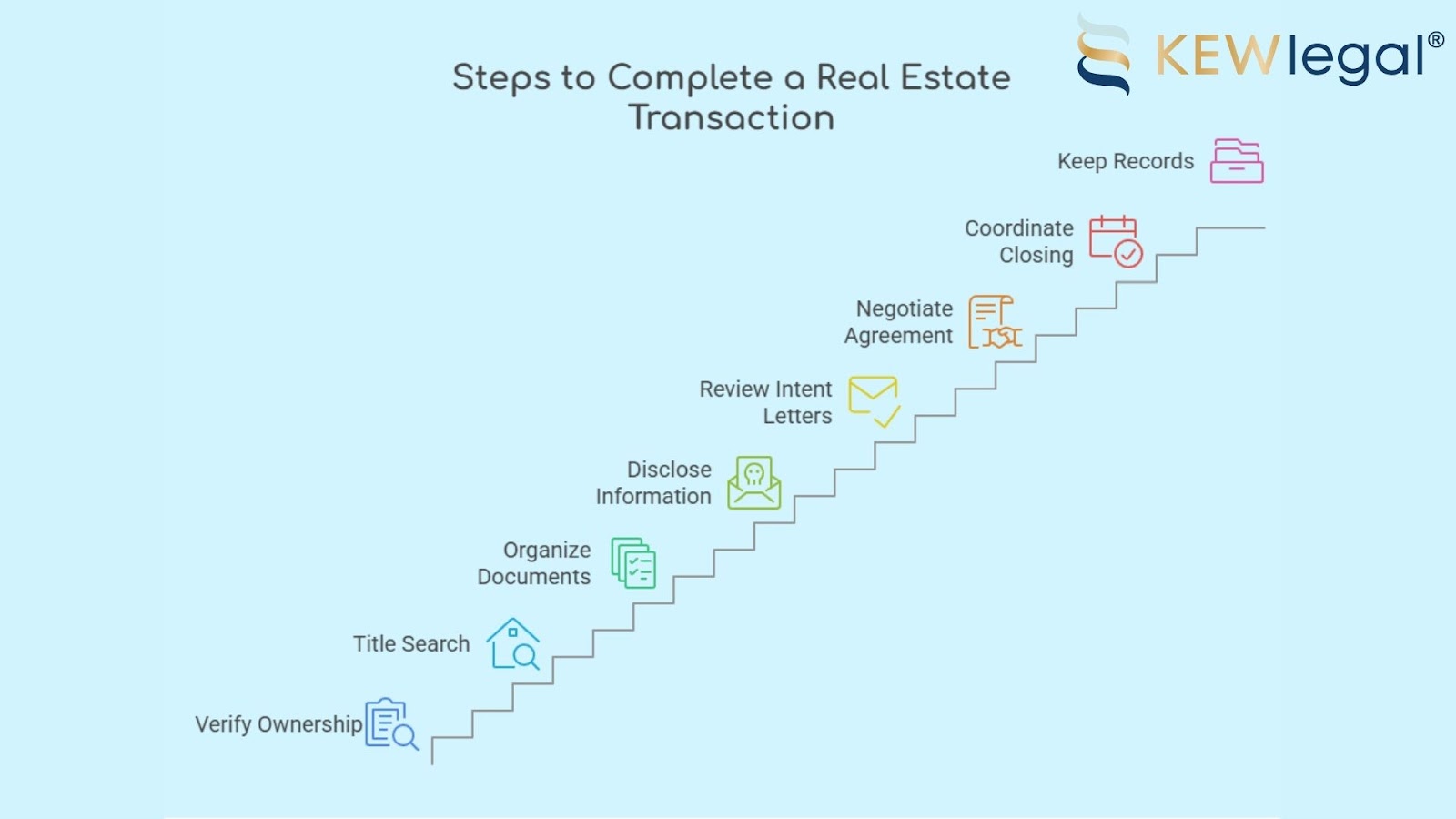
Every commercial sale follows the same general path, but each step carries legal and financial decisions that can either protect the deal or slow it down. Handling these steps in the right order helps avoid delays, renegotiations, and last-minute surprises.
Step 1: Verify Legal Ownership and Authority to Sell
Before listing the property, confirm who legally owns it and who has authority to sign.
If the property is owned by an LLC, partnership, or trust:
- Confirm the entity is active and in good standing
- Review the operating agreement, partnership agreement, or trust documents
- Prepare a written resolution authorizing the sale
- Confirm who is authorized to sign contracts and closing documents
Buyers and lenders will require proof of authority. Sorting this out early prevents delays once the deal is under contract.
Step 2: Order a Title Search Early
A full title search confirms ownership and identifies issues that could affect the sale, such as:
- Liens or unpaid taxes
- Easements or use restrictions
- Boundary or survey discrepancies
- Title defects from prior transfers
The American Land Title Association reports hundreds of millions of dollars paid out annually in title claims. In Florida, unresolved title issues are a common cause of delayed or failed closings. Ordering a title search early gives you time to fix problems before a buyer is involved.
Step 3: Organize Due Diligence Documents
Commercial buyers expect transparency and documentation. Preparing these materials in advance speeds up negotiations and builds buyer confidence.
Common due diligence documents include:
- Current leases and estoppel certificates
- Rent rolls and operating statements
- Surveys and site plans
- Zoning verification and permits
- Environmental reports (Phase I or II, if applicable)
- Certificates of occupancy
- Loan payoff information
Buyers typically request 30 to 60 days for due diligence. Sellers who are organized reduce follow-up questions and keep the timeline on track.
Step 4: Disclose Material Information in Writing
Florida still follows a form of caveat emptor for commercial property, but sellers cannot hide known material defects.
Disclosures should include:
- Structural or environmental issues
- Code violations or open permits
- Pending litigation or disputes
- Known tenant defaults or conflicts
- Unpaid assessments or taxes
Put disclosures in writing and include disclaimers stating that buyers must perform their own due diligence. Clear disclosure reduces the risk of post-closing claims and strengthens your legal position.
Step 5: Review Letters of Intent Carefully
A Letter of Intent sets expectations for the deal and often drives the final contract terms.
Key items to review include:
- Purchase price and deposit amount
- Financing and inspection contingencies
- Due diligence timelines
- Closing date and extensions
- Whether the LOI is binding or non-binding
Vague language can cost leverage later. Before signing, confirm that the LOI reflects the deal you actually want and does not lock you into unfavorable terms prematurely.
Step 6: Negotiate a Strong Purchase Agreement
The purchase agreement controls the transaction. Every deadline, obligation, and risk allocation should be clear.
A well-drafted agreement should:
- Define deposit and default remedies
- Clearly allocate risk during due diligence
- Address financing failures and extensions
- Limit seller liability with caps and survival periods
- Specify what is included and excluded from the sale
In a cautious financing environment, unclear contract language is one of the most common reasons deals fall apart. Boilerplate templates rarely account for current market risks.
Step 7: Coordinate a Clean and Secure Closing
Commercial closings in Florida often take 75 to 90 days, depending on diligence and financing.
Before closing:
- Clear liens and title issues
- Finalize estoppels and tenant documents
- Confirm wire instructions verbally to prevent fraud
- Review prorations, payoff statements, and settlement statements carefully
Mistakes at closing can delay funding or create disputes after the fact. Attention to detail matters.
Step 8: Keep Records and Close the Loop Properly
After closing, retain copies of:
- Purchase agreements and amendments
- Disclosure materials
- Settlement statements
- Escrow and wire confirmations
- Communications related to the transaction
Florida real estate professionals must retain records for at least five years, and sellers should do the same. These documents protect you if questions, audits, or disputes arise later.losing.
Should You Sell On Your Own or Hire a Business Attorney?

It is legally possible to sell a commercial property in Florida without a business attorney. But in practice, doing so shifts risk onto you, often at the most expensive point in the deal.
Commercial real estate transactions involve more than a purchase price. They include entity authority, disclosure obligations, financing contingencies, tax considerations, and liability exposure that standard residential deals rarely touch.
A single drafting error, missed disclosure, or unclear contract term can delay closing or trigger post-sale disputes. A business attorney’s role is not to slow the deal down. It is to keep it from breaking.
An experienced attorney helps by:
- Verifying ownership authority and entity compliance
- Reviewing and negotiating LOIs before leverage is lost
- Drafting and tightening purchase agreement terms
- Limiting seller liability through caps, disclaimers, and survival clauses
- Coordinating with brokers, title companies, and lenders
- Spotting risks that do not appear until late-stage diligence
In a market where buyers are cautious and lenders are strict, contracts must be precise. Boilerplate forms and informal agreements often fail when scrutiny increases. Legal review confirms the business terms you agree to are enforceable and aligned with your goals.
For sellers looking to protect their time, capital, and reputation, legal guidance is not an extra. It is part of running a clean transaction.
Want Legal Clarity Before You List?
Selling commercial property is not just about getting an offer. It is about closing without delays, disputes, or loose ends that come back later.
If you want practical legal guidance that supports the business side of your deal, KEW Legal® is built for that. We focus on clear answers, tight documents, and protecting your position from the first conversation through closing.
Talk with a business and real estate attorney who understands Florida commercial transactions and knows how to keep deals moving.
Get in touch with us here to take the next step.