

Employer Guide | Coral Gables and Sunny Isles Beach
How to Handle Employee Disputes in Florida: A Practical Guide for Employers
Document the facts, respond in writing on a short timeline, and check Florida and federal deadlines before you act. KEW Legal focuses on employment law for employers across Miami-Dade and South Florida.
By Kristina E. Wilson · Published October 31, 2026
The Short Answer: How Florida Employers Usually Handle Employee Disputes
Most employee disputes are handled in three steps. First, document the facts. Second, respond in writing on a short timeline. Third, check the Florida and federal deadlines before you take any action.
This approach usually keeps the issue narrow. It also gives you a clear record if the matter moves to a state agency or a court. Many disputes get worse because of a quick reply that was vague, late, or written in anger.
This guide covers the dispute types that employers in Miami-Dade and Broward County see most often. These include discrimination, harassment, retaliation, pay disputes, resignations, terminations, workplace conduct, and threats.
The right next step depends on the facts. A single comment and a pattern of conduct call for different responses. Keep that in mind as you read.
If you just received an employee complaint or a resignation letter and aren't sure what comes next, we can talk through your options with you. Talk it through with our team — the first consultation is free, confidential, and carries no obligation.
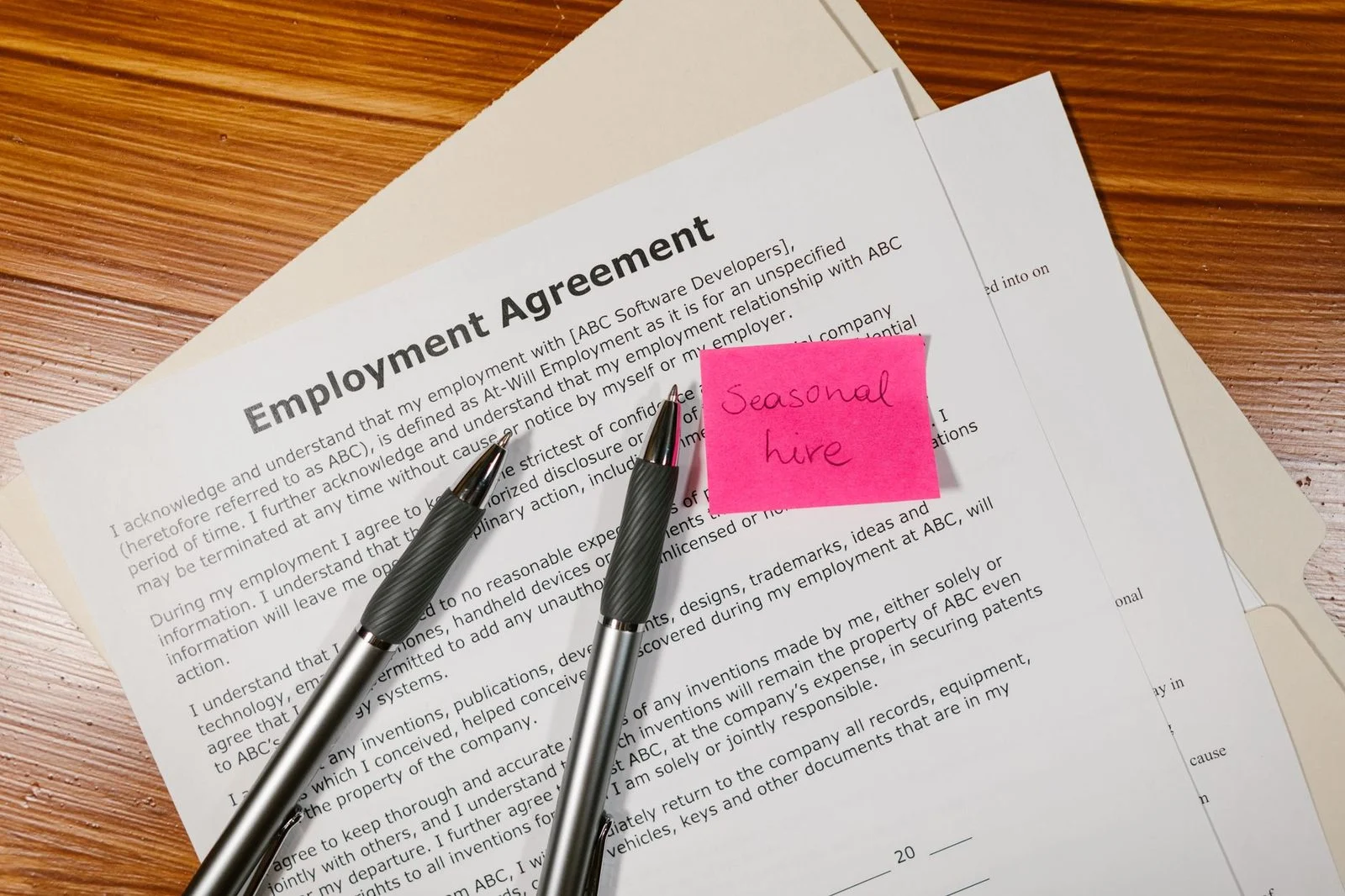
Document the Facts Before You Respond
The first thing to do is gather the facts in writing. Do this before you answer the employee or make any decision. A good file makes every later step easier.
Start by collecting the employee’s written complaint, if there is one. Add the policies that apply, the employment file, work schedules, pay records, and any messages tied to the dispute. Keep these in one place.
Next, write a dated timeline of events. Separate what someone saw or heard firsthand from what was reported to you or assumed. This split matters later, because a reviewer will want to know which facts are solid.
Preserve emails, texts, and messaging app records. Do not delete or edit anything once a dispute is reasonably foreseeable. Deleted messages can look worse than the messages themselves.
Finally, list the people who witnessed the events. Note whether any manager who will make a decision has a personal stake in the outcome. That person may need to step back from the decision.
Federal and Florida Rules That Commonly Apply to Employers
Florida’s main workplace discrimination law is the Florida Civil Rights Act. It bars an employer from discriminating in pay, terms, conditions, or privileges of employment because of race, color, religion, sex, pregnancy, national origin, age, handicap, or marital status. See Fla. Stat. § 760.10 for the full list of unlawful practices.
The ban on employment discrimination applies to an employer, and under Fla. Stat. § 760.02 an employer is a person employing 15 or more employees for each working day in each of 20 or more calendar weeks in the current or preceding calendar year. See Fla. Stat. § 760.02 for that definition.
Deadlines matter. Any person aggrieved by a violation may file a complaint with the Florida Commission on Human Relations within 365 days of the alleged violation. The complaint can also go to the federal Equal Employment Opportunity Commission, and the earliest filing date controls. See Fla. Stat. § 760.11.
Once a complaint is filed, the Commission sends a copy to the accused employer within 5 days. The person accused of the violation may file a verified answer within 25 days of the date the complaint was filed with the Commission. The Commission must decide within 180 days whether there is reasonable cause to believe discrimination occurred. These steps appear in the same statute.
Your own written policies matter too. Under Florida case law, a policy manual usually does not create an enforceable contract unless it says clearly that it is a separate employment contract. See Quaker Oats Co. v. Jewell. Even so, applying your policies the same way to every employee avoids many disputes.
Respond in Writing on a Short Timeline
A prompt, factual written reply usually works better than an informal talk alone. A talk can be useful, but it leaves no record of what was promised or said. A written reply gives both sides a shared starting point.
A neutral reply does four things. It acknowledges the concern. It describes the steps you are taking, such as a review or an investigation. It avoids admissions of fault until the facts are clear. It keeps the tone calm and professional.
Stick to facts in the reply. Avoid guessing about the employee’s motives or making comments about their character. Those comments can be quoted later.
Resignations need the same care. Confirm the date the resignation takes effect and write down the reason the employee gave, if any. Review what pay the employee is owed and document how you handled it.
For more on this topic for Miami employers, read our guide, Workplace Disputes for Miami Employers: Florida Guide.
Discrimination, Harassment, and Hostile Work Environment Claims
A discrimination claim usually turns on whether a protected trait played a role in how someone was treated. Florida law covers pay, assignments, and other terms of employment. See Fla. Stat. § 760.10.
Common examples include unequal pay or work assignments tied to sex, race, or another protected trait. Another example is an employment decision based on age or pregnancy. Each one needs a careful review of the facts and the reasons behind it.
A hostile work environment claim is different. It looks at conduct that keeps repeating.
After a harassment complaint, act quickly. Investigate promptly and document what you find. Consider interim steps, such as changing the schedule or the reporting line, while the investigation continues. Write down every step, including the reasons for it.
Keep the people who report concerns protected. Retaliation against them is a separate problem, covered in the next section.
Retaliation and Whistleblower Complaints
Retaliation means taking an adverse action against an employee because the employee opposed an unlawful practice, made a charge, testified, assisted, or participated in any manner in an investigation, proceeding, or hearing. Florida law bars this under the Civil Rights Act. See Fla. Stat. § 760.10.
Florida’s private-sector whistleblower law also has its own rules. It applies to an employer that employs ten or more persons. See Fla. Stat. § 448.101.
Under that law, an employer may not retaliate against an employee who objects to or refuses to join a practice that violates a law, rule, or regulation. See Fla. Stat. § 448.102. For disclosures to a government agency, the employee must have first raised the issue in writing with a supervisor or the employer and given the employer a reasonable opportunity to correct it, and the disclosure itself must be made under oath and in writing.
Timing also matters. An employee generally has 2 years after discovering the retaliatory action, or 4 years after it was taken, whichever is earlier. See Fla. Stat. § 448.103.
When an objection arrives, review the allegation promptly. Consider whether the person who made the decision was involved in the issue. Make sure any employment action has a documented, legitimate reason.
Not sure what your next step is?
Talk it through with our team — the first consultation is free, confidential, and carries no obligation.
Pay, Commission, and Bonus Disputes
Pay disputes usually turn on two things: the written pay terms and the actual payment history. Start by pulling the signed agreement, the written compensation plan, and every pay record for the period in question.
The most common disputes involve unpaid wages, disputed hours, commission math, and bonus eligibility. Check each one against the plan’s exact wording. Small wording differences often decide the issue.
Florida’s minimum wage law sets a clear process when a claim is made. The employee must first give the employer written notice of the claim. The employer then has 15 calendar days after receiving the notice to pay the unpaid wages or resolve the claim. See Fla. Stat. § 448.110.
If an employee wins a minimum wage claim, the employee may recover the unpaid back wages plus an equal amount as liquidated damages, unless the employer proves a good-faith defense. Under Fla. Stat. § 448.110(6)(c), if the employer proves by a preponderance of the evidence that the act or omission behind the claim was in good faith, and that it had reasonable grounds for believing it was not violating s. 24, Art. X of the State Constitution, the court has sound discretion to award no liquidated damages at all, or a liquidated amount no greater than the unpaid minimum wages. Liquidated damages are extra damages set by the statute. The employee also recovers reasonable attorney’s fees and costs. See the same statute.
Overtime is another source of confusion. See 29 C.F.R. 541.600. Review each role against the applicable exemption requirements before you assume it is exempt.
Terminations, Resignations, and Off-Duty Conduct
A termination should rest on a documented, consistently applied reason. Compare the decision with how you treated employees in similar situations. Inconsistency is often what turns a routine firing into a dispute.
Florida is generally an at-will employment state. An at-will employee may be discharged at any time, as long as the reason is not one the law prohibits. Under the Florida Minimum Wage Act, retaliation and discrimination against a person for exercising minimum wage rights under s. 24, Art. X of the State Constitution are prohibited. See Fla. Stat. § 448.110(5).
Off-duty conduct, including social media posts, needs a close look. The key question is how the conduct connects to the job. Do not assume that anything an employee does outside work is grounds for discipline. Review the facts first.
Before you tell the employee about a decision, review the file. Check prior warnings, performance reviews, and any signed agreement. Make sure the stated reason matches the record.
References are another area of risk. That immunity does not apply if the information was knowingly false or violated a civil right under chapter 760, and the challenger must show that by clear and convincing evidence. See Fla. Stat. § 768.095.
Recording, Threats, Unemployment Claims, and Garnishment After a Dispute
Threats and secret recordings can make a dispute harder to resolve. Treat any threat as a serious matter. Save the messages in their original form, with dates and sender details, and do not delete them.
Be careful with recordings. Recording a conversation without understanding the rules can create new problems for the employer. If you are unsure whether a recording is allowed, speak with counsel before you make one.
A former employee may file for unemployment benefits after a separation. Your written response to the state agency becomes part of the record. Keep it factual and consistent with your personnel file.
If a wage garnishment order reaches your business, read it closely and respond by the date it states. Keep a copy and log every step you take.
Working With Outside Counsel in Miami-Dade and Broward
Outside general counsel is useful when a dispute carries legal exposure. That includes an agency charge, a demand letter, a lawsuit threat, or a dispute likely to escalate. Early review often keeps the issue manageable.
KEW Legal is a Florida business law firm with offices in Coral Gables and Sunny Isles Beach. The firm serves business owners and investors across Miami-Dade and South Florida, including clients in Miami, Doral, Brickell, Aventura, and Fort Lauderdale. The firm also works with clients in Broward County.
Kristina E. Wilson is the responsible lawyer for this page. The firm’s lawyers include Natalie Martinez. Our team supports the lawyers with day-to-day office work.
KEW Legal handles employment law for employers as part of its broader business practice. It also handles partnership disputes, vendor and contract disputes, commercial leases, and business succession planning. Each matter turns on its own facts.

Talk Through Your Employee Dispute With KEW Legal
If you have just received a complaint, a resignation, a pay demand, or a termination question, you do not have to decide the next step alone. Early, organized handling often makes the situation easier to manage. We can help you sort through the facts and the options.
Call 305-990-2300 or send us a message through our contact page. The first consultation is free, confidential, and carries no obligation to continue.
This guide gives general information. Each employee dispute turns on its own facts, so the right response depends on your situation.
The Three Steps Most Employers Follow
1. Document the Facts
Write down what happened, when it happened, and who was involved. Keep copies of relevant emails, schedules, and performance records in one place.
2. Respond in Writing
Reply on a short timeline with a calm, factual written response. A clear reply keeps the issue narrow and creates a record if the matter moves to an agency or court.
3. Check the Deadlines
Review the Florida and federal requirements that may apply before you take action. Acting too quickly or too late can change how the dispute develops.
Warning: Pause Before You Reply
A quick reply that is vague, late, or written in anger is one of the most common ways employee disputes get worse. Review the facts and talk with counsel before you send anything.
How KEW Legal Works With Employers
Outside General Counsel
We act as ongoing outside legal counsel for business owners who need guidance on employee matters as they arise.
Coral Gables and Sunny Isles Beach
Our offices serve employers throughout Miami-Dade, Broward County, and surrounding South Florida communities.
Confidential First Consultation
Your first consultation is free and confidential, with no obligation to continue.
Written Responses and Records
We help you prepare clear, accurate written responses and organize the documents that matter.
Facing an Employee Dispute? Talk With KEW Legal Before You Respond.
Request a Consultation
Fill out the short form and we will take it from there.