

Employment Law for Employers | Coral Gables & Sunny Isles Beach
Employee Offboarding Review for Florida Employers
A departing employee touches access, pay, property, and records all at once. Here is how a legal review keeps each step consistent with your policies and agreements.
By Kristina E. Wilson · Published November 21, 2026
When an employee leaves, a to-do list is not enough. You also need to confirm that each step matches your own policies and the Florida and federal rules that apply. For a Florida employer, a departure comes down to four areas: system access, final pay, records, and notices.
This page explains what a practical offboarding review covers, how it works, and where gaps usually show up.
What an Employee Offboarding Review Is and Who It Is For
An employee offboarding review is a written check of every step you take when someone leaves, whether they resign or you end the job. A checklist tells you what to do. A review asks whether each task fits your written policies, your signed agreements, and the employment rules that apply.
This page is for the owner, manager, or HR lead at a Florida business who is handling a departure now or expects one soon. You may be canceling logins, preparing a final paycheck, and gathering paperwork all at once.
Every role and pay structure needs its own check. A salaried manager with commissions raises different questions than an hourly worker. Match the checklist to the facts of each departure.
Not sure what your next step is?
Talk it through with our team — the first consultation is free, confidential, and carries no obligation.
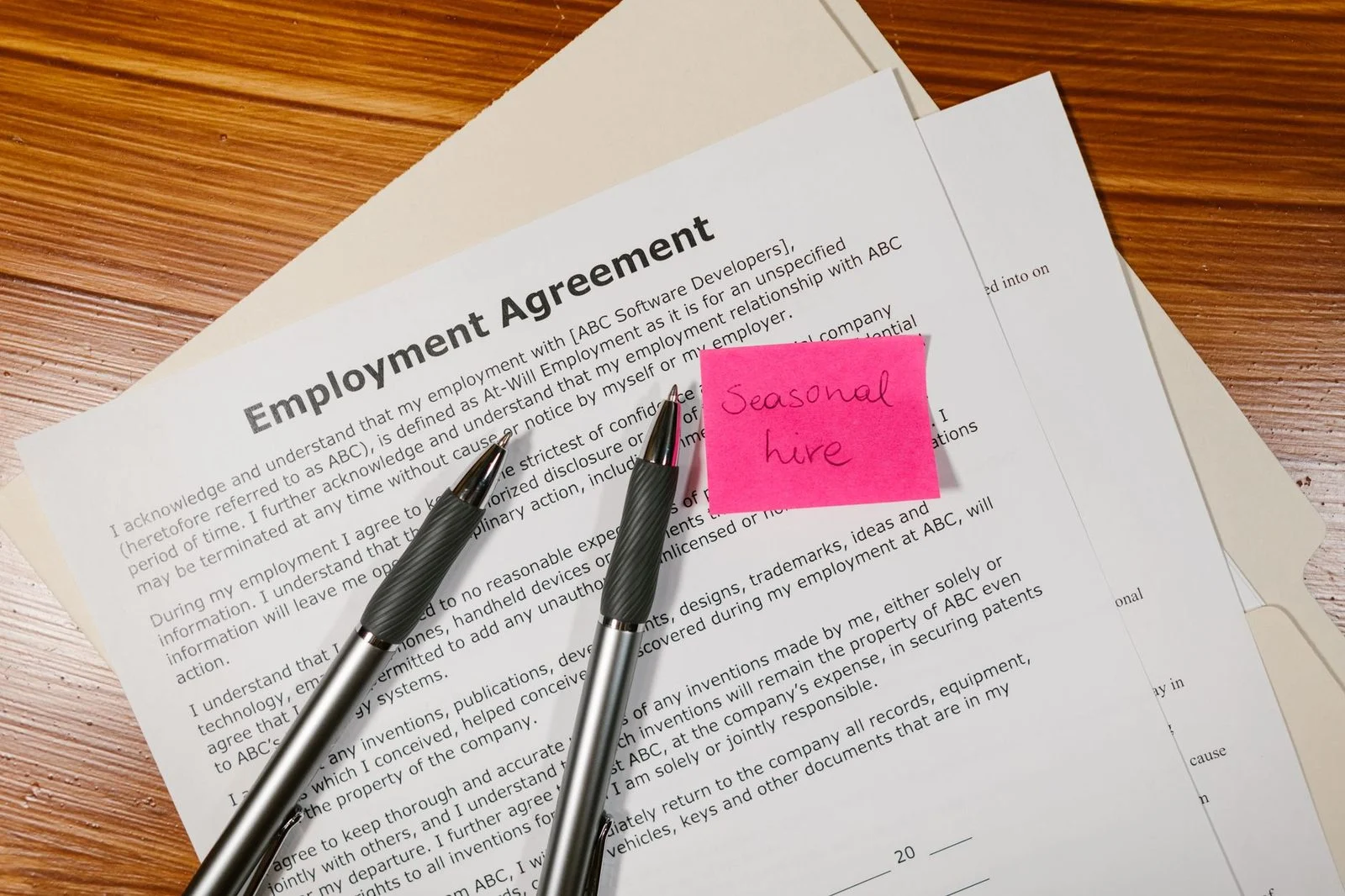
What the Review Covers: Access, Pay, Records and Notices
The review covers four areas: access, pay, records, and notices.
- Access: every system, account, device, and key the employee could use to reach your business.
- Pay: final wages, overtime, paid time off, bonuses, commissions, and deductions.
- Records: the personnel file, payroll and time records, and Form I-9.
- Notices: the separation notice, benefit end dates, and any agreement the employee must still honor.
The review also reads your own documents, including offer letters, your handbook, bonus plans, and any signed confidentiality or non-compete agreement. The four areas connect. A system left open can expose client data. An unpaid amount can lead to a wage claim. A missing notice can leave the employee unsure what they may still do.
You receive a written gap list with corrected steps you can act on.
Access: Systems, Accounts, Devices and Data
Close every route the departing employee has into your business, and record when and by whom each one closed.
- Email, cloud storage, and shared drives
- Payroll, banking, and accounting portals
- CRM, scheduling, and other software tools
- Building access, gate codes, and key cards
- Company phones and laptops, plus personal devices that hold company data or logins
Shared logins need attention. If the employee knew a shared password, change it at separation instead of waiting for a problem. Also check client and vendor contact lists, social media admin rights, and domain or website credentials. Someone who controls your website may still hold the keys.
Keep a dated record of each closure. That record is often what you need when someone asks later what happened. Manager, IT, and finance should each sign off on their part.
Final Pay and Wage Obligations
When an employee’s employment ends, questions about the final paycheck often come up, and Florida’s minimum wage rule is the starting point for them. The Florida Constitution sets that rule for all hours worked in Florida.
Check the final calculation line by line:
- Regular wages through the last day worked
- Overtime, plus any bonus or commission your written plan makes payable
- Accrued paid time off, which turns on your written policy and any agreement
- Training time and other work time that may have been missed
- Deductions for reimbursements or equipment, checked against the employee’s written authorization
Under the federal equal pay provision, any amounts owing to an employee that have been withheld in violation of that provision are deemed unpaid minimum wages or unpaid overtime compensation (29 U.S.C. § 206). Errors carry real cost. A worker who prevails under the Florida Constitution recovers the back wages, the same amount as liquidated damages (an added penalty equal to the back pay), and reasonable attorney’s fees.
Under Florida’s Minimum Wage Act, a worker must first give written notice, and the employer has 15 calendar days to pay or resolve the claim. A court may reduce the penalty only if the employer proves good faith and reasonable grounds (Fla. Stat. § 448.110).
Records and Personnel Files
Payroll records must be preserved for at least 3 years under 29 C.F.R. § 516.5, and basic time and earning cards or sheets must be preserved for at least 2 years from the date of last entry under 29 C.F.R. § 516.6.
Include signed offer and separation papers, performance and discipline records, timekeeping data, and leave records. Keep medical and benefits information apart from the general personnel file.
Form I-9 needs its own check. Federal officers must give at least three business days’ notice before inspecting Forms I-9 (8 C.F.R. § 274a.2). Have the forms ready to produce.
Reference requests often follow a departure. Under Florida law, an employer that gives information about a former employee to a prospective employer on request is immune from civil liability. The exception applies only if the information was knowingly false or violated a civil right under chapter 760, and that must be shown by clear and convincing evidence (Fla. Stat. § 768.095). Use one reference process so every request gets the same answer.
Notices, Benefits and Restrictive Covenants
Your separation notice should match your records, and a non-compete must be in a signed writing to be enforced. Fla. Stat. § 542.335 reads: “(i) No court may refuse enforcement of an otherwise enforceable restrictive covenant on the ground that the contract violates public policy unless such public policy is articulated specifically by the court and the court finds that the specified public policy requirements substantially outweigh the need to protect the legitimate business interest or interests established by the person seeking enforcement of the restraint.”
If you ask an employee to sign a restrictive covenant, a court will not enforce it unless it is set forth in a writing signed by the person against whom enforcement is sought. For a covered noncompete agreement under Fla. Stat. § 542.45, you must provide the proposed agreement at least 7 days before an offer of employment expires or, for a current employee, at least 7 days before the date that an offer to enter into it expires.
An at-will employee can be let go at any time, but not for a reason the law prohibits, such as retaliation or unlawful discrimination (Laguerre v. Palm Beach Newspapers).
Your handbook is not automatically a contract. Request company property return in writing, and review any separation agreement before you present it.
Not sure what your next step is?
Talk it through with our team — the first consultation is free, confidential, and carries no obligation.
How the Offboarding Review Works, Step by Step
The review runs in five steps, from intake to a corrected checklist.
- Intake. You share the employee’s role, start and separation dates, reason for separation, and the relevant agreements, policies, and pay records.
- Document review. Our team checks the offer letter, handbook, bonus and commission plans, and any covenant or confidentiality agreement against the facts.
- Access and pay audit. Each system, account, and final pay item is compared with your records, and gaps are noted.
- Written gap list. You receive a dated list of items that are complete, items that need action, and items that need a decision.
- Corrected checklist and notices. Separation notices and a checklist for future departures are revised, so the next exit runs the same way.
The timeline depends on how many departures, agreements, and systems are involved. A single departure can often be reviewed quickly. A group of departures takes longer.
Why Employers Work With KEW Legal
KEW Legal is a Florida business law firm with offices in Coral Gables and Sunny Isles Beach. It acts as outside general counsel for business owners and investors across Miami-Dade and Broward County, including Miami, Aventura, Doral, Brickell, and Fort Lauderdale.
Because the firm works as outside general counsel, an employment review can fit inside an ongoing legal relationship. Advice on one departure can carry over to your handbook, your agreements, and future separations.
Kristina E. Wilson is the responsible lawyer for this page. The firm’s lawyers include Natalie Martinez. Employment law for employers is one of the firm’s practice areas, alongside partnership disputes, vendor contracts, and commercial leases.
If a matter falls outside what the firm handles, the firm may refer it to another lawyer or firm. If it does, the firm will tell you.
Frequently Asked Questions About Employee Offboarding Reviews
Do I need a review for every departure?
Yes, the review applies to resignations and terminations alike. Access, pay, and records questions come up in both.
Is a checklist enough without a legal review?
A checklist tracks tasks. A review checks whether those tasks match your policies, your agreements, and the wage and notice rules that apply.
Can a review predict how a dispute would end?
No review can promise a result. Any claim’s outcome depends on its facts.
What does the first consultation cost?
La consulta inicial es gratuita, confidencial y sin compromiso de continuar. In English: the initial consultation is free, confidential, and carries no obligation to continue.
Which areas does the review cover?
It covers access, final pay, records, and notices. Restrictive covenant and handbook questions are reviewed as they arise.

Talk With KEW Legal Before the Next Departure Is Final
If an employee is leaving and you’re not sure what to close, you’re probably balancing account cancellations, a final paycheck, and separation paperwork at the same time. That’s the moment when a missed step is easiest to make.
KEW Legal can review access, pay, records, and notices with you while the employee’s accounts and files are still in front of you. Send a message through the contact page or call 305-990-2300 to get started.
What a legal review adds to your checklist
Policy and agreement alignment
We compare each offboarding step against your handbook, employment agreements, and any confidentiality or non-solicitation terms.
System and data access
We help you map which accounts, devices, and records a departing employee can reach, and how each one should be closed.
Timing of pay and notice
We review the final pay and notice steps against the wage rules that apply to your workforce, so nothing is left to memory.
Resignations and terminations
The same review applies whether the employee resigned or was let go, since access, pay, and records questions arise in both.
A checklist tracks tasks. It does not check the law.
Offboarding steps that look routine can conflict with your own written policies or with the wage and notice rules that apply to your business. Reviewing them before the employee leaves is far easier than correcting them afterward.
How KEW Legal reviews an offboarding
1. Gather your documents
We start with your handbook, the departing employee's agreements, and your current offboarding checklist.
2. Map the open items
We identify pay, access, property, and records issues that need attention before the employee's last day.
3. Confirm the steps
We confirm each step against your policies and applicable employment rules, and flag any gaps for your decision.
4. Document the file
We help you keep a clear written record of the steps taken, which supports your business if questions come up later.
Talk with KEW Legal before your next departure. Your first consultation is free, confidential, and carries no obligation to continue.
Related practice areas
Request a Consultation
Fill out the short form and we will take it from there.