
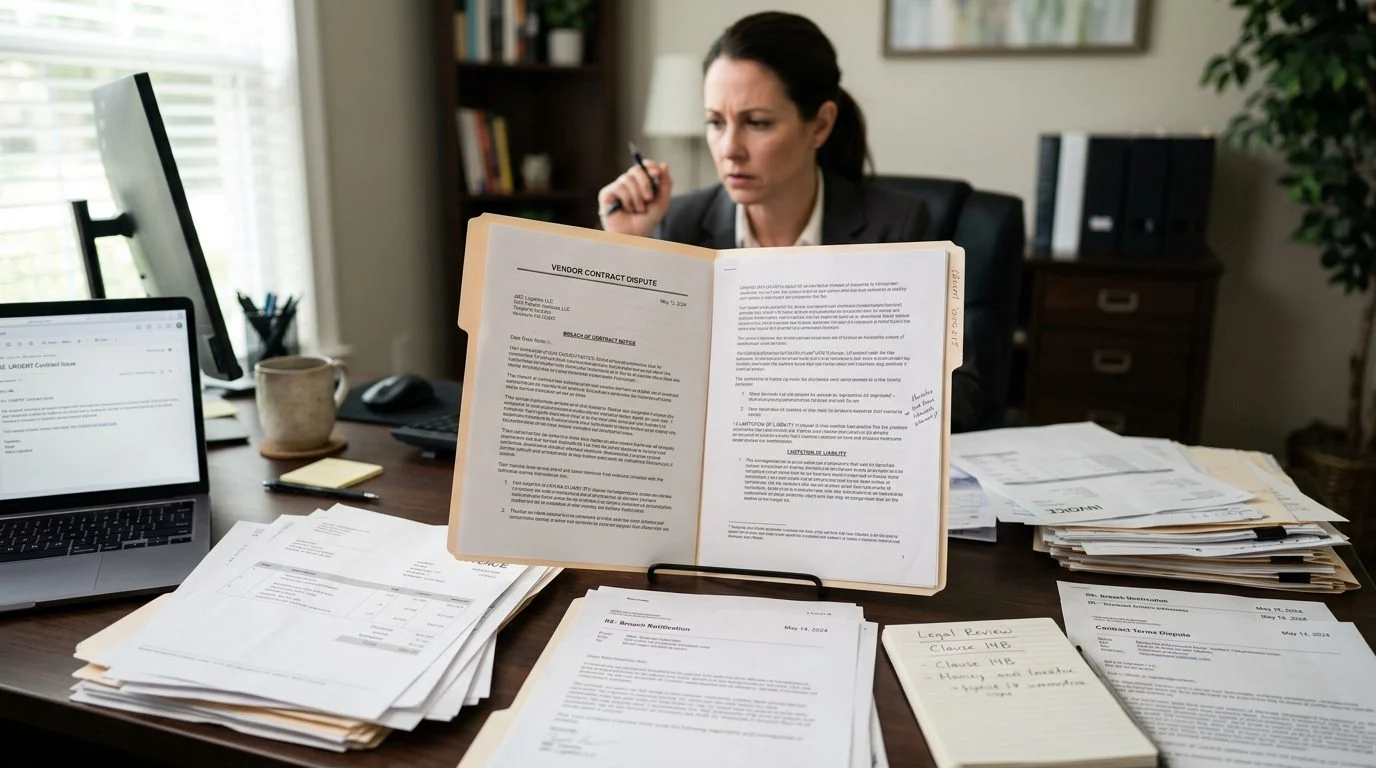
Vendor Contracts | Miami-Dade and South Florida
Know What Your Vendor Contract Limits Before You Sign
A liability cap can shape what a business recovers when a vendor falls short, so the clause deserves a careful read before the ink dries.
By Kristina E. Wilson · Published November 6, 2026
You signed a vendor contract, and now the vendor’s failure has cost your business money. A limitation of liability clause is a contract term that caps how much one party must pay the other, or bars certain kinds of loss. In most cases it limits how much you can recover, not whether you can bring the claim at all.
What a Limitation of Liability Clause Does
A limitation of liability clause limits the money a party can recover for a breach or loss. It usually works on the remedy, not on the claim itself. You can still prove the vendor broke the deal, but your recovery may be smaller than your full loss. Whether a specific claim is limited depends on the clause’s exact language, the type of loss, and the facts of the dispute. Business owners often treat the cap as a ceiling on everything. That is a mistake. The clause reaches only the claims its wording describes, so read it word by word before you assume it covers a problem.
If a vendor's failure cost your business money and the contract has a liability cap in the way, reach out to KEW Legal to talk through the language with us. Talk it through with our team — the first consultation is free, confidential, and carries no obligation.
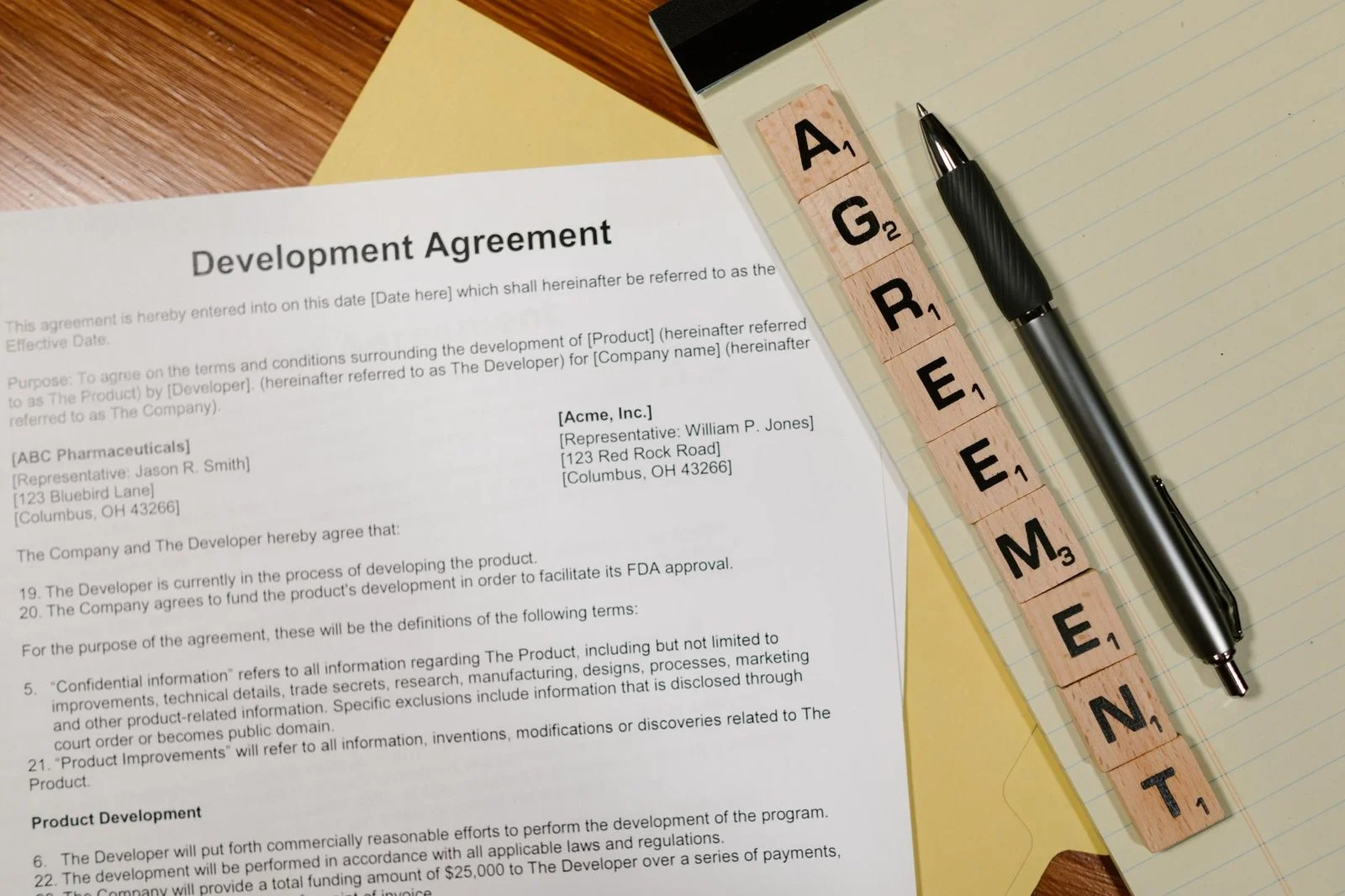
What a Vendor Contract Cap Usually Contains
Most vendor agreements set a dollar cap and list damages the vendor does not have to pay. The cap is often tied to the fees paid under the contract over a set period. Sometimes it is a fixed sum written into the agreement. The exclusion list often names indirect, incidental, special, or consequential damages. Some lists also name lost profits, lost revenue, or lost business opportunities.
Check whether the clause is mutual. A cap that protects both sides works differently from one that only shields the vendor. That difference affects how much room you have to push back during negotiation. It matters before you sign, not after a problem starts. If you want the wider picture, our business contract and vendor dispute page covers how these disputes usually develop.
Why Consequential Damages and Lost Profits Waivers Matter
A waiver of consequential damages can remove the largest part of a business loss, even when direct damages are small. Direct damages are the immediate cost of the breach, such as the price of replacing defective equipment. Consequential damages flow from the breach more indirectly, such as lost sales, idle staff, or downtime while a replacement is sourced.
Here is a simple example. A supplier ships a faulty part that stops your production line for three weeks. The part itself may cost little. The lost orders could cost far more. If the contract waives consequential damages, that larger loss may fall outside what you can recover. The wording that defines “consequential” or “indirect” damages often decides which losses stay on the table. Read those definitions closely.
How Florida Courts Review These Clauses
Florida courts can refuse to enforce a term that is unconscionable, meaning unfair in how the deal was made and in what it says. Under the Florida Supreme Court’s test in Basulto v. Hialeah Automotive, a court looks at both parts. The court weighs how the deal was made and how unfair the terms are together. Neither part needs to be equally strong.
For contracts for the sale of goods, the UCC gives courts a specific set of options. A court may refuse to enforce an unconscionable contract, enforce the rest of it without the unfair clause, or limit the clause so it avoids an unfair result. The parties also get a reasonable chance to present evidence about the deal’s commercial setting, purpose, and effect when it is claimed or appears to the court that the contract or a clause may be unconscionable (Fla. Stat. § 672.302). Contract terms that appear fair at first glance can still raise questions once they are reviewed in context. Do not assume it will be enforced exactly as written.
Carve-Outs: Claims a Cap Often Does Not Reach
Many vendor agreements leave some claims outside the cap. Common examples are indemnity duties, breach of confidentiality, and misuse of intellectual property. Some contracts also carve out gross negligence, willful misconduct, or fraud. Read the carve-out list next to the cap. A claim inside a carve-out may be recoverable even when the general cap applies.
Whether a given carve-out works the way you expect depends on the contract’s exact words and the facts of the loss. Watch for words such as “except,” “excluding,” and “notwithstanding.” Those words often signal that a rule has an exception. Do not assume a carve-out covers your loss just because the label sounds similar.
Liquidated Damages Versus Limitation Clauses
A liquidated damages clause sets a fixed amount payable after a specified breach. A limitation clause works differently. It caps or excludes what can be recovered after a breach. Both can appear in the same agreement, and they can interact. A contract might set a fixed payment for late delivery and also cap all other damages.
Read both provisions together. A fixed payment can change how much room remains under the cap. Ask which clause controls if the two seem to conflict, and check whether the contract answers that question. Reviewing both clauses side by side shows how the fixed payment and the cap work in your deal.
Not sure what your next step is?
Talk it through with our team — the first consultation is free, confidential, and carries no obligation.
Timing: A Contract Cannot Shorten the Time to Sue
A contract cannot set a shorter deadline to sue than the statute allows. Florida law makes void any provision that fixes a shorter period to begin an action arising out of the contract than the applicable statute of limitations (Fla. Stat. § 95.03).
The filing clock is separate from the cap. A claim can be timely and still recover less than your full loss. Review both timing and amount. Keep copies of notices, invoices, and emails, because they show when the problem started and what you told the vendor.
Goods Contracts and the UCC
For a contract to buy goods, Florida’s UCC sales chapter may apply. It covers transactions in goods. In a mixed deal, if the sale-of-goods aspects predominate, the sales chapter applies to the transaction, but other law may also apply to aspects that do not relate to the sale of goods.
Several rules matter here. Unless excluded or modified (to exclude or modify the implied warranty of merchantability or any part of it, the language must mention merchantability and, in case of a writing, must be conspicuous), a warranty that the goods shall be merchantable is implied in a contract for their sale if the seller is a merchant with respect to goods of that kind. Phrases such as “as is” can exclude implied warranties (Fla. Stat. § 672.316). Remedies can also be limited under the UCC’s limitation-of-damages rules (ss. 672.718 and 672.719).
Buyers face a notice rule too. After accepting goods, you must notify the seller of a breach within a reasonable time after you discover or should have discovered it, or you may be barred from any remedy (Fla. Stat. § 672.607). When each side sends its own forms, a cap in a confirmation does not always become part of the deal between merchants (Fla. Stat. § 672.207).
Frequently Asked Questions
Does a liability cap stop me from suing the vendor?
Usually it limits how much you can recover, not whether you can file. Whether a specific claim is limited depends on the wording and the facts.
Can I negotiate the cap before I sign?
Yes. Parties often negotiate the cap amount, the damages exclusions, and the carve-outs before signing.
Does the UCC apply to my vendor contract?
It applies to transactions in goods. In a mixed deal, it applies in full only when the goods side is the main part of the deal.
Talk with KEW Legal About Your Vendor Contract
If a vendor’s failure cost your business money and the contract contains a cap, you may have a claim worth reviewing. KEW Legal has offices in Coral Gables and Sunny Isles Beach. We work with business owners and investors across Miami-Dade and South Florida. Call 305-990-2300 or send us a message. We will review the cap, the exclusions, and the carve-outs alongside the facts of your loss. Our first consultation is free, confidential, and carries no obligation to continue. Kristina E. Wilson is the lawyer responsible for this page.
Read the Cap Before You Sign
Key Terms to Review in a Liability Cap
The Cap Amount
Check how the dollar limit is calculated, such as a fixed sum or a multiple of fees paid, and whether it applies to the whole contract or to each claim.
Excluded Damages
Look at whether indirect, consequential, or lost-profit damages are excluded, since these categories often matter most to a business.
Carve-Outs
Identify the claims that sit outside the cap, such as confidentiality breaches, data issues, or indemnified third-party claims.
Scope and Wording
Confirm which parties, services, and events the clause covers, and make sure its definitions match the rest of the agreement.
How KEW Legal Supports Business Owners
Contract Review Before Signing
Our team reviews vendor agreements, including liability caps, indemnities, and termination terms, so you can negotiate from a clear position.
Vendor Dispute Representation
When a vendor relationship breaks down, the firm focuses on business contract and vendor disputes for owners across Miami-Dade and Broward counties.
Outside General Counsel
For ongoing questions, the firm's lawyers serve as outside general counsel, advising business owners on contracts as their operations grow.
Clear, Practical Advice
We explain the trade-offs of each clause in plain language so you can decide which terms matter most for your business.
Have a Vendor Contract Ready for Review? Start With a Free, Confidential Consultation
Related practice areas
- Business Contract And Vendor Dispute Attorney
- Can a Vendor Raise Prices Mid Contract in Florida?
Request a Consultation
Fill out the short form and we will take it from there.