

Vendor Contract Disputes | Coral Gables and Sunny Isles Beach
Vendor Contract Disputes and Separate LLC Liability in Florida
Find out how a vendor's claim is usually handled and why keeping each company's affairs distinct matters when a dispute reaches your other businesses.
By Kristina E. Wilson · Published November 14, 2026
A vendor at one of your locations stops performing, or its lawyer sends a demand letter. The question you bring is whether that fight can reach your other venues, your owned property, or the hotels you’re planning.
Florida law generally keeps a company’s debts with that company. Keeping each entity’s contracts, bank accounts and records distinct is a practical habit worth reviewing with counsel. Here is how that works and what you can review now.
Does a Vendor Dispute at One Venue Stay at That Venue?
Under Florida’s LLC statute, a company’s debts generally stay with that company. Whether a particular dispute stays there depends on the facts, especially how each entity has actually been run.
The starting rule is clear. A company’s debt or liability is solely the company’s. A member or manager is not personally liable for it just because they hold that role (Fla. Stat. § 605.0304).
The operating agreement comes next. Under Fla. Stat. § 605.0105, it governs relations among the members and between the members and the company. Chapter 605 governs whatever it leaves out. Read it before you answer the vendor’s demand.
Check three things first:
- Which entity signed the vendor contract.
- Which entity received the invoices and paid them.
- Whether the venue’s operating agreement names the right manager.
If a dispute is already moving, our guide on business partner disputes in Florida explains the early options.
What Separate LLCs Protect in Florida
A separate LLC can generally help protect your personal assets from the company’s debts, but that protection has exceptions, such as a lease or loan you sign in your own name and agree to cover personally, and cases where a court finds the company was operated to mislead creditors or commit fraud. Three gaps can weaken that shield, and each one comes from how the business is run.
- Commingled accounts. Money moving between entities without clear records makes it hard to show that each company stands on its own.
- Personal promises. Under Fla. Stat. § 725.01, no action may be brought on a special promise to answer for the debt, default or miscarriage of another person unless the promise, or some note or memorandum of it, is in writing and signed by the party to be charged or by some other person lawfully authorized to sign for them. Florida’s statute of frauds, Fla. Stat. § 725.01, provides that no action may be brought on a special promise to answer for the debt, default or miscarriage of another person unless the agreement, or some note or memorandum of it, is in writing and signed by the party to be charged or by some other person lawfully authorized to sign for them.
- Improper use. This “showing of improper conduct” requires proof that “the corporation was actually organized or used to mislead creditors or to perpetrate a fraud upon them.” (Wurtzebach v. Flooring Depot FTL) Under § 605.0304(2), failing to observe formalities is not a ground for imposing liability on a member or manager for a debt, obligation, or other liability of the company.
Still, the records you keep shape how any challenge to your entities would look.
How a Vendor Dispute Spreads Between Entities
A dispute spreads when the paper trail ties one entity’s problem to another entity’s money or property. The common paths are easy to spot once you know them.
- Shared vendors. One LLC signs the contract, several venues use the service, and the bills go to a sister company.
- Cross-default terms. A loan or lease in one entity’s name can link its default to other entities’ assets.
- Intercompany transfers. Under Fla. Stat. § 726.105, a transfer can be fraudulent as to a creditor if made with actual intent to hinder, delay or defraud. It can also be fraudulent if made without reasonably equivalent value while the debtor’s remaining assets were unreasonably small for the business. The statute lists transfers to insiders, concealment, and whether the debtor had been sued or threatened with suit as factors.
- Blurred roles. Shared staff, shared insurance and one manager running several companies make it unclear which entity owes what.
- Buyer and lender reviews. A sale, a loan or a filing in a new state can expose records that don’t match the structure.
Timing matters too.
What an Entity-by-Entity Review Covers
An entity-by-entity review matches each contract, property and record to the company that owns it. It starts with a map and ends with a fix list.
- Entity map. Each venue, property and planned hotel, with its owning entity, operating agreement and manager.
- Contract inventory. Each vendor, lease, equipment and staffing deal, with the named counterparty, the signing entity, and the notice, cure and termination terms.
- Deadlines. Florida sets different limitation periods for different claims, listed in Fla. Stat. § 95.11. A contract clause that shortens that period is void under § 95.03.
- Records. Under Fla. Stat. § 605.0410, an LLC keeps a current list of members and managers, its operating agreement and its filed articles at its principal office or another location. If a member who complies with the inspection rules in § 605.0410 is refused access, § 605.0411 lets the circuit court in the county of the LLC’s principal office summarily order inspection and copying, at the company’s expense.
- Insurance. Confirm with your broker which entity is the named insured at each location.
- Status. Check each entity’s filing status on Sunbiz, the Florida Department of State’s filing system.
If you’re ending a vendor agreement early, see ending a vendor contract early in Florida before you send notice.
How the Engagement Works, Step by Step
The engagement moves in five steps, from a first meeting to ongoing support for new deals.
- First consultation. We review the dispute or expansion plan and your basic entity chart.
- Document collection. You gather operating agreements, contracts, personal promises, loan papers, bank account details and dispute correspondence.
- Exposure map. We show which entity signed what, where a problem could spread, and which deadlines are running.
- Targeted fixes. Options can include corrected signatures, separate accounts, written intercompany agreements or a negotiated mutual release. Each is used only where the facts support it.
- Ongoing counsel. New venues, hotels and vendor deals get set up with the structure in place from the start.
Timing turns on how many entities you have, which documents are available, and whether a dispute is already active.
Why Work With KEW Legal on a Multi-Entity Business
KEW Legal acts as outside general counsel for business owners and investors across Miami-Dade and South Florida. The firm handles vendor and contract disputes, commercial leases, business succession and real estate investment matters.
The firm has offices in Coral Gables and Sunny Isles Beach. Kristina E. Wilson is the responsible lawyer for this page and is one of the firm’s lawyers. Natalie Martinez is also one of the firm’s lawyers.
For an owner with several entities, that means:
- Matters are organized by entity, so each venue, property and contract is mapped to the company that owns it.
- Vendor disputes, commercial leases and ownership questions are reviewed together, so one entity’s problem is checked against the others.
Our practice is Florida law. If you move into a new state, its rules may require a lawyer licensed there, and we will tell you so plainly.
Questions Owners Ask Before Deciding
Here are short answers to common questions owners raise before they decide on a review.
Can a vendor claim against one LLC reach my other LLCs?
Florida law says a company’s debt is solely the company’s. Whether a sister entity is pulled in depends on the records and how the entities have operated.
Can a guest injury at one location reach my hotels or real estate?
The entity named, the insurance in place and how the entities have operated all shape the answer. Each is a fact-specific question for your own review.
Do I need to restructure everything now?
Not necessarily. A review shows which items need attention first.
Does the firm charge for the first meeting?
The initial consultation is free, confidential, and with no obligation to continue.
Can the firm help with a new state?
Our practice is Florida law, so a new state may require a lawyer licensed there.
Take the Next Step on Your Current Dispute
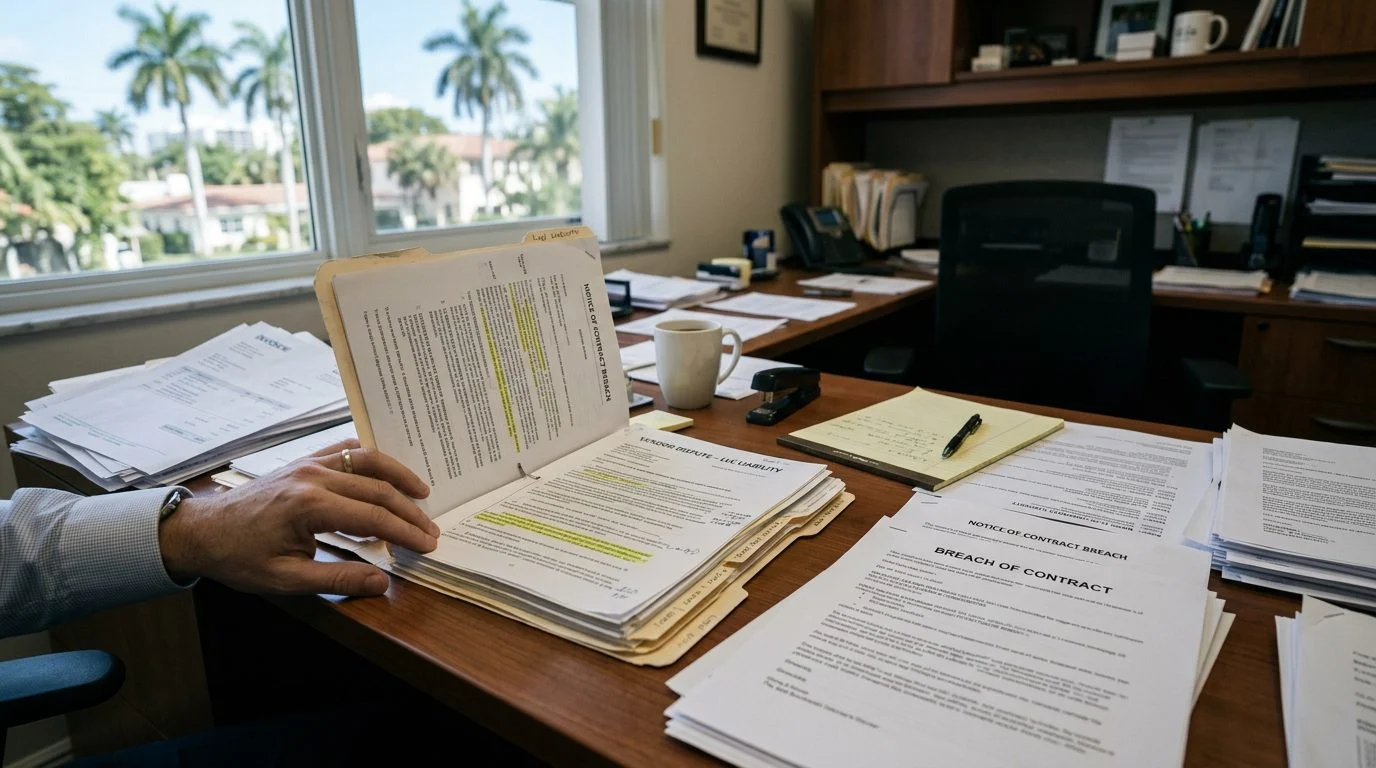
If a vendor at one location has stopped performing, and you’re asking whether it can reach the rest of your business, the answer starts with the entity map. Contact KEW Legal to schedule a consultation, call 305-990-2300, or send us a message. Nobody can promise how a dispute will end, but the facts about your entities can be reviewed now.
Habits that help keep each LLC separate
Sign in the right name
Make every vendor contract in the exact legal name of the LLC that receives the goods or services, and avoid signing for a sister company without clear authority.
Keep money apart
Maintain separate bank accounts, and do not pay one company's bills from another company's funds without documenting the transfer as a loan or intercompany charge.
Document intercompany dealings
Put shared services, loans and cost allocations in written agreements, and invoice them at terms that reflect how the entities actually operate.
Review insurance and contracts together
Confirm which entity holds each policy, lease and vendor agreement so responsibility is clear before a problem arises.
How KEW Legal helps business owners
Outside general counsel
Our team focuses on the contracts, disputes and entity questions that business owners and investors face across Miami-Dade and South Florida.
Contract and vendor disputes
We review the agreement, the records and the communications that matter, then discuss the options available for your situation.
Entity structure and separateness
Kristina E. Wilson and our lawyers review how your LLCs have been organized and operated so you understand where your exposure may lie.
Offices in Coral Gables and Sunny Isles Beach
We serve clients throughout Miami-Dade, Broward County and the surrounding communities.
Do not ignore a vendor's demand
A demand letter, lawsuit or notice from a vendor can affect every company connected to the dispute. Avoid ignoring it, paying it informally from another entity's account, or signing any new promise to pay personally before you understand the exposure.
Talk with KEW Legal about your vendor dispute or LLC questions. The initial consultation is free, confidential and comes with no obligation to continue.
Related practice areas
Request a Consultation
Fill out the short form and we will take it from there.