

Business Contract Review | Coral Gables & Sunny Isles Beach
Review Your Business Contract Before You Sign
KEW Legal focuses on business contract and vendor dispute matters for owners and investors across Miami-Dade and South Florida. Get clear answers on the terms that matter, the risks they carry, and your options.
By Kristina E. Wilson · Published October 27, 2026
A business contract review is a careful read of an agreement before anyone signs it. The lawyer flags risky terms, explains what each one means for your business, and proposes changes while they are still easy to request. KEW Legal focuses on business contract review for owners, partners, and investors in Miami-Dade and Broward County. If you are weighing a deal in Miami, this page explains what the review covers, how it works, and what to bring.
What a Business Contract Review Covers and Who Needs One
A business contract review is a read of a proposed agreement before signature. It finds the risks, explains each term in plain words, and identifies the changes worth asking for.
A review is worth doing for anyone whose signature will bind a business. That includes:
- Owners signing vendor, supplier, or service agreements.
- Partners entering or amending an operating or partnership agreement.
- Buyers and sellers of a business.
- Landlords and tenants on commercial leases.
- Employers using offer letters, employment agreements, or non-competes.
Timing matters most. Changes are easiest to ask for before you sign. After work starts or money moves, the other side often has more leverage.
Open terms are a risk too. Florida courts require a meeting of the minds on all essential terms before a contract is enforceable. Open terms are a problem to solve before signing, not a safety net.
Not sure what your next step is?
Talk it through with our team — the first consultation is free, confidential, and carries no obligation.
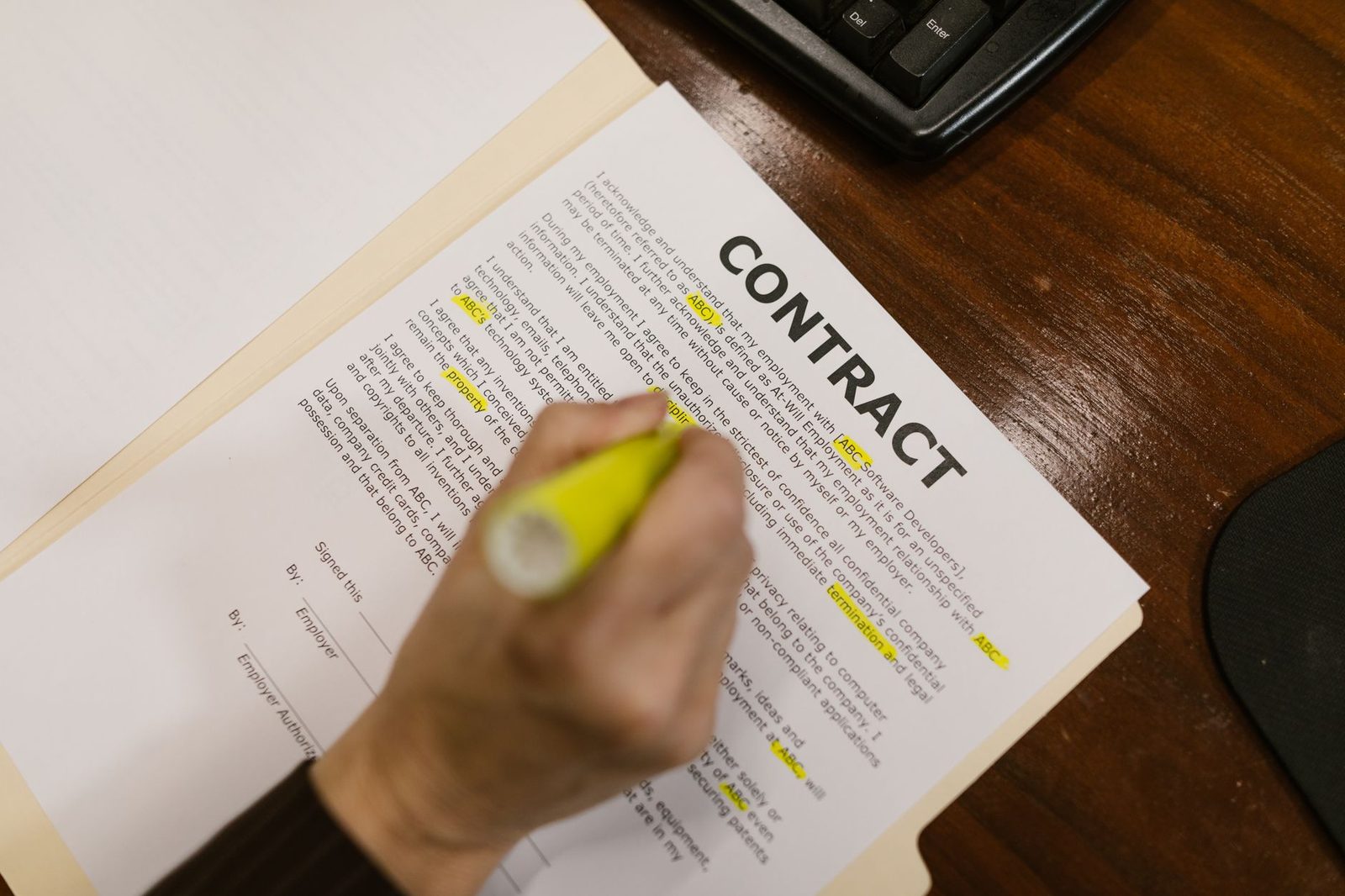
Clauses That Cause Disputes Later and What They Mean
The clauses that cause the most later disputes cover payment, termination, liability, renewal, assignment, forum, restrictive covenants, and personal liability.
- Payment and pricing: due dates, late fees, price increases, minimum purchases, and who pays for extras.
- Termination and default: notice periods, cure periods (time to fix a problem), and what happens to deposits and unpaid balances.
- Liability and indemnity: caps on how much one side owes and which side covers third-party claims. Florida courts refuse to enforce a term as unconscionable (unfair in how it was made and what it says) only when both unfair-process and unfair-terms problems exist (Basulto v. Hialeah Automotive).
- Renewal and exit: automatic renewal and the cost of leaving. Many people miss the notice date for ending an auto-renewing deal.
- Assignment and change of control: whether selling the business or moving ownership needs the other side’s consent.
- Forum: where a case would be heard and whether arbitration comes first. Florida enforces a written arbitration agreement unless grounds exist to revoke any contract (Florida arbitration code). Venue is generally the county where the defendant resides, where the claim arose, or where the property is located, but this section does not apply to actions against nonresidents (Florida venue statute).
- Restrictive covenants: to enforce a non-compete or similar restriction, the party seeking enforcement must show a writing signed by the person bound, prove a legitimate business interest, and prove the restraint is reasonably necessary to protect it (Florida restrictive covenant law).
- Personal liability and signing authority: who is personally bound, and whether the signer has authority to bind the company.
How Each Contract Type Is Reviewed
Each contract type carries its own risk points, so the review follows the kind of deal in front of you.
- Vendor and supply agreements: delivery dates, service levels, and remedies for missed deliveries.
- Commercial leases: rent increases, operating expense pass-throughs, repair duties, use clauses, default and eviction terms, renewal options, and whether an owner must personally cover the tenant’s obligations. Florida law bars suit on a lease longer than one year unless it is in writing and signed by the party to be charged (Florida statute of frauds). Fla. Stat. § 725.01 reads: “unless the agreement or promise upon which such action shall be brought, or some note or memorandum thereof shall be in writing and signed by the party to be charged therewith or by some other person by her or him thereunto lawfully authorized.”
- Partnership and operating agreements: capital contributions, voting, deadlock, buy-sell triggers, distributions, and exit terms. A partnership agreement cannot eliminate the duty of loyalty (Florida partnership act).
- Acquisition and sale agreements: representations, indemnity escrow, earn-outs, closing conditions, and post-closing duties.
- Employment agreements: confidentiality, invention assignment, restrictive covenants, and termination terms. A handbook does not automatically form a contract. Policy statements in a manual are not enforceable contract rights unless the manual says it is a separate employment contract (Quaker Oats Co. v. Jewell).
Each review ends with an issues list ranked by risk, plain-language explanations, and proposed redline language. A redline is the marked-up wording of the change you want.
How the Review Works, Step by Step
A review moves through six steps, from a first conversation to a version ready for signature.
- Initial consultation. We discuss the deal, the parties, and the signing date. The first consultation is free, confidential, and carries no obligation to continue.
- Gather documents. Bring the draft, exhibits, schedules, prior versions, key emails, and any existing agreements with the same party.
- Attorney review. The full draft is read against your goals and any earlier commitments.
- Written issues memo. Each high-risk term gets a reason it matters and a recommended change.
- Negotiation support. You receive redlines, talking points for the other side, and advice on which points to hold and which to trade.
- Final check. The version you plan to sign is checked against the issues memo.
How long this takes depends on the facts, including the document’s length and how quickly the other side replies. You set the priorities for what to negotiate.
Send us a message with the draft and your signing date so we can plan the review around it.
Why Work With KEW Legal on Contract Review
KEW Legal is a Florida business law firm with offices in Coral Gables and Sunny Isles Beach. It focuses on business contract work for owners and investors.
The firm acts as outside general counsel for business owners and investors. Contract review fits into ongoing advice about the business, not a one-time document check.
Kristina E. Wilson is the responsible lawyer for this page. The firm’s lawyers include Kristina E. Wilson and Natalie Martinez, supported by office staff. Our team reads each draft against your business goals.
The firm focuses on business contracts, partnership and vendor disputes, commercial leases and evictions, real estate investment, employment matters for employers, and business succession. Clauses reviewed before signing are often the same clauses that decide later disputes. That is why review work and dispute work overlap.
Frequently Asked Questions About Business Contract Review
Do I need a lawyer for a simple vendor agreement?
Simple-looking terms like auto-renewal, liability caps, and assignment often carry the largest later costs. A short review can catch them before you sign.
Can you review a contract I already signed?
Yes. A review can show your rights, deadlines, and exposure under that agreement.
Will you negotiate changes with the other side?
Yes. The firm prepares redlines and talking points, and you decide which terms to pursue.
What should I bring to the first consultation?
Bring the draft, any exhibits, prior versions, and your signing deadline.
What if the other party refuses my changes?
We explain the risk of each remaining term so you can decide whether to sign. No outcome can be promised.
Does the review cover enforceability?
Yes. Enforceability under Florida law is checked for restrictive covenants and other key terms.
Not sure what your next step is?
Talk it through with our team — the first consultation is free, confidential, and carries no obligation.

Get Your Contract Reviewed Before the Signing Date
Send your draft to KEW Legal before the signing date, while the risky terms can still change. If a vendor, landlord, partner, or buyer has handed you terms with a deadline, our office in Coral Gables or Sunny Isles Beach can review them with you. Schedule a consultation or call 305-990-2300 to start.
Contract Terms We Review
Auto-Renewal and Termination
Renewal dates, notice requirements, and exit rights can quietly lock a business into terms it never intended to accept.
Liability and Indemnification
Caps, exclusions, and indemnity clauses decide who pays when something goes wrong. We look at how they allocate risk.
Assignment and Change of Control
Terms on transferring a contract, or on a sale or ownership change, can affect deals you make later.
Payment and Performance Obligations
Pricing, deadlines, penalties, and default terms should match what your business can realistically deliver.
How KEW Legal Works With Business Owners
Plain-Language Review
We explain each key term, what it means for your business, and where the exposure sits.
Focus on Your Business Interests
Our attorneys look at the agreement from your side and point out changes worth requesting.
Ongoing Outside General Counsel
Many clients bring us back for vendor agreements, leases, and disputes as their business grows.
Direct Access to Our Team
Call 305-990-2300 or send us a message to start the conversation.
Watch Out for the Small Print
Terms such as auto-renewal, liability caps, and assignment often carry the largest costs later. A short review before you sign can catch them early.
Start with a free, confidential first consultation. There is no obligation to continue.
Related practice areas
Request a Consultation
Fill out the short form and we will take it from there.