
Business Litigation | Coral Gables & Sunny Isles Beach
Someone Is Deliberately Undermining Your Business? Let's Talk.
KEW Legal helps business owners and investors across Miami-Dade and Broward counties respond when a competitor, former partner, vendor, or insider interferes with a business relationship. Kristina E. Wilson focuses on business disputes and outside general counsel work for South Florida companies.
By Kristina E. Wilson · Published October 17, 2026
The short answer: tortious interference with a business relationship
When someone deliberately undermines your business, the lawsuit is most often called tortious interference with a business relationship. Some lawyers call it tortious interference with contractual relations. The label matters less than the conduct and the relationship that was hurt.
“Tortious” describes a civil wrong. The harmed party asks a court for money damages and, in some cases, an order to stop the conduct.
Court papers can word the claim in different ways. The core question stays the same. Did someone intentionally disrupt a deal, a client, or a contract that helped your business earn money? If you’re reading this because something is happening now, writing down the facts early helps.
If someone is undermining a deal, client, or partnership you depend on, you don't have to sort out the claims alone. Our team can talk through the facts with you. Talk it through with our team — the first consultation is free, confidential, and carries no obligation.

Related claims that often come up alongside it
Sabotage rarely fits one label. The facts may support more than one claim.
Concerns about false statements that harm someone’s reputation come up for many business owners. If a former partner tells clients you stole money, that statement may be the core issue. Courts generally look at whether the statement was false, so proof matters.
Statements that affect a company’s products, services, or finances can raise concerns for business owners. It is a separate claim with its own proof.
Breach of fiduciary duty applies to people who run or own part of a business. Under Fla. Stat. § 620.8404, a partner’s duty of loyalty includes not competing with the partnership before it dissolves. LLC members and managers owe similar duties under Fla. Stat. § 605.04091. Acting in your own interest is not automatically a breach, so the details matter.
Trade secrets are another common claim. Florida defines a trade secret as information with independent economic value from not being generally known, and it must be protected by reasonable secrecy efforts (Fla. Stat. § 688.002). Client lists and pricing can qualify, but only if the business really protected them.
Breach of contract may also apply. A partnership agreement, vendor contract, or lease can include confidentiality or non-solicitation terms. Under Fla. Stat. § 542.335, a court will not enforce a restrictive covenant unless it is in a writing signed by the person it binds.
What a Florida court generally looks at in an interference claim
In general terms, a court looks at whether these points can be shown:
- A business relationship or expected deal existed, such as a steady client, a pending sale, or a vendor agreement.
- The other person knew about it.
- The person acted intentionally and without a fair, legitimate reason.
- Under Florida law, a tortious interference claim requires damage to the plaintiff caused by the interference.
This is a general overview, not a full statement of what must be proven. How each point applies depends on the facts. Emails, texts, invoices, and call logs can show who knew what and when. A dated timeline can show whether a lost deal followed a specific statement or move. Good records make each point easier to prove.
Common sabotage scenarios in South Florida businesses
Sabotage often comes from people already close to the business. Four patterns come up often.
- A co-owner steers a shared client or pending deal to a new company while still owning part of the original business. If the company is an LLC, a member may bring a direct action when the member has suffered an actual or threatened injury that is not solely the result of injury to the company (Fla. Stat. § 605.0801).
- A former employee contacts clients after leaving, uses confidential information, or spreads false claims about the employer.
- A vendor spreads false claims about finances or service to lenders, suppliers, or a buyer during a sale.
- A co-owner disrupts a lease renewal, property deal, or succession plan by giving landlords, investors, or family members misleading information.
When a worker is involved, employment and confidentiality issues can overlap. The company’s governing documents and any signed agreements shape the response.
Steps that help protect your record early
Start by keeping originals. Save emails, texts, call logs, client messages, and records of lost or delayed deals in their original form. Screenshots alone can miss dates and sender details.
Next, write a dated timeline. Note when the relationship changed, when each statement was made, and who was present. Then gather the governing papers: the partnership or operating agreement, vendor contracts, employment agreements, confidentiality clauses, and any commercial lease with notice or dispute terms.
Be careful with your own moves. Under Fla. Stat. § 57.105, a court shall award a reasonable attorney’s fee when the losing side knew or should have known a claim was not supported by the material facts or by existing law. A sanctions motion must be served first and gives the other side 21 days to withdraw or correct the challenged paper.
Avoid public posts and heated messages to the other side. Those can create new claims. Where appropriate, route communications through counsel.

Talk through your situation with KEW Legal
If a partner, vendor, or former employee is pulling clients or deals away from a business you built or help run, the questions can pile up fast. Some readers are looking into this for a family member or for a company they did not form. That is a hard place to stand.
Your situation may involve a lost client, a stalled sale, a partner diverting work to a new entity, or a former employee spreading false statements about your company. Those facts are where a review starts.
Kristina E. Wilson is the responsible lawyer for this page. KEW Legal has offices in Coral Gables and Sunny Isles Beach and provides outside general counsel work across Miami-Dade and South Florida. The initial consultation is free, confidential, and carries no obligation to continue.
If someone is undermining a deal, client, or partnership you depend on, you don’t have to sort out the claims alone. Call 305-990-2300 or send a message through our contact page.
Quick answers
What’s the lawsuit called when someone sabotages your business? It is most often called tortious interference with a business relationship. It is a civil claim between the parties, not a criminal charge.
Does a trade secret claim have a deadline in Florida? Yes. A misappropriation claim must be brought within 3 years after the misappropriation is discovered, or should have been discovered with reasonable diligence.
Does a non-compete need to be in writing? Yes. A Florida court will not enforce a restrictive covenant unless it is in a writing signed by the person against whom enforcement is sought.
How We Approach Business Sabotage Matters
Careful Review of the Record
We review your contracts, communications, and the timeline of events to understand exactly how the interference affected your business relationships.
Protecting Your Business Relationships
Our goal is to identify the steps that can safeguard your customers, vendors, partners, and business reputation while your matter moves forward.
Practical, Business-Focused Strategy
We consider your business goals, budget, and long-term operations so that every recommendation fits the way your company actually runs.
Clear Communication
You will receive straightforward updates and direct answers, so you always know where your matter stands and what comes next.
Preserve Your Records
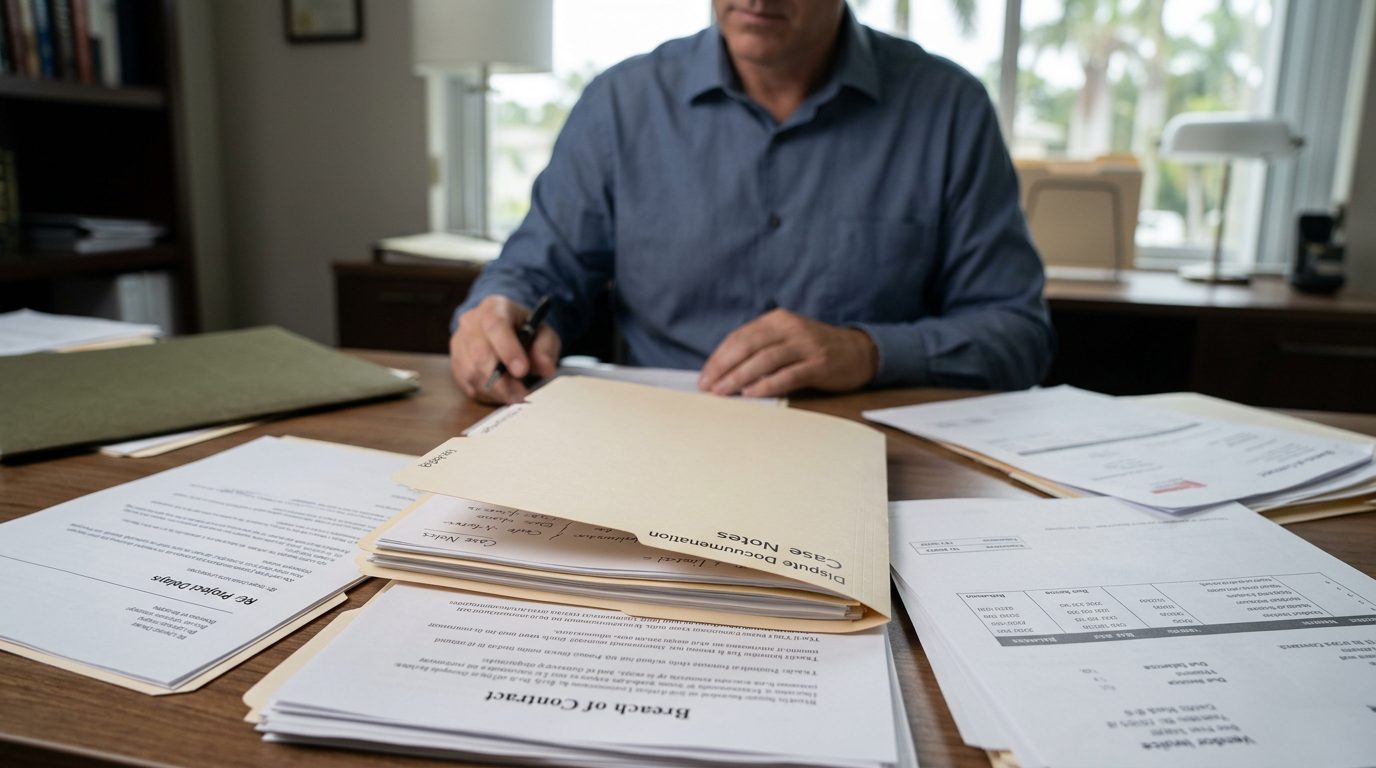
Keep emails, text messages, contracts, invoices, and notes about any unusual conversations or changes in your business relationships. Organized documentation helps us evaluate what happened from the start.
Situations We Handle
Interference With Customers or Vendors
A competitor or former associate contacts your customers or suppliers to divert business, end agreements, or spread false claims about your company.
Partnership and Shareholder Conflicts
A co-owner or partner takes actions designed to damage the company, interfere with its deals, or undercut its operations.
Sabotage by Former Employees
A departing employee or insider uses confidential information or relationships to pull clients, disrupt contracts, or harm company operations.
Disruption of Contracts and Deals
Someone interferes with a sale, lease, financing, or other transaction that your business had already arranged with a third party.
Your First Consultation Is Free
Related practice areas
- Outside General Counsel For Businesses
- Business Partner Stealing Clients
Request a Consultation
Fill out the short form and we will take it from there.