
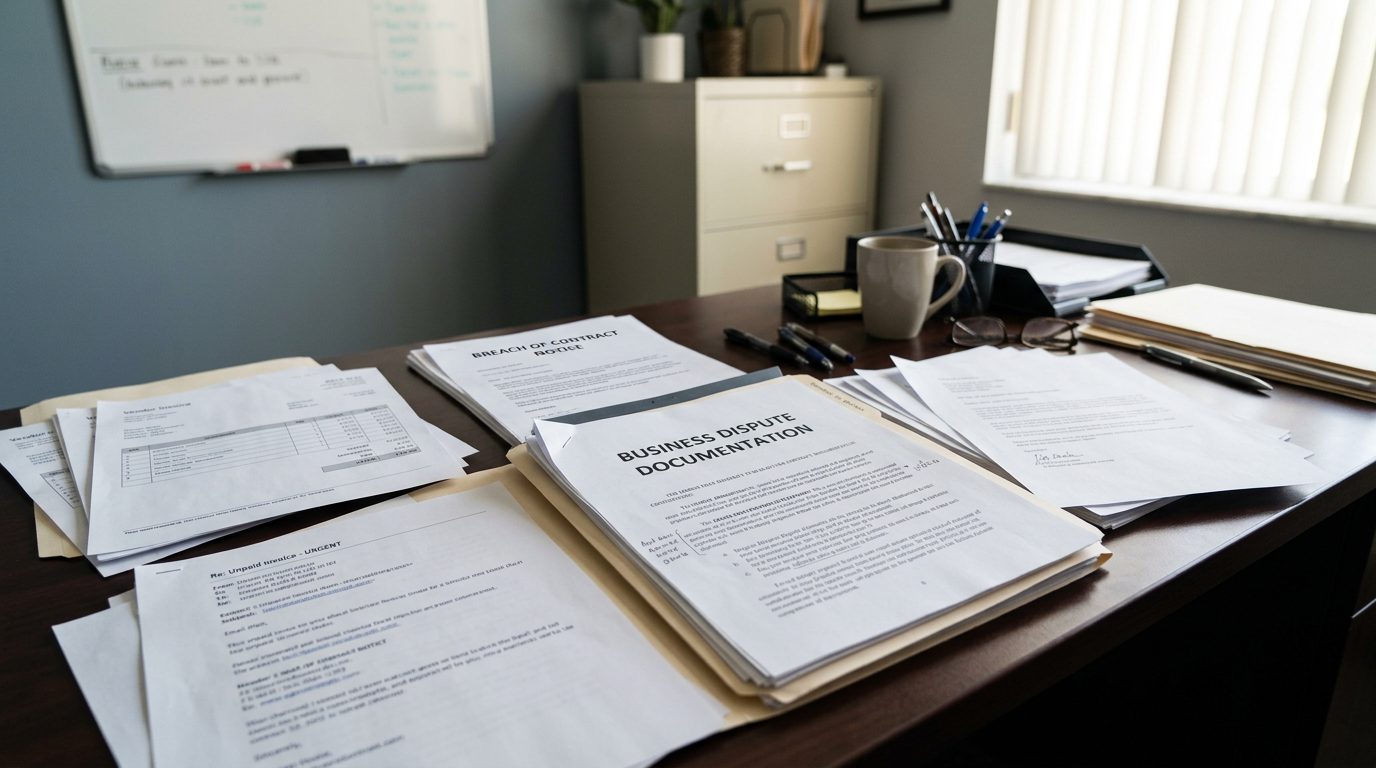
Business Disputes | Broward County and South Florida
Business Disputes Resolved With Clear Legal Guidance
KEW Legal, with offices in Coral Gables and Sunny Isles Beach, works as outside general counsel for business owners and investors in Broward County and Miami-Dade. Our lawyers handle partner conflicts, vendor disagreements, employee issues and commercial lease problems. Kristina E. Wilson is responsible for this page.
By Kristina E. Wilson · Published October 21, 2026
If you need a business dispute attorney in Broward County, KEW Legal handles disagreements tied to owning, funding, or running a business. The firm covers partnership, vendor, lease, employment, and investment property matters. KEW Legal works from offices in Coral Gables and Sunny Isles Beach.
What a Business Dispute Attorney Does for Broward Owners and Investors
A business dispute attorney works on conflicts that grow out of owning, funding, or running a company. Many of these problems start small. A missed payment, an unclear contract term, or a partner who stops sharing information can become a lawsuit if no one acts early.
Outside general counsel is an ongoing legal role. The firm acts as a steady legal resource, so owners can ask about recurring issues before they become disputes. Common examples include signing authority, lease terms, and employee policies.
This page is for:
- LLC members and partners who disagree about control or money
- Co-investors in a property or business
- Employers facing workplace claims or policy questions
- Owners of investment property, including owners who live outside Florida
KEW Legal serves business owners in Broward County from its offices in Coral Gables and Sunny Isles Beach.
If a partner has gone silent, a vendor is holding payment, or a tenant is behind on rent, you may have a claim, and you don't have to face it alone. Talk it through with our team — the first consultation is free, confidential, and carries no obligation.

Partnership and LLC Member Disputes
A partnership or LLC dispute usually turns on what the governing agreement says about money, control, and exit. Common disagreements include:
- Deadlocks between owners on major decisions
- Disputes over profit distributions
- Questions about capital contributions
- Arguments over management decisions
- Disagreements about how an owner leaves the business
Records are often the first fight. A Florida limited liability company must keep, at its principal office or another location, a current list of the full names and last known addresses of each member and manager, and copies of its financial statements, if any, for the three most recent years. A member may inspect and copy those records during regular business hours, on reasonable notice.
If the company refuses, a court in the county of its principal office may order inspection at the company’s expense (§ 605.0411). The court must also order the company to pay reasonable attorney fees and other costs of obtaining the order, unless the company proves that it refused inspection in good faith because it had a reasonable basis for doubting the right of the member, manager, or other person to inspect or copy the records. Partners also have access to partnership books and records (§ 620.8403).
Read our guides on whether a minority member can see company books and whether a co-owner can sign contracts alone.
Gather these early: the operating or partnership agreement, meeting minutes, capital account records, and written messages between owners.
Vendor, Contract, and Breach Disputes
A vendor or contract dispute turns on the written terms and on what each side actually did. Typical problems include non-payment, late or defective deliveries, and disagreements over scope of work.
Start by reviewing the controlling terms: payment deadlines, notice requirements, termination clauses, dispute resolution provisions, and limits on liability.
Arbitration clauses carry weight. An agreement in a record to arbitrate existing or future disputes is generally valid and enforceable (Fla. Stat. § 682.02).
Notice matters for goods. A buyer that accepts goods must notify the seller of a breach within a reasonable time after discovering it or after it should have discovered it, or be barred from any remedy (§ 672.607).
Oral deals can count. An oral contract still needs offer, acceptance, consideration, and clear essential terms (St. Joe Corp. v. McIver).
Options often include a demand letter, negotiation, mediation or arbitration if the contract requires it, and litigation. Keep invoices, emails, purchase orders, and delivery records from the start.
Commercial Lease Disputes and Commercial Evictions
Common lease problems include unpaid rent, disputed common-area charges, repair duties, unauthorized subletting, and default notices.
For unpaid rent, a landlord may remove a tenant who stays after default, after 3 days’ written notice demanding rent or possession (§ 83.20). For a material breach of the lease other than unpaid rent, when the lease is silent or the tenancy is oral at will, a written notice gives the tenant at least 15 days to cure or surrender the premises (§ 83.20). If a tenant refuses to leave at lease end, the landlord may demand double the monthly rent (§ 83.06).
Owners who live outside Florida or abroad can work with the firm on these steps. Authority and communication arrangements are set out in the engagement.
Before acting, gather the lease, the rent ledger, every notice sent or received, and tenant communications. The right steps follow from the lease wording and the tenancy’s history, so don’t send a notice without a review.
Employment Issues and Real Estate Investment Matters
Employment and property issues often touch the same contracts and owners as the rest of the business. An at-will employee may be fired at any time, but not for a reason the law prohibits, such as retaliation or unlawful discrimination (Laguerre v. Palm Beach Newspapers).
A court shall modify an overbroad restraint and grant only the relief reasonably necessary to protect the legitimate business interest (§ 542.335). Under § 542.335, a court shall not enforce a restrictive covenant unless it is in a writing signed by the person against whom enforcement is sought (Quaker Oats Co. v. Jewell).
On the property side, the firm handles purchase and sale agreements, ownership structures for investment property, and disputes between co-investors.
How the Process Works: From First Consultation to Resolution
The process moves from a consultation to a document review, then to a plan with clear next steps. Here is what to expect:
- Free, confidential first consultation. The first consultation is free, confidential, and comes with no obligation to continue. You describe the dispute, and the firm asks about the documents involved.
- Document review. The firm reviews the governing agreements, correspondence, and records. It then explains the issues and options in writing.
- Early steps. These may include a demand letter, negotiation, or a settlement proposal.
- Formal proceedings if needed. Options can include mediation, arbitration, or a court case. Florida courts under court rules must refer many money-damage cases to mediation when a party asks, provided the requesting party is willing and able to pay the costs of the mediation or the costs can be equitably divided between the parties, with exceptions such as landlord-tenant disputes without a personal injury claim (§ 44.102). Fla. Stat. § 44.102 reads: “(2) A court, under rules adopted by the Supreme Court: (a) Must, upon request of one party, refer to mediation any filed civil action for monetary damages, provided the requesting party is willing and able to pay the costs of the mediation or the costs can be equitably divided between the parties, unless: 1.”
- Resolution and follow-up. The firm documents any settlement and can keep advising the business on recurring issues.
The timeline for each step depends on the facts, the documents, and the other side’s response.
Not sure what your next step is?
Talk it through with our team — the first consultation is free, confidential, and carries no obligation.
Why KEW Legal for Business Disputes in Broward County
KEW Legal concentrates on business law for owners and investors. Outside general counsel is a core part of how the firm works with businesses. The firm’s offices are in Coral Gables and Sunny Isles Beach, Florida.
Kristina E. Wilson is the responsible lawyer for this page. The firm’s lawyers include Natalie Martinez.
Related problems often overlap. A co-owner’s signing authority can affect a lease or vendor contract. An employee dispute can touch company policies and owner agreements. One firm handling these matters can keep the documents and facts in one place. Our team can review your situation in a consultation.
Frequently Asked Questions About Business Disputes in Broward County
Do I need a lawyer before I send a demand letter?
Early legal review helps you understand the contract terms. It also helps you avoid statements that could weaken your position.
Can a partner dispute be resolved without going to court?
Negotiation, mediation, and arbitration are often considered first, when the agreements allow them.
What should I bring to the first consultation?
Bring the operating or partnership agreement, any relevant contracts or leases, correspondence, and a short written timeline of events.
Can I get help if I live outside Florida?
Yes. Owners who live abroad can work with the firm on commercial lease and eviction matters. Authority and communication terms are set in the engagement.
Do I have to visit Coral Gables or Sunny Isles Beach?
Consultations can be arranged by phone or through the contact form on this site.

Talk to KEW Legal About Your Broward Business Dispute
If a partner has gone silent, a vendor is holding payment, or a tenant is behind on rent, you may have a claim, and you don’t have to face it alone. Schedule a consultation, call 305-990-2300, or send us a message today.
Common Business Disputes We Handle
Partnership Disputes
Disagreements among owners over control, profit distribution, capital contributions or exit terms. We review your operating agreement and help you weigh negotiation, mediation or other options.
Vendor and Contract Disputes
Non-payment, late delivery, breach of terms or disagreements over scope of work. We review the contract language and advise on how to respond to a vendor or counterparty.
Commercial Leases and Evictions
Lease negotiation, default issues and commercial eviction matters for property owners, including owners who live outside Florida and need a local legal representative.
Employment Issues for Employers
Workplace disputes, policy questions and employee separations. We help employers understand their obligations and reduce avoidable risk before a problem escalates.
Why Business Owners Work With KEW Legal
Outside General Counsel Approach
We act as an ongoing legal resource for your business, not only when a dispute arises.
Contract-Focused Review
We read the agreements that govern your relationships before recommending a path forward.
Practical Risk Management
We explain the potential consequences of each option so you can make informed decisions.
South Florida Business Focus
Our offices in Coral Gables and Sunny Isles Beach serve clients throughout Broward County and Miami-Dade.
Confidential Conversations
Your first consultation is confidential, so you can discuss your situation openly.
Speak With a Lawyer Before You Respond in Writing
Early legal review helps you understand the contract terms and avoid statements that could weaken your position. Contact us before you sign a settlement, send a demand letter or respond to a formal notice from a partner, vendor, tenant or employee.
Discuss Your Business Dispute With KEW Legal
Related practice areas
Request a Consultation
Fill out the short form and we will take it from there.