

Outside General Counsel · Coral Gables & Sunny Isles Beach
Keep Every LLC in Good Standing as Your Portfolio Grows
A practical way to track the filings, records and banking habits that hold a multi-entity real estate portfolio together.
By Kristina E. Wilson · Published November 13, 2026
If you run a growing set of LLCs for towers, rental buildings and joint ventures, one missed filing can stall a closing. This entity maintenance checklist for developers with many LLCs in Florida gives you one list to track for every company.
Five things need steady attention for each Florida LLC: its annual report, its registered agent, its operating agreement, its records, and a clear answer to who can sign for it. The sections below cover each item, explain how outside general counsel handles this work, and answer the questions developers ask before they call.
Who This Entity Maintenance Checklist Is For
This checklist is for a family-run developer whose companies have grown faster than the paperwork behind them.
Each building, phase, rental project or joint venture often gets its own LLC. Each one has its own annual report, registered agent and bank account. Add tower turnovers, closings and vendor contracts, and the work can outgrow one in-house lawyer’s desk.
Outside general counsel usually takes the outward-facing, recurring work: entity upkeep, closing support, contract review and filings with deadlines. Your in-house team keeps the daily decisions. Where that line falls can be set at the start.
If you are the one tracking all of these companies, this list gives you the whole picture in one place. Keep it as a master document and update it when a project closes, starts or changes hands.
If closings, company filings and contracts are stacking up across your LLCs, reach out and we'll talk through your entity list with you. Talk it through with our team — the first consultation is free, confidential, and carries no obligation.
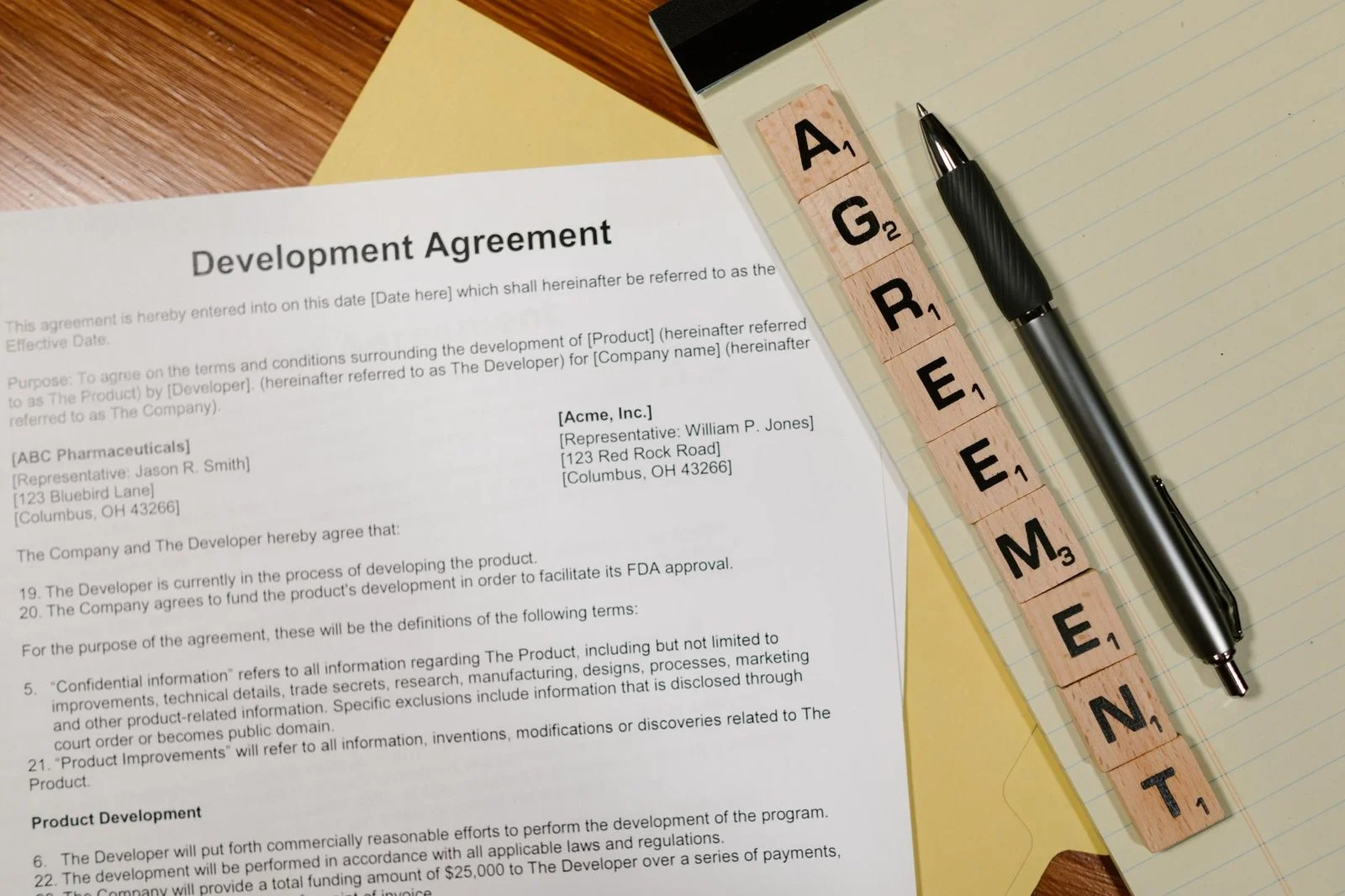
State Filings, Annual Reports and Registered Agents
The information in the report must be current as of the date it is delivered to the department for filing. Florida’s Division of Corporations administers these annual-report filings.
Missed deadlines carry real consequences. Under the same statute, a company that fails to file a compliant report may not maintain or defend a court action in Florida until the report is filed and all fees and penalties are paid. Under Fla. Stat. § 605.0714, the department may administratively dissolve an LLC that does not deliver its annual report by 5:00 p.m. Eastern Time on the third Friday in September, and that dissolution must occur on the fourth Friday in September. The company keeps existing, but it may only wind up its affairs.
Section 605.0714 addresses administrative dissolution of an LLC. Fla. Stat. § 605.0714 lets the department dissolve a limited liability company administratively if it does not deliver its annual report by 5:00 p.m. Eastern Time on the third Friday in September of each year. A statement of change is due within 30 days after a registered agent’s name or address changes, unless within those 30 days the agent filed a statement of change under § 605.0116 or the change was made in accordance with § 605.0114(4).
Before a closing, keep in mind that the Florida Department of State may administratively dissolve a limited liability company that does not deliver its annual report by 5:00 p.m. Eastern Time on the third Friday in September of each year or does not pay a fee or penalty due to the department. It shows whether fees are paid, whether the latest annual report is filed and whether the company was administratively dissolved.
- Legal name, document number and filing date for each entity
- Registered agent name and address, with a 30-day change check Fla. Stat. § 605.0714 reads: “(d) Deliver for filing a statement of a change under s. 605.0114 within 30 days after a change has occurred in the name or address of the agent unless, within 30 days after the change occurred: 1.”
- Annual report window on one shared calendar
- A responsible contact for each company
Operating Agreements, Records and Member Decisions
Each LLC should have a current operating agreement that matches how the company actually runs today.
Fla. Stat. § 605.0105 says the operating agreement governs relations among members and between members and the company. Where the agreement is silent, the chapter’s default rules apply. Fla. Stat. § 605.0106 binds the company to its operating agreement. An agreement written for the first building may not fit the third.
Management structure matters too. Under Fla. Stat. § 605.0407, an LLC is member-managed unless its operating agreement or articles say otherwise. Confirm which structure applies to each entity, because it decides who makes the call.
Keep written consents for major moves such as loans, sales, new joint venture partners and manager changes. Decide early whether a finished project’s LLC should stay active or wind up. Under Fla. Stat. § 605.0709, a dissolved LLC winds up its affairs and may file a statement of termination once that work is complete.
Keeping Each Company Separate
Keep each LLC’s bank account, contracts and money trail apart, so every transaction traces back to one company.
Under Fla. Stat. § 605.0304, a company’s debt is solely the company’s. A member or manager is not personally liable for it just because of that role. The same section says failing to observe formalities is not, by itself, a ground for that liability. Clean records still matter, because they show which company did what.
- Give each LLC its own bank account.
- Put every payment or loan between entities in writing, on documented terms.
- Keep personal and family spending out of company accounts.
- Confirm each property sits in the entity meant to hold it.
Related-party deals need extra care. Fla. Stat. § 605.04092 defines a family member to include a spouse, child, parent, sibling and certain others. A deal with such a person is not void for that reason when the statute’s requirements are met. Under § 605.04092(4)(a), in a member-managed limited liability company, or a manager-managed one in which the managers have failed to or cannot act, a conflict of interest transaction cannot be authorized, approved, or ratified under this subsection solely by a single member. This provision puts the burden of proving the deal was unfair on the person challenging it only if its requirements have been satisfied.
Contracts, Closings and Signing Authority
Before any deed, closing or contract is signed, confirm which person has authority to sign for that exact entity.
Fla. Stat. § 605.04074 sets the default rules. In a member-managed LLC, a member acting in the ordinary course binds the company, unless that member had no authority to act for the company in the particular matter and the other party knew or had notice that the member lacked authority. The same rule applies to managers in a manager-managed LLC.
Real estate needs one more check. Unless a recorded certified statement of authority limits that person, a member of a member-managed LLC or a manager of a manager-managed LLC may sign an instrument affecting the company’s interest in real property. That instrument is conclusive for someone who gives value without knowing the signer lacked authority.
For turnover and closing work:
- Sign in the entity’s exact legal name, and state the signer’s capacity.
- Organize closing files by property and entity, including title, closing statements and post-closing filings.
- Match tower turnover paperwork to the entity that holds the project.
- Decide who receives which documents. Under Fla. Stat. § 605.0410, a company may set reasonable limits on who can access and use its information, but those limits do not apply to a member’s request for the records listed in subsection (1).
How Outside General Counsel Works With You
Outside general counsel works in four steps: review, inventory, calendar and ongoing upkeep.
- Free first consultation. KEW Legal offers a free first consultation that is confidential and carries no obligation to continue. We review your entity list, open projects and pending contracts.
- Inventory. We build a written list of every LLC, its filing status, governing documents, registered agent and open obligations.
- Calendar. Annual report windows, registered agent checks, document updates and dormant-entity reviews go on one shared schedule.
- Ongoing upkeep. We handle recurring contracts, closing support and entity maintenance, with a clear point of contact for urgent matters.
Timing shifts with how many entities you have, how complete your records are and how your project calendar runs. Turnaround is set matter by matter, not promised in advance. Check-ins keep the master list current as projects close, begin or change hands.
Not sure what your next step is?
Talk it through with our team — the first consultation is free, confidential, and carries no obligation.
Questions Developers Ask Before Calling
Most questions come down to deadlines, how each entity is structured, and what happens to closing timing.
Do I need one LLC per building?
Your financing, liability and ownership goals shape that choice. We review them together at the first consultation.
What happens if an annual report is missed?
Florida law lets the state dissolve an LLC administratively for failing to file, and a company can apply for reinstatement afterward. Address missed filings quickly, because the company cannot maintain or defend a court action until the report is filed and all fees and penalties due under this chapter are paid.
Will outside counsel slow down our closings?
Closing timelines are set around your deal calendar. We discuss scheduling and who handles what at the start.
Is a first conversation confidential?
Yes. Your first conversation with us is confidential.
Can outside counsel take work off our in-house lawyer?
Yes. Outside general counsel can take entity upkeep, closing support and day-to-day contract review alongside your in-house team.

Next Step: Talk Through Your Entity List
A short first conversation can show which filings, signatures and contracts need attention first.
Kristina E. Wilson is the responsible lawyer for this page. KEW Legal has offices in Coral Gables and Sunny Isles Beach. If closings, company filings and contracts are piling up across your LLCs, schedule a consultation, send us a message, or call 305-990-2300.
Why Review Your Entity Maintenance With Counsel
A Single Calendar for Every Entity
We help you map each LLC's filing dates, registered agent details and required records so nothing depends on memory.
Separateness You Can Demonstrate
We review how each property, bank account and contract is held so your records reflect the structure you intended.
Structure Tied to Your Goals
Financing, liability and ownership goals shape how entities should be organized, and we review those goals with you.
Counsel for Owners Who Live Abroad
For investors managing Miami-Dade and Broward properties from overseas, we coordinate maintenance, notices and any commercial eviction matters.
Do Not Let a Missed Filing Sit
A missed state filing can affect an LLC's active status. If you discover one, contact us promptly so we can review the options and the steps for reinstatement.
Recurring Tasks to Track for Each LLC
Annual Reports and State Filings
Keep a record of each state filing, confirmation and due date, and assign one person to own the calendar.
Registered Agent and Contact Records
Confirm that each entity's registered agent and mailing address are current, especially after a sale or refinance.
Operating Agreements and Minutes
Update operating agreements when ownership, management or financing changes, and keep signed written consents on file.
Bank Accounts and Contracts
Hold each property's accounts, leases and vendor contracts in the correct entity name to keep records clear.
Talk With KEW Legal About Your LLC Portfolio. Your First Consultation Is Free, Confidential and Without Obligation.
Related practice areas
Request a Consultation
Fill out the short form and we will take it from there.