

Employment Law for Employers | Coral Gables and Sunny Isles Beach
Put a Drug Testing Policy in Writing Before You Need It
A clear policy protects your workplace, your managers and your people when a difficult situation arises.
By Kristina E. Wilson · Published November 12, 2026
Maybe an incident, a worried manager, or a question from your insurer has you weighing a drug testing policy for employees in Florida. The short answer: a good policy is a written rulebook that says who gets tested, when, how results are handled, and what happens next. The paper matters as much as the test, because you’ll rely on it when a result leads to a decision.
What a Drug-Free Workplace Policy Is and Who Needs One
A drug-free workplace policy is a written program covering drug and alcohol use, testing, employee education, and consequences. Employers with drivers, equipment operators, or other safety-sensitive jobs often adopt one. Any business that wants one consistent standard can use one too.
Most readers arrive with a specific trigger: an accident, a suspected impairment, or an insurer asking what rules are in place. A policy written in the middle of a crisis often raises more questions than it answers. It’s worth building before you need it.
A common mistake is copying a template that doesn’t match your jobs or sites. Another is enforcing the rule for some crews but not others. Both create problems when a decision gets challenged.
Your employee handbook matters too.
Not sure what your next step is?
Talk it through with our team — the first consultation is free, confidential, and carries no obligation.
What a Compliant Written Policy Should Cover
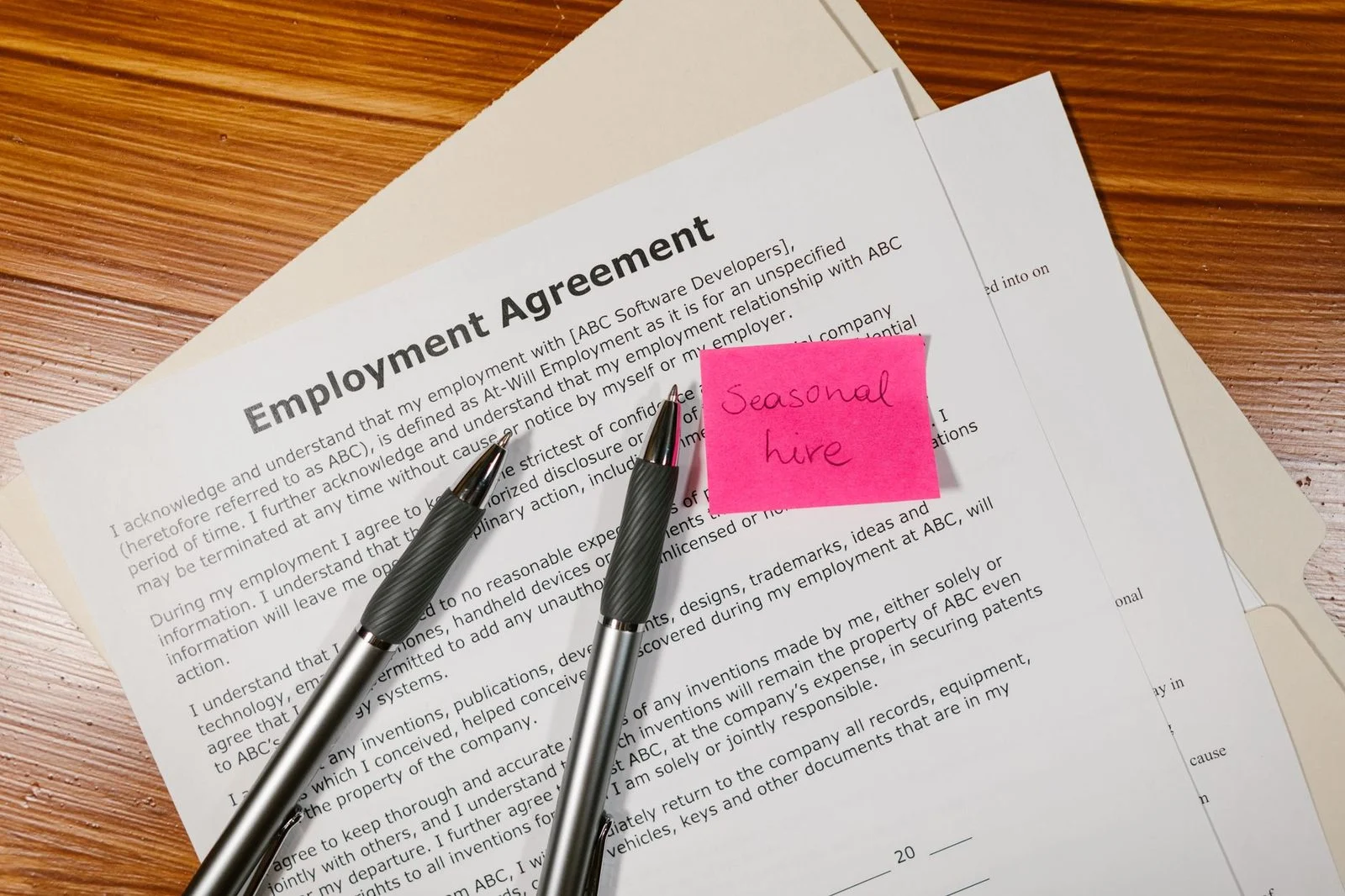
A written policy should state its purpose, who it covers, what it prohibits, and what happens when someone breaks it. Include these parts:
- Purpose and scope: which employees, job sites, and vehicles it covers.
- Prohibited conduct: using, possessing, selling, or working while impaired, plus any on-site rules.
- Notice and acknowledgment: a written copy for each employee, with a record that they received it.
- Education: the risks of drug and alcohol use and how the policy works.
- Help resources: any employee assistance or treatment options your business offers.
- Consequences: what happens after a violation, and how it fits your existing discipline steps.
Decide early whether the policy is a company rule or a contract, and draft the wording to match your intent. Florida courts look for clear words on that point.
Types of Employee Testing and How to Choose
Name each type of test your policy uses, because each one answers a different question. Common types include:
- Pre-employment: applied the same way to every candidate for the same job.
- Reasonable suspicion: triggered by written, specific observations of impairment.
- Post-accident: tied to defined incident types and applied the same way each time.
- Random: set out in advance and selected by a neutral method.
- Return-to-duty and follow-up: used for employees returning after a violation or treatment, as the program provides.
Pick the types that match your real job risks, and write down why. Then the policy explains its own choices.
Pre-employment testing overlaps with hiring checks. In a civil lawsuit over an employee’s intentional wrong (a tort) that harms a third person, Florida law presumes an employer wasn’t negligent in hiring if, before hiring, it ran a background investigation of the kinds listed in Fla. Stat. § 768.096 and the investigation did not reveal any information that reasonably demonstrated the unsuitability of the prospective employee for the particular work to be performed or for the employment in general.
Beyond Marijuana: Drugs, Alcohol, and Prescriptions
Name the substances your policy tests for and the alcohol standard it uses. A general word like “drugs” leaves managers guessing.
- Testing panels can cover many substances, not only marijuana.
- Alcohol testing is its own component, with its own method and impairment standard.
- Lawfully prescribed medicine needs a process. Give employees a private way to disclose prescriptions that affect safe work.
- Medical marijuana is a common question. State how the policy treats it at work, so managers don’t improvise.
- Definitions matter. If a result involves a substance the employee says was legally obtained, your written definitions and review steps decide how you respond.
A frequent mistake is testing for a substance without stating when a result counts as a violation.
Procedures for Collection, Testing, and Results
Every step from collection to decision should be written down and followed the same way each time. Solid programs usually cover these points:
- Collection and chain-of-custody steps that record each handoff of a sample.
- Lab testing, with a confirmation test before acting on any initial positive result.
- A chance for the employee to explain or challenge a result before action is taken.
- Confidential handling, limited to the managers who need to know.
- Records of notices, acknowledgments, the reason for each test, and the outcome.
Keep these records with the policy. A common gap is a rule that says “test on suspicion” but has no written list of signs or a process for documenting them. If a decision is challenged later, the file shows what you did and why.
Workers’ Compensation Questions Your Policy Should Answer
Florida law prohibits an employer from discharging, threatening to discharge, intimidating, or coercing an employee by reason of the employee’s valid claim for compensation or attempt to claim compensation under the Workers’ Compensation Law. See Fla. Stat. § 440.205.
Post-accident testing is where a test and a claim can overlap. Apply the rule the same way to every incident, and keep testing decisions separate from any decision about a claim.
The Florida Civil Rights Act also bars discrimination against someone because they opposed an unlawful employment practice, under Fla. Stat. § 760.10. The Act’s definition of employer requires 15 or more employees for each working day in each of 20 or more calendar weeks in the current or preceding calendar year, per Fla. Stat. § 760.02.
Not sure what your next step is?
Talk it through with our team — the first consultation is free, confidential, and carries no obligation.
How KEW Legal Helps Employers Build and Apply a Policy
KEW Legal helps employers draft a testing policy, roll it out, and apply it to a real decision as part of its outside general counsel work. The work follows these steps:
- Review: look at your handbook, past incidents, insurance requirements, and any contract terms that apply.
- Draft: write or revise the policy and testing steps to fit your operations and Florida law.
- Roll out: prepare notices, acknowledgment forms, and manager instructions.
- Train: show supervisors how to document reasonable suspicion and handle post-accident steps.
- Apply: advise on a specific incident or employee decision, including discipline and termination steps.
KEW Legal is a Florida business law firm with offices in Coral Gables and Sunny Isles Beach. It serves business owners and investors across Miami-Dade and South Florida. Kristina E. Wilson is the responsible lawyer for this page, and Natalie Martinez is also one of the firm’s lawyers. Employment law for employers is one of the areas our lawyers handle within that outside general counsel work.
Frequently Asked Questions
Can an employer fire someone for a positive test?
It depends on the facts. Every situation is different, so the specific facts of your matter are worth reviewing with a lawyer.
Can a drug testing policy for employees in Florida require a test after every accident?
Post-accident testing is set by your written policy, and it should use defined incident types. Apply the rule the same way every time.
How long does an employee have to file a discrimination complaint?
Under Fla. Stat. § 760.11, a person aggrieved by an alleged violation has 365 days from the violation to file a complaint with the Florida Commission on Human Relations, or may instead file with the federal Equal Employment Opportunity Commission or a state fair-employment-practice agency.
Are alcohol and drug testing the same?
No. Define each one separately in the policy, with its own method and standard.

Talk With KEW Legal About Your Drug Testing Policy
If an incident, an insurer’s question, or a gap you’ve noticed has you weighing a drug testing policy for employees in Florida, KEW Legal can talk it through with you. Bring your current handbook, any incident reports, and the question you need answered. The first consultation is free, confidential, and carries no obligation to continue. Call 305-990-2300, send us a message, or schedule a consultation.
How KEW Legal helps Florida employers
Written policies
We draft drug testing policies in plain language that explain when testing applies, what employees must do and how the process works.
Risk review
Our lawyers review your existing handbook, testing vendor agreements and employment documents so the policy fits together.
Manager guidance
We help supervisors understand how to apply the policy consistently and avoid decisions that are hard to explain later.
Ongoing counsel
As outside general counsel for business owners, we advise on employee questions and disputes as they come up.
Do not wait until a problem happens
A policy that is never written down, not shared with employees, or applied differently from one person to the next can create more difficulty than it prevents. Review your approach before an incident forces the decision.
What a well-drafted policy addresses
When testing happens
Clear descriptions of pre-employment, random, reasonable suspicion and post-incident testing, so each category is defined before it is used.
How employees are notified
Written notice, acknowledgment forms and a consistent way to communicate changes to the policy over time.
How results are handled
Defined steps for confirmation, employee responses, confidentiality and the actions that follow a result.
Records and vendors
Guidance on where documents are kept, who may access them and how testing providers are chosen and contracted.
Review your drug testing policy with KEW Legal
Related practice areas
- How Do I Manage Employees Legally in Florida? A Guide for Business Owners
- Employment Compliance When Your Florida Company Reaches 15 Employees
- Background Check and Hiring Policy Compliance for Florida Employers
Request a Consultation
Fill out the short form and we will take it from there.