

Employment Law | Coral Gables & Sunny Isles Beach
Thinking About a Severance Agreement? Know What Can Undermine It.
KEW Legal counsels Miami-Dade and South Florida business owners and employers on the terms, signing process and enforceability of severance agreements.
By Kristina E. Wilson · Published November 3, 2026
What voids a severance agreement? A severance agreement is voided when a basic contract element is missing, when a legal rule cancels it, or when it was signed under a defect the law recognizes. Instead, a specific term or the whole deal can be voidable or unenforceable.
This guide walks through the main Florida grounds. It is written for business owners and HR leads who manage a separation. For the broader picture, read our Florida employee problems guide.
What makes a severance agreement void, voidable, or unenforceable?
A voidable agreement can be cancelled by the party it protects. An unenforceable term is one a court won’t enforce, though the rest of the deal may still stand.
Florida courts apply the basic rules of contract law, including offer, acceptance, consideration, and essential terms stated clearly enough. The Florida Supreme Court in St. Joe Corp. v. McIver applies those requirements to contracts. If one is missing, the deal can fail.
Florida is an at-will state. Either side can end employment for any reason, except a reason the law prohibits, such as retaliation or unlawful discrimination. The Florida Supreme Court in Gessner v. Southern Co. restates that rule in 2026.
If a severance packet with a deadline is in front of you or someone you manage, we can review the agreement with you. Talk it through with our team — the first consultation is free, confidential, and carries no obligation.

Missing consideration: paying you what you were already owed
Florida’s Minimum Wage Act sets its own steps for unpaid minimum wages. The worker must first give the employer written notice. The employer then has 15 calendar days to pay or resolve the claim. Check what the payment adds beyond what is already owed, and read the written terms closely.
Duress, fraud, or mistake when you signed
A severance agreement can be challenged when it was signed under pressure, based on false statements, or built on a shared mistake. These defenses depend on the facts, so the details of the signing matter.
Mistake works differently. Under Waterside at Boynton Homeowners’ Ass’n, rescission for mutual mistake of fact is available only if the mistake is mutual and the fact goes to the essence of the contract. The term ‘mutual mistake of fact’ is one of law, and the equitable remedy of rescission is available only if the mistake is mutual and the fact is of the essence of the contract (Waterside at Boynton Homeowners’ Ass’n v. Southern Homes of Palm Beach, LLC).
Timing matters too. Ratification occurs when a party entitled to rescind a voidable contract fails to do so after the discovery of facts that warrant a rescission (Flaherty v. Flaherty). Under Flaherty v. Flaherty, ratification happens when the party entitled to rescind fails to do so after discovering the facts.
Can a severance agreement waive discrimination or retaliation claims?
Florida’s Civil Rights Act makes it unlawful for an employer to discriminate against an individual with respect to compensation, terms, conditions, or privileges of employment because of protected traits such as race, sex, age, and marital status.
The Whistle-Blower’s Act protects employees who object to, or refuse to take part in, an employer practice that violates a law, rule or regulation. The written-notice requirement appears in the disclosure provision of Fla. Stat. § 448.102, which states that this subsection “does not apply unless the employee has, in writing, brought the activity, policy, or practice to the attention of a supervisor or the employer.” Fla. Stat. § 448.102(1) reads: “However, this subsection does not apply unless the employee has, in writing, brought the activity, policy, or practice to the attention of a supervisor or the employer and has afforded the employer a reasonable opportunity to correct the activity, policy, or practice.”
Employers should also check handbooks. Under Quaker Oats Co. v. Jewell, policy statements in a manual are not enforceable contract rights unless the manual says explicitly that it is a separate employment contract. A severance promise made only in a handbook may not be enforceable on that basis.
Which terms may be unenforceable?
A term can be unenforceable when it conflicts with a statute, sets an unlawfully short deadline, or is too one-sided to enforce.
First, a clause that shortens the time to sue is void. The contracts-shortening-time statute says a contract period shorter than the statute of limitations is void. Second, unconscionability requires both unfair process and unfair terms. In Basulto v. Hialeah Automotive, the Florida Supreme Court weighed both together.
Third, non-compete and non-solicitation terms often sit inside severance deals. Under Florida’s restrictive covenant statute, a covenant must be in a writing signed by the person bound. Fla. Stat. § 542.335 reads: “In any action concerning enforcement of a restrictive covenant: (a) A court shall not enforce a restrictive covenant unless it is set forth in a writing signed by the person against whom enforcement is sought.” It must also be reasonable in time, area and line of business, and it must be supported by a legitimate business interest; a restrictive covenant without one is unlawful, void and unenforceable.
Can you sue after accepting severance?
Claims the release does not cover, or claims that arise after signing, are usually not affected by it. Timing rules also apply. A claim can also fail if the employee did not notify the employer as the statute requires.
Whether a particular claim survives turns on the exact wording and the facts. Read every release line by line before you sign.
Not sure what your next step is?
Talk it through with our team — the first consultation is free, confidential, and carries no obligation.
Does a severance package need to be signed, and are severance agreements confidential?
Most severance packages are offered in exchange for a signed release. Signing is the employee’s choice, but declining usually means giving up the offered payments.
You can ask for time to review, ask questions about specific terms, and request changes. Whether an employer will change terms is up to that employer.
Many agreements include confidentiality clauses covering the terms of the payment. Their reach comes from the written text and the law that applies.
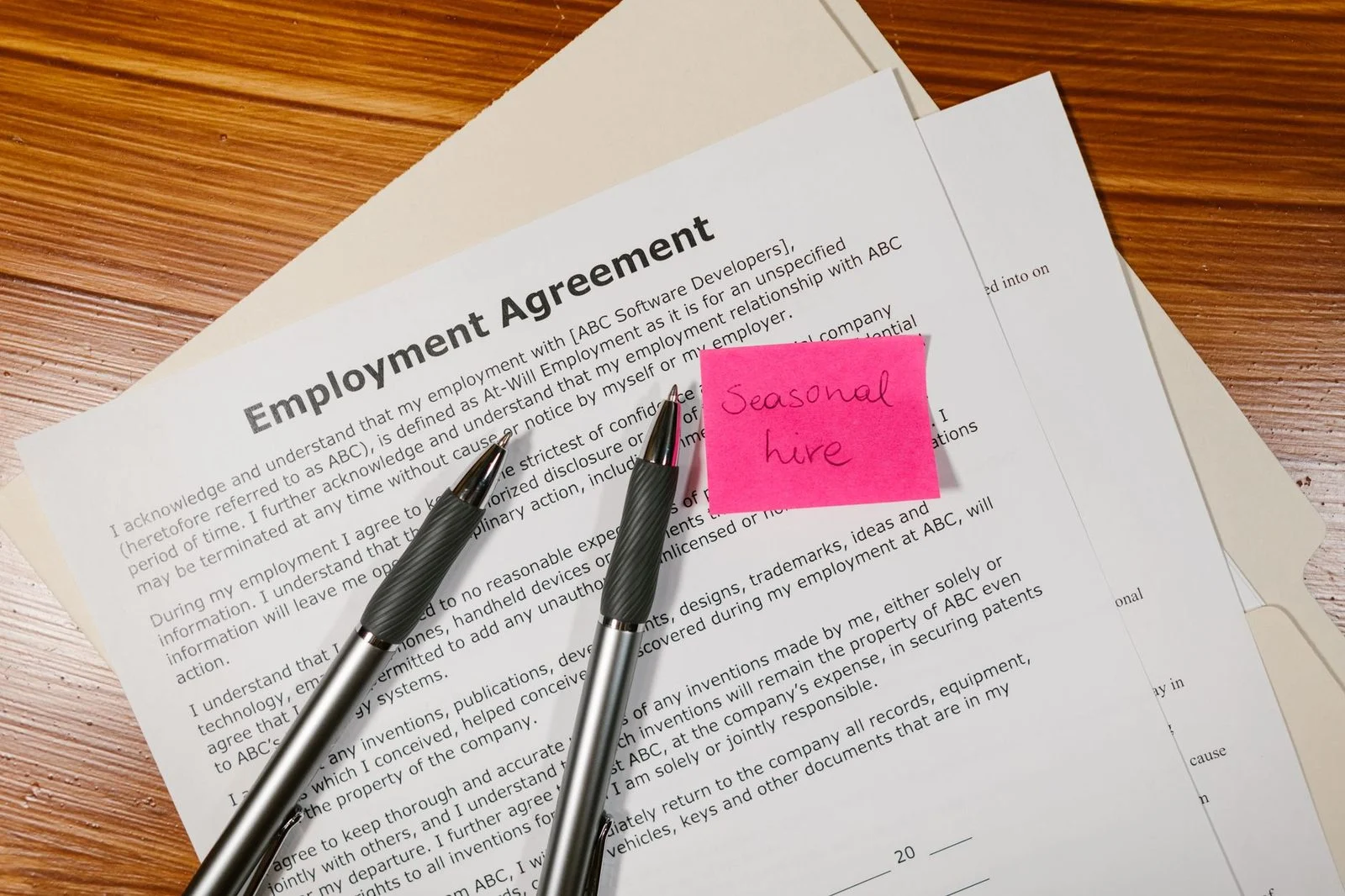
What to do when a severance deadline is on the table
Write down the deadline, keep every copy of the agreement, and save every message. Avoid signing under pressure. These steps help whether you are the employee or the business owner.
Note what was said and when, including any verbal promise. Record dates and names. A reader handling someone else’s separation may feel the weight of a job or a livelihood at stake. Slowing down helps.
Frequently asked questions
Can you sue after signing a severance agreement?
Sometimes.
Is a severance agreement legally binding in Florida?
Yes, if it meets basic contract requirements and no defense or statute voids it.
What makes a severance agreement voidable?
Pressure, fraud, or a qualifying mistake at signing can make it voidable, and those defenses turn on the facts.
If a severance packet with a deadline is on your desk or someone else’s, call 305-990-2300 or send us a message. Our first consultation is free, confidential, and without obligation to continue. KEW Legal has offices in Coral Gables and Sunny Isles Beach. If a matter falls outside our practice, we will tell you and may refer you to another firm.
Kristina E. Wilson is the responsible lawyer for this page. This page is general information, not legal advice.
Don't assume a signed agreement is final
A signature does not settle every question. Terms, the circumstances of signing and the surrounding facts can all matter. Review the agreement with counsel before you sign it or rely on it.
Issues that often come up in severance reviews
Pressure or coercion
Whether the agreement was presented with threats, undue pressure or an unreasonably rushed process is often a central question.
Misrepresentation or fraud
Statements about the terms, the release or the employee's rights can shape whether the agreement holds up.
Mistakes in the agreement
Errors in amounts, dates, scope or the parties involved can create disputes about what was actually agreed.
Unclear or one-sided terms
Vague release language or lopsided obligations can lead to disagreement over what each side must do.
How KEW Legal approaches severance agreements
Full-document review
We read the actual release language, payment terms, confidentiality and non-disparagement provisions, and the circumstances around signing.
Protection for employers and owners
We help employers draft and evaluate severance terms designed to reduce avoidable disputes.
Ongoing business counsel
KEW Legal also serves as outside general counsel for business owners who need employment advice on a continuing basis.
Plain-language guidance
We explain the options and risks in terms you can act on, in English or Spanish.
Have a severance agreement to review?
Start with a free, confidential consultation with no obligation to continue.
Related practice areas
- What qualifies as job abandonment?
- What is a hostile work environment in Florida?
- Can a company withhold a final paycheck?
Request a Consultation
Fill out the short form and we will take it from there.