

Employment Law for Employers | Coral Gables & Sunny Isles Beach
Facing an Employee Claim for Unpaid Commission?
KEW Legal helps Florida employers review commission plans, respond to demands and work toward a resolution. Free, confidential first consultation with no obligation to continue.
By Kristina E. Wilson · Published October 31, 2026
What should a Florida employer do when an employee claims unpaid commission? Start by reading the signed plan, pulling the sales and payroll records, and contacting KEW Legal before answering the demand. Most of these disputes turn on three things: the plan’s exact words, the event that triggers payment, and what the paper trail shows. This guide walks through those points from the employer’s side, along with the first steps to take.
What a Commission or Bonus Pay Dispute Involves
A commission or bonus dispute starts when an employee says pay tied to a sale, a target, or a payout date was missing, short, or held back. These disputes most often involve sales staff, account managers, brokers, and anyone paid on revenue or performance goals.
Disputes tend to start at predictable points:
- A resignation or firing close to a deal closing.
- A plan change in the middle of the year.
- Two people claiming credit for the same sale.
- A bonus labeled discretionary that the employee expected to receive.
Many claims mix contract questions with wage questions. The employee may argue the plan was a binding promise. The employee may also argue the unpaid amount is a wage violation. Each theory has its own rules, so both get reviewed.
KEW Legal’s Coral Gables office handles employer-side pay disputes. Kristina E. Wilson is the responsible lawyer for this page, and the firm’s lawyers, including Natalie Martinez, work with the firm’s support staff.
If an employee has sent you a commission or bonus demand, you don't have to work out the response alone, and KEW Legal can review the facts with you. Talk it through with our team — the first consultation is free, confidential, and carries no obligation.
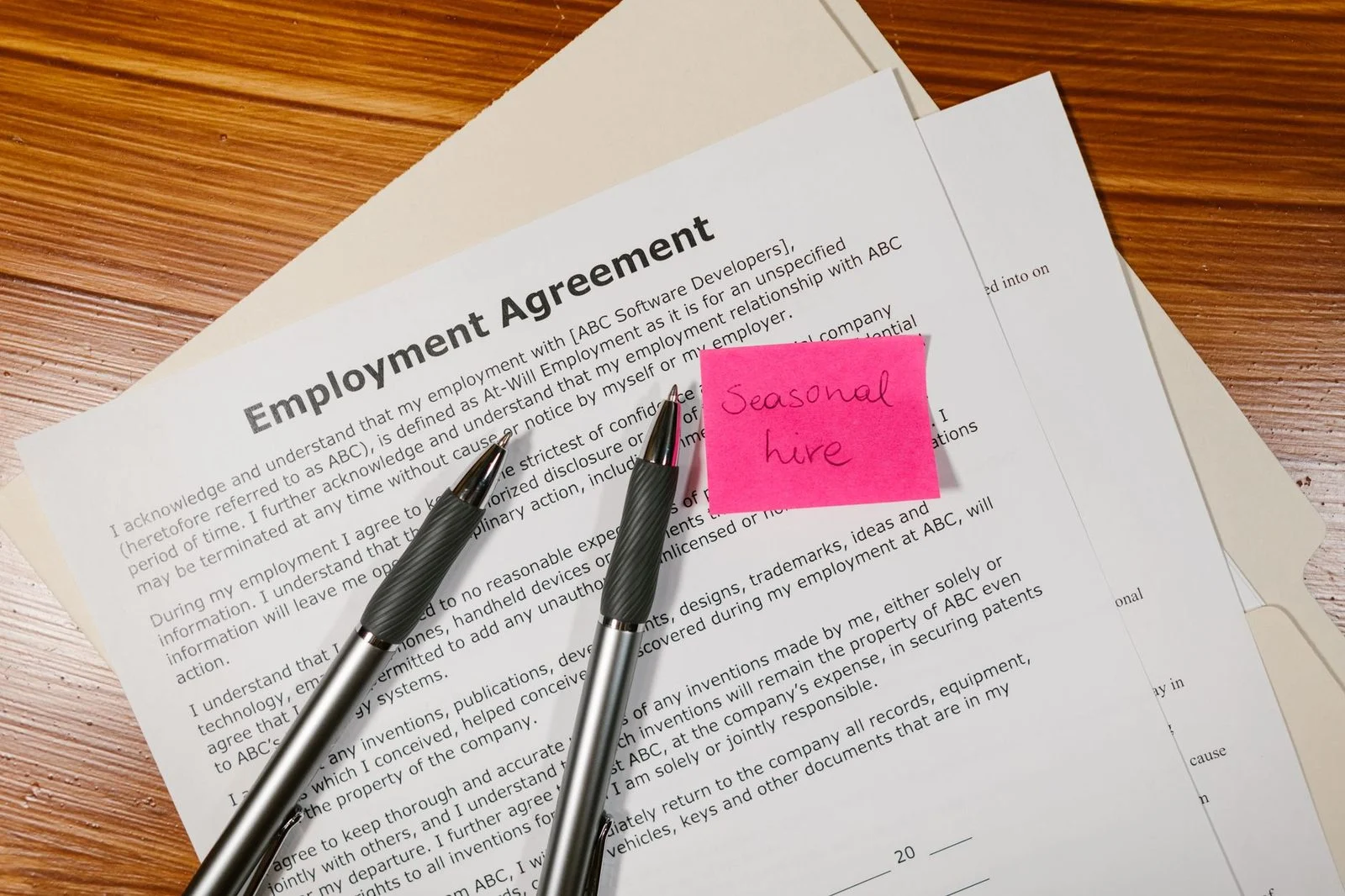
Is the Commission or Bonus Actually Owed?
Whether pay is owed usually turns on the governing document, the event that earns the pay, and the records that show what happened.
- Start with the signed commission plan, offer letter, or bonus policy.
- Compare “earned” with “paid.” Some plans require the employee to still be employed on the payout date. Others do not.
- Read the rules for returns, cancellations, and chargebacks. A clear clawback formula settles more questions than a vague one.
- Check how split and house accounts were assigned. Moving an account to house status after a departure is a common source of disputes.
- Separate a formula-based bonus from a discretionary one. A bonus the employer always paid can change how a dispute is read.
- Read handbook language carefully. Under Florida law, policy statements in an employment manual generally do not create enforceable contract rights unless they show an explicit mutual agreement that the manual is a separate employment contract. Quaker Oats Co. v. Jewell.
- Oral promises are harder to prove. Emails and texts often decide what was said.
- Build a dated timeline of the sale, the trigger, the payroll cycle, and every written message about the amount.
Florida Pay Laws That May Apply
Florida gives employees several ways to pursue unpaid wages. Each has its own remedies and time limits.
- Minimum wage. The Florida minimum wage amendment requires employers to pay employees at least the minimum wage for all hours worked in Florida, but only individuals entitled to the federal minimum wage under the federal Fair Labor Standards Act are eligible for the state minimum wage.
- Notice first. Before suing for unpaid minimum wages under the Florida Minimum Wage Act, an employee must give written notice. The employer then has 15 calendar days to pay or resolve the claim, and the time limit pauses during that window.
- Fees. In an unpaid wage action, a court may award costs and a reasonable attorney’s fee to the prevailing party. See Fla. Stat. § 448.08.
- Deadlines. Florida law sets time limits for filing contract claims, and those limits can differ depending on whether the agreement is in writing.
- Retaliation. If an employee says the employer punished them for objecting to an unlawful practice, Fla. Stat. § 448.102 prohibits retaliatory personnel action against an employee for objecting to, or refusing to participate in, an activity, policy, or practice of the employer that violates a law, rule, or regulation. A suit under Fla. Stat. § 448.103 must be brought within 2 years after the employee discovers the action, or 4 years after it was taken, whichever is earlier.
- Proof. In Gessner v. Southern Co. (2026), the Florida Supreme Court held that the employee must prove the practice is, by definition, a violation of law.
Federal wage law may also apply. How the rules fit together depends on the facts.
What Employers Should Do in the First Week
In the first week, an employer should keep every record, avoid anything that looks like retaliation, and bring counsel in before answering the demand.
- Preserve records. Keep sales data, CRM notes, emails, texts, and payroll files. Pause routine deletion until the review is done.
- Avoid retaliation. Under the retaliation rules above, route every decision about the employee through counsel first.
- Hold off on promises. A casual message that admits money is owed can shape the dispute. Keep written replies short and factual.
- Pull every version. Gather prior-year plans, amendments, and offer letters.
- Check consistency. Look at how the same plan was applied to other employees. Inconsistent treatment can change the analysis.
- Note the clock. Fla. Stat. § 45.061 describes an offer of settlement served more than 60 days after service of the summons and complaint and not less than 60 days before trial. However, the section states that it ‘does not apply to causes of action that accrue after the effective date of this act.’ Fla. Stat. § 45.061 reads: “The offer shall remain open for 45 days unless withdrawn sooner by a writing served on the offeree prior to acceptance by the offeree.” It stays open for 45 days unless it is withdrawn or accepted; an offer not accepted within 45 days is deemed rejected.
How KEW Legal Handles Commission and Bonus Disputes for Employers
KEW Legal acts as outside general counsel for business owners and investors across Miami-Dade and South Florida. It starts with the facts before taking a position.
- Intake. A confidential review of the demand, the plan language, and the sales and payroll records.
- Analysis. A map of what is documented, what is disputed, which laws may apply, and which deadlines may be running.
- Response. A written position, a settlement approach, or a negotiated payout plan, based on what the records support. Contesting a claim carries cost risk. Under Fla. Stat. § 57.105, upon the court’s own initiative or the motion of a party, the court shall award a reasonable attorney’s fee, to be paid in equal amounts by the losing party and the losing party’s attorney, when the court finds that the losing party or its attorney knew or should have known that a claim or defense was not supported by the material facts necessary to establish it or would not be supported by then-existing law applied to those facts. Monetary sanctions may not be awarded on the existing-law ground if the claim or defense was presented as a good faith argument for extending, modifying, or reversing existing law, or establishing new law, with a reasonable expectation of success.
- Resolution or escalation. If the claim goes forward, the matter may move into litigation or an agency process. The employer stays informed at each step.
Timelines vary with the records and the claim, and no result is promised. The first consultation is free, confidential, and carries no obligation to continue.
Drafting Commission and Bonus Plans That Reduce Disputes
A clear, signed, written plan reduces the arguments that lead to disputes.
- Put the plan in writing, sign and date it, and keep every prior version.
- Name the trigger: booking, shipment, invoice, cash collection, or payment receipt. State which one controls payout.
- Say whether employment must continue through the payout date, and how a resignation or firing affects earned commission.
- Write a clawback formula for cancellations, refunds, and chargebacks.
- For post-termination commission, name the tail period and the accounts it covers.
- Call a bonus discretionary only when the employer truly keeps that discretion, and apply it the same way each time.
- If the plan should bind the company and the employee, say so in the plan and have the employee sign it. A handbook section alone may not be enough.
- Set a written process and deadline for disputing a commission calculation.
- Review the plan each year and after major changes to territory, quota, or product mix.
Not sure what your next step is?
Talk it through with our team — the first consultation is free, confidential, and carries no obligation.

Frequently Asked Questions
Can an employee claim commission after leaving the company?
It depends on the plan’s wording about earned commission and post-termination sales. KEW Legal reviews that language first.
Does a commission agreement have to be in writing in Florida?
A written plan is the clearest proof of the terms. Oral terms can still be disputed, so a signed plan protects both sides.
Is a bonus always owed if the employer promised one?
Not always. It turns on whether the bonus was a formula-based entitlement or a discretionary payment, and on how the employer described it.
What should I do if I receive a demand letter today?
Preserve records, avoid retaliation, make no written promises, and contact KEW Legal promptly.
Who pays attorney’s fees in an unpaid wage case?
Under Florida law, a court may award costs and a reasonable attorney’s fee to the prevailing party in an action for unpaid wages.
How long do I have to respond to a minimum wage notice?
Under the Florida Minimum Wage Act, the employer has 15 calendar days after receiving the written notice to pay or resolve the claim.
If an employee has just sent you a commission or bonus demand, you don’t have to sort out the response alone. Call 305-990-2300 or use the contact form to talk the facts through with KEW Legal.
How KEW Legal Works With Employers
Plan-First Review
We start with the written commission agreement, offer letters, sales records and any pay communications to understand what the plan actually says.
Employer-Side Focus
KEW Legal represents business owners and employers across Miami-Dade and Broward County on employment and commission matters.
Clear Communication
We explain your options in plain language so you can make informed decisions about responding to the employee and the next steps.
Practical Options
Depending on the facts, we discuss negotiation, written responses, mediation or other paths to resolve the dispute.
Do Not Ignore a Demand Letter
Silence, or an informal promise to pay, can complicate a commission dispute. Route communications through counsel and keep records of every pay decision and related discussion.
Common Steps in an Employer Commission Dispute
1. Gather Your Documents
Collect the signed plan, any amendments, commission statements, CRM or sales data, and payroll records tied to the claim.
2. Review the Plan Language
Look closely at how commissions are earned, when they are paid and what the plan says about sales made after employment ends.
3. Respond in Writing
A measured, accurate written response helps frame the issue and avoids statements that could be used later.
4. Explore Resolution
Many disputes are resolved through negotiation or mediation. We help you weigh those options against the cost and risk of litigation.
Talk With KEW Legal About Your Commission Dispute. Free, Confidential First Consultation.
Related practice areas
- Employee Problems at a Florida Business: What Owners Should Do First
Request a Consultation
Fill out the short form and we will take it from there.