

Employment Law for Employers · Coral Gables & Sunny Isles Beach
Florida Employee Nondisclosure Agreements: Understanding Their Limits
Confidentiality terms work best when they track the information a role really touches. Here is how business owners can review them with that in mind.
By Kristina E. Wilson · Published November 5, 2026
Your company needs to protect its secrets, and you need to stay within Florida law. Knowing the employee nondisclosure agreement limits in Florida helps you do both. If you are considering having an employee sign a nondisclosure agreement, keep in mind that it can protect real business information, but it cannot be used to keep a worker from reporting suspected illegal conduct to a government agency.
The line is clearer than most templates suggest. The wording of each clause decides which side of that line it falls on.
What an Employee Non-Disclosure Agreement Can Protect
An employee NDA can protect confidential information that gives your company an edge over competitors. Common examples include customer lists, pricing and margin data, supplier terms, internal processes, and trade secrets.
Florida defines a trade secret in its trade secret statute, Fla. Stat. § 688.002. In plain terms, it is information that is worth money because others don’t know it, and that you take reasonable steps to keep secret. A pricing formula or a proprietary process can fit that definition. A general conversation about the office usually does not.
The NDA works alongside that statute. Florida’s trade secret law says it does not affect contractual remedies, so a signed agreement can give you rights of its own (§ 688.008). Each restricted category should also tie to a legitimate business interest. Florida’s restrictive covenant statute, § 542.335, requires the party seeking enforcement to prove one. Trade secrets and valuable confidential information both qualify. A clause that covers everything an employee sees is not tied to a legitimate business interest, and an overbroad clause is not simply enforced as written: if the restraint is overbroad, overlong, or otherwise not reasonably necessary, a court shall modify the restraint and grant only the relief reasonably necessary to protect such interest or interests.
If you're drafting a new-hire NDA, or an employee just raised a complaint and you're unsure what the agreement allows, we can help you sort through it. Talk it through with our team — the first consultation is free, confidential, and carries no obligation.
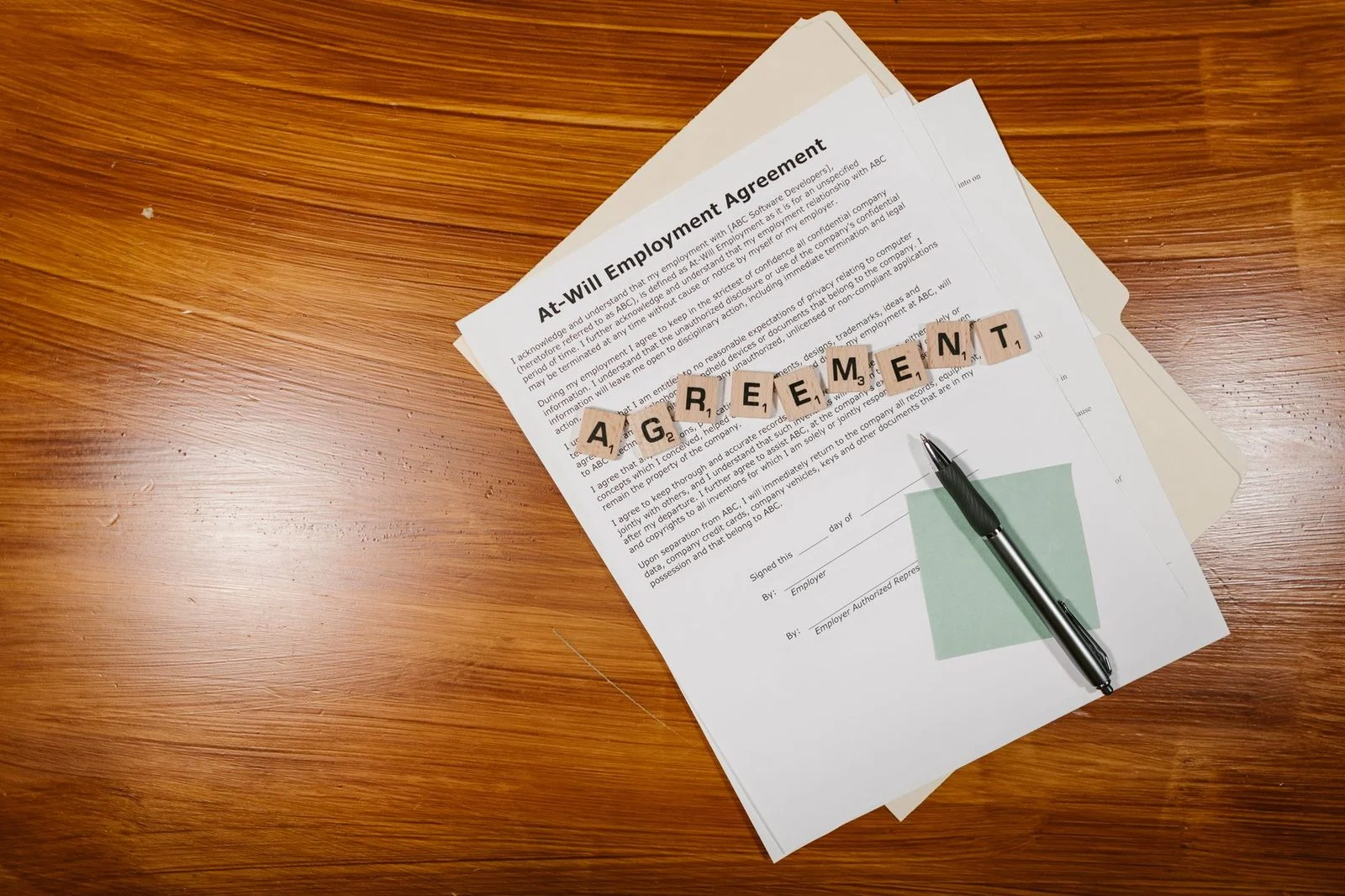
Where an NDA Cannot Reach: Reporting Unlawful Conduct to Agencies
Under § 448.102(1), an employer may not take retaliatory personnel action against an employee who has disclosed, under oath and in writing, to an appropriate governmental agency an employer activity, policy, or practice that violates a law, rule, or regulation, subject to the statute’s written-notice condition. Fla. Stat. § 448.102 reads: “However, this subsection does not apply unless the employee has, in writing, brought the activity, policy, or practice to the attention of a supervisor or the employer and has afforded the employer a reasonable opportunity to correct the activity, policy, or practice.” Florida’s private-sector whistle-blower statute bars retaliation against an employee who provides information to, or testifies before, an agency investigating an employer’s possible violation (§ 448.102).
The same statute also protects an employee who objects to, or refuses to take part in, a practice that violates a law, rule or regulation.
There is a condition to know. For the agency-disclosure protection, the employee must first bring the problem to the employer in writing and give the employer a reasonable chance to correct it. Build a clear written reporting path into your policies so this step is easy to follow.
Retaliation claims also have time limits. Under § 448.103, an employee may sue within 2 years after discovering the retaliation, or within 4 years after the action was taken, whichever is earlier. Under § 448.103, recovery is barred if the employee did not give the employer the written notice that § 448.102(1) requires before an agency disclosure, or if the retaliatory personnel action was predicated upon a ground other than the employee’s exercise of a protected right.
A clause that tells employees not to talk to regulators invites a retaliation claim.
Florida Private Whistleblower Act Protections
The risk comes from the wording, not from confidentiality itself. A safer approach names the specific categories you protect, such as customer pricing files or unreleased product plans. It does not sweep in everyday talk about wages, schedules or working conditions.
Common Drafting Pitfalls That Weaken an Employer’s NDA
The most common NDA weaknesses are overly broad definitions, missing exceptions, and no clear return-of-materials step. Watch for these four problems:
- Definitions that cover general skills, public information, or the employee’s own pay.
- No carve-out for agency reporting, testimony, or disclosures the law requires.
- No instruction to return or destroy confidential materials at separation, and no record of it.
- Uneven use of the agreement across people in similar roles.
Florida courts can narrow an overbroad restriction instead of always throwing it out. Under § 542.335, a court shall modify an overbroad or overlong restraint and grant only the relief reasonably necessary. A narrow, specific clause is still easier to defend.
Also, a confidentiality rule in a handbook is usually not a contract. Florida courts hold that handbook policies are not enforceable contract rights unless they contain specific language showing the parties explicitly agreed the manual is a separate employment contract (Quaker Oats Co. v. Jewell). A handbook policy does not replace a signed NDA.
Harassment-Related Confidentiality Terms Need Separate Review
Confidentiality terms that touch on harassment complaints need separate, careful review.
A clause that silences an employee about a harassment concern, before any dispute arises, is the kind of term that needs a closer look. Review when the clause is presented, how it is worded, and whether it could stop an employee from raising a concern.
Employees who want to raise discrimination or harassment with the federal government can use the EEOC charge process. Your agreement should not block that route.
NDAs, Non-Solicitation, and Non-Compete Agreements Compared
An NDA restricts how information is used or shared. A non-compete restricts working for a competitor. A non-solicitation agreement restricts contacting customers or employees after someone leaves.
Florida’s restrictive covenant statute, § 542.335, governs many of these agreements. It requires a signed writing and a legitimate business interest. The restraint must also be reasonably necessary to protect that interest.
The 2025 CHOICE Act added separate rules for certain noncompetes. Under § 542.45, a covered noncompete must include written advice of the right to seek counsel. Fla. Stat. § 542.45 reads: “(2) RESTRAINT OF TRADE.—A covered noncompete agreement does not violate public policy as a restraint of trade, as described in s. 542.18, or an attempt to monopolize trade or commerce in this state, as described in s. 542.19, and is fully enforceable according to its terms, provided that: (a) A covered employee was advised, in writing, of the right to seek counsel before execution of the covered noncompete agreement and was provided notice as described in subsection (3).” Under Fla. Stat. § 542.45, a court must presume that an employee or individual contractor has access to confidential information or customer relationships if the employee or individual contractor acknowledges the access or receipt of such access in writing. A covered noncompete may not exceed 4 years (§ 542.43).
Don’t assume an NDA follows the same rules as a noncompete. Which rules apply depends on the agreement’s terms and the employee’s pay.
Not sure what your next step is?
Talk it through with our team — the first consultation is free, confidential, and carries no obligation.
Questions Employers Ask About Employee NDAs in Florida
Most questions come down to one test: does the clause protect real business information without reaching protected speech?
What does Florida law say about NDAs and government reporting?
Can I require an NDA from every employee?
Coverage should match a documented business need. Restrict only the information each job actually touches.
Do NDAs need updating when duties change?
Review is wise when the confidential information an employee handles changes a lot. A narrow update protects you better than an old, broad form.
Should an NDA be signed at hiring or at separation?
Either timing can work. Both need a signed writing, specific categories, and consistent use across similar roles.

Reviewing Your Employee NDA With KEW Legal
KEW Legal can review your employee NDA against the limits described above. We work with business owners and employers across Miami-Dade County, Broward County and South Florida.
KEW Legal is a Florida business law firm with offices in Coral Gables and Sunny Isles Beach. This page was prepared with responsibility held by Kristina E. Wilson, one of the firm’s lawyers.
If you’re drafting a new-hire NDA, or an employee just raised a complaint about a practice you’re unsure is lawful, share the agreement or the facts with us. Our team can review the wording before it is signed or enforced. The first consultation is free, confidential, and carries no obligation to continue.
Call 305-990-2300 or send us a message.
How KEW Legal helps employers with confidentiality agreements
Agreements matched to the role
We help you review what each position actually handles, so confidentiality terms are tied to real business needs.
Drafting and updates
When duties change or the information an employee handles shifts, we help revise the form instead of relying on an outdated one.
Employment law focused on employers
Our attention is on the employer side of workplace agreements, policies and day-to-day employee questions.
Outside general counsel
Business owners can bring employee agreement questions to us as part of ongoing guidance for their company.
An older or overly broad form can create problems
A nondisclosure form written years ago, or one copied for every employee regardless of role, may not fit how your business operates today. Review it before you rely on it.
Questions to review with counsel
Scope of the information
Which specific information does this role need to protect, and which information is unrelated to the work?
Duration and reach
How long should confidentiality obligations last, and what do they cover after the employment ends?
Changes over time
Has the employee's role, the business's operations or the sensitivity of its information changed since the agreement was signed?
Related agreements and policies
How does the nondisclosure agreement fit alongside handbook policies, separation terms and other employee documents?
Review your employee agreements with KEW Legal. Our initial consultation is free, confidential and comes with no obligation to continue.
Related practice areas
Request a Consultation
Fill out the short form and we will take it from there.