
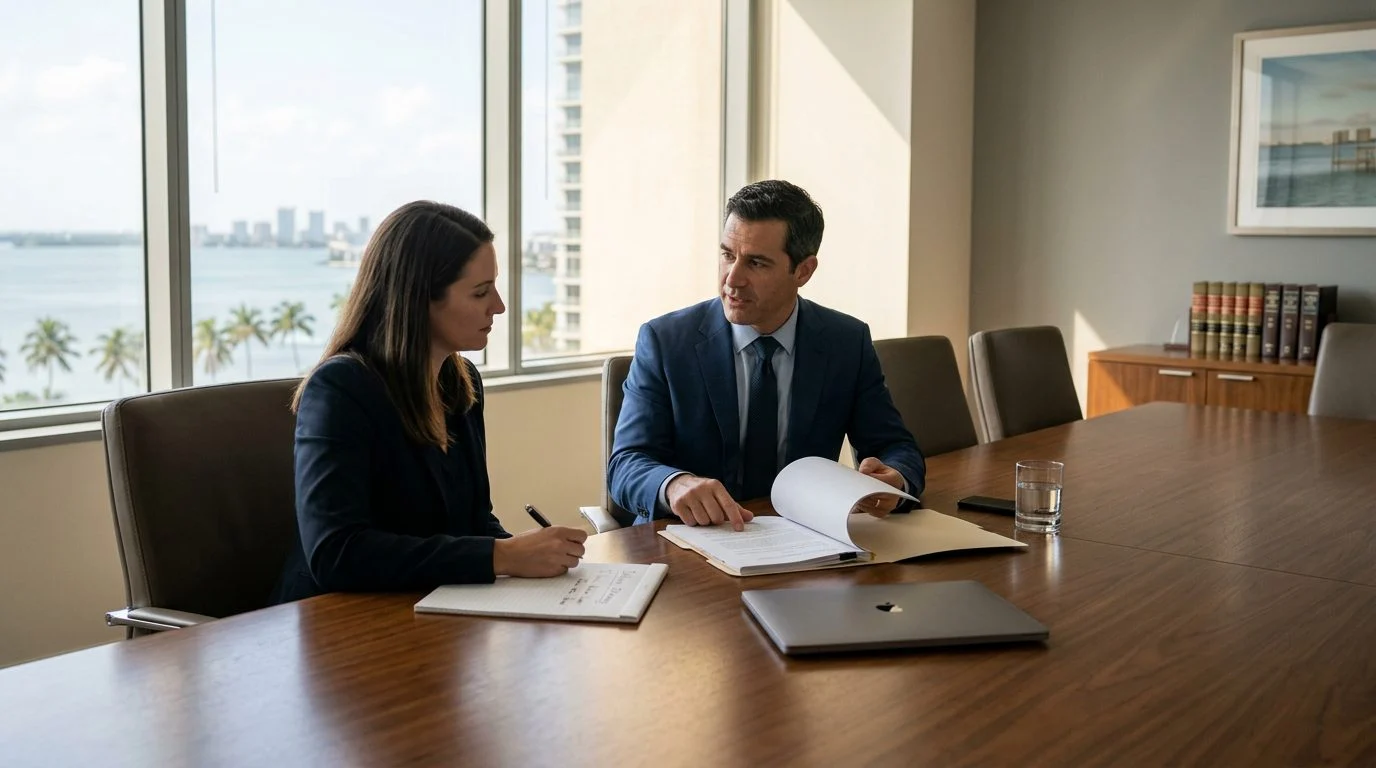
Employment Law for Employers | Coral Gables and Sunny Isles Beach
Wrongful Termination Defense for Florida Employers
KEW Legal helps business owners and managers across Miami-Dade and South Florida review terminations, respond to employee claims, and protect the company before and after a dispute begins.
Why Employers Call KEW Legal
Free
First consultation, confidential and with no obligation to continue
2
Offices in Coral Gables and Sunny Isles Beach
Miami-Dade
and Broward County business clients
By Kristina E. Wilson · Published October 29, 2026
A wrongful termination defense attorney for employers Florida businesses can call works on the company’s side of these disputes. The work can start before a firing is final, and it continues if an employee files a demand letter, an agency charge or a lawsuit. KEW Legal represents employers in these matters from offices in Coral Gables and Sunny Isles Beach. This page explains the claims Florida employers face, the steps that lower risk, and how a defense engagement runs.
What Wrongful Termination Defense Covers for Florida Employers
Wrongful termination defense protects a company accused of firing an employee unlawfully. It has two parts. The first is a review of a planned termination before the decision is final. The second is defense after a claim arrives, including responses to demand letters and agency charges and, when needed, litigation.
This work fits owners, managers and HR teams in Florida. It applies when an employee has sent a demand letter, when a government agency has opened a charge, when a lawsuit has been filed, or when a manager is weighing a firing that could lead to a complaint.
KEW Legal represents employers. The firm also works as outside general counsel for businesses. That means employment questions are handled together with contracts, commercial leases and ownership issues, so a company does not need separate advisers for each part of the same problem.
If you are holding a termination decision, a demand letter or an agency notice that calls your firing unlawful, you do not have to face the next step alone; our team is ready to talk. Talk it through with our team — the first consultation is free, confidential, and carries no obligation.
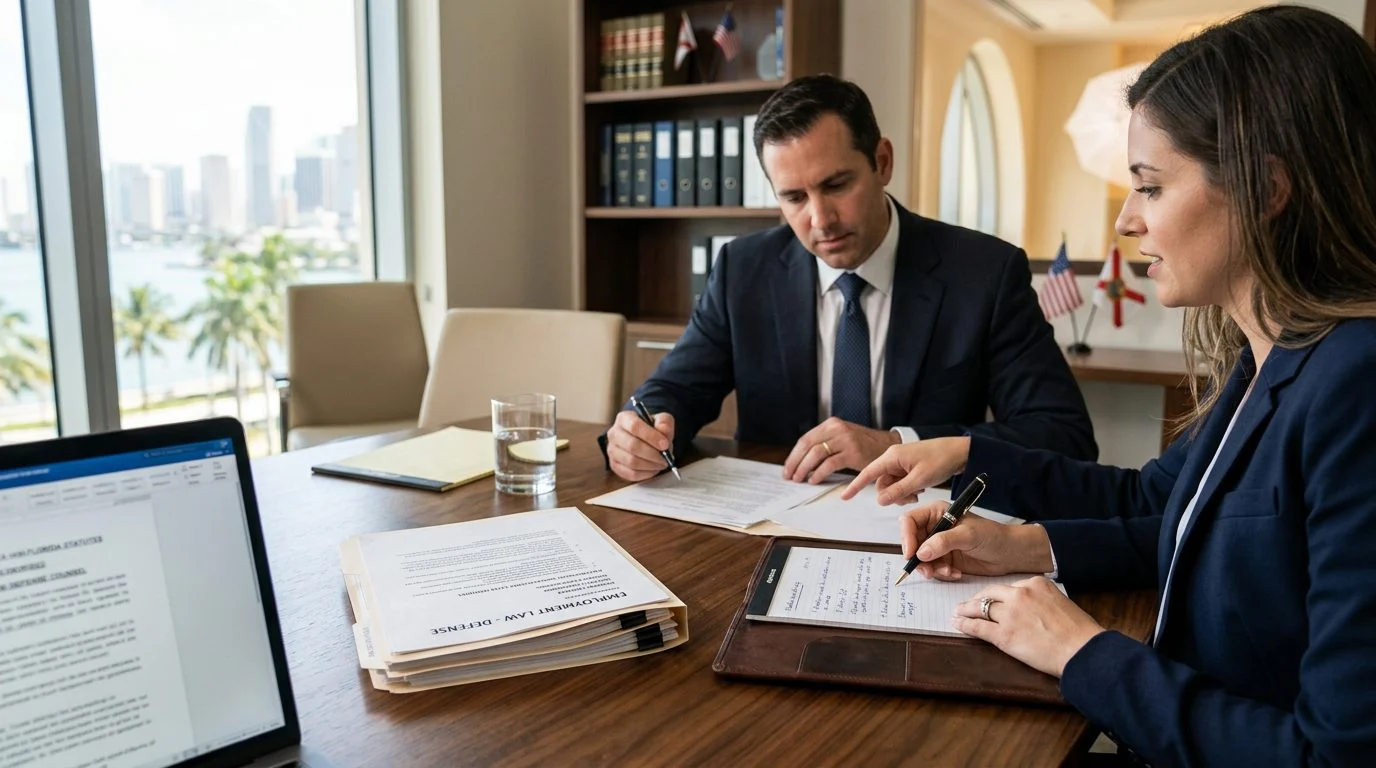
Florida’s At-Will Rule and the Claims Employers Actually Face
Florida is an at-will employment state, but the right to end a job has limits. An employer still cannot act for a reason the law prohibits.
Four kinds of claims matter most here:
- Discrimination. Under Fla. Stat. § 760.10, an employer may not discharge someone because of race, color, religion, sex, pregnancy, national origin, age, handicap or marital status. The Florida Civil Rights Act covers employers that employ 15 or more employees for each working day in each of 20 or more calendar weeks in the current or preceding calendar year, as Fla. Stat. § 760.02 defines that term.
- For the whistle-blower provisions in Fla. Stat. § 448.101, an employer is any private individual, firm, partnership, institution, corporation, or association that employs ten or more persons.
- Workers’ compensation retaliation. Fla. Stat. § 440.205 bars an employer from discharging, threatening to discharge, intimidating or coercing an employee because of a valid compensation claim or an attempt to claim compensation.
- Written promises.
Total punitive damages to one aggrieved person may not exceed $100,000, under Fla. Stat. § 760.11. Each claim has its own elements, so the facts decide which one fits.
Steps to Reduce Termination Risk Before Any Decision Is Final
A documented, consistent decision is easier to defend. Review these points before the employee hears the news.
- The reason. Write down the business reason before acting. Confirm it is the real reason.
- Consistency. Check whether comparable employees were handled the same way.
- Timing. A firing close to a complaint, a leave request or a workers’ compensation claim can draw close scrutiny.
- The file. Review performance reviews, warnings, emails and text messages. Someone will read them later.
- Written terms. Compare the planned action against the handbook, offer letter and any signed agreement. The wording decides what binds.
- Written notice. If the employee says they raised a legal violation, check whether it was put in writing.
Start this review before the termination date, not after a demand letter arrives.
How a Wrongful Termination Defense Engagement Works
Most engagements follow five steps, from the first call through litigation if the matter does not resolve earlier. The firm sets the order based on the deadlines in front of the employer.
- Intake call. The firm hears about the termination, the employee’s allegations and any deadlines in a demand letter or agency notice.
- Document review. The firm collects personnel files, policies, messages and a timeline of the decision.
- Assessment. The firm evaluates the claims and the company’s defenses, then gives a plan the employer can act on.
- Response or negotiation. The firm responds to the demand letter or agency charge, or negotiates where that fits the employer’s goals.
- Litigation defense. If the matter is not resolved, the firm handles discovery, motions and trial.
Some claims carry short filing windows. Under Fla. Stat. § 448.103, a Whistle-Blower’s Act suit must be filed within 2 years after the employee discovers the retaliation or within 4 years after the action, whichever is earlier. How long each stage takes depends on the facts and the forum.
Why Florida Employers Work With KEW Legal
KEW Legal focuses its practice on business law for owners and investors in Miami-Dade and South Florida. Employment matters for employers are part of that work.
The firm has offices in Coral Gables and Sunny Isles Beach. Employers can meet with the firm in person at either location.
Kristina E. Wilson is the responsible lawyer for this page. The firm’s lawyers include Kristina E. Wilson and Natalie Martinez.
Outside general counsel means one firm handles a company’s ongoing legal questions. When an employment question comes up, the firm can review it alongside contracts, commercial leases and ownership terms. Employers do not have to explain the same business to several advisers.
Common Questions From Employers Facing a Termination Dispute
Employers usually ask whether Florida lets them fire at will, when to call counsel, and what a first consultation involves.
Is Florida an at-will state?
Yes. Either side may end an indefinite job at any time, but not for a reason the law prohibits.
Should we involve counsel before a termination is final?
Review before the decision is final is generally the lower-risk path. It gives the company time to test its reasons before the employee reacts.
What happens after an EEOC or Florida Commission on Human Relations charge?
The employer responds within the agency’s deadlines, and counsel usually prepares that response. The EEOC guidance for employers covers federal anti-discrimination duties.
Can we still be sued after a separation agreement is signed?
The agreement’s terms and the way it was signed both matter. Bring it to counsel for review before relying on it.
Are outcomes predictable?
No one can promise a result. Each matter turns on its own facts.
Are consultations free?
The first consultation is free, confidential and without obligation to continue.
Not sure what your next step is?
Talk it through with our team — the first consultation is free, confidential, and carries no obligation.

Talk to KEW Legal About a Termination Decision or Claim Before You Act
A termination decision, a demand letter or an agency notice can carry deadlines that are already running. Early review gives the employer more room to respond.
Call 305-990-2300 or send us a message through the contact page to schedule your first consultation. Our Coral Gables and Sunny Isles Beach offices are available for in-person meetings.
How We Work With Employers
Outside general counsel
We act as an ongoing legal resource for business owners, so employment questions get reviewed by counsel who already knows your company.
Records-first review
We examine the personnel file, timeline, policies, and communications behind a termination so the company can test its reasons before it acts.
Clear, direct communication
You get plain-language advice on your options, the likely risks, and the next steps, without legal jargon.
Protection through every stage
From a pre-termination review to a demand letter or a pending claim, we focus on protecting the company's interests.
Review Before the Decision Is Final
Terminations that are reviewed before they take effect give the company time to check its documentation and reasons. Contact us before you notify the employee when you can.
What We Handle for Employers
Pre-termination review
We review the proposed decision, supporting documents, and timing before the company acts.
Responding to an employee claim
We assist with agency charges, demand letters, and lawsuits, and we develop a response strategy for the company.
Policy and handbook guidance
We help align written policies and employment practices with how your business actually operates.
Ongoing employment counsel
As outside general counsel, we advise on day-to-day workforce questions so issues are addressed before they escalate.
Talk With KEW Legal Before Your Next Employment Decision
Related practice areas
Request a Consultation
Fill out the short form and we will take it from there.