
Employment Law for Employers | Coral Gables and Sunny Isles Beach
Where Employment Disputes Go in Miami-Dade: A Guide for Employers
An overview of the agencies and courts that hear workplace claims, and the steps a business should take when an employee dispute moves past the internal stage.
By Kristina E. Wilson · Published October 23, 2026
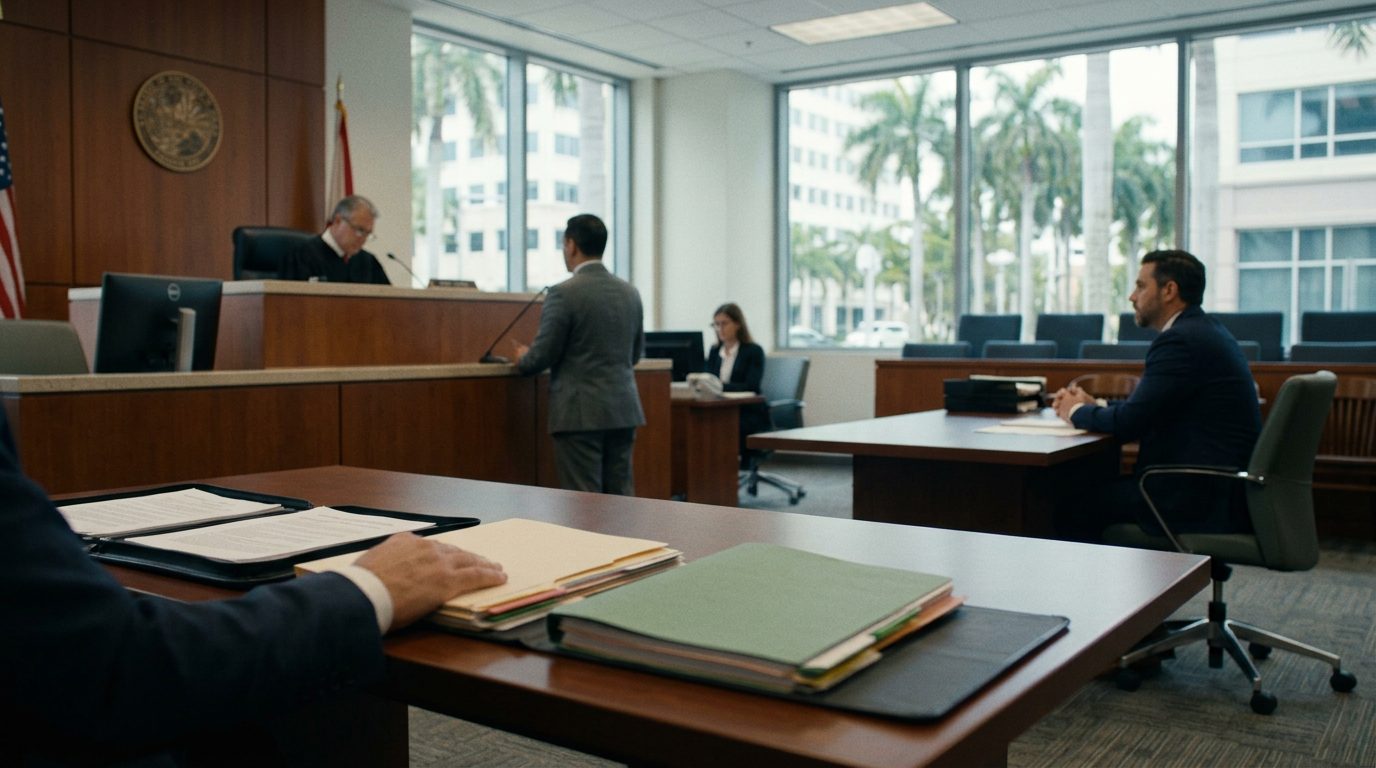
Employment disputes in Miami-Dade County can move through federal agencies, Florida agencies, and courts. One workplace problem can touch more than one of them. This guide maps the employment dispute courts Miami Dade businesses and workers encounter, and how a matter typically moves between them.
Kristina E. Wilson, one of the lawyers at KEW Legal, is responsible for this page. KEW Legal has offices in Coral Gables and Sunny Isles Beach. This page is general information, not legal advice. A matter may be referred to another lawyer or firm where appropriate.
Which federal and state courts and agencies handle employment disputes arising in Miami-Dade County?
Federal agencies, Florida agencies, and two court systems handle employment disputes in Miami-Dade County. The federal district court and Florida’s state circuit court are the main courts. Which one fits depends on the type of claim.
Miami-Dade County sits in the Eleventh Judicial Circuit.
At the federal level, the U.S. Equal Employment Opportunity Commission (EEOC) takes discrimination charges. At the state level, the Florida Commission on Human Relations takes state discrimination complaints. Under Florida’s minimum wage law, a worker must first give the employer written notice and allow 15 days to pay or resolve the claim before filing suit.
Keep these bodies straight. That makes the first filing date important from the start.
If a workplace complaint or termination dispute has landed on your desk, we're glad to talk through which agency or court may apply to your situation. Talk it through with our team — the first consultation is free, confidential, and carries no obligation.
What qualifies as employment discrimination?
Employment discrimination is unfair treatment at work because of a protected trait. Under Florida law, an employer may not discriminate in pay, hiring, firing, or other job terms because of race, color, religion, sex, pregnancy, national origin, age, handicap, or marital status (Fla. Stat. § 760.10).
Company size matters. The Florida Civil Rights Act defines an employer as a person with 15 or more employees for each working day in each of 20 or more calendar weeks in the current or preceding year (Fla. Stat. § 760.02). A business below that count is not an employer under that definition, so owners should count headcount carefully.
Punishing a worker for raising a concern is a separate question. Employers should review that issue early, before a complaint turns into a formal charge.
Which federal agencies take employment discrimination charges and wage complaints in Miami-Dade?
The EEOC takes federal discrimination charges. Florida law also lets a worker file a complaint with the EEOC instead of the state commission (Fla. Stat. § 760.11). A charge starts an agency process. A lawsuit is a separate step in court.
Federal timing rules also apply. Acting early keeps options open.
Federal wage issues follow federal rules on their own track. Florida wage claims follow the state rules in the next section.
Which Florida agencies and Miami-Dade bodies handle employment complaints?
The Florida Commission on Human Relations takes state discrimination complaints filed within 365 days of the alleged violation (Fla. Stat. § 760.11). The complaint must name the employer and describe the violation.
The commission sends a copy to the accused within 5 days. The accused person may file an answer within 25 days of the complaint’s filing date. Both the complaint and the answer must be verified.
Florida minimum wage claims go to court instead. That notice must name the minimum wage claimed, the work dates and hours, and the total unpaid amount (Fla. Stat. § 448.110).
Local county rules can also differ from state law, so they belong in the review.
Which courts hear employment lawsuits filed in Miami-Dade County?
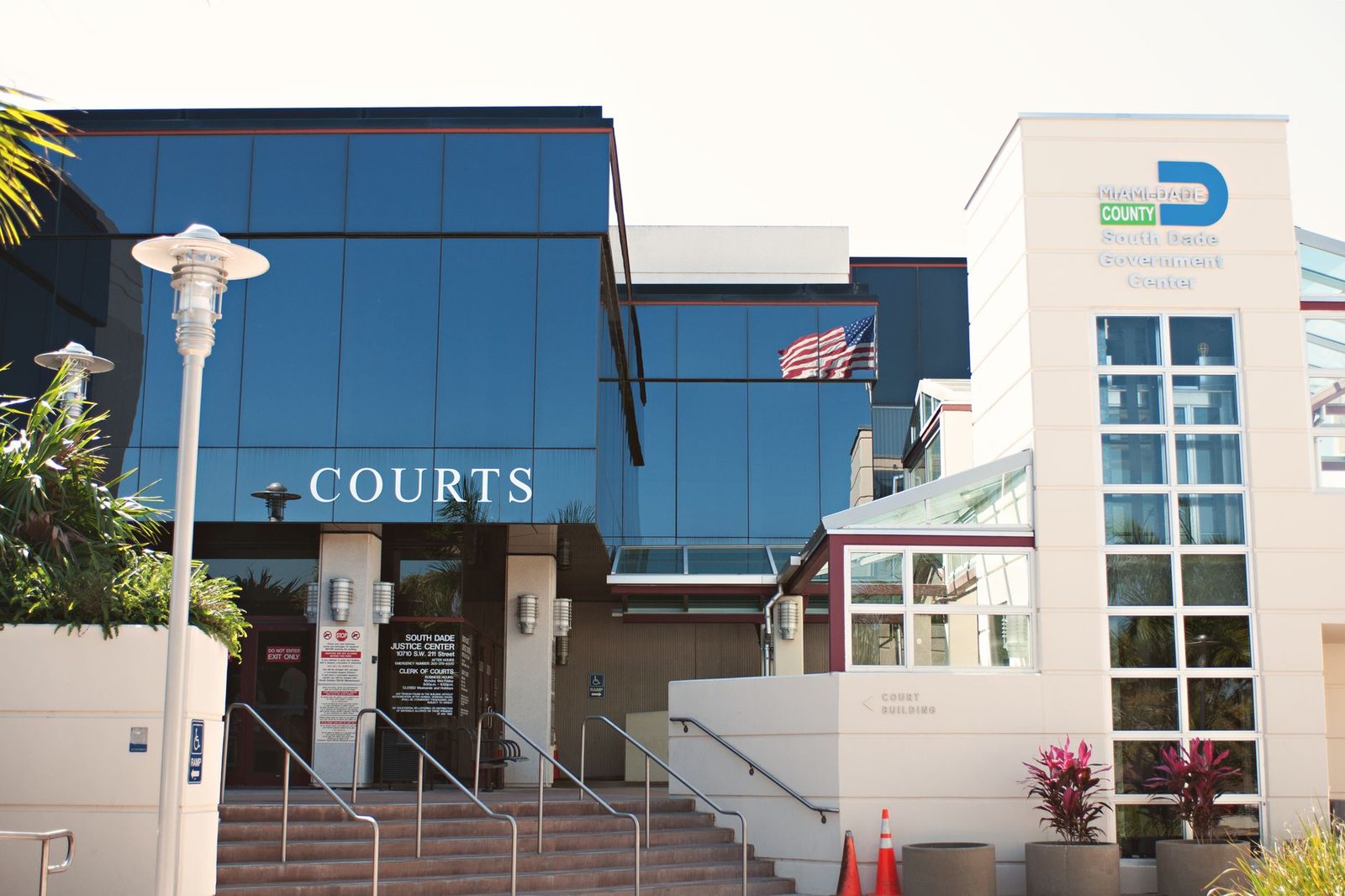
The employment dispute courts Miami Dade cases use depend on the claim. Federal employment claims go to federal district court. State employment claims go to Florida’s circuit court, which for Miami-Dade is the Eleventh Judicial Circuit.
Under the Florida private-sector whistle-blower statute, a civil action may be brought in the county in which the alleged retaliatory personnel action occurred, in which the complainant resides, or in which the employer has its principal place of business (Fla. Stat. § 448.103). For many Miami-Dade workers and employers, one of those counties is Miami-Dade. The worker may sue within 2 years after discovering the action, or within 4 years after it was taken, whichever is earlier.
Under section 448.103, an employee who alleges retaliation for objecting to an employer’s activity, policy, or practice that is in violation of a law, rule, or regulation (section 448.102(3)) may bring a civil action, but the employee may not recover if the retaliatory personnel action was predicated upon a ground other than the exercise of a right protected by the act. A court may also award reasonable attorney’s fees, court costs, and expenses to the prevailing party (Fla. Stat. § 448.104).
How do agency charges and court cases fit together in a Miami-Dade employment dispute?
A typical dispute starts inside the company, may move to an agency, and may end in court. The steps can overlap, and some claims skip the agency step. Discrimination charges generally begin with an agency. Wage claims and whistle-blower suits go to court under the rules above.
Firing disputes often turn on at-will status. Florida is an employment-at-will state, so either side may end indefinite employment at any time for any reason (Gessner v. Southern Co.). That rule has a limit. An at-will worker cannot be fired for a reason the law prohibits, such as retaliation or unlawful discrimination (Laguerre v. Palm Beach Newspapers).
Many owners assume a handbook is a binding contract. Policy statements in an employee handbook do not create enforceable contract rights unless they contain specific language showing the parties agreed the manual is a separate employment contract (Quaker Oats Co. v. Jewell). Keep emails, schedules, pay records, and performance reviews as the matter moves. Those records matter at every stage.
Not sure what your next step is?
Talk it through with our team — the first consultation is free, confidential, and carries no obligation.
Talking with a Miami-Dade employment attorney about which forum applies to your situation
A demand letter, an agency notice, or a firing dispute can arrive without warning. That can feel heavy, especially for an owner who also runs payroll and manages staff.
You don’t have to sort through agencies, courts, and deadlines alone. Our first consultation is free, confidential, and comes with no obligation to continue. Call 305-990-2300 or contact us to talk through which agency or court may apply to your situation.
For the employer-side framework, read the employment law counsel page and the Miami-Dade employee disputes guide.
Frequently asked questions
How long does a worker have to file a Florida discrimination complaint?
A complaint with the Florida Commission on Human Relations is filed within 365 days of the alleged violation.
Does the Florida Civil Rights Act cover a small business?
The act defines an employer as one with 15 or more employees for each working day in 20 or more calendar weeks in the current or preceding calendar year, and any agent of such a person.
Where employment disputes are heard
Florida Commission on Human Relations
The state agency that receives and investigates discrimination charges under the Florida Civil Rights Act.
U.S. Equal Employment Opportunity Commission
The federal agency that receives and investigates workplace discrimination charges under federal law.
Florida state courts
Miami-Dade and Broward County courts that hear employment claims, including contract, wage and retaliation matters.
Do not respond to an agency charge on your own
A charge or complaint from a government agency or a demand letter from an employee's lawyer is a serious matter. Speak with counsel before you respond, make statements or change workplace policies.
How KEW Legal supports employers
Employer-side focus
Our employment law work is directed at employers, including business owners in Miami-Dade and Broward County who face agency charges, complaints or lawsuits.
Outside general counsel
Our team works with business owners on day-to-day employment questions as well as formal disputes, so issues can be addressed early.
Responsible attorney
Kristina E. Wilson is the responsible attorney for this page. Our lawyers, including Natalie Martinez, handle employment matters for businesses in Coral Gables and Sunny Isles Beach.
Free first consultation
Our initial consultation is free, confidential and without obligation to continue. Call 305-990-2300 or send us a message.
Talk with KEW Legal before an employee dispute reaches a courtroom
Related practice areas
- Employment Counsel for Florida Business Owners: Employee Disputes, Restrictive Covenants and Misclassification in Miami-Dade
- Workplace Dispute Timeline Miami Dade
Request a Consultation
Fill out the short form and we will take it from there.