
Employment Law for Employers | Miami-Dade County
Navigating Employment Disputes in Miami-Dade Courts and Agencies
A practical guide for employers on how workplace claims move through agencies and courts, and how KEW Legal's outside counsel team helps business owners respond at each step.
By Kristina E. Wilson · Published November 4, 2026
Employment disputes in Miami-Dade County can land in federal court, in Florida state court, or in an agency office. The forum depends on the legal basis of the claim, and one dispute can touch several forums. This guide maps those forums, the clocks that run in each, and what employers and employees should know first. It is general information, not legal advice.
Which Federal and State Courts and Agencies Handle Employment Disputes Arising in Miami-Dade County?
Federal courts, state courts, and agencies each play a role, and the law behind a claim decides where it goes. Federal claims go to federal court, and the federal trial court for Miami-Dade County is the U.S. District Court for the Southern District of Florida, Miami Division. Claims under Florida law go to Florida state courts, including the Eleventh Judicial Circuit, which serves Miami-Dade County.
Many discrimination matters start with a charge filed at a state or federal agency, not with a lawsuit. One dispute can touch more than one forum. A firing might involve a federal charge, a Florida discrimination complaint, a claim for unpaid overtime, and a question about a severance agreement. Each piece has its own rules and its own clock.
If you received an agency notice or a demand letter and aren't sure where it belongs, our team can talk it through with you. Talk it through with our team — the first consultation is free, confidential, and carries no obligation.
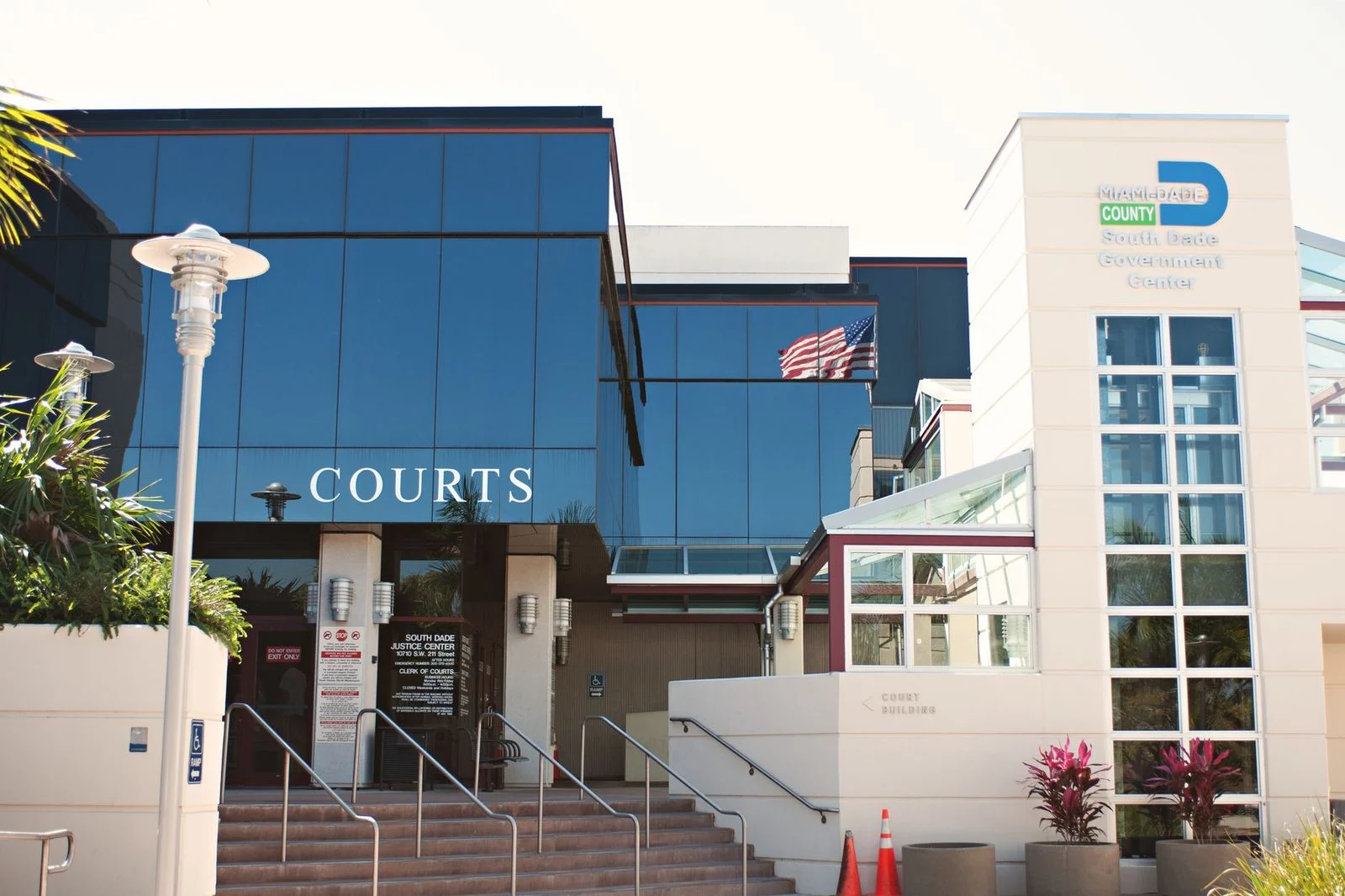
Federal Courts for Employment Claims in Miami-Dade County
Many federal discrimination claims begin with the U.S. Equal Employment Opportunity Commission (EEOC), the federal agency that investigates discrimination charges.
Federal rules are not the same as Florida rules. A claim may fit one track, the other, or both. Which track fits depends on the facts of the job and the pay practice. Federal and state tracks are separate starting points, so a worker should not assume one covers everything.
State Courts for Florida Employment Claims in Miami-Dade County
That includes Florida Civil Rights Act claims, Florida minimum wage claims, and most contract disputes. The Florida Civil Rights Act covers an employer with 15 or more employees for each working day in 20 or more calendar weeks in the current or preceding year. It bars discrimination in pay, terms, conditions, or privileges of employment based on protected traits such as race, sex, age, and marital status, as set out in Florida’s unlawful employment practices statute.
A court in a civil action under this law may award back pay and compensatory damages, including damages for mental anguish. In any civil action brought under this section, the court may also award punitive damages; the state and its agencies and subdivisions shall not be liable for punitive damages, and the judgment for the total amount of punitive damages awarded under this section to an aggrieved person shall not exceed $100,000, and the right to trial by jury is preserved in any such private right of action in which the aggrieved person is seeking compensatory or punitive damages, and any party may demand a trial by jury.
Florida is an employment-at-will state. Either side may usually end the job at any time, but not for a reason the law prohibits. Florida has no common-law claim for retaliatory discharge, so a fired worker needs a statute or contract to sue. Handbook policies also do not create contract rights unless they show an explicit agreement that the manual is a separate employment contract.
Discrimination Agencies: EEOC and the Florida Commission on Human Relations
An agency charge is an administrative filing, not a lawsuit. The EEOC handles federal discrimination charges. The Florida Commission on Human Relations handles complaints under Florida’s civil rights law. The Commission’s FAQ describes the EEOC’s role and how the two sets of protections work together.
Florida law also bars retaliation. It is unlawful for an employer to discriminate against a person who opposed a practice that the law prohibits, or who made a charge, testified, or took part in an investigation. See § 760.10 of the Florida Statutes.
Miami-Dade County also publishes its own fair-employment policy. That page describes how County employees report discrimination and which classes it protects. It is a county policy for County workplaces, so it works differently from the state and federal laws above.
Wage and Hour Claims: Florida Minimum Wage Law and Federal Wage Agencies
Florida minimum wage claims go to court, but only after written notice. Before suing for unpaid minimum wages, the worker must notify the employer in writing. The notice must state the minimum wage claimed, the work dates and hours, and the total unpaid wages through the date of the notice, under Florida’s minimum wage statute.
A worker who wins recovers the unpaid back wages plus the same amount as liquidated damages (an extra amount equal to the unpaid wages). The worker also recovers reasonable attorney’s fees and costs. The employer can reduce or avoid the extra amount only by proving, by a preponderance of the evidence, that its act was in good faith and that it had reasonable grounds for believing the act was not a violation; even then, the court decides in its sound discretion whether to award no liquidated damages or an amount up to the unpaid minimum wages.
A court may also award the prevailing party in an unpaid wage case costs and a reasonable attorney’s fee, as stated in § 448.08.
Employment Issues Business Owners Face
Some workplace disputes involve union activity or group complaints about working conditions. Its procedures are separate from state court, the EEOC, and wage claims.
A dispute that looks like a labor issue may still belong in another forum. Employers and employees should confirm which framework applies before they file anything. Employers should also keep records of the complaint raised and when it was raised.
Not sure what your next step is?
Talk it through with our team — the first consultation is free, confidential, and carries no obligation.
Filing Deadlines and the Usual Order of Steps
The Florida Commission on Human Relations says the deadline to file an employment discrimination complaint with the Commission is 365 days from the alleged violation. That clock starts early, so waiting for an internal HR process to finish can use up much of it.
Once the agency acts, a lawsuit has its own deadline. A civil action under the Florida Civil Rights Act must start no later than one year after the Commission’s reasonable cause determination or the EEOC’s Notice of Right to Sue, whichever comes first. If neither issues within 180 days after the complaint is filed, the suit can start no later than 18 months after filing, according to § 760.11.
The usual order runs like this. The worker raises an internal complaint. Then comes an agency charge, an investigation or mediation, and a determination or notice. A lawsuit follows if the matter is not resolved. Which clock applies turns on the legal basis of the claim, so each claim needs its own timeline.
What Miami-Dade Employers Should Expect When an Agency Charge or Demand Arrives
When a charge arrives, the agency will usually ask for a written response and records. Employers should read the agency notice closely and note every date in it. Preserve documents, confirm the timeline, and keep messages to the employee consistent.
Retaliation is a serious risk at this stage. Florida law bars discrimination against a worker who files a charge or takes part in an investigation, so managers should not treat the complaint as a reason to change how the worker is treated. Policy reviews also help. A handbook can matter in court, but only if it meets the explicit agreement standard described above.
KEW Legal, based in Coral Gables and Sunny Isles Beach, offers outside general counsel for businesses and employment law support for employers. Kristina E. Wilson is the responsible lawyer for this page. This page is general information, not legal advice.

Talk With KEW Legal About Your Miami-Dade Employment Matter
You may be holding an agency notice, a demand letter, or a question about a current or former worker. This may not be a situation you chose. A short conversation can help sort out which court or agency fits the facts you have.
Quick Answers
How long do I have to file a Florida discrimination complaint?
The Florida Commission on Human Relations says the deadline is 365 days from the alleged violation.
Do I have to give notice before suing for unpaid minimum wages in Florida?
Yes. Florida law requires written notice to the employer before the claim is filed.
Our first consultation is free, confidential, and carries no obligation to continue. Call 305-990-2300 or send us a message through our contact page to talk about your Miami-Dade employment matter.
How KEW Legal Supports Employers
Defense Planning
Our attorneys focus on preparing employers to respond to agency charges and lawsuits with a clear, organized position.
Records and Documentation
We help employers review personnel files, policies, and communications so the facts are assembled accurately from the start.
Early Case Assessment
We discuss the claim, the employer's options, and the likely next steps so decisions are made with full information.
Outside General Counsel
For ongoing employment questions, KEW Legal acts as outside general counsel, so business owners have a single legal resource before problems escalate.
Do Not Ignore Agency or Court Papers
Charges, demand letters, and court summons often include response deadlines.
Where Employment Disputes Are Heard
Miami-Dade County and Florida State Courts
Wage, contract, and some employment claims may proceed in state court, where pleadings, discovery, and motions shape the case.
Federal Court in South Florida
Federal employment claims may be heard in the U.S.
Talk with KEW Legal Before Your Next Employment Decision
Request a Consultation
Fill out the short form and we will take it from there.