

Employment Law for Employers | Coral Gables and Sunny Isles Beach
Understand Your Exposure Before an Employment Claim Escalates
KEW Legal helps Miami-Dade and South Florida employers assess employment risk, respond to claims and protect the business. Responsible attorney: Kristina E. Wilson.
By Kristina E. Wilson · Published October 23, 2026
What Financial Exposure Do Employers Face in Florida Employment Claims, Including Back Pay, Compensatory and Punitive Damages, and Opposing Counsel’s Attorney’s Fees?
Employer exposure in a Florida employment claim can include back pay, compensatory and punitive damages, liquidated damages in some wage cases, and the other side’s attorney’s fees. The total depends on which statute the claim is brought under and on the facts.
Think of these as separate buckets. Back pay replaces wages the employee lost. Damages compensate for harm. Attorney’s fees are a cost of the case. Each bucket follows its own rules, so one demand letter can point to several at once.
Each commercial matter depends on its own facts and documents. Discrimination claims under the Florida Civil Rights Act follow Fla. Stat. § 760.11. Unpaid minimum wage claims follow the Florida Minimum Wage Act and the state minimum wage amendment in Fla. Const. art. X, § 24.
Most employers first see this as a demand letter or agency charge. Treat it as a list of possible claims, not a single dollar figure, and review each one on its own.
Not sure what your next step is?
Talk it through with our team — the first consultation is free, confidential, and carries no obligation.
How Back Pay and Lost Wages Are Measured in Florida Employment Claims
Back pay is lost-pay relief a court may order in a Florida Civil Rights Act case. The statute allows a court to order “affirmative relief from the effects of the practice, including back pay” (Fla. Stat. § 760.11).
Timing matters. A slow or unclear response can let the numbers grow.
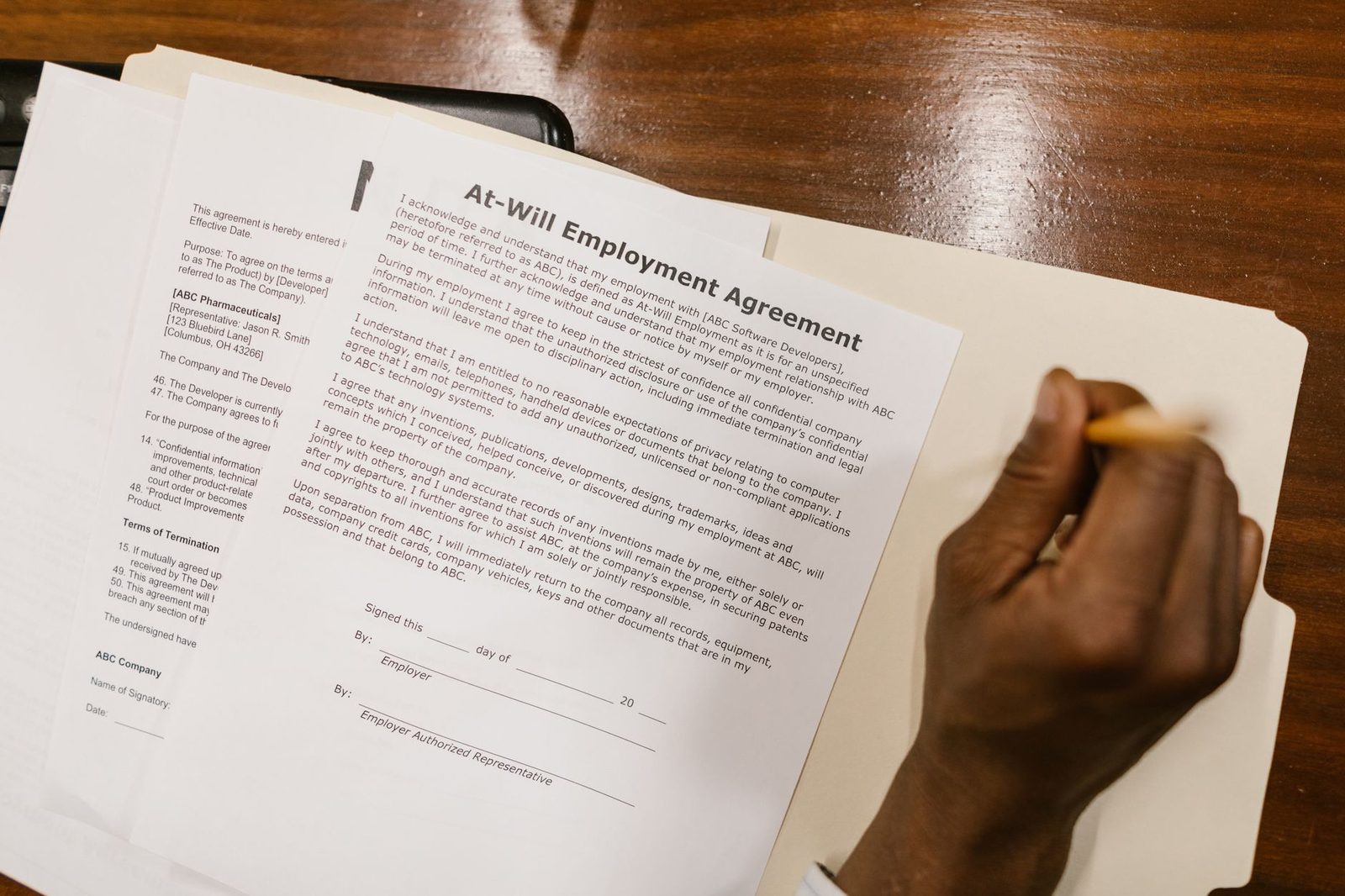
At-will employment has limits. An at-will employee can be let go at any time, but not for a reason the law prohibits, such as retaliation or unlawful discrimination (Laguerre v. Palm Beach Newspapers). Why the employee was let go matters, not just when.
Handbooks are another point to check. Policy statements in an employee manual do not create enforceable contract rights in Florida unless they explicitly say the manual is a separate employment contract (Quaker Oats Co. v. Jewell).
Compensatory and Punitive Damages Under the Florida Civil Rights Act
Under the Florida Civil Rights Act, a court may award compensatory damages for mental anguish, loss of dignity, and other intangible injuries. Punitive damages are also available in these civil actions under the Florida Civil Rights Act, but a judgment for the total punitive damages owed to an aggrieved person is capped at $100,000.
The Act’s coverage starts at 15 employees. For purposes of the Florida Civil Rights Act of 1992, an “employer” means any person employing 15 or more employees for each working day in each of 20 or more calendar weeks in the current or preceding calendar year, and any agent of such a person (Fla. Stat. § 760.02(7)).
A jury may hear these claims. The right to a jury trial is preserved when an employee seeks compensatory or punitive damages in a private lawsuit.
The $100,000 ceiling applies to punitive damages. Back pay and compensatory damages are separate lines, so read a demand as a combined total, not one headline number.
Attorney’s Fees, Liquidated Damages, and Who Pays Opposing Counsel
Each side usually pays its own lawyer in Florida. Each party generally bears its own attorney’s fees unless a contract or statute provides otherwise (Price v. Tyler). Several employment statutes change that default.
Under the Florida Civil Rights Act, a court may, in its discretion, allow the prevailing party a reasonable attorney fee as part of the costs (Fla. Stat. § 760.11). Because the award goes to the “prevailing party,” it can run to either side.
Florida’s general unpaid-wage statute works similarly. In an action for unpaid wages, the court may award to the prevailing party costs of the action and a reasonable attorney’s fee (Fla. Stat. § 448.08).
Liquidated damages add a second layer in minimum wage cases. These are an extra payment equal to the unpaid wages. A prevailing employee recovers the unpaid back wages plus the same amount as liquidated damages, plus reasonable fees and costs (Fla. Stat. § 448.110). That can double the wage figure.
The court has some room to reduce it. If the employer shows a good-faith act with reasonable grounds for believing it was lawful, the court may, in its discretion, award no liquidated damages or a smaller amount.
Timing is also a factor. Before suing over unpaid minimum wages, the employee must give the employer written notice. The employer then has 15 calendar days after receipt to pay the total or otherwise resolve the claim, which makes that window an early decision point.
Under the Florida Minimum Wage Act, for any employer or other person found to have willfully violated the section, the Attorney General may seek to impose a fine of $1,000 per violation, payable to the state, in addition to injunctive relief or in lieu of it (Fla. Stat. § 448.110(7)).

Talk Through Your Employer Exposure With Kristina E. Wilson in Coral Gables
If a demand letter or agency charge just arrived, you may be reading these numbers while running a business. These are general principles, not a prediction of how any specific claim will turn out.
Kristina E. Wilson is an attorney at KEW Legal, which has an office in Coral Gables. KEW Legal focuses on employment law for employers, along with other business law matters.
Quick answers
Can punitive damages be awarded under the Florida Civil Rights Act?
Yes, a court may award them. Total punitive damages to one aggrieved person may not exceed $100,000.
Does the Florida Civil Rights Act cover small employers?
It covers employers with 15 or more employees for each working day in 20 or more calendar weeks, in the current or preceding calendar year.
Who pays attorney’s fees in a Florida employment lawsuit?
Each side usually pays its own.
If a demand letter or agency charge has landed on your desk, call 305-990-2300 or send us a message. Our first consultation is free, confidential, and with no obligation to continue.
Common Sources of Employer Exposure
Discrimination and Harassment Claims
Complaints about how an employee was treated because of a protected characteristic can arise from hiring, pay, scheduling, discipline or termination decisions.
Retaliation Claims
Adverse action taken after an employee raises a concern, files a complaint or takes part in an investigation often draws close scrutiny.
Wage and Hour Disputes
Questions about overtime, classification, final pay and recordkeeping can turn into claims if they are not addressed early and carefully.
Separation and Termination Decisions
How an employee is let go, what is documented and what is communicated can shape the outcome of any later dispute.
How Employers Can Reduce Risk
Keep Clear Records
Accurate personnel files, written policies and documented performance concerns give the business a clearer account of its decisions.
Apply Policies Consistently
Treating similar employees in similar situations the same way makes it easier to explain why a decision was made.
Respond Carefully to Complaints
A measured, documented response to an internal complaint or demand letter helps protect the business while the matter is reviewed.
Seek Advice Early
Reviewing a situation before action is taken, or before a dispute grows, gives the business more options to consider.
Do Not Wait When a Claim Arrives
A charge, agency notice, demand letter or lawsuit should be reviewed by counsel promptly. Your first consultation with KEW Legal is free, confidential and comes with no obligation to continue.
Talk with KEW Legal About Your Employment Matter
Request a Consultation
Fill out the short form and we will take it from there.