

Employment Law for Employers | Coral Gables and Sunny Isles Beach
An Employee Complaint Just Landed on Your Desk? Start Here.
The first days after a complaint are often the most important. Here is how business owners can pause, protect the business, and decide when to bring in counsel.
By Kristina E. Wilson · Published November 9, 2026
When an employee complaint names a law or threatens a lawsuit, it has become a legal problem. When a problem with an employee starts to look like a legal issue, knowing how to respond can protect your business. Keep the records you have, pause decisions about the employee, avoid any step that looks like punishment, and speak with counsel before you reply in writing.
This guide walks Florida business owners through those early steps. It also covers the Florida rules that often apply and how a matter can move from a complaint to a lawsuit. It covers the employer’s side only.
When an Employee Problem Becomes a Legal Problem
A complaint becomes a legal matter when it points to a specific claim. That usually means the employee cites a statute, asks for money by a set date, mentions a lawsuit, or sends a demand letter from a lawyer. A letter from a government agency is another clear signal.
Common triggers include:
- a harassment or discrimination complaint
- a demand for unpaid wages or overtime
- a dispute over a firing
- a resignation paired with a threat or demand
- a notice from a state or federal agency
Early handling matters because your first responses build the record. A court or agency may later read your emails, your notes, and the timing of each decision. Careful steps at the start make that record easier to defend.
If a demand letter, wage notice, or resignation threat just reached your business, our team can help you plan the next step. Talk it through with our team — the first consultation is free, confidential, and carries no obligation.
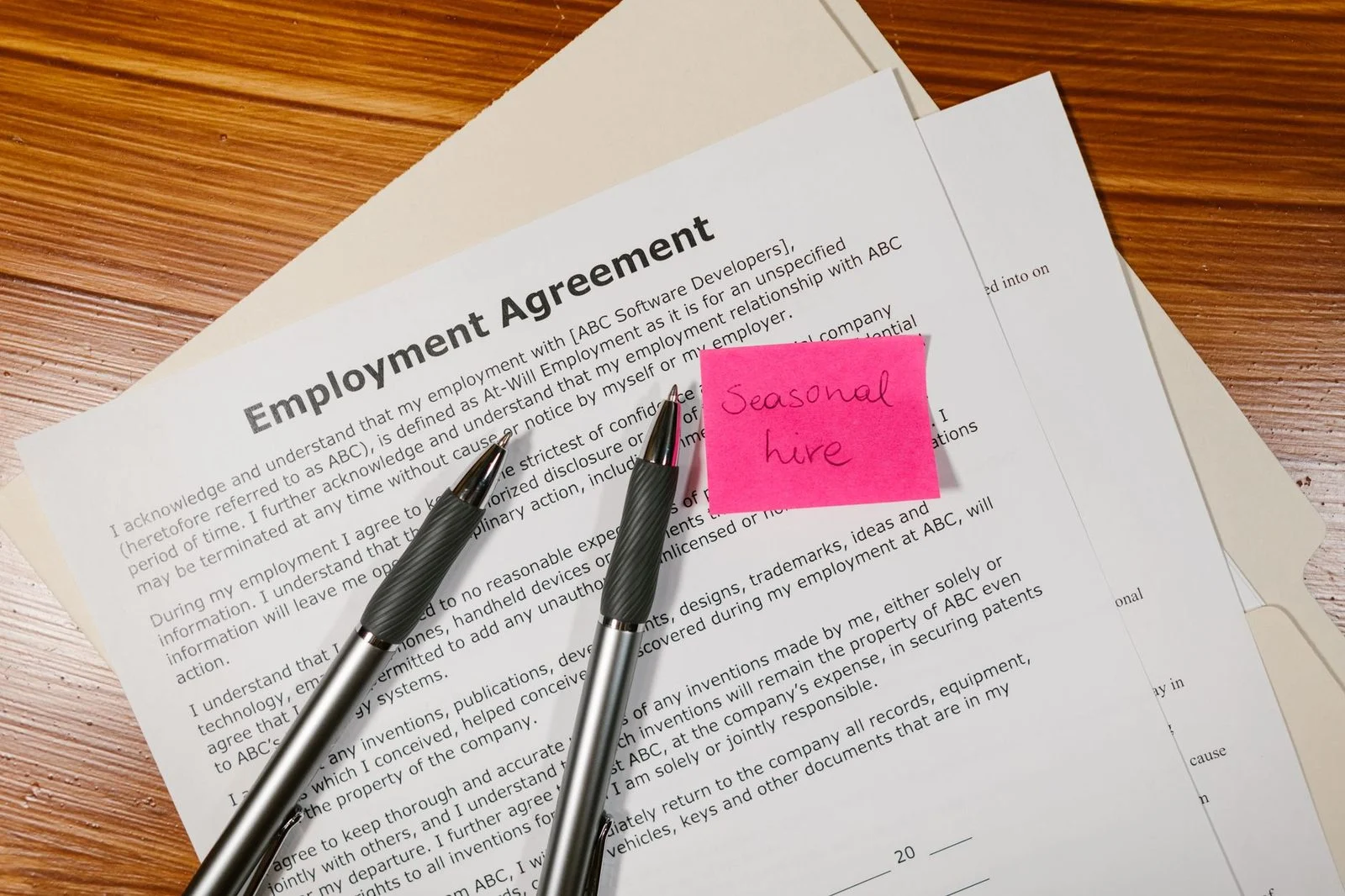
The First 48 Hours: A Practical Sequence for Owners
In the first 48 hours, write down the facts, save every record, and name one person to make decisions about the matter.
Start with a written timeline while your memory is fresh. Note who was involved, what happened, when it happened, who was present, and what was said. Mark the notes as prepared at your direction.
Next, preserve evidence. Save emails, text messages, messaging app chats, schedules, time records, personnel files, and any security footage. Turn off automatic deletion for those sources. Deleting or changing records after a complaint can create a second problem.
Limit who talks about the matter. Share it only with people who need to know, such as your attorney and the manager who handles pay decisions.
Write down any response date that a letter, notice, or demand sets, and keep it visible. If your business carries employment practices liability insurance, review the policy’s notice terms soon.
Finally, involve counsel before any written response goes to the employee or the employee’s lawyer.
What Not to Do: Mistakes That Make Claims Worse
Avoid any step that looks like punishment for the complaint. That mistake often turns a manageable problem into a second claim.
Florida law protects employees who object to practices that violate a law. It also protects employees who give information to an investigating agency. Under Fla. Stat. § 448.102, an employer may not take retaliatory personnel action for those activities. The minimum wage law adds its own ban on retaliation under Fla. Stat. § 448.110.
Keep these points in mind:
- Don’t edit or “clean up” personnel files after a complaint.
- Don’t discuss the employee in group chats, staff meetings, or social media.
- Don’t contact a represented employee’s lawyer directly, or pressure the employee to drop a claim.
- Don’t promise a settlement or reinstatement before the facts are reviewed.
- Don’t discipline a complaining employee for a related performance issue without checking the timing and records first.
Types of Employee Complaints and How They Differ
Each type of complaint follows different rules. Sort the complaint before you respond.
Harassment and discrimination complaints are the most sensitive. Under Fla. Stat. § 760.10, it is unlawful for an employer to discharge or discriminate against someone because of race, color, religion, sex, pregnancy, national origin, age, handicap, or marital status. The same section bars retaliation against a person who opposes such a practice or takes part in an investigation.
Remedies can be significant. Under Fla. Stat. § 760.11, a court may order back pay, but no liability for back pay accrues from a date more than 2 years before the complaint is filed with the commission, and a court may also award compensatory damages, including damages for mental anguish. Total punitive damages under that section cannot exceed $100,000.
Wage complaints follow the minimum wage rules covered in the next section.
Termination disputes turn on the stated reason and whether the records support it. Florida is an at-will state. In Gessner v. Southern Co., the Florida Supreme Court restated that either party may end indefinite employment at any time for any reason. At-will status has limits, though. In Laguerre v. Palm Beach Newspapers, Inc., the Fourth District explained that an at-will employee may not be fired for a reason the law prohibits, such as retaliation or unlawful discrimination.
A resignation paired with a demand can still carry legal consequences. Review the resignation and any reply before anything is sent.
Florida Wage Claims: What Employers Need to Know
A Florida minimum wage claim usually starts with a written notice, and the employer has 15 calendar days after receiving it to pay the total unpaid wages or otherwise resolve the claim.
Under Fla. Stat. § 448.110, a worker must notify the employer in writing before bringing a claim for unpaid minimum wages. The notice must identify the minimum wage claimed, the work dates and hours, and the total unpaid amount. The employer then has 15 calendar days to pay or otherwise resolve the claim. The statute of limitations is paused during that period.
If the worker wins, the worker recovers the unpaid back wages plus the same amount as liquidated damages (an added penalty equal to the unpaid wages). The worker also recovers reasonable attorney’s fees and costs. A court may reduce liquidated damages if the employer proves a good-faith act with reasonable grounds for believing it was lawful.
The state constitution sets the minimum wage standard. Under Fla. Stat. § 448.110(9), these claims may proceed as class actions under Rule 1.220, Florida Rules of Civil Procedure, but the plaintiffs must prove, by a preponderance of the evidence, the individual identity of each class member and the individual damages of each class member.
Fee shifting matters too. Under Fla. Stat. § 448.08, a court may award the prevailing party in an unpaid wage action costs and a reasonable attorney’s fee.
Review your timekeeping, how each worker is classified as exempt or non-exempt, tip handling, and any off-the-clock work. One employee’s complaint can prompt a look at pay practices for others. Keep your calculations consistent and easy to review.
Retaliation: The Claim Owners Often Create by Accident
Retaliation is a claim many owners create without meaning to. It usually comes from bad timing and a reaction that looks like punishment.
Under Fla. Stat. § 448.103, an employee who suffers a retaliatory personnel action may sue within 2 years after discovering it, or within 4 years after the action was taken, whichever is earlier. A court may order an injunction, reinstatement, lost wages and benefits, and other compensatory damages.
The merit of the original complaint still matters. In Gessner v. Southern Co., the Florida Supreme Court held that the practice an employee objected to must, by definition, violate a law. Under Gessner v. Southern Co., to prevail on a retaliation claim under section 448.103 alleging a violation of section 448.102(3), an employee must establish that the employer’s activity, policy, or practice to which the employee objected is, by definition, in violation of law; and under section 448.103(1)(c), an employee may not recover if he or she failed to notify the employer about the illegal activity, policy, or practice as required by section 448.102(1).
Under Florida’s private whistleblower act, an employee whose claim rests on a disclosure to a government agency may not recover unless he or she first brought the illegal activity, policy, or practice to the attention of a supervisor or the employer in writing, as s. 448.102(1) requires. That subsection also requires that any disclosure to an appropriate governmental agency be made under oath and in writing.
Timing is evidence. A firing or schedule change close to a complaint is often examined closely. Before any decision that affects a complaining employee, write down the legitimate business reason and have it reviewed.
Not sure what your next step is?
Talk it through with our team — the first consultation is free, confidential, and carries no obligation.
Investigating an Internal Complaint Properly
A documented internal review shows the business took the complaint seriously. It also gives you facts to act on.
Decide who will investigate. An owner who saw the events or is named in the complaint may need an outside investigator or a review that counsel directs.
Interview the person who complained, the accused, and any witnesses. Write down what each person said, with dates. Ask for documents that support each account.
Keep fact-finding separate from discipline. Gather the facts first, then decide on any discipline. That order makes the outcome easier to explain later.
Share the outcome in a measured way. Tell the people involved what the business is doing. Leave out private notes and details about other employees.
If your written policy sets out a complaint process, follow it. Inconsistent handling is a common source of trouble in later disputes.
Agency Charges and Unemployment Claims
A government agency charge or an unemployment claim needs a factual, documented reply.
The Florida Commission on Human Relations handles discrimination complaints under state law. The civil remedies in Fla. Stat. § 760.11 follow the commission’s steps. Read each agency notice closely and calendar any response date it sets.
When a former employee applies for unemployment (reemployment assistance), the state may ask the employer why the job ended. Answer from your records, not from memory or impressions. Keep the answer consistent with what the employee was told.
Every response to an agency should be factual, consistent with the business’s records, and reviewed before it is filed. An answer that contradicts your records can hurt your position in later steps.
From a Demand Letter to a Lawsuit: The Stages Owners Should Expect
A dispute often moves in stages: a demand letter, talks, and, if talks fail, a court case.
A demand letter states the employee’s claim and usually asks for money or another action. Some letters set a response deadline. Review the letter before you send anything, and treat its deadline as real.
Talks and mediation (a session with a neutral third party to help reach agreement) are the next common steps. Some employment disputes settle before a lawsuit is filed. The path depends on the facts and the claims involved.
Filing and service of a lawsuit start formal deadlines for responses. Calendar every deadline the day papers arrive.
Discovery is the exchange of information. Each side may request documents, answer written questions, and give sworn testimony. This is why the preservation steps from the first 48 hours matter so much. Missing or altered records can weaken the business’s position during discovery.
Cost is a factor at every stage. Under Fla. Stat. § 448.104, a court may award reasonable attorney’s fees, court costs, and expenses to the prevailing party.
Prevention: Handbooks, Policies, and Consistent Practices
A clear handbook helps managers and staff know what to expect. Consistent enforcement is what makes it useful.
Written policies should cover harassment reporting, pay practices, leave, and discipline. Make sure managers know where complaints go.
Be careful about what a handbook promises. Under Quaker Oats Co. v. Jewell, policy statements in an employee manual do not create enforceable contract rights unless the manual uses specific language showing the parties agreed it is a separate employment contract. Review your handbook’s wording before you rely on it in a dispute.
Train managers to escalate complaints rather than settle them alone. Train them to avoid comments about protected traits or about an employee’s complaint.
Apply rules evenly. Inconsistent enforcement can make a sound policy look like an excuse.

Bring KEW Legal Into the Matter Early
KEW Legal serves as outside general counsel for business owners and investors across Miami-Dade and South Florida. Our offices are in Coral Gables and Sunny Isles Beach. Kristina E. Wilson is the lawyer responsible for this page. Natalie Martinez is also one of our lawyers.
Early review can help organize the record, define the response, and identify which supporting services fit. Those services include employment law for employers, partnership disputes, and business succession planning. If a complaint involves a co-owner, it may also fall under partnership dispute work.
Our first consultation is free, confidential, and carries no obligation to continue.
Quick Answers
What should I do first when an employee complains?
Preserve every record, avoid any step that looks like retaliation, and speak with counsel before you reply in writing.
Can a Florida employer fire someone who complained?
Florida is an at-will state, but an employer cannot fire someone for a reason the law prohibits, such as retaliation.
How long does an employee have to sue for unpaid minimum wages?
Unpaid minimum wage claims arise under the Florida Minimum Wage Act, section 448.110, Florida Statutes, which in subsection (8) requires a civil action to be brought within the limitations period specified in s. 95.11, Florida Statutes. Before filing, the employee must give the employer written notice of the intent to sue, and the limitations period is tolled for 15 days after the employer receives that notice.
Does a handbook create a contract in Florida?
Not by default. It does only if it clearly states that the parties agreed it is a separate employment contract.
If a demand letter, wage notice, or resignation threat has just reached your business, you don’t have to work out the next step alone. Call 305-990-2300 or send a message through our contact page to talk it through with our team.
Four First Steps for Owners
Preserve every record
Keep emails, texts, schedules, performance reviews, and personnel files intact. Do not edit, delete, or reorganize anything related to the matter.
Avoid anything that looks like retaliation
Hold off on discipline, schedule changes, or termination decisions involving the employee until you have reviewed the situation with counsel.
Write down the timeline
While details are fresh, note who said what, when it happened, and who else was present. Keep these notes factual and privileged where possible.
Speak with counsel before you respond
A written reply can become evidence. Talk with a business law attorney before you answer the employee, a manager, or an outside agency.
Why Owners Bring Employee Issues to KEW Legal
Outside general counsel
KEW Legal works with business owners and investors across Miami-Dade and South Florida as ongoing outside counsel, not only when a problem arises.
Business-focused employment advice
Our attorneys concentrate in employment law for employers, with attention to how each issue affects operations, contracts, and ownership.
Planning before the next issue
Policies, handbooks, and documented procedures can help a business respond more consistently when concerns come up.
Clear, direct communication
We explain your options in plain language so you can make informed decisions for your company.
Important Warning
Do not ignore a complaint, do not confront the employee, and do not discuss the matter with coworkers or on social media. Early missteps are easier to avoid than to correct.
Talk With KEW Legal About Your Situation
Related practice areas
Request a Consultation
Fill out the short form and we will take it from there.