

Employment Law for Employers | Coral Gables & Sunny Isles Beach
Final Paycheck Guidance for Florida Employers
KEW Legal advises business owners across Miami-Dade and South Florida on final pay, separation paperwork, and the payroll details that come with an employee's last day.
By Kristina E. Wilson · Published November 1, 2026
A final paycheck Florida employer attorney can review the file before pay goes out. The right timing depends on the facts: the last day worked, the regular pay schedule, and the written policies in place. This guide explains what usually must be paid, which policy language controls, and where employers tend to create problems. KEW Legal advises businesses across Miami-Dade and South Florida from offices in Coral Gables and Sunny Isles Beach.
What a Florida Final Paycheck Covers
A final paycheck covers the pay an employee earned through the last day of work. It applies when someone quits, is laid off, or is fired.
It applies to hourly, salaried, and commission-based staff alike. Keep it separate from other payouts, such as unused PTO, earned commissions, and reimbursements. Each one can follow different rules, so each needs its own line on your checklist.
Florida’s constitution sets the pay floor. Employers must pay at least the state minimum wage for all hours worked in Florida, and that rate reaches $15.00 per hour on September 30, 2026 (Florida Constitution, art. X, § 24). Covered employers must also display the state minimum wage notice poster where staff can see it (Fla. Stat. § 448.109).
This page is for owners, office managers, and HR leads in Miami-Dade, Broward, and South Florida who are planning a separation.
If a resignation or termination is on your calendar and the PTO or commission terms are unclear, we can review them with you before a dispute starts. Talk it through with our team — the first consultation is free, confidential, and carries no obligation.
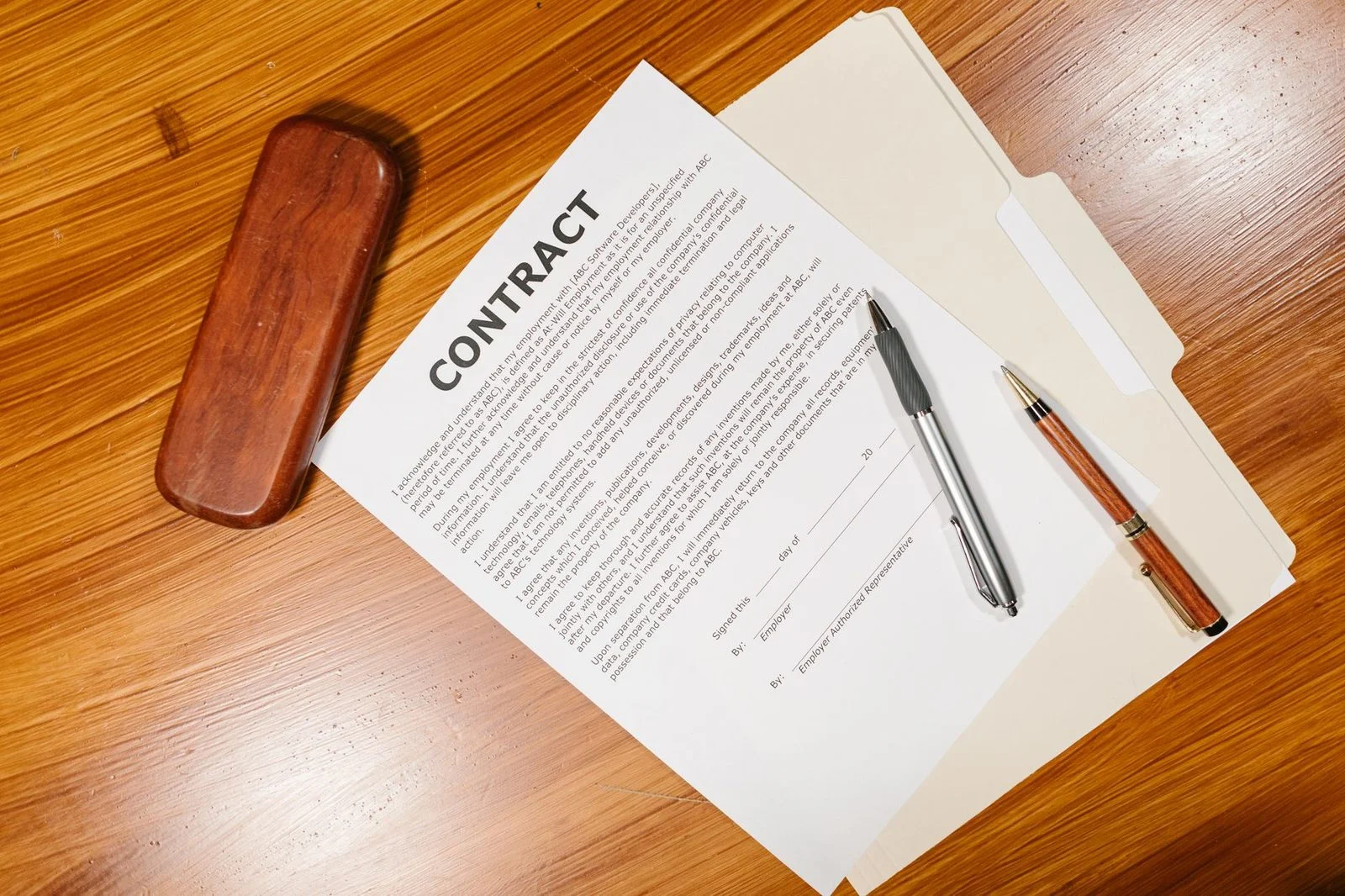
What Wages Are Due at Separation
Wages earned through the last day worked form the core of the final check. Check each item below against the timecards before you cut the check.
- Hours worked through the last day, including any overtime already earned.
- Commissions and bonuses that the written plan says were earned by the separation date.
- Approved business expenses that the company agreed to reimburse, or that policy requires it to reimburse.
- Partial-period pay, rounding of hours, and any tip distributions that apply.
Commission questions often cause the most trouble. The written plan decides when an amount is earned, so read it before you calculate anything.
When Unused PTO Must Be Paid Out
Questions about unused paid time off often depend on the employer’s written policies and agreements, so reviewing those documents is a useful first step. A handbook line alone is not always a binding promise.
Policy statements in an employment manual do not create enforceable contract rights in Florida unless the manual uses specific language showing the parties explicitly agreed it is a separate employment contract (Quaker Oats Co. v. Jewell). The wording controls the outcome.
Review the accrual method, the use rules, any cap or forfeiture language, and how past separations were handled. Paying some departing staff but not others, without a documented reason, makes later questions harder to answer. Close the PTO ledger on the separation date so both sides work from one fixed number.
Timing: When the Final Check Is Due
Timing is set by the last day worked, the regular pay schedule, and the payment method on file. A short calendar keeps the check on track.
- Confirm the last day worked in writing.
- Calculate final wages, earned commissions, and approved reimbursements.
- Confirm the PTO balance and any commission still pending.
- Issue payment by the agreed method and keep proof of delivery.
Written wage demands start their own clock. Under Florida’s minimum wage law, a worker who claims unpaid minimum wages must first give the employer written notice. That notice must identify the wage claimed, the work dates and hours, and the total amount. The employer then has 15 calendar days after receiving it to pay or resolve the claim (Fla. Stat. § 448.110). Calendar that 15-day window the day a written demand arrives.
Deductions, Forfeiture Clauses, and Commission Plans
Forfeiture clauses need careful drafting. Language that takes away pay already earned needs clear wording.
Commissions raise a related point. Where an express contract covers the same subject, claims arising out of that relationship will not support an unjust enrichment claim (Williams v. Johnson). That makes the written commission plan the central document.
Put these terms in writing before you need them:
- How PTO accrues and when it is used.
- Conditions for any payout at separation.
- The rule that sets the separation date.
- How and when you will give notice of policy changes.
Common Employer Mistakes and Where the Exposure Comes From
Most separation problems start with a gap between what the policy says and what the employer does. Three gaps deserve attention.
- Retaliation after a complaint. Florida law bars an employer from taking retaliatory personnel action against an employee because the employee objected to, or refused to participate in, an activity, policy, or practice of the employer that violates a law, rule, or regulation (Fla. Stat. § 448.102). Fla. Stat. § 448.102 protects an employee who disclosed, or threatened to disclose, an employer’s unlawful activity, policy, or practice to an appropriate governmental agency, under oath and in writing. That protection does not apply unless the employee first brought the activity, policy, or practice to the attention of a supervisor or the employer in writing and gave the employer a reasonable opportunity to correct it. An employee may sue within 2 years after discovering the action or within 4 years after it was taken, whichever is earlier (Fla. Stat. § 448.103). The employee must also prove the practice actually violated a law (Gessner v. Southern Co.).
- Firing for a prohibited reason. An at-will employee may be discharged at any time. But the termination cannot be for a reason the law prohibits, such as retaliation or unlawful discrimination (Laguerre v. Palm Beach Newspapers).
- Unpaid minimum wages. A worker who wins can recover the back wages, the same amount as liquidated damages, and reasonable attorney’s fees and costs, but if the employer proves good faith and reasonable grounds, the court may, in its sound discretion, award no liquidated damages or award any amount thereof not to exceed an amount equal to the amount of unpaid minimum wages. An employer found liable for intentionally violating minimum wage requirements is subject to a fine of $1,000 per violation, payable to the state (Florida Constitution, art. X, § 24).
Not sure what your next step is?
Talk it through with our team — the first consultation is free, confidential, and carries no obligation.
How KEW Legal Helps Employers Get Separation Pay Right
KEW Legal works with employers as outside general counsel. That includes reviewing pay policies and separation payouts before a dispute starts. Kristina E. Wilson is the responsible lawyer for this page. The firm’s lawyers, including Natalie Martinez, advise business owners on employee issues.
A typical review follows these steps:
- Gather the handbook, PTO ledger, offer letter, commission plan, timecards, and separation date.
- Review the terms against the facts.
- Advise on the payout and its timing.
- Prepare written guidance or policy language.
Services for employers include employment law advice and ongoing outside general counsel support. The first consultation is free, confidential, and carries no obligation to continue. If a matter falls outside our practice areas, we may refer it to another lawyer or firm.

Frequently Asked Questions
Is there one number of days to pay a final paycheck?
Plan the final check around the last day worked, the regular pay schedule, and the written policy. A final paycheck Florida employer attorney can map those details to your payroll.
Must unused vacation be paid when someone quits?
It often turns on the written policy, the employment agreement, or past practice. Florida courts look for specific contract language before treating a handbook statement as binding.
Can commissions be held until a sale closes after the employee leaves?
Questions about commissions often depend on the terms of the written commission plan. Where an express contract covers the same subject, an unjust enrichment claim generally will not succeed.
Can a company deduct money from a final check?
Check every deduction against the written pay terms before you take it. Ask a lawyer to review unusual deductions first.
Can a separation create retaliation exposure?
Yes. If the separation follows a written objection to a practice that violates a law, Florida’s whistle-blower statute may apply.
If a resignation or termination is already on your calendar, and the PTO or commission questions are still open, you don’t have to sort it out alone. Call 305-990-2300 or send us a message, and we’ll review your facts with you.
How KEW Legal supports employers on final pay
Written policy review
We review your handbook, offer letters, and employment agreements so the final pay plan matches what you have actually put in writing.
Timing tied to your payroll
We help map the last day worked, your regular pay schedule, and your payroll process into one practical plan.
Outside general counsel
Final pay is often one part of a larger employee matter. We look at it alongside your broader business and employment obligations.
Confidential first conversation
Our free first consultation is confidential and carries no obligation to continue.
Talk with counsel before you hold back final pay
Withholding or delaying a final paycheck can create serious exposure for a business. Review the written policy, the payroll details, and the separation facts with a lawyer before you act.
Details we review before a final check goes out
The last day worked
We confirm the exact final day, any partial pay period, and how it fits your payroll calendar.
Pay schedule and timing
We look at your regular pay cycle and how the final check fits into your payroll system.
Policies and agreements
We compare your handbook, employment contract, and past practice to see what your written documents say.
Accrued paid time off
We review how unused vacation or paid leave is addressed in your policies and agreements.
Separation paperwork
We help you prepare clear separation documents that record the terms of the employee's departure.
Have a final paycheck question? Speak with Kristina E. Wilson at KEW Legal.
Related practice areas
Request a Consultation
Fill out the short form and we will take it from there.