

Employment Law for Employers | Coral Gables and Sunny Isles Beach
Release of Claims Agreements for Florida Employers
Clear, well-drafted terms can help a business resolve a departure on its own footing, and the right preparation starts before any paperwork leaves the office.
By Kristina E. Wilson · Published November 13, 2026
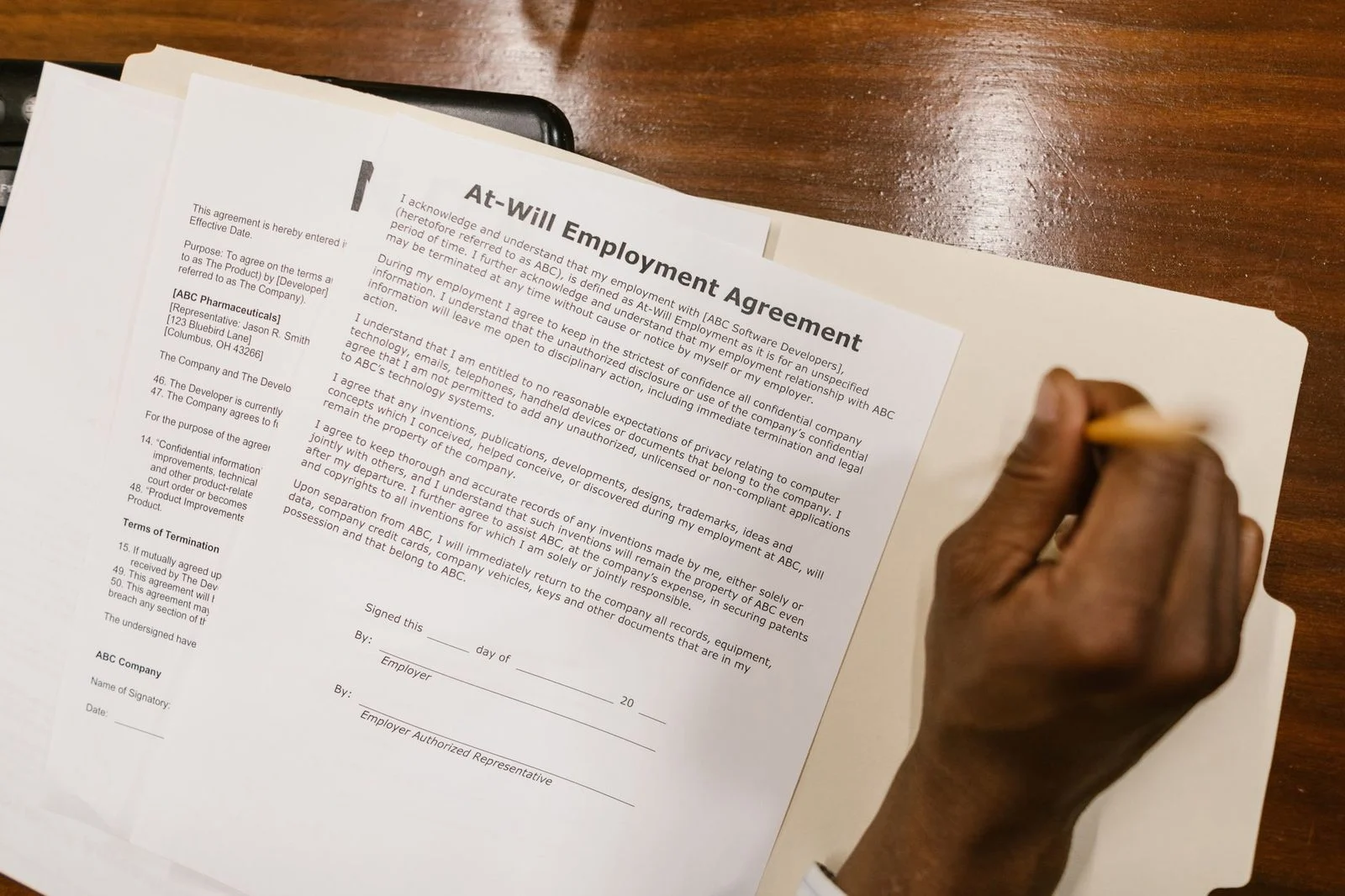
If you’re ending an employee’s job, you may be wondering what a signed release actually gets you. A release of claims agreement is a written contract in which an employee gives up certain legal claims against the employer in return for something of value, usually severance pay. Its protection depends on its wording, and Florida law sets limits on what it can do.
This guide explains what these agreements cover, what they cannot waive, and the steps Florida employers should follow before the termination meeting.
What a Release of Claims Agreement Is and Who Uses One
A release of claims agreement is a signed contract that trades severance or another benefit for the employee’s agreement to give up listed claims. Because it is a contract, it needs an offer, an acceptance, consideration (something the employee would not otherwise receive), and essential terms stated clearly, as St. Joe Corp. v. McIver explains for contracts generally.
A release differs from a standalone severance letter, which may only state a payment. It is narrower than a full separation agreement, which often adds reference terms, property return, and other points. Many employers place a release section inside a full agreement.
Florida employers usually use these agreements when ending employment for layoffs, restructuring, or performance reasons. Size matters. The Florida Civil Rights Act definitions cover employers with 15 or more employees for each working day in each of 20 or more calendar weeks in the current or preceding calendar year, and their agents. The Whistle-Blower’s Act definitions cover employers with ten or more employees.
If you're ending an employee's job and want a signed release, we can talk through the agreement with you before the meeting. Talk it through with our team — the first consultation is free, confidential, and carries no obligation.

What the Agreement Typically Covers
A release usually covers claims tied to the job and how it ended. The exact wording sets its reach.
- Employment claims. The release lists the claims being given up, such as wage, discrimination, and retaliation claims. Florida’s discrimination ban lists race, sex, age, and other traits, so age-related claims belong in the drafting.
- Supporting terms. Common terms include the severance amount and payment timing, benefits continuation, return of company property, and confirmation of final pay.
- Confidentiality, non-disparagement, and cooperation. These clauses need clear, specific wording. Vague terms invite disputes later about what the employee actually agreed to.
- Neutral reference. Florida makes an employer immune from civil liability for certain disclosures about a former employee. The immunity does not apply if the information was knowingly false or violated a civil right under chapter 760, and that must be shown by clear and convincing evidence (§ 768.095). Agree on reference language in advance.
Limits on What a Release Can Cover
Two things decide what a release gives up: the law around it and the exact wording. Some protections come from statute, so the release must be drafted around them.
- Retaliation for reporting. An employer may not retaliate against an employee for objecting to a violation, refusing to take part in it, or giving information to an agency investigating it (§ 448.102).
- A disclosure to a government agency under subsection (1) must be made under oath and in writing, and the employee must first have brought the activity, policy, or practice to the attention of a supervisor or the employer in writing, giving the employer a reasonable opportunity to correct it (§ 448.102).
- Workers’ compensation claims. No employer may discharge, threaten, intimidate, or coerce an employee for a valid workers’ compensation claim (§ 440.205).
- At-will employment. Florida is an employment-at-will state, but an at-will employee cannot be fired for a reason the law prohibits, such as retaliation or unlawful discrimination (Laguerre v. Palm Beach Newspapers).
- Civil rights damages. A Florida Civil Rights Act lawsuit can seek back pay and damages for mental anguish. Punitive damages are capped at $100,000 per aggrieved person, and the state and its agencies and subdivisions cannot be liable for punitive damages (§ 760.11).
- Handbook promises. Handbook statements generally do not create contract rights unless they say so explicitly (Quaker Oats Co. v. Jewell). Put the release terms in the agreement itself.
Special Rules for Employees 40 and Older
Employees 40 and older need extra care, because age-related waivers can carry their own steps. Florida’s discrimination law lists age as a protected trait, so age belongs in every release review. Extra timing and disclosure steps can apply, and they change with how many employees leave together. Build that schedule before the termination meeting, not after it.
How the Process Works, Step by Step
The process moves through five steps, from file review to payment. Each step protects a different part of the deal.
- Review the file. Gather the reason for separation, performance records, and any complaints, leave requests, or workers’ compensation history.
- Draft or review the agreement. Align the release scope, payment terms, and protected-rights language. A court will not enforce a restrictive covenant unless it is set forth in a writing signed by the person against whom enforcement is sought, which is often the employee. The person seeking enforcement of a restrictive covenant, often the employer, must plead and prove the existence of one or more legitimate business interests to enforce it (§ 542.335).
- Deliver the agreement. Give it with whatever review period your timeline requires, and record the delivery date.
- Answer questions and requested changes. Respond to the employee’s questions and edits. Then confirm the signed version and its date.
- Pay and file. Pay severance on the schedule the agreement sets, and keep signed copies in the personnel file. Pay final wages on time and separately. If wages go unpaid, a court may award the prevailing party costs and a reasonable attorney’s fee (§ 448.08).
Timing depends on the facts, including the employee’s age, how many people are leaving, and how many revisions are requested.
How KEW Legal Helps Florida Employers With Releases
KEW Legal drafts and reviews release of claims agreements for employers as part of its employment work. The firm’s offices are in Coral Gables and Sunny Isles Beach. It also serves as outside general counsel for business owners and investors across Miami-Dade, Broward County, and South Florida.
Its work for employers includes:
- Drafting and reviewing separation and release agreements
- Advising on timing and age-related steps before notice is given
- Reviewing a separation decision before the employee is told
The work starts with your workforce, your handbook, and how past exits were handled, rather than a generic template. Our lawyers include Kristina E. Wilson and Natalie Martinez. Kristina E. Wilson is the lawyer responsible for this page.
Not sure what your next step is?
Talk it through with our team — the first consultation is free, confidential, and carries no obligation.
Frequently Asked Questions
Is a release of claims agreement required in Florida?
A release is a voluntary contract. Employers use one when they offer something of value, such as severance, for the employee’s promise to give up listed claims.
Can an employee sign a release after being fired for cause?
An employer can offer severance in exchange for a release, but the agreement must still be a valid contract.
Can a release stop an employee from contacting a government agency?
Florida’s Whistle-Blower’s Act protects an employee who gives information to a government agency.
What if an employee wants to undo a signed agreement?
Under Florida law, a voidable contract can be ratified if the party who could undo it does nothing after learning the key facts (Flaherty v. Flaherty). That is a general rule, not an automatic result.
Can the release be negotiated?
In most cases, yes. Payment timing, the severance amount, and reference language are common points to discuss.
Talk With KEW Legal Before the Separation Meeting
If the separation is already decided, the release is the document that sets what you receive in return for the severance you offer. You may be making this call under time pressure, with a meeting already on the calendar. Your first consultation is free, confidential, and carries no obligation to continue. To schedule a consultation, call 305-990-2300 or send us a message through our contact page. We have offices in Coral Gables and Sunny Isles Beach.
How KEW Legal Supports Employers
Drafting tailored to your business
We prepare release terms that reflect the facts of your workplace, the role of the departing employee, and the consideration you plan to offer.
Protecting your business interests
Our attorneys focus on confidentiality, non-disparagement, and return-of-property terms that help safeguard your company after the separation.
Counsel for employers
KEW Legal represents business owners and management in South Florida, including Miami-Dade and Broward counties.
Clear, practical guidance
We explain each provision in plain language so you know what you are offering, what you are asking for, and why.
Review Before You Offer
Do not send a release to an employee until its terms have been reviewed against the specific facts of the separation. Language that works in one situation may not fit another.
Key Parts of a Release Agreement
Scope of the release
Defines which claims the employee agrees to give up and how the agreement is worded to match your objectives.
Consideration
Identifies what the employer offers in exchange for the release, such as severance pay or benefits, and how it is delivered.
Protective covenants
Addresses confidentiality, non-disparagement, and return of company property, so the terms are clear and enforceable.
Review and signature
Sets out the review period and signing steps, so the employee has a clear, documented opportunity to consider the offer.
Prepare Your Release Agreement With Confidence. Start With a Free, Confidential Consultation.
Related practice areas
Request a Consultation
Fill out the short form and we will take it from there.