

Employment Law for Employers · Coral Gables and Sunny Isles Beach
Employee Disputes Florida Employers: What to Do First
Kristina E. Wilson of KEW Legal helps business owners in Miami-Dade and Broward respond to employee demand letters, agency charges, and complaints with a clear plan from the start.
By Kristina E. Wilson · Published October 17, 2026
Employee disputes Florida employer owners face usually start with one letter, one call, or one agency notice. The first few days often matter as much as the claim itself. Write down the facts, keep every related record, and talk with counsel before you reply to a demand letter, charge, or complaint.
This guide covers the main employee disputes Florida employer teams see, the law behind each one, and the early steps that protect the business. It is written for owners, managers, and HR decision-makers in Miami-Dade, Broward, and across South Florida.
What to Do First When an Employee Dispute Starts
Keep the facts, preserve every record, and get counsel before you answer. Those steps come before any reply.
Early notes and emails can become evidence. A quick reply to an employee, a text from a manager, or a note in a file can shape how a later claim is read. Stick to facts, date each entry, and name the person who wrote it.
Put a litigation hold in place right away. A litigation hold is a written instruction to keep relevant material intact. That includes emails, texts, schedules, timekeeping data, and personnel files. Don’t delete or edit them, even if they look unhelpful.
Calendar every deadline the day a letter arrives. Demand letters and agency notices can set short response windows. A missed date can limit your options. Our team can help you map those dates against the claim and the records you have.
If an employee has just sent you a wage demand or a discrimination charge, you don't have to sort out the next steps alone. Our team can talk it through with you. Talk it through with our team — the first consultation is free, confidential, and carries no obligation.
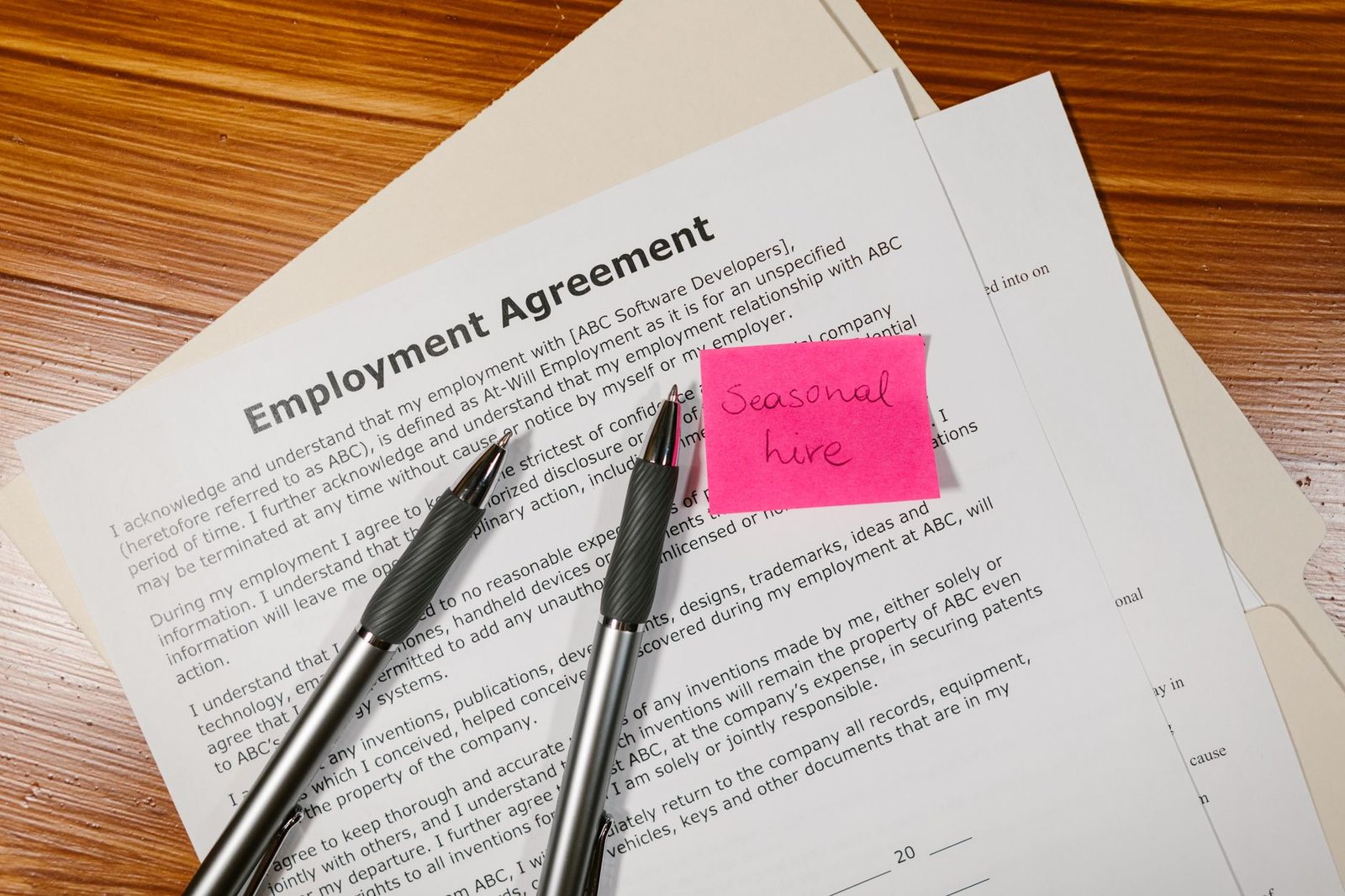
Employee Rights in Florida: The Legal Framework
Employee rights in Florida come from federal law, Florida law, and the terms of the working relationship. Each source covers different issues. More than one can apply to the same dispute.
Under Section 207 of the Fair Labor Standards Act, an employee who works more than forty hours in a workweek generally must receive overtime compensation at a rate not less than one and one-half times the employee’s regular rate of pay, provided the employee is covered by the Act and not exempt under section 213. Federal law also limits how employers may interfere with certain protected leave rights.
Florida law adds its own rules. The Florida Minimum Wage Act sets state wage rules and remedies. The Florida Civil Rights Act covers discrimination.
Read each rule against the issue in front of you. Ask which law covers the specific problem and what that law requires from the employer. A rule that fits one situation may not fit another.
Unpaid Wage Claims Under Florida and Federal Law
An employee who is owed unpaid wages can sue. The court may award costs and a reasonable attorney’s fee to the prevailing party, under Fla. Stat. § 448.08.
Minimum wage claims follow a specific path. Under Fla. Stat. § 448.110, the employee must first give the employer written notice. The notice must name the minimum wage claimed, the work dates and hours, and the total unpaid wages through the notice date.
The employer then has 15 calendar days to pay or otherwise resolve the claim. The statute of limitations is paused during those 15 days. If the claim is not resolved, the employee may bring suit.
If the employee prevails, the statute provides the full unpaid back wages plus the same amount as liquidated damages. Liquidated damages are extra damages equal to the unpaid wages. Reasonable attorney’s fees and costs are also awarded. If the employer proves good faith and reasonable grounds, the court may award less liquidated damages, or none.
Common triggers include misclassifying a worker as exempt, off-the-clock work, rounding practices that favor the company, and pay owed at separation. Questions about overtime can also implicate federal rules, which apply only to covered, non-exempt employees.
Breaks, Overtime, and Timekeeping Practices
Short rest breaks count as paid work time under federal rules. Under Section 785.18 of the Department of Labor’s rest period regulations, rest periods of short duration, running from 5 minutes to about 20 minutes, are common in industry and are customarily paid for as working time. They must be counted as hours worked.
Your payroll records matter in a dispute. Under Section 516.2 of the Department of Labor’s recordkeeping regulations, an employer must maintain and preserve payroll records that include each employee’s full name, home address, and the time of day and day of week on which the employee’s workweek begins.
Fixed schedules can simplify records, but they have a limit. If an employee works more or fewer hours than the schedule in a given week, the record must show the exact hours worked each day and each week.
Salary level is one test for certain exemptions. Under Section 541.600 of the Department of Labor’s regulations, an employee classified as an exempt executive, administrative or professional employee generally must be paid on a salary basis, but the regulations contain exceptions. Certain professionals, such as practicing lawyers, physicians and teachers, are exempt from the salary requirement under Section 541.600(e), computer employees may be paid hourly under Section 541.400(b), and outside sales employees have no salary test under Section 541.500. The salary level itself has been the subject of recent rulemaking and litigation, so the current figure should be checked against current law. Job duties also matter, so review both before you classify anyone as exempt.
Practical steps include accurate clock records, written pay policies, and consistent overtime math.
Discrimination Claims Under Fla. Stat. 760.10
Florida law generally prohibits employers with 15 or more employees from discriminating in pay, terms, or conditions of work (Fla. Stat. § 760.02(7)). The protected traits include race, color, religion, sex, pregnancy, national origin, age, handicap, and marital status, as listed in Fla. Stat. § 760.10.
Complaints often involve treatment tied to one of these traits. Examples include pay differences, job assignments, discipline, or remarks by a supervisor. Each one needs a review of the facts and the decision record.
The statute lists several remedies. A court may order back pay and award compensatory damages, including damages for mental anguish. Under Fla. Stat. § 760.11, punitive damages are capped at $100,000 in total, and recovery against the state and its agencies and subdivisions is limited to the caps in Fla. Stat. § 768.28(5).
Deadlines matter. An FCRA complaint must first be filed with the Florida Commission on Human Relations within 365 days of the alleged violation (§ 760.11(1)). The lawsuit itself generally has to be brought no later than 1 year after the earlier of a reasonable cause determination or a federal Notice of Right to Sue.
Prompt, neutral reviews and documented, consistent decisions make a record easier to explain.
Retaliation Claims: What Florida Law Protects
Florida and federal law restrict retaliation against employees who object to or report certain practices, but coverage depends on the employer’s size. Florida’s Civil Rights Act retaliation provisions reach employers with 15 or more employees, the Florida private whistleblower act reaches private employers with 10 or more persons (Fla. Stat. § 448.101(3)), and the FMLA defines covered employers as those with 50 or more employees (29 U.S.C. § 2611(4)).
Under Fla. Stat. § 760.10, an employer may not retaliate against someone for opposing an unlawful practice. The same rule covers filing a charge or taking part in an investigation.
Under Fla. Stat. § 448.102, a private employer with 10 or more persons, as defined in Fla. Stat. § 448.101(3), may not retaliate against an employee who objects to, or refuses to participate in, a practice that violates a law, rule, or regulation. The statute also protects an employee who gives information to, or testifies before, an agency investigating the employer. For disclosures to a government agency, the employee must first raise the issue in writing with the employer and give a reasonable chance to fix it.
Federal law adds its own protection. Under Section 2615 of the Family and Medical Leave Act, it is unlawful for any employer to discharge or in any other manner discriminate against any individual for opposing any practice made unlawful by that law.
Timing and records matter. A decision made soon after a complaint draws close attention. Before any change in pay, schedule, or status, write down the business reason and who approved it.
Not sure what your next step is?
Talk it through with our team — the first consultation is free, confidential, and carries no obligation.
Restrictive Covenants: Non-Compete and Non-Solicitation Agreements
Non-compete and non-solicitation agreements are generally analyzed under Fla. Stat. § 542.335, which includes employee time presumptions in § 542.335(1)(d). Florida’s 2025 CHOICE Act (effective July 1, 2025) sets a separate framework for covered noncompete and garden-leave agreements with higher-earning workers, so the applicable law should be verified against current statutes. Those requirements start with the writing.
A court will not enforce a restrictive covenant unless it is in a writing signed by the person against whom enforcement is sought. The covenant must also be reasonable in time, area, and line of business.
A covenant must also protect a legitimate business interest. A covenant not supported by one is void and unenforceable. The party seeking enforcement must show the restraint is reasonably necessary to protect that interest.
If the restraint is overbroad or overlong, the court must modify it. The court grants only the relief reasonably necessary. Courts read these covenants in favor of reasonable protection for the legitimate interest.
A violation of an enforceable covenant creates a presumption of irreparable injury. Even so, no temporary injunction may be entered without a proper bond.
Unemployment Claims and Employer Contests Under Chapter 443
Under Florida’s definitions in its unemployment compensation statute, “benefits” means the money payable to an individual, as provided in that chapter, for his or her unemployment. The definitions in Fla. Stat. § 443.036 explain key terms. A benefit year is the one-year period that begins with the first week for which a worker first files a valid claim.
Describe every separation accurately and consistently. Record the reason for each separation when it happens. Use the same account in the personnel file and in any agency response.
Inconsistent statements cause problems later. If a manager gives one reason to the agency and another in a written warning, the gap becomes part of the dispute. Keep one accurate, documented account.
Calendar the response date from every agency notice when it arrives. Counsel can review the separation record before anything goes to the agency.
Responding to a Demand Letter: Steps Employers Should Take
Respond to a demand letter in a set order. First, confirm the deadline. Next, preserve records. Then gather the personnel file and pay records, and name one person to handle communication.
Avoid informal contact with the employee about the claim. Casual talks can create statements that get quoted back later. Route questions through the designated contact or counsel.
Don’t take adverse action because of the claim without documented, legitimate reasons. Have counsel review those reasons first. Timing and documentation carry weight under the retaliation rules above.
If the demand is a Florida minimum wage claim, check whether it meets the written notice requirements of Fla. Stat. § 448.110. The employer has 15 calendar days after receipt to pay or resolve the claim.
Counsel can review the claim, evaluate the facts, and set the response strategy. A response drafted with counsel can be checked for accuracy before it goes out. Every matter turns on its own facts and records.
Outside General Counsel for Ongoing Employee Risk
Outside general counsel means a business lawyer you can call on an ongoing basis. You don’t wait for a claim to arrive before you ask questions. Regular access to advice can help catch problems early.
Ongoing work often covers handbooks, written pay policies, separation practices, and job classifications. Each one affects how a later dispute is read.
Practical steps include writing pay and conduct policies and applying them the same way to everyone. Classify exempt and non-exempt roles against both the duties test and the salary rules. Keep performance reviews documented and dated.
KEW Legal focuses on business law for owners and investors across South Florida. Employment matters for employers are one part of that work, alongside contracts, leases, and property.
Employee Dispute Counsel in Miami-Dade and Broward
KEW Legal is a Florida business law firm with offices in Coral Gables and Sunny Isles Beach. It serves business owners and investors across Miami-Dade and South Florida.
The firm serves clients in Miami, Miami-Dade County, Aventura, Brickell, Doral, Fort Lauderdale, and Broward County. Matters often begin with one employee problem and grow into ongoing guidance across the company.
Kristina E. Wilson is the responsible attorney for this page. The practice’s support staff, including assistants and office staff, help clients with day-to-day office work.
If an employee has just sent you a wage demand or a discrimination charge, you don't have to sort out the next steps alone. Our team can talk it through with you. Talk it through with our team — the first consultation is free, confidential, and carries no obligation.

Talk With KEW Legal About Your Employee Dispute
If you just received a wage demand, a discrimination charge, a retaliation complaint, a non-compete dispute, or an unemployment notice, the next step is clear. Decide what to preserve, what to calendar, and how to respond before anyone replies.
What are the main employee disputes Florida employer teams face?
Common disputes include unpaid wage claims, discrimination complaints, retaliation claims, non-compete disputes, and unemployment contests. Each one has its own rules and deadlines.
How long does an employee have to sue for discrimination in Florida?
Under Fla. Stat. § 760.11, the one-year limit runs from the earlier of a reasonable cause determination or a Notice of Right to Sue. If no determination issues within 180 days, the outer limit is 18 months from filing.
Does an employer have 15 days to answer a minimum wage notice?
The employer has 15 calendar days after receiving the written notice to pay or otherwise resolve the claim, under Fla. Stat. § 448.110.
Are rest breaks paid under federal rules?
Under Section 785.18 of the Department of Labor’s rest period regulations, rest periods of short duration, running from 5 minutes to about 20 minutes, are customarily paid as working time and must be counted as hours worked.
If you are weighing these steps now, call 305-990-2300 or send us a message. Our free first consultation is confidential and carries no obligation to continue.
Four Early Steps for Employers
Write down the facts
Record who was involved, what was said or done, and when it happened while the details are still clear.
Keep every related record
Hold onto personnel files, schedules, pay records, emails, texts, and policies. Do not delete or alter anything tied to the dispute.
Route all communications
Send demand letters, agency notices, and complaints to counsel rather than answering them on your own.
Talk with counsel before you reply
A brief conversation with an attorney can help you understand your options before you respond in writing.
Key warning
Do not reply to a demand letter, agency charge, or employee complaint before speaking with counsel. A rushed written response can shape the dispute in ways that are hard to undo.
How KEW Legal Supports Employers
Business-focused counsel
KEW Legal focuses on Florida business law, including employment matters for employers in Miami-Dade and Broward County.
Practical next steps
We help you organize facts and records and plan your response before any deadline-driven decisions are made.
Clear communication
You receive plain-language guidance on how to handle your employee dispute and how it fits your broader business goals.
Local offices
KEW Legal has offices in Coral Gables and Sunny Isles Beach, serving owners across South Florida.
Start with a free, confidential first consultation, with no obligation to continue.
Request a Consultation
Fill out the short form and we will take it from there.