
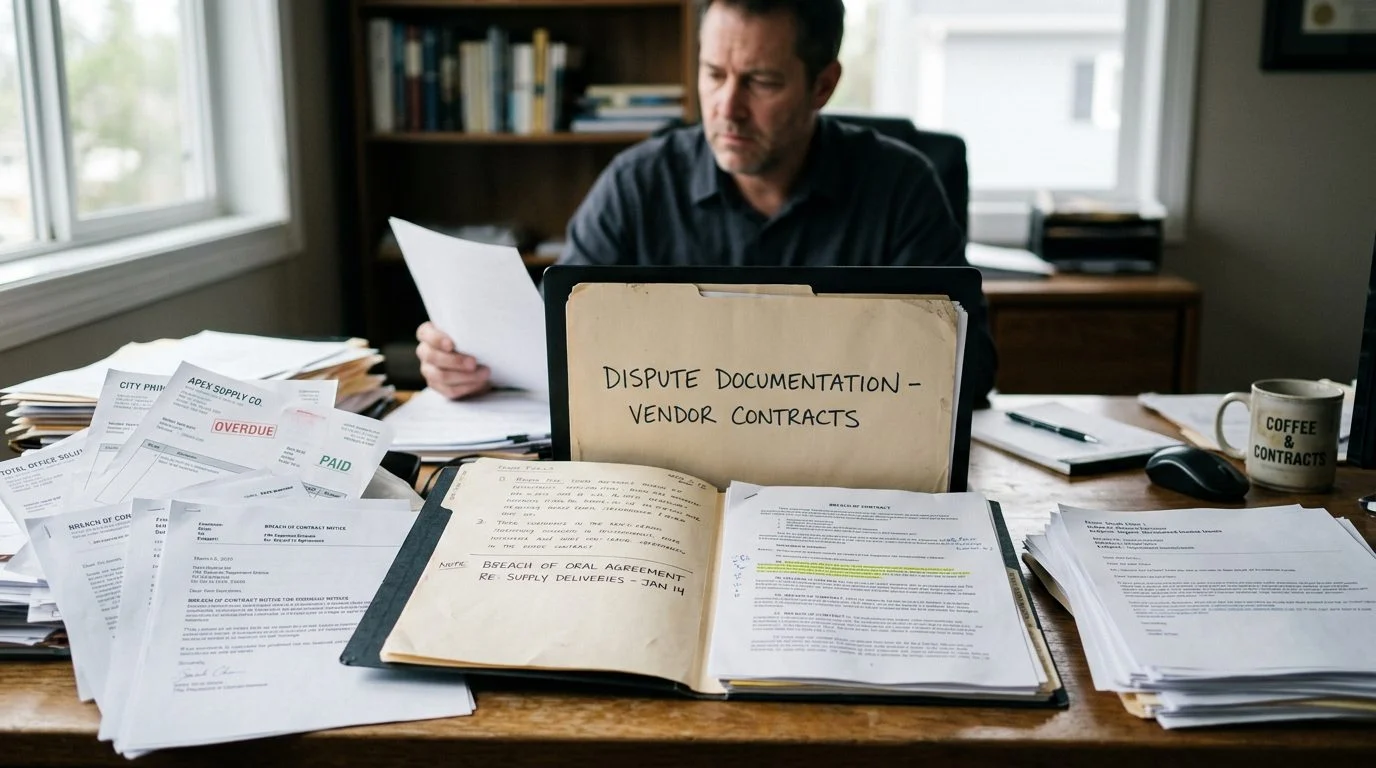
Business Contracts | Coral Gables and Sunny Isles Beach
Is a Handshake Deal Enforceable? Know What Makes an Oral Contract Valid
Verbal agreements shape partnerships, vendor relationships and business deals every day. Here is how to tell when one may hold up and when it needs a closer look.
By Kristina E. Wilson · Published November 6, 2026
You shook hands on a deal, or agreed by phone or text, and now the other side isn’t following through. Florida law still requires a signed writing for some agreements, and we cover that rule below.
The Short Answer: The Five Requirements of a Valid Oral Contract
An oral contract is an agreement made by spoken words or by conduct, rather than by a signed document. Florida’s commercial code for sales of goods says a contract may be made “in any manner sufficient to show agreement,” including conduct by both sides. Fla. Stat. § 672.204
Kristina E. Wilson is the attorney responsible for this page. KEW Legal is a Florida business law firm with offices in Coral Gables and Sunny Isles Beach. The firm acts as outside general counsel for business owners and investors across Miami-Dade and South Florida. Its work includes partnership and vendor disputes, employee issues, and commercial leases.
Each requirement gets its own section below. Each one includes a plain definition, a business example, and the points where verbal deals tend to break down.
If a verbal deal with a vendor, partner, or tenant has stalled, you don't have to sort it out alone. Contact KEW Legal to talk through your facts. Talk it through with our team — the first consultation is free, confidential, and carries no obligation.

Requirement 1: A Clear and Definite Offer
An offer is one party’s proposal to be bound on stated terms once the other side agrees. A solid offer names the parties, what is being bought or done, the price, and when it starts. Picture a cleaning vendor who tells you on the phone, “$4,000 a month for weekly service, starting June 1.” That is an offer. Compare it with “we should work together sometime.” That line expresses interest, but it sets no terms, so it usually isn’t an offer.
Missing details don’t always sink a deal. Under Fla. Stat. § 672.204(3), a contract for goods does not fail for indefiniteness just because some terms are left open, if the parties intended to make a deal and a court has a reasonably certain basis for a remedy. Fla. Stat. § 672.206 An offer to make a contract is construed as inviting acceptance “in any manner and by any medium reasonable in the circumstances,” unless the language or circumstances unambiguously indicate otherwise.
Requirement 2: Acceptance and the Meeting of Minds
Acceptance is the other side’s clear agreement to the offer’s terms, shown by words or conduct. Both sides also need to understand the deal the same way. Lawyers call this a meeting of the minds. If one person thinks the price is $4,000 and the other thinks it’s $4,400, they never agreed on price.
Counteroffers are where many verbal deals go off track. A reply that changes the terms can act as a counteroffer instead of a yes. Florida’s goods rules add a wrinkle. A definite “yes” can still count as acceptance even when it changes terms, unless it is expressly conditional on the other side agreeing to them. Under Fla. Stat. § 672.207, a definite and seasonable expression of acceptance operates as an acceptance even though it states terms additional to or different from those offered, unless the acceptance is expressly made conditional on assent to those additional or different terms (Fla. Stat. § 672.207). The exact words decide which.
Conduct can also show acceptance. Under the same goods rules, conduct by both parties that recognizes a contract can be enough to establish one, even when the writings don’t match. Fla. Stat. § 672.207
Requirement 3: Consideration, the Exchange of Value
Consideration is something of value that each side gives, or promises to give, in exchange for the other side’s promise. It can be money, goods, a service, a promise to perform, or a promise to hold off on a claim. Consider a supplier who promises monthly inventory and a buyer who promises to pay $12,000 per shipment. Each side gives something and gets something back.
The values don’t have to be equal. A promise of a favor with nothing expected in return is a weak basis for a contract. People often assume a friendly “I’ll take care of you” counts as a deal. Ask a simple question: what did each side give up? If you can name it on both sides, you’re closer to a real contract.
Requirement 4: Legal Capacity to Contract
A manager who agrees to terms the company never approved creates a fight over authority, not just over the terms.
Partners cause many of these problems. One partner may shake hands on a vendor deal the others never heard about. Whether the business is bound then turns on the partnership’s structure, the partner’s authority, and what the company did afterward.
Florida courts also explain ratification, which can happen when a party keeps a deal after learning the key facts. “Ratification occurs when a party entitled to rescind a voidable contract fails to do so after the discovery of facts that warrant a rescission.” Flaherty v. Flaherty That is a general rule, not an automatic result. So a party’s later conduct can matter.
Requirement 5: Lawful Purpose
An ordinary deal, such as a verbal agreement to share profits from a legal retail store, meets this test.
This element looks at what the agreement is for. It does not ask whether one side later failed to perform, or whether the deal went badly. A party that breaks a lawful deal has a contract dispute, not a lawful-purpose problem. That difference matters when you decide what you can enforce.
Not sure what your next step is?
Talk it through with our team — the first consultation is free, confidential, and carries no obligation.
Are Oral Contracts Legally Binding in Florida?
Florida’s statute of frauds covers several categories. No action can be brought on them unless the promise, or a note or memorandum of it, is in writing and signed by the party to be charged or by some other person lawfully authorized by that party. Fla. Stat. § 725.01 Those categories include a contract for the sale of land, a lease of land longer than one year, and an agreement that cannot be performed within one year from when it is made. They also include a special promise to answer for another person’s debt, default, or miscarriage.
Sales of goods have their own writing rule. For a sale priced at $500 or more, Florida requires a record sufficient to show the contract, signed by the party against whom enforcement is sought. Fla. Stat. § 672.201 There are exceptions. Goods specially manufactured for the buyer can be enforced only if they are not suitable for sale to others in the ordinary course of the seller’s business and, under circumstances which reasonably indicate the goods are for the buyer, the seller, before notice of repudiation is received, has made a substantial beginning of their manufacture or commitments for their procurement. So can goods already paid for and accepted. A deal can also be enforced to the extent the other side admits in court that it was made. Between merchants, a written confirmation can satisfy the rule if it is received within a reasonable time and the receiving party has reason to know its contents, unless the receiving party gives written notice of objection within 10 days after receiving it.
Electronic records carry legal weight too. The federal E-Sign Act supports the general validity of electronic records and electronic signatures. The wording of the message and who sent it both matter. Our business contract and vendor dispute page covers these writing rules in more detail.
What Makes a Verbal Contract Fail or Become Hard to Prove
A verbal deal usually fails when one of the five parts is missing, or when no one can prove the terms. Proof is often the harder problem. Evidence that can bear on the terms of an oral agreement includes testimony, emails, texts, invoices, payment records, and conduct. When two people remember the same call differently, the fight becomes about what was said.
A typical dispute starts small. A vendor starts work, the client pays part of the bill, and then the client disputes the price. Or one partner says “we agreed 60/40,” and the other says it was 50/50. Each side has its own account and little paper to back it up.
Mistakes can also undo a deal, but Florida’s rule is narrow. Whether rescission or another remedy may be available depends on the specific facts and the terms of the contract, which our lawyers can review with you. Which rule fits depends on the facts and evidence in each situation.
Why Some Sources List Six or Seven Elements
Some lists split the framework into six or seven items. They often add separate points such as intent to be bound or mutual assent. Those ideas fit inside offer and acceptance. Intent to be bound is what separates a real deal from a casual chat. Mutual assent is the meeting of the minds from Requirement 2.
So the difference is organizational, not substantive. The five-part list groups everything under offer, acceptance, consideration, capacity, and lawful purpose. When you compare lists, look past the count and check that each idea is covered somewhere.
Talk Through Your Verbal Agreement With a Coral Gables Business Attorney
A verbal deal that has gone sideways can put money, a lease, or a working relationship at risk. You don’t have to sort out the five requirements on your own. KEW Legal works as outside general counsel for business owners and investors. Its work includes partnership, vendor, lease, and employment disputes in Miami-Dade and Broward County.
What are the 5 requirements of a valid oral contract?
Does a verbal agreement need to be in writing in Florida?
Some do. Land sales, leases longer than one year, and deals that cannot be performed within a year generally need a signed writing under Florida’s statute of frauds.
Is a text message agreement valid?
Federal E-Sign law supports the general validity of electronic records and signatures.
If a handshake or phone deal has stalled, reach out to KEW Legal and talk through your facts. Contact KEW Legal or call 305-990-2300. The first consultation is free, confidential, and comes with no obligation.
This is attorney advertising. No particular result can be promised.
How KEW Legal Works With Business Owners
Outside general counsel
We focus on the legal questions business owners and investors face day to day, from partnership and vendor issues to contracts and leases.
Rooted in South Florida
Our offices in Coral Gables and Sunny Isles Beach serve clients across Miami-Dade and Broward Counties.
A free first consultation
Your initial consultation is free, confidential and comes with no obligation to continue.
Direct access to our lawyers
Call 305-990-2300 or send us a message to discuss the arrangement you have in place.
Do Not Assume a Verbal Deal Is Safe or Worthless
An oral agreement can create real obligations, and disputes often turn on what can be proved and how the deal actually operated. Speak with our team before you rely on a verbal arrangement or walk away from one.
Common Oral Agreements We Review
Partnership understandings
Verbal terms about ownership, profit sharing or responsibilities between co-owners and investors.
Vendor and supplier arrangements
Handshake pricing, delivery promises and service terms that later become disputed.
Employment terms
Pay, duties or commitments discussed with staff or contractors that were never put in writing.
Commercial lease and property deals
Informal rental terms, occupancy understandings and side agreements tied to investment property.
Get Clear Answers About Your Business Agreement. Your First Consultation Is Free, Confidential and Carries No Obligation.
Related practice areas
- Business Contract And Vendor Dispute Attorney
- Does a Business Contract Have to Be in Writing to Be Enforceable in Florida?
- What Is a Cure Period in a Vendor Contract and How Do I Use It in Florida?
Request a Consultation
Fill out the short form and we will take it from there.