

Business Contracts | Coral Gables and Sunny Isles Beach
When Two Purchase Orders Disagree, Who Controls the Deal?
KEW Legal, a Florida business law firm, helps Miami-Dade and South Florida business owners sort out conflicting purchase order, invoice and vendor terms. Free first consultation: confidential, with no obligation to continue.
By Kristina E. Wilson · Published November 4, 2026
The Short Answer: No Single Document Wins Automatically
A purchase order does not automatically beat a vendor’s invoice. In Florida, the answer turns on three questions. Did a contract form? When did it form? Which conflicting terms became part of it?
The core rule for mismatched paperwork sits in Fla. Stat. § 672.207. Read it alongside the facts of your deal. The outcome depends on the facts, so two similar sets of papers can lead to different results.
Many disputes follow one pattern. The buyer sends a purchase order. The vendor sends back an acknowledgment or invoice with its own terms. Then the goods ship, or payment stalls, and each side points to a different page. This page explains the rules, the terms that clash most often, the notice duty, and the steps to take once a fight begins.
If your purchase order and a vendor's invoice now disagree on payment, delivery, or warranty, we can review both documents with you. Talk it through with our team — the first consultation is free, confidential, and carries no obligation.
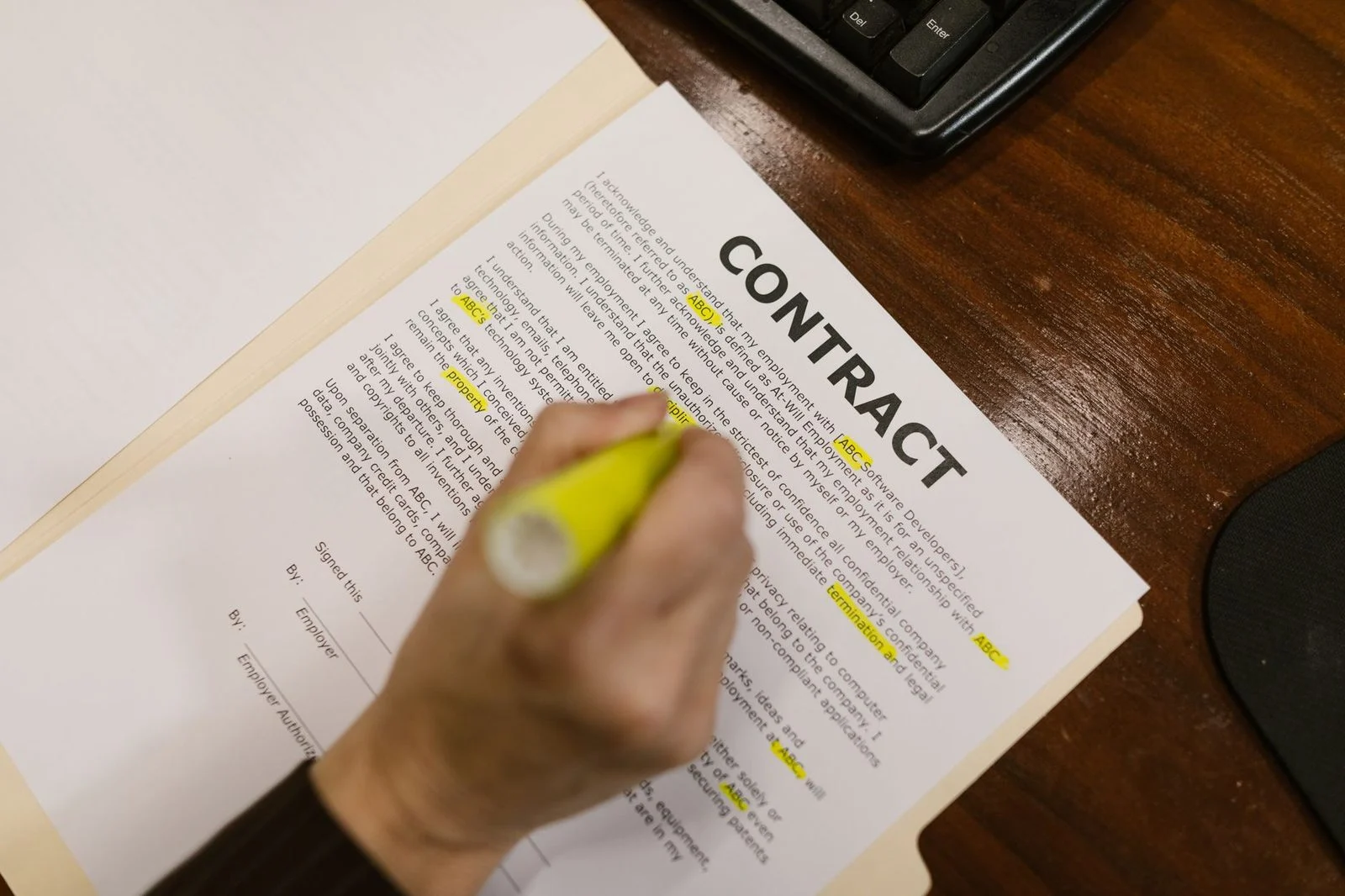
How Purchase Orders and Vendor Forms Collide
A purchase order and a vendor form collide when each one says something different about the same deal. Lawyers often call this the “battle of the forms.” The name describes the clash. It does not name a winner.
The sequence is usually simple. The buyer issues a purchase order with its own terms. The vendor replies with a quote, an acknowledgment, or an invoice that adds its own terms. Work starts, and the paperwork stays in the file.
Often the two documents agree on the big points. Both may list the same goods and the same price. The conflict usually sits in the fine print, such as:
- warranties and disclaimers
- delivery dates and shipping risk
- payment timing and late fees
- cancellation and restocking charges
- indemnity and liability limits
- forum or arbitration clauses
Goods or Services: Which Body of Law Applies
Florida’s sales-of-goods rules in Chapter 672 cover transactions in goods. A supply order for equipment or parts usually falls under them. The chapter also reaches some mixed deals. Under Fla. Stat. § 672.102, if the sale-of-goods parts of a hybrid deal predominate, the chapter applies to the whole deal. Other law may still reach the non-goods parts.
Take a deal for a commercial refrigeration unit plus installation. The unit is the goods piece. The installation is the service piece. Which piece is bigger, in value and in purpose, can decide which rules reach the dispute.
Chapter 672 also uses the word “merchant.” Under Fla. Stat. § 672.104, a merchant is a person who deals in goods of the kind or who otherwise, by occupation, holds himself or herself out as having knowledge or skill peculiar to the practices or goods involved. It also holds itself out as having special knowledge of those goods. “Between merchants” means both parties carry that knowledge. Whether a party counts as a merchant turns on its own business, or on knowledge attributed to it through an agent, broker or other intermediary it employs.
Pure service contracts fall outside the goods rules. Other Florida contract principles then guide the analysis. Classification changes which rules apply. It does not tell you who will win.
Florida Statute 672.207: Additional and Different Terms
A definite and timely acceptance can form a contract, even when it adds terms. Under Fla. Stat. § 672.207, a definite and seasonable acceptance, or a written confirmation sent within a reasonable time, operates as an acceptance. This holds even when it states terms that differ from the offer. The exception is an acceptance that is expressly made conditional on the other side agreeing to the new terms.
Next, the statute treats the extra terms as proposals. Between merchants, such terms become part of the contract unless the offer expressly limits acceptance to its terms, the terms materially alter the contract, or notification of objection to them has already been given or is given within a reasonable time after notice of them is received (Fla. Stat. § 672.207).
- the offer expressly limited acceptance to its own terms
- the new terms materially alter the deal
- the other side objected, or objects within a reasonable time after learning of them
So, between merchants, a vendor’s invoice can add a term to a purchase order deal unless the purchase order expressly limits acceptance to its own terms, the term materially alters the deal, or the buyer objects within a reasonable time after notice of the term is received. Otherwise, the added terms are only proposals for addition to the contract. A term that changes the deal in a major way, or one the buyer already objected to, may not survive. A buyer who wants to block extra terms should say so in writing, and early.
Missing terms do not always sink a deal. Under Fla. Stat. § 672.204(3), a contract for sale of goods does not fail for indefiniteness even though one or more terms are left open, if the parties intended to make a contract and there is a reasonably certain basis for giving an appropriate remedy. This holds if the parties meant to make one and there is a reasonably certain basis for a remedy.
Here is the candid part. Section 672.207 speaks clearly to additional terms.
Terms That Most Often Create Disputes
Price, payment timing, delivery, warranties, indemnity, cancellation, fees, and arbitration clauses cause most of the friction. Each one matters because it decides who pays when something goes wrong.
Warranty language is a common fight. Under Fla. Stat. § 672.316, a written exclusion of the implied warranty of merchantability must mention merchantability and be conspicuous. Phrases such as “as is” or “with all faults” exclude implied warranties unless the circumstances indicate otherwise.
Fee clauses are a trap. A vendor’s invoice may say the buyer pays legal fees in a collection fight. Under Fla. Stat. § 57.105, if a contract allows fees to a party that must enforce it, a court may also allow fees to the other side when it prevails. This subsection applies to any contract entered into on or after October 1, 1988. Florida’s general rule, from Price v. Tyler, is that each party bears its own fees unless a contract or statute provides otherwise.
Arbitration clauses often hide in invoice footers. Under Fla. Stat. § 682.02, an arbitration agreement in a record is valid and enforceable. The exception is a ground that exists in law or equity for revoking a contract. A party can still challenge a pre-printed term. Under Basulto v. Hialeah Automotive, a Florida court requires both procedural unfairness (how the deal was made) and substantive unfairness (how harsh the terms are) before refusing to enforce a term as unconscionable.
When Conduct Creates the Contract and Why Notice Matters
Both sides’ actions can create a contract, even when the papers don’t match. Under Fla. Stat. § 672.207, conduct by both parties that recognizes the existence of a contract is enough. The terms then include those on which the writings agree, plus supplementary UCC terms. Shipping, accepting goods, and paying are the kinds of conduct that matter.
Notice matters just as much. Under Fla. Stat. § 672.607, when a tender has been accepted, the buyer must notify the seller of breach within a reasonable time after it discovers or should have discovered the breach. Miss that window, and the buyer is barred from any remedy.
The same section puts the burden on the buyer to prove any breach of goods it accepted. It also requires the buyer to pay at the contract rate for goods accepted. A written notice of breach creates a dated record, and that record helps.
Not sure what your next step is?
Talk it through with our team — the first consultation is free, confidential, and carries no obligation.
Steps to Take Once a Dispute Has Started
Start by gathering every document and building a dated timeline. Collect each purchase order, quote, acknowledgment, invoice, email, delivery receipt, payment record, and change request. Note which document came first and which terms each one states.
Do not ignore a vendor’s demand letter. Do not pay or refuse payment until you know which terms apply. Either move can affect your position on notice and on the fee and warranty terms.
Watch the clock. Florida sets time limits for suing over contracts, and the start date can vary. It may run from delivery, from payment, or from when a breach was discovered. Check the dates early, before a deadline passes.

Can KEW Legal Review My Purchase Order and Vendor Invoice?
Yes, KEW Legal can review the actual documents in your dispute. Your papers may include a purchase order, a vendor invoice with different payment or warranty language, and a shipment or payment now in question. The review looks at which terms are in play and what the dates show.
Frequently asked questions
Does a purchase order always beat a vendor invoice in Florida?
No. A written confirmation sent within a reasonable time can form a contract even when its terms differ, unless the acceptance is expressly made conditional on assent to those terms, under Fla. Stat. § 672.207.
Does Florida’s UCC cover service contracts?
Chapter 672 covers transactions in goods. In a mixed deal, the part that predominates decides how much of the chapter applies, under Fla. Stat. § 672.102.
Where a tender has been accepted, missing that window can bar any remedy, under Fla. Stat. § 672.607.
Is “as is” enough to remove warranties?
Under Fla. Stat. § 672.316, “as is” excludes implied warranties unless the circumstances indicate otherwise.
If your purchase order and a vendor’s invoice now conflict, contact KEW Legal or call 305-990-2300. KEW Legal has offices in Coral Gables and Sunny Isles Beach. Kristina E. Wilson is the responsible lawyer for this page. The first consultation is free, confidential, and comes with no obligation to continue.
Attorney advertising.
How we approach conflicting vendor terms
We review every document
We start with the purchase order, the vendor's invoice, any acknowledgment forms and the correspondence that followed, so the full paper trail is in view.
We protect your business position
Our focus is on how the conflicting terms affect your payments, deliveries, liability and continuing vendor relationships.
We explain your options in plain English
You get a clear explanation of where the documents stand and what steps are available before you decide how to respond.
We act as outside general counsel
Many business owners bring us in as their ongoing legal resource, so vendor terms are reviewed before problems reach a dispute.
Review the terms before the first shipment
Conflicting terms are usually easier to address before work begins or a dispute starts. Send us the documents exchanged so far and we will review them with you.
Common sources of conflict
Purchase order vs. vendor invoice
Each side sends its own form with different pricing, payment timing or boilerplate, and neither document clearly addresses the other.
Acknowledgment forms
A vendor's order acknowledgment adds or changes terms after you have already issued a purchase order.
Delivery, payment and returns
Shipping responsibility, late-payment charges and return rights often differ between the buyer's and seller's paperwork.
Warranty and liability clauses
Limits on warranties, indemnity and liability are among the terms most often left in conflict and most costly to sort out later.
Get clear answers on your vendor terms before a dispute begins
Related practice areas
- Business Contract And Vendor Dispute Attorney
- Florida Breach of Contract: What You Must Prove
Request a Consultation
Fill out the short form and we will take it from there.