

Business Contracts | Coral Gables & Sunny Isles Beach
Thinking About Leaving a Business Contract in Florida?
KEW Legal helps business owners and investors across Miami-Dade and Broward counties understand their options before they stop performing, send a notice, or walk away from a deal.
By Kristina E. Wilson · Published October 26, 2026
Can I get out of a business contract in Florida? Sometimes, yes. Simply stopping work or payments is different. It can become the breach the other side points to. This guide walks through each route and the cost of acting too early.
What Does Getting Out of a Business Contract Actually Mean?
Getting out means ending your duties under the contract in a way the law and the other side can recognize. Walking away on your own does not do that. It only shifts the question to whether your reason was good enough.
If you stop delivering goods, paying a vendor, or showing up under a partnership deal, the other side may say you breached first. Then you may have to prove your reason. Stopping on your own can become the very breach they point to.
The answer turns on three things: the contract language, why you want out, and how the other side has acted since the problem started. Emails, notices, and dates often matter as much as the signed page. Two similar contracts can lead to different answers.
If you're deciding whether to keep performing under a contract that is now in dispute, you don't have to work through that choice alone. Talk it through with our team — the first consultation is free, confidential, and carries no obligation.

Start With the Exit Terms in Your Contract
The easiest lawful exit is often the one your contract already gives you. Read the termination clauses before you look at any legal theory. Most contracts use one or more of three exits.
Termination for convenience lets a party leave for any reason after notice. Termination for cause requires a specific failure by the other side. Non-renewal can require notice months before the end date.
Notice rules are where many owners slip. The contract usually names who must receive written notice, the address or email to use, how delivery must happen, and the deadline. A notice sent to the wrong person, or a day late, can turn a valid exit into a breach. Keep proof of delivery.
Many contracts also give a cure period. This gives the other side a chance to fix the problem before termination takes effect. Skipping it can weaken your exit.
If the contract involves an employee, a separate rule applies. Laguerre v. Palm Beach Newspapers
Grounds That Can Void or Undo a Contract
Some contracts can be undone on a legal ground. The ground must fit the facts, and you must act on it in time. Fraud, mistake, and unfair terms are the grounds people raise most often, and each has its own test.
Fraud is one example. The deceived party may undo the deal, or keep it and sue for damages.
Timing matters. In Flaherty v. Flaherty, the Second District explained that ratification happens when a party who may rescind fails to do so after learning the facts that justify it. As the court explained in Flaherty v. Flaherty, ratification occurs when a party entitled to rescind a voidable contract fails to do so after the discovery of facts that warrant a rescission.
Mistake is narrower than many people think. In Waterside at Boynton Homeowners’ Ass’n, the Fourth District said rescission for mutual mistake requires a mutual mistake about a fact that goes to the essence of the contract. Florida also allows rescission for a unilateral mistake in limited circumstances, as the Third District explained in DePrince v. Starboard Cruise Services.
Unfair terms face a high bar. Under Basulto v. Hialeah Automotive, a court looks at both how the deal was made and how unfair the terms are.
Writing rules add another layer. Under Florida’s statute of frauds, no action may be brought upon an agreement that is not to be performed within the space of 1 year from the making thereof unless the agreement, or some note or memorandum thereof, is in writing and signed by the party to be charged or by another person lawfully authorized by that party. Under Florida’s goods sales rule, a contract for the sale of goods for the price of $500 or more is not enforceable by way of action or defense unless there is a record sufficient to indicate that a contract for sale has been made, signed by the party against whom enforcement is sought or by that party’s authorized agent or broker, except as otherwise provided in the statute, including for specially manufactured goods, admitted contracts, and goods paid for and accepted.
When the Other Side Breaches First
If the other side fails to perform in a serious way, that failure may give you grounds to stop your own performance. A serious failure is different from a small delay. The facts decide which one you have.
Sometimes the other side says clearly that it will not perform. That statement can change your options before the due date arrives. Do not treat that statement as the end of the matter without checking the contract.
Give the notice and cure opportunity the contract calls for before you treat the deal as ended. Keep records of your performance, the breach, every notice, and every reply.
If you already received goods, timing is critical. Under Florida’s rule on accepted goods, once a buyer has accepted goods, the buyer must notify the seller of a breach within a reasonable time after discovering it, or after the point it should have been discovered, or be barred from any remedy.
Negotiated Exits: Mutual Release, Buyout, and Mediation
Often the cleanest exit is a written deal that both sides sign. A mutual release ends the contract and states what each side gives up. Put the terms in writing, including payment dates, returned property, pending work, and confidentiality. A vague handshake can leave the dispute alive.
A buyout works similarly. One side pays to end the contract early. Document the amount, the timing, and what counts as full payment. Also record who keeps which files, so neither side can later say the exit was incomplete.
Mediation is another path. If a filed lawsuit seeks money damages, a court must refer it to mediation on one party’s request, when that party can pay or the costs can be split fairly. Florida’s court-ordered mediation statute excludes some cases, including landlord and tenant disputes without a personal injury claim and actions filed to collect a debt. Florida calls its mediation confidentiality rules the Mediation Confidentiality and Privilege Act.
What Stopping Performance Can Cost You: Damages and Deadlines
Stopping performance can expose you to damages and a lawsuit.
Keep your own losses limited once a problem starts.
Florida sets time limits for suing. Florida Statutes section 95.11 sets five years for written contracts and four years for contracts not founded on a written instrument. Under section 95.03, a clause fixing a shorter time to sue is void.
The clock generally starts when the last element of the claim occurs, under section 95.031. The amount in dispute often shapes which court hears the case. Our separate guide on small claims versus circuit court covers that choice.
Not sure what your next step is?
Talk it through with our team — the first consultation is free, confidential, and carries no obligation.
Real Estate Contracts and Commercial Leases
Whether a buyer or seller can walk away from a real estate contract depends on what the signed contract says about contingencies, deadlines, and deposits. A contingency is a condition that must be met before the deal closes. A missed inspection or financing date can change the answer, so read every date carefully.
Florida’s statute of frauds also requires a signed writing for contracts to sell land and for leases longer than one year. See section 725.01.
For commercial leases, check early termination clauses, assignment rights, and sublease rights. Leaving the space before using those routes can leave the tenant owing rent under the lease terms. KEW Legal also handles commercial eviction matters, including for owners who live abroad. Our broader guide on business contract and vendor disputes covers the wider framework.
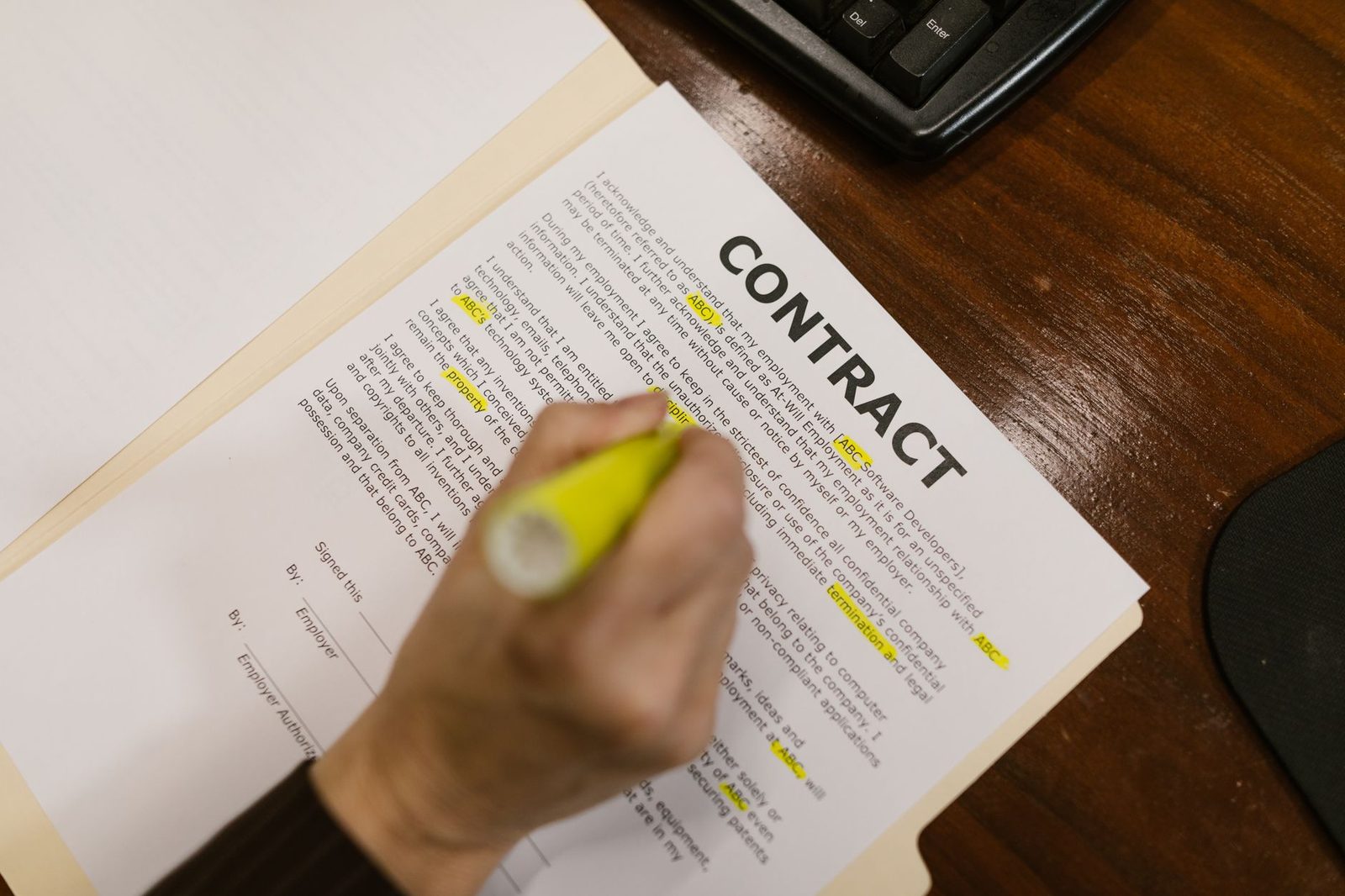
Talk Through Your Contract Before You Stop Performing
Before you stop performing, review the contract, the notices, and the messages against the routes above. You may be under pressure from a partner, a vendor, or a landlord. You may also be researching this for a company or partner you don’t control. Either way, the early steps matter.
Bring the signed contract, every notice, and the key emails or texts to a free, confidential initial consultation with Kristina E. Wilson, with no obligation to continue. KEW Legal has offices in Coral Gables and Sunny Isles Beach. Call 305-990-2300 or send us a message.
Can I get out of a business contract in Florida if the other side stopped performing?
Possibly. The other side’s failure may give you grounds, but the facts and your notices decide the answer.
How long do I have to sue over a business contract in Florida?
Florida Statutes section 95.11 generally allows five years for written contracts and four years for contracts not in writing.
Can I undo a business contract because of a mistake?
Only in limited cases. A mutual mistake must concern a fact that goes to the essence of the contract.
Can a verbal business agreement be enforced in Florida?
Sometimes. Certain agreements, such as those that cannot be performed within one year, must be in writing and signed under Florida’s statute of frauds.
How KEW Legal Approaches Contract Exit Questions
Contract-by-Contract Review
We read the full agreement, including termination, default, notice, and dispute resolution provisions, before recommending a course of action.
Protecting Your Position
We focus on steps that help keep your rights and defenses intact while the facts are still being gathered.
Clear, Practical Guidance
We explain your options in plain language, including the risks of each path, so you can make an informed decision for your business.
Outside General Counsel Support
For business owners who need ongoing legal support, our team can handle contract questions as part of broader counsel for the business.
Before You Stop Performing
Stopping payments, ignoring deadlines, or sending a termination notice without reviewing the contract can change your position. Speak with a lawyer before you take action.
Questions That Shape Your Options
What Does the Contract Say?
Termination clauses, cure periods, notice requirements, and dispute provisions often control what you can do next.
How Has the Other Side Performed?
Missed payments, unfinished work, or changed terms may matter, but the specific facts and documentation determine their significance.
What Notices Have Been Exchanged?
Emails, letters, and informal messages can help or hurt your position, so it is important to review them carefully.
What Would Exiting Cost?
Damages claims, lost profits, and other obligations should be weighed against the costs of staying in the agreement.
Talk Through Your Contract with KEW Legal
Related practice areas
Request a Consultation
Fill out the short form and we will take it from there.