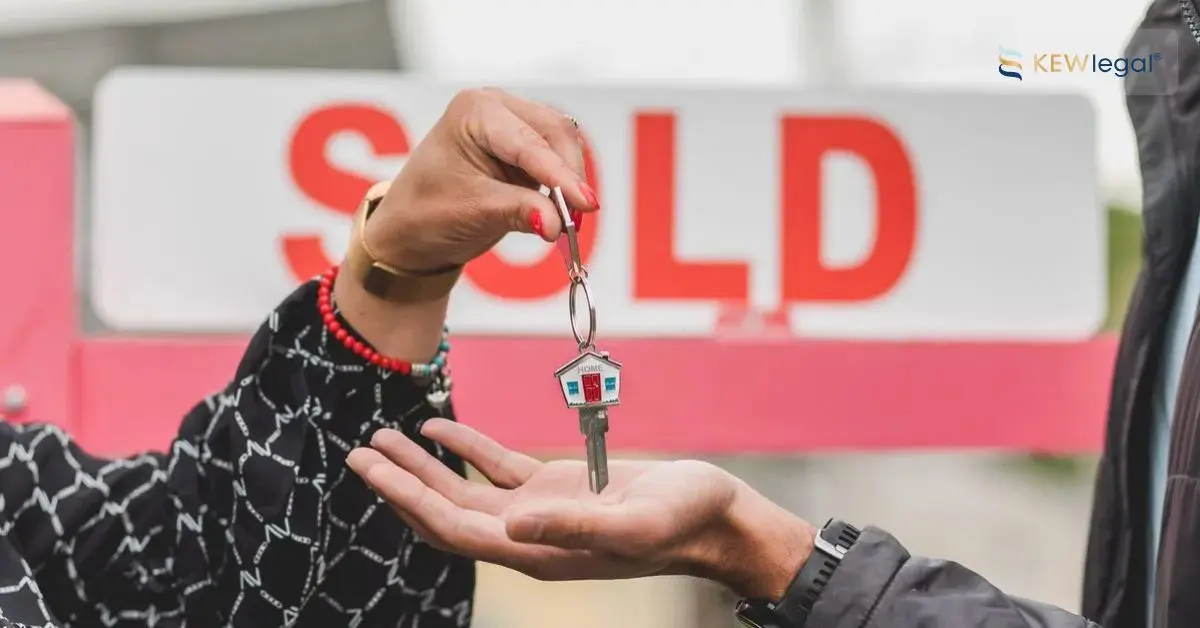
Florida real estate closings involve more than signing documents and transferring funds. Because a basic title company cannot provide legal advice or fix legal defects, buyers and sellers benefit from having an attorney-led closing team involved from the start.
KEW Legal® helps Florida property owners, buyers, sellers, and investors handle title, escrow, and real estate closing issues with practical legal guidance. Contact us today to protect your transaction before problems delay or derail your closing.
What Is Title in a Florida Real Estate Transaction?
Title is the legal right to own, use, sell, or transfer a piece of property. In a Florida real estate transaction, the title process confirms that the seller actually has the legal authority to sell the property and that there are no ownership problems, liens, unpaid debts, or other defects that could affect the buyer’s rights after closing.
This is different from a deed. A deed is the document used to transfer ownership from the seller to the buyer. Title is the legal ownership itself. Before closing, a title search reviews public records to identify anything that could interfere with clean ownership.
If a title issue is found, the closing may be delayed until the problem is resolved. A standard title company may be able to identify the issue, but it cannot provide legal advice or fix legal defects. An attorney-led title team can help review the problem, explain the legal risk, and take steps to clear title so the transaction can move forward.
Title Insurance Costs Exactly the Same Everywhere in Florida
Florida sets title insurance rates by law, meaning you cannot shop around for a cheaper premium. The Florida Office of Insurance Regulation mandates fixed rates across the state. For a $500,000 property, the premium is strictly $2,575. Every title agency charges this exact amount.
Since price is non-competitive, you are shopping for closing speed, contract interpretation, and legal protection.
Choosing a discount title shop saves you nothing on the premium but costs you leverage if a dispute happens. A basic title clerk cannot give legal advice or file an injunction when a seller suddenly refuses to close.
Because the state forces you to pay the same rate everywhere, using a title agency that lacks in-house legal counsel means you get less value for the exact same money.
Who Pays the Title Fees? The Answer Changes by County
The party responsible for paying the title insurance policy depends entirely on which of Florida’s 67 counties the property is in. Customary practice dictates the terms. If you use a standard FAR/BAR contract and leave the specific boxes unchecked, local customs take over.
| County Custom | Who Pays Title Premium? | Who Chooses the Title Agent? |
| —– | —– | —– |
| Miami-Dade & Broward | Buyer | Buyer |
| Palm Beach, Sarasota, Hillsborough | Seller | Seller |
| Collier / Naples | Negotiated | Negotiated |
When the seller pays, they control the closing agent. This puts the buyer at a disadvantage if the seller’s agent is slow, unresponsive, or misses a hidden lien. Buyers in seller-pay counties routinely hire their own real estate lawyer to oversee the seller’s title company and protect their deposit.
Basic Title Searches Do Not Stop Modern Quitclaim Fraud
Title fraud is shifting rapidly. Currently, 62% of Florida title fraud cases involve vacant land. Scammers forge quitclaim deeds, list the property below market value, and push for a fast cash close. Quitclaim fraud jumped 51% recently, forcing the state to react.
Basic title agents look for old liens. Law firms look for identity markers. Florida’s March 2024 fraud penalties give law enforcement more authority, but prevention happens at the closing table.
Remote Online Notarization (RON) and programs like the Lee County ID Verification Pilot force sellers to prove their identity through biometric and cryptographic checks before funds move.
Even the best identity check cannot prevent a dispute if a legitimate, previously unknown heir contests the sale. This is why a title insurance policy remains necessary, despite strict upfront identity verification.
What Is Escrow in a Florida Real Estate Transaction?
Escrow is the process of having a neutral third party hold money or documents during a real estate transaction until certain contract conditions are met. In a Florida closing, escrow often involves the buyer’s deposit, also called earnest money, which is held until the deal closes or the contract is canceled.
The escrow agent does not represent the buyer or the seller. Their role is to follow the contract and hold the funds safely. If the transaction closes, the deposit is usually applied toward the buyer’s purchase price or closing costs.
If the deal falls through, the contract determines whether the buyer gets the deposit back or the seller may have a claim to it.
Escrow disputes often happen when the buyer and seller disagree over deadlines, inspection rights, financing contingencies, or whether one side breached the contract. money.
Escrow Disputes Break Down By Contract Type
Whether you get your deposit back after a canceled deal depends entirely on if you signed a standard FAR/BAR contract or a CRSP contract. Missing a deadline is the number one reason buyers lose their escrow deposits in Florida. When a deal crashes, the timeline to claim the money changes based on the paperwork.
A FAR/BAR “As-Is” Contract strictly sets inspection and financing contingency periods. If the buyer cancels within the inspection period, they get the deposit back quickly. If a dispute happens, the escrow agent must report it to the Florida Real Estate Commission (FREC) within 15 days and initiate a resolution process within 30 days.
A CRSP Contract offers different default remedies and lacks some of the standardized, fast-acting protections of FAR/BAR, often dragging out dispute resolutions.
A neutral title company will simply freeze the money and interplead the funds into a court registry if the buyer and seller fight. They will not advocate for you. Only your own attorney can aggressively demand the release of funds and threaten litigation for breach of contract.
Standard Title Companies Cannot Fix Legal Defects
Administrative title clerks stop working the moment they find a legal problem with the property boundary or ownership history. If a title search reveals an unpermitted addition, a lingering mechanics lien, or a probate issue, a standard title company pauses the transaction. They cannot clear the title. They only issue insurance on a clean title.
Hiring a closing attorney means the person running the title search is the same person who can file the legal paperwork to fix the defect. They bridge the gap between finding the problem and solving it.
You pay the same fixed state premium either way. Using a title-only agency leaves you paying out-of-pocket for outside legal counsel if a defect delays the closing.
Using an attorney-led title team builds legal resolution directly into the Florida real estate closing process, preventing a delayed closing from killing your interest rate lock.
FAQ: Deciding How to Close in Florida
Can I force the seller to use my title company?
Yes, if you offer to pay for the title insurance. In counties where the seller customarily pays, buyers can take control of the closing timeline by absorbing the premium cost. The trade-off is higher upfront closing costs. In competitive markets, offering to pay title fees makes a buyer’s offer significantly stronger.
Does title insurance cover survey errors?
Only if you purchase a specific endorsement. A standard policy excludes boundary disputes unless a new, certified survey is provided to the underwriter before closing. Relying on an old survey provided by the seller leaves you entirely exposed to neighbor encroachment claims and fence-line disputes.
Protect Your Florida Closing Before a Title or Escrow Problem Delays the Deal
A real estate closing can move smoothly until one title defect, missed contract deadline, fraud concern, escrow dispute, or ownership issue puts the entire transaction at risk. Because Florida title insurance premiums are fixed, buyers and sellers should focus on the quality of legal guidance they receive, not just who can process paperwork.
KEW Legal® helps clients handle Florida real estate closings, title issues, escrow disputes, contract concerns, and property ownership problems with attorney-led support from start to finish. With offices in Sunny Isles and Coral Gables, our team assists buyers, sellers, investors, and property owners across South Florida.
If you are preparing for a closing or dealing with a title or escrow issue, contact KEW Legal® today to protect your transaction before problems become more costly.