
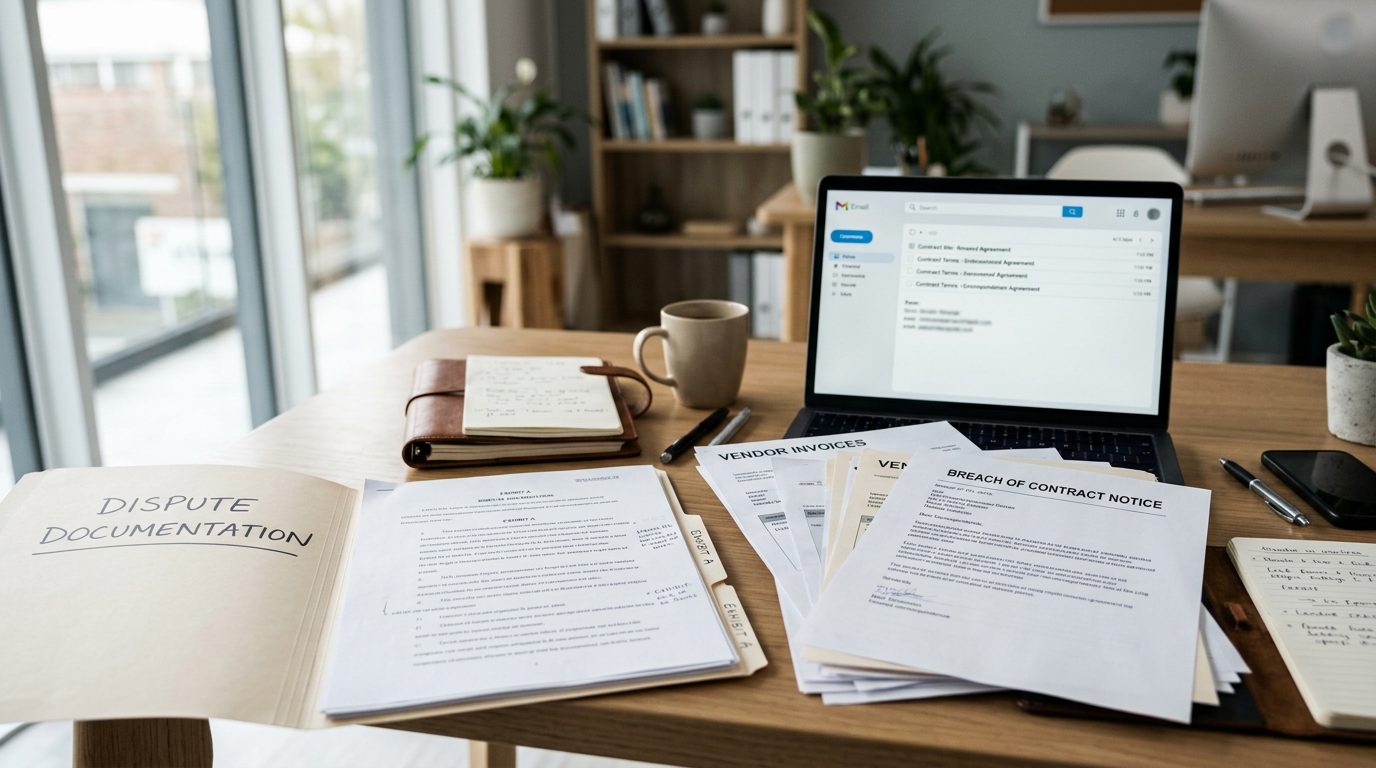
Vendor Guide | Coral Gables & Sunny Isles Beach
A Handshake Can Be a Binding Deal in Florida. Know Where Your Vendor Agreement Stands.
A practical guide for business owners across Miami-Dade and Broward. KEW Legal offers a free first consultation, which is confidential and carries no obligation to continue.
By Kristina E. Wilson · Published October 26, 2026
Is a verbal agreement binding in Florida? Usually, yes. A vendor deal made by phone, in person, or by text can bind a business when the core contract elements are present. The hard part is often proving what was agreed. This guide explains the rules, the evidence that matters, and the next steps. It is written for owners, managers, and office staff facing a price change or a dispute over a deal that never made it to paper.
Is a Verbal Agreement Binding in Florida? The Short Answer
In most cases, a spoken deal binds a Florida business once the basic contract elements are in place. That is why a phone call with a supplier can matter as much as a signed purchase order. Every situation is different, so the facts matter. Some agreements must be in writing and signed by the party to be charged before a court will enforce them.
The analysis usually has two parts. First, did a contract form? Second, does a law require a signed writing for this kind of deal? Reviewing each stage of a deal separately can help you spot potential issues.
Proof matters too. Even a binding deal can be hard to enforce if no one can show the terms. Price, quantity, and delivery date are often the points that get fought over. For the wider picture of contracts and vendor disputes, see our outside general counsel guide for businesses.
Not sure what your next step is?
Talk it through with our team — the first consultation is free, confidential, and carries no obligation.
What Makes a Verbal Contract Binding in Florida?
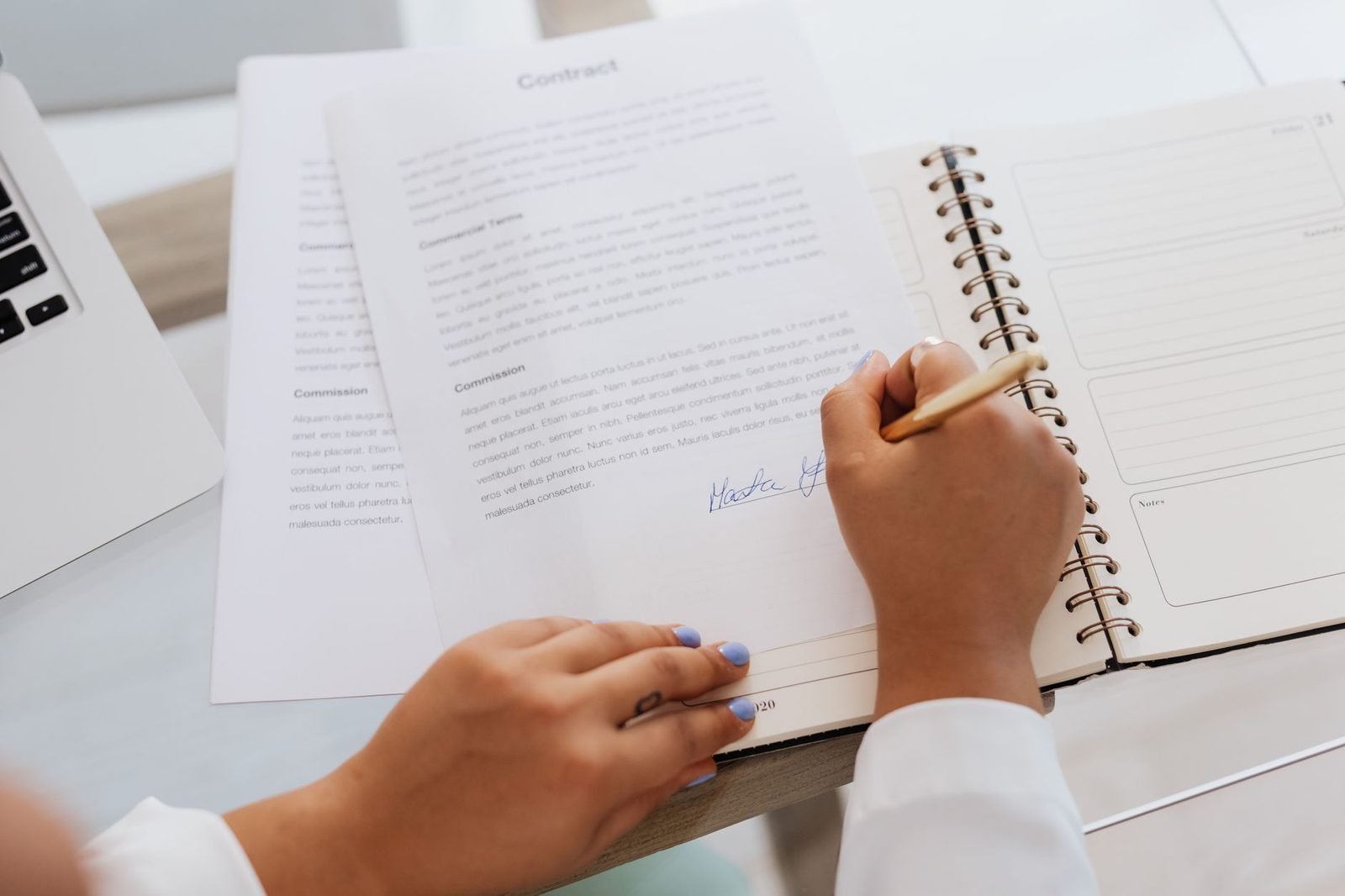
A verbal contract is binding when it has an offer, an acceptance, consideration, and essential terms stated clearly enough.
Offer. One side proposes terms, such as price, quantity, scope, and delivery date. A vendor who quotes a set price for a set order has made an offer. Under Fla. Stat. § 672.206, an offer generally invites acceptance by any reasonable method.
Acceptance. The other side agrees. Acceptance does not always need a formal signature. For goods, Fla. Stat. § 672.204 says a contract may be made in any manner that shows agreement, including conduct by both parties that recognizes a contract exists.
Consideration and meeting of the minds. Each side gives something of value, and both understand the same deal. Parties who describe a deal differently can end up disagreeing about what was agreed.
Essential terms. Open terms do not always sink a deal. For goods, the same section says a contract does not fail just because some terms are left open, if the parties meant to make a deal and there is a reasonably certain basis for a remedy.
When Florida Law Requires a Writing
Some verbal deals must be in writing. The main rule is the statute of frauds. Fla. Stat. § 725.01 says no action can be brought on certain agreements unless they are in writing and signed by the party to be charged. Fla. Stat. § 725.01 reads: “unless the agreement or promise upon which such action shall be brought, or some note or memorandum thereof shall be in writing and signed by the party to be charged therewith or by some other person by her or him thereunto lawfully authorized.” Those include an agreement that is not to be performed within one year, a lease longer than one year, and a contract for the sale of lands. Fla. Stat. § 725.01 reads: “unless the agreement or promise upon which such action shall be brought, or some note or memorandum thereof shall be in writing and signed by the party to be charged therewith or by some other person by her or him thereunto lawfully authorized.”
The same statute covers a special promise to answer for another person’s debt or default. Fla. Stat. § 725.01 reads: “unless the agreement or promise upon which such action shall be brought, or some note or memorandum thereof shall be in writing and signed by the party to be charged therewith or by some other person by her or him thereunto lawfully authorized.” That promise must be in writing and signed to be enforced.
Goods follow a different rule. Fla. Stat. § 672.201, as amended in 2025, says a contract for goods priced at $500 or more is not enforceable unless there is a record sufficient to indicate a contract was made, signed by the party against whom enforcement is sought or by that party’s authorized agent or broker. Equipment, inventory, and supply orders often fall in that range.
Between merchants, a written confirmation can work against you. If you receive one within a reasonable time and have reason to know its contents, it can satisfy the signed-record rule unless you object in writing within 10 days.
Many routine service arrangements fall outside these rules. A service that can be finished within one year is generally not caught by the one-year rule. A verbal service deal may still be enforceable.
What Evidence Shows a Verbal Deal Existed?
The strongest proof is what the parties wrote or did around the deal. Start with the message trail. Texts, emails, and voicemails that show the offer, the acceptance, and the price are often the first records to pull.
Documents that match the claimed terms add weight. Invoices, quotes, purchase orders, delivery tickets, and payment records can all show what was agreed. Under Fla. Stat. § 672.207, conduct by both parties that recognizes a contract can establish a contract for sale, even when the writings do not.
Course of dealing also matters. If the parties handled past orders, prices, and payments the same way, that pattern can help show what they meant.
Electronic records can count. Under Fla. Stat. § 668.004, an electronic signature can sign a writing and has the same force as a written signature, unless the law provides otherwise. The Uniform Electronic Transaction Act applies only when each party has agreed to deal electronically, a question judged from context and conduct.
Preserve everything now. Don’t delete texts, and keep phone logs, voicemails, and email folders intact.
Can a Business Back Out of a Verbal Agreement?
A business often cannot simply walk away from a deal it already made. Whether you can exit depends on the facts, and backing out can lead to a claim against your business.
Whether a party must keep performing depends on the particular facts. Each one needs review against the actual record, including what was said and what was delivered.
For goods, the seller also has remedies. Under Fla. Stat. § 672.709, when a buyer fails to pay the price as it becomes due, the seller may recover the price of goods the buyer accepted. A buyer who keeps the goods and ignores the invoice can face that claim.
Two practical steps help. First, check any written confirmation for the 10-day objection window under Fla. Stat. § 672.201. Second, avoid sending new written statements about the deal until you have reviewed the record. Ignoring a vendor’s messages can also make a dispute harder to manage.
Does a Later Written Contract Override a Verbal Agreement?
Later written documents can differ from earlier discussions, so it helps to compare them. Compare any new paperwork with every earlier message before you assume it controls.
Many written contracts say they are the entire agreement. Reading each clause closely before you sign is a sensible step.
For goods, the code has its own rules. Under Fla. Stat. § 672.207, a written confirmation with different terms can still operate as an acceptance, unless acceptance is expressly made conditional on agreeing to those terms.
Where conduct by both parties establishes a contract even though the writings do not, the terms consist of those on which the writings agree, plus any supplementary terms incorporated under other provisions of the code. A document you never signed also needs careful review, since the signed-record rule for goods can matter.
Not sure what your next step is?
Talk it through with our team — the first consultation is free, confidential, and carries no obligation.
How Can a Business Prevent Verbal Vendor Disputes?
Send a written confirmation right after every verbal deal. A short email or text should list the price, scope, quantity, delivery date, payment terms, and timing. Ask the vendor to reply and confirm.
For recurring suppliers and service providers, use purchase orders and standard terms. That gives each order the same written base, so the deal is not rebuilt from memory each time.
Require written change orders for any scope or price change. A change made by phone should be confirmed in writing before work or payment moves forward.
Keep signed and confirmed versions in one place that the right people can find. Staff should know where the current version lives.
Setting up records early is easier than reconstructing a deal after a dispute starts. Our guide to the first 30 days with outside general counsel explains how that process can begin.
When Should a Business Involve Outside General Counsel?
Bring in outside general counsel early when a vendor says a deal exists and you dispute it, or when a verbal price increase is demanded.
Review is also useful when a partner or employee made the commitment. KEW Legal acts as outside general counsel for business owners and investors across Miami-Dade and South Florida, with offices in Coral Gables and Sunny Isles Beach.
If a matter moves toward court, that is a separate step. Read how outside general counsel and litigation counsel can work together in can outside general counsel appear in court. If ownership is involved, such as a member’s death, see what happens when an LLC member dies.
Is a verbal agreement binding in Florida?
Usually, yes, when the contract elements are present and no law requires a signed writing.
Does a verbal agreement for goods over $500 need to be in writing?
Generally, yes. Under Fla. Stat. § 672.201, a contract for the sale of goods priced at $500 or more generally is not enforceable unless a record sufficient to indicate that a contract was made is signed by the party against whom enforcement is sought, subject to the statute’s exceptions.
Can I back out of a verbal agreement?
The answer depends on the details.
Does a written agreement override a verbal one?
Compare any signed contract with earlier messages to see how they fit together.
If a vendor now points to a phone call or handshake as a final deal, you don’t have to sort it out alone. Call KEW Legal at 305-990-2300 or send us a message to talk through your facts. The first consultation is free, confidential, and carries no obligation to continue.
Responsible attorney: Kristina E. Wilson, KEW Legal, Coral Gables, Florida.
How KEW Legal Helps Business Owners With Vendor Agreements
Contract review
We review the terms of vendor agreements, purchase orders and service arrangements so you know what was actually agreed.
Vendor dispute handling
When a supplier or contractor fails to perform, we work to assess your position and pursue a resolution that protects your business.
Outside general counsel
We act as ongoing outside general counsel for business owners, so vendor questions get answered before they become disputes.
Clear next steps
We explain your options in plain language and recommend practical steps, whether that means documenting terms, sending a demand or negotiating.
Don't Rely on Memory Alone
Verbal terms are difficult to prove when the other side disagrees about price, scope or delivery dates. Confirm key vendor terms in writing, even in a short follow-up email, and keep your records.
Questions to Ask Before You Rely on a Verbal Vendor Deal
What exactly was agreed?
Write down the price, the work or goods, the schedule and who is responsible for what. Gaps in these terms are often where disputes begin.
Is the deal one that must be in writing?
Some agreements, such as certain sales of goods, have writing requirements under Florida law. Whether yours does depends on its specific terms and facts.
Is there proof of the deal?
Emails, texts, invoices, payments and delivery records can help show what both sides agreed to and how they performed.
Does your contract address disputes?
Look for terms on payment, termination, notice and how disagreements will be handled. A lawyer can help you identify gaps before a problem arises.
Unsure Where Your Vendor Deal Stands? Talk to KEW Legal.
Related practice areas
- Florida Employers: Steps When an Employee Causes Trouble
Request a Consultation
Fill out the short form and we will take it from there.