

Outside General Counsel for Startups | Miami
Steady legal support for your startup, from day one
KEW Legal acts as outside general counsel for founders and growing companies across Miami-Dade and Broward, with a practice that covers partnership questions, vendor contracts, employment, commercial leases and business transitions.
Working with KEW Legal
Free
Confidential first consultation with no obligation to continue
2
Offices in Coral Gables and Sunny Isles Beach
By Kristina E. Wilson · Published October 23, 2026
Outside general counsel for startups in Miami is a business lawyer you keep on call for a company’s ongoing legal questions. Instead of one filing or one contract, you get steady advice on founder decisions, agreements, and hiring. KEW Legal provides this support to business owners and investors from its Coral Gables office, with a second office in Sunny Isles Beach.
What outside general counsel means for an early-stage company
Outside general counsel is ongoing legal support for a company’s everyday business questions. It is not a one-time project. The company keeps a lawyer who learns its documents and history over time.
Early-stage companies often can’t justify a full-time in-house lawyer yet. Still, legal questions arrive early and often. Who owns what? What can a co-founder do? Is this vendor contract safe to sign?
This arrangement suits founders and operators of two- and three-founder companies in Miami-Dade and Broward County. It also suits investors who hold interests in young businesses.
KEW Legal focuses on business law for owners and investors. Kristina E. Wilson, one of the firm’s lawyers, is responsible for this page’s content.
If a co-founder wants out, or your operating agreement needs attention before the next investor meeting, we can talk it through with you. Talk it through with our team — the first consultation is free, confidential, and carries no obligation.
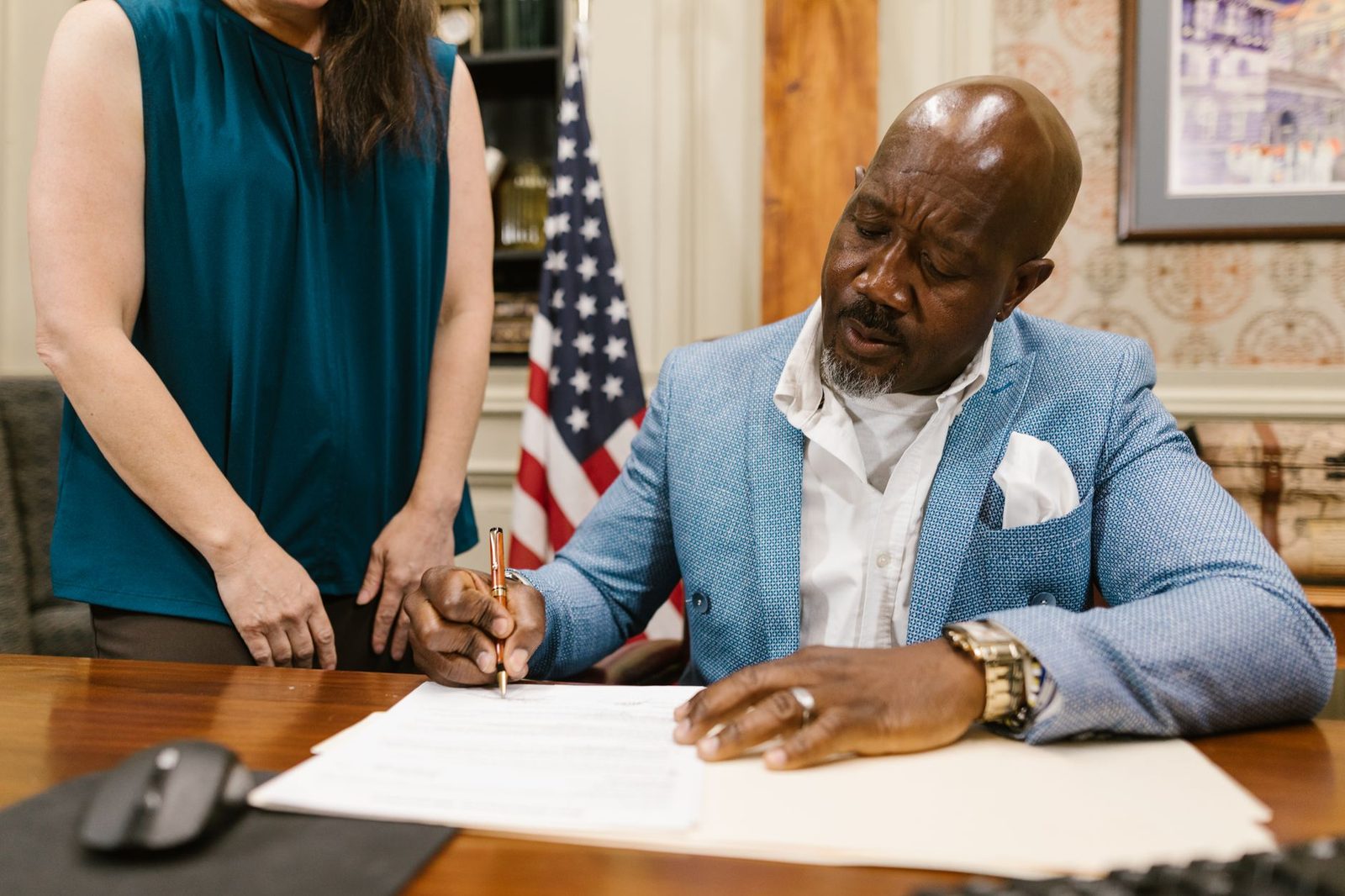
Founder and partner disputes
Founder disputes usually start with unclear roles. The fix starts with the company’s paperwork.
In a Florida LLC, the operating agreement governs relations among members and how the company runs. Where the agreement is silent, the LLC statute fills the gap (Fla. Stat. § 605.0105).
Voting rules matter too. In a member-managed LLC, a majority-in-interest vote generally decides most acts (Fla. Stat. § 605.04073).
A member’s ability to withdraw is governed first by the operating agreement, which controls relations among members (Fla. Stat. § 605.0105(1)(a)).
Typical options include negotiated buyout terms, written role changes, mediation, and litigation as a last resort. In money-damages cases, a court must send the case to mediation when one party asks, provided the requesting party is willing and able to pay the costs of the mediation or the costs can be equitably divided between the parties, subject to listed exceptions (Fla. Stat. § 44.102). Fla. Stat. § 44.102 reads: “(2) A court, under rules adopted by the Supreme Court: (a) Must, upon request of one party, refer to mediation any filed civil action for monetary damages, provided the requesting party is willing and able to pay the costs of the mediation or the costs can be equitably divided between the parties, unless: 1.” Early, documented steps usually leave more choices open than waiting for a filed dispute.
Operating agreements and governance documents
An operating agreement sets the rules for how a Florida LLC’s owners share value, vote, and make decisions.
Key terms include membership interests, voting rights, capital contributions, and who can act for the company. Vesting schedules and buy-sell provisions decide what happens to a founder’s interest when that founder leaves.
Capital promises need care. A promise to contribute is enforceable only if it is in a writing the person signed (Fla. Stat. § 605.0403). The agreement can also set penalties for a member who fails to contribute, such as a forced sale or forfeiture.
A member is bound by the operating agreement even without signing it (Fla. Stat. § 605.0106). A member is bound by and may enforce the operating agreement even without signing it (Fla. Stat. § 605.0106). The rule that the operating agreement may be amended only with the consent of all members is in a different section, § 605.04073(1)(d), not § 605.0106.
A departing founder can still owe debts from the time they were a member. Dissociation does not, by itself, end those liabilities (Fla. Stat. § 605.0603).
Florida LLCs also keep active status by filing annual reports. The Florida Division of Corporations FAQ explains these filing duties. Formation questions are fact-specific, so the firm reviews each company’s documents before recommending changes.
Investor, vendor and client contracts
A startup should review important contracts before signing, because early terms often shape later deals.
Common agreements include investor documents, promissory notes, vendor and software agreements, service contracts, and client agreements. Review focuses on payment terms, liability limits, indemnity, termination rights, intellectual property ownership, and confidentiality. A clause that looks minor at signing can control a later dispute.
A written contract also limits some other claims.
If a vendor sends a demand letter, the firm can review the demand, the contract, and the proposed response before you reply.
Early hiring and employment questions
Florida employment is generally at will, but an employer may not end employment for a reason the law prohibits. Retaliation and unlawful discrimination are examples of prohibited reasons (Laguerre v. Palm Beach Newspapers).
Florida’s Whistle-Blower’s Act bars retaliation against an employee who objects to, or refuses to join, a practice that violates a law, rule or regulation (Fla. Stat. § 448.102). Under Florida’s whistleblower act, an employee who objected to or refused to participate in an employer’s activity, policy, or practice that violates a law, rule, or regulation is protected from retaliatory personnel action (Fla. Stat. §§ 448.102(3), 448.103). Under § 448.103, an employee may not recover if the retaliatory personnel action was predicated upon a ground other than the employee’s exercise of a right protected by this act (Gessner v. Southern Co.).
Handbook policies usually do not form a contract. A manual creates enforceable contract rights only if it says it is a separate employment contract (Quaker Oats Co. v. Jewell).
Pay rules matter at hiring. Whether a worker is an employee or an independent contractor depends on the facts.
How the engagement starts and runs
The first consultation is free, confidential, and comes with no obligation to continue.
- Step 1: Make contact. Call 305-990-2300 or send a message through the contact page.
- Step 2: Share the basics. Bring formation documents, a simple picture of ownership, and the issue or upcoming deal.
- Step 3: Get a clear read. The firm explains which matters it handles, what they would involve, and whether another lawyer or firm should take a matter.
- Step 4: Put terms in writing. If you hire the firm, scope, communication expectations, and fees are set out in writing before work begins.
Time-sensitive matters, like a demand letter with a response date, get raised first. The firm keeps founders informed as the matter moves.
Not sure what your next step is?
Talk it through with our team — the first consultation is free, confidential, and carries no obligation.
Why founders bring their legal matters to KEW Legal
KEW Legal is a Florida business law firm with offices in Coral Gables and Sunny Isles Beach.
The firm focuses on business owners and investors across Miami-Dade and South Florida. Its work covers partnership disputes, outside general counsel, business contracts, employment matters for employers, business sales and succession, commercial leases, and real estate investment.
Its lawyers include Kristina E. Wilson and Natalie Martinez. They work with the firm’s team of support staff.
The practical advantage is continuity. A lawyer who has read your formation papers and your key contracts can answer a new question with more context.
Some matters fall outside what the firm handles. In that case, the firm will say so and may refer you to another lawyer or firm.

Questions founders ask before hiring outside general counsel
Outside general counsel gives a company an ongoing business lawyer for recurring questions, not a single filing.
Does outside general counsel replace an in-house lawyer?
Not always. It gives a company steady legal support without a full-time legal hire.
Can the firm help before we form the LLC?
Yes. Florida law lets two or more people who plan to become members make an agreement that becomes the operating agreement once the company forms, and lets one person who plans to become the initial member assent to terms that will become the operating agreement upon formation (Fla. Stat. § 605.0106).
What if a co-founder disagrees with the plan?
Start by reviewing the operating agreement and any side agreements. Then weigh talks, written changes, or mediation.
Will the firm handle every legal issue?
No. Matters outside the firm’s scope may be referred to another lawyer or firm.
If a co-founder wants out, an operating agreement is needed before your next investor meeting, or a vendor contract is ready for signature, talk it through with Kristina E. Wilson. Call 305-990-2300 or send us a message.
How outside general counsel supports a startup
Ongoing access to counsel
Instead of hiring a full-time in-house lawyer, you get a legal partner who already knows your business and can answer questions as they come up.
Contracts that match your plans
We review and draft agreements with investors, vendors, contractors and customers so the terms reflect how your company actually operates.
Planning before problems start
Early decisions about ownership, roles and decision-making are easier to shape before disagreements arise, and we help you think them through.
Clear, practical communication
Our team explains options in plain language so you can make informed decisions about your company.
Review before you sign
Founder agreements, vendor contracts and office leases often carry obligations that are hard to change later. Have the terms reviewed before you commit, not after a dispute begins.
Areas of startup legal support
Partnership and founder disputes
Support when co-founders or partners disagree about roles, control, contributions or the future direction of the company.
Business contracts and vendor disputes
Drafting, review and resolution of agreements with suppliers, contractors, software providers and service vendors.
Employment law for employers
Guidance on hiring, employee agreements, workplace issues and handling employee concerns as your team grows.
Commercial leases and evictions
Review of office and retail lease terms, along with help addressing commercial tenant and eviction matters for property owners.
Talk with Kristina E. Wilson and our team about your startup
Related practice areas
Request a Consultation
Fill out the short form and we will take it from there.