
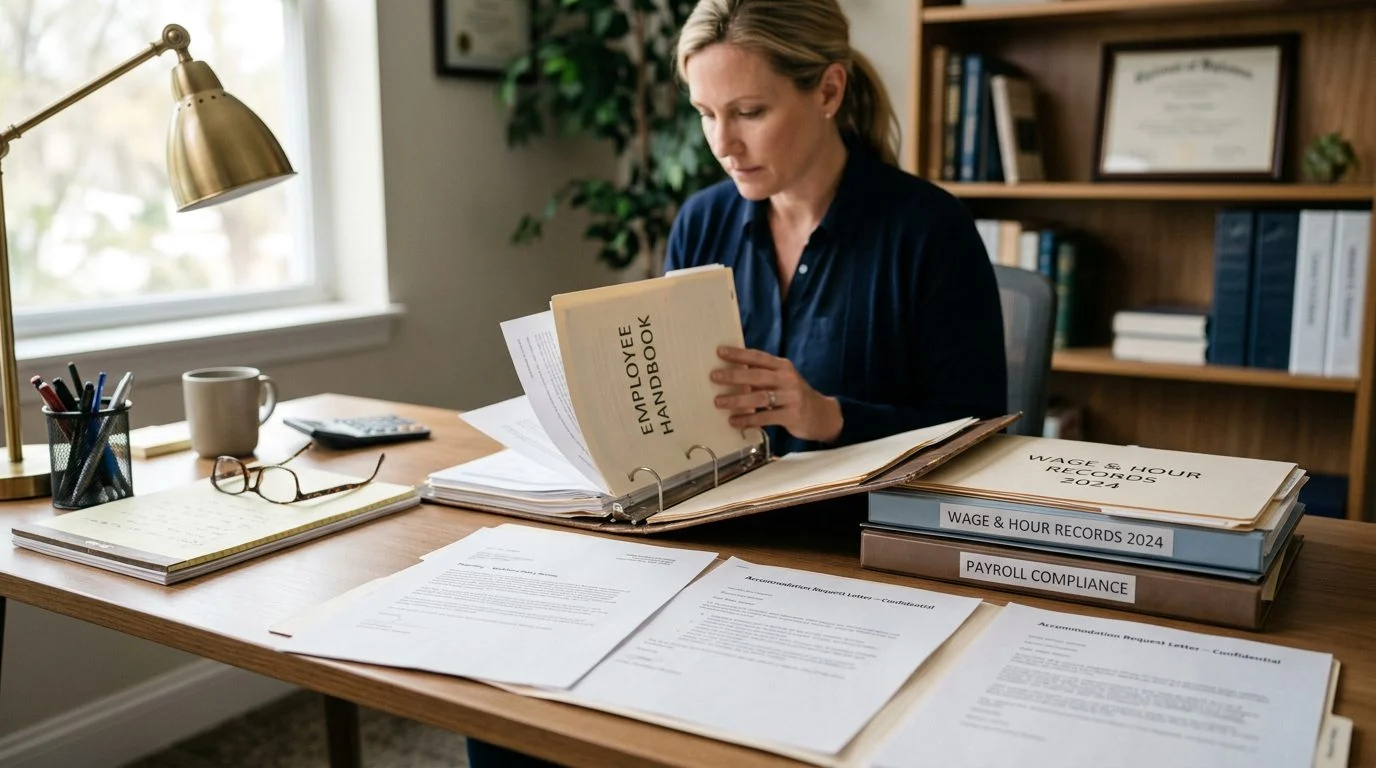
Florida Minimum Wage Increase 2026 Employer Guide
By Kristina E. Wilson · Published October 31, 2026
Florida’s minimum wage is recalculated each September 30, and each adjusted rate takes effect on the following January 1. Employers need to plan payroll around that date. This Florida minimum wage increase 2026 employer guide explains the schedule, tipped pay, and what an underpayment can cost. It is general information, and your facts decide how the rules apply to you.
Written by Kristina E. Wilson, responsible attorney at KEW Legal, a Florida business law firm with offices in Coral Gables and Sunny Isles Beach.
What Is Florida’s Minimum Wage Right Now?
Florida’s minimum wage rises in yearly steps set by the Florida Constitution, Article X, Section 24.
After that, the state calculates a yearly adjustment based on inflation. Each adjusted rate takes effect on the following January 1. Payroll systems need an annual check, not a one-time update.
No new law is needed before the increase takes effect. The amendment says implementing legislation is not required to enforce it. The wage rules and enforcement are also set out in the Florida Minimum Wage Act, § 448.110. For a Florida minimum wage increase 2026 employer, the adjusted rate is calculated by September 30 and takes effect on January 1.
How Florida’s Minimum Wage Compares to the Federal Minimum Wage
Florida’s amendment starts from federal rules. It defines “employer,” “employee,” and “wage” using the federal Fair Labor Standards Act (FLSA). The Florida Constitution, Article X, Section 24 says federal case law guides how the amendment is read.
The amendment also does not limit other laws that set higher pay. If another law requires a higher wage, that law still applies. Florida’s rate is a floor, not a ceiling.
Federal rules still apply on top of the state rules. A payroll review should check both sets of rules, not just the state number. Keeping both in view helps you avoid gaps between them.
Which Workers and Hours Are Covered
The state minimum applies to covered employees for all hours worked in Florida. The amendment says employers “shall pay Employees Wages no less than the Minimum Wage for all hours worked in Florida.”
Only people entitled to the federal minimum wage under the FLSA are eligible for the state rate, according to the Florida Minimum Wage Act, § 448.110. Whether a task counts as work time follows those federal definitions. Check training and pre-shift tasks against them.
Florida also has a 10-hour rule for manual labor. Under Fla. Stat. § 448.01, ten hours of labor is a legal day’s work for manual labor paid by the day, week, month, or year. Extra pay is owed for work beyond 10 hours in a day that the employer requires, unless a written contract signed by the employee and the employer sets a different number of hours.
Keep accurate time records for every employee. Those records are your proof if a pay question comes up.
Tipped Employees and the Tip Credit
Employers may count some tips toward the minimum wage for tipped employees. The Florida Constitution, Article X, Section 24 sets those limits.
Section 448.110(3) sets the base rate at $6.15 per hour for all hours worked in Florida, but only employees entitled to the federal minimum wage under the federal Fair Labor Standards Act are eligible for it; under § 448.110(4)(a) that rate is adjusted every year for inflation, so the rate in effect today may be higher than $6.15 per hour. Payroll needs both numbers.
Tips can’t close every gap. Because the credit is capped, the employer still owes the cash wage. Track tips and cash pay separately so you can show how each paycheck was built.
Practical Payroll Steps for Employers Before and After the Increase
Start with a pay audit before September 30, 2026. List every role paid near the state rate. Check each hourly rate against the rate that applies on each date.
Post the required poster. Each covered employer must display a minimum wage poster in a conspicuous place where covered employees work. The state makes the poster available in English and Spanish each year, under Fla. Stat. § 448.109.
Review pay compression. Raising the lowest rates can narrow the gap with experienced staff. Review supervisor and senior pay in the same process.
Write handbook pay rules carefully. Under Quaker Oats Co. v. Jewell, a manual’s policy statements generally don’t create enforceable contract rights. They do only if the manual clearly says it is a separate employment contract.
Don’t punish employees for raising pay concerns. The amendment makes retaliation unlawful, including filing a complaint or telling others about their rights, as stated in Article X, Section 24. An at-will employee can still be fired, but not for a reason the law prohibits, as the Laguerre v. Palm Beach Newspapers decision explains.
What Underpaying Wages Can Cost a Florida Business
An employee paid below the state minimum who prevails can recover the unpaid wages plus an equal amount as liquidated damages, but if the employer proves good faith and reasonable grounds, the court may, in its sound discretion, award no liquidated damages or award any amount thereof not to exceed an amount equal to the amount of unpaid minimum wages. Liquidated damages are an extra sum set by law. Under § 448.110, a prevailing employee also receives reasonable attorney’s fees and costs.
An employer can reduce that extra sum only in narrow cases. If it proves a good-faith act with reasonable grounds, the court may award no liquidated damages, or an amount up to the unpaid minimum wages. The court decides the amount.
A small pay question can grow when time or tip records don’t match the paychecks.
Can an employee recover attorney’s fees for unpaid minimum wage in Florida?
A prevailing employee is awarded reasonable attorney’s fees and costs under § 448.110. In other unpaid wage actions, the court may award the prevailing party fees under § 448.08.
Does an employee have to give notice before suing?
Yes. The employee must notify the employer and give 15 days to resolve the claim before filing a civil action, under § 448.109.

Talk Through Your Payroll Question With Our Team
If a pay question has reached you, you don’t have to work through Florida’s rules alone. You might be an owner reviewing rates before the September 30, 2026 step, a manager who just got a pay complaint, or an owner who received a demand about unpaid wages.
KEW Legal is a Florida business law firm with offices in Coral Gables and Sunny Isles Beach. For a Florida minimum wage increase 2026 employer facing a pay question, a short conversation can clarify the next step. Call 305-990-2300 or send a message through our contact page. The first consultation is free, confidential, and without obligation.
Ready to take the next step?
Related practice areas
- Workplace Legal Risks for Florida Business Owners: Employee Problems Before They Become Claims
- Does Florida Discrimination Law Apply to Small Business?
Request a Consultation
Fill out the short form and we will take it from there.