
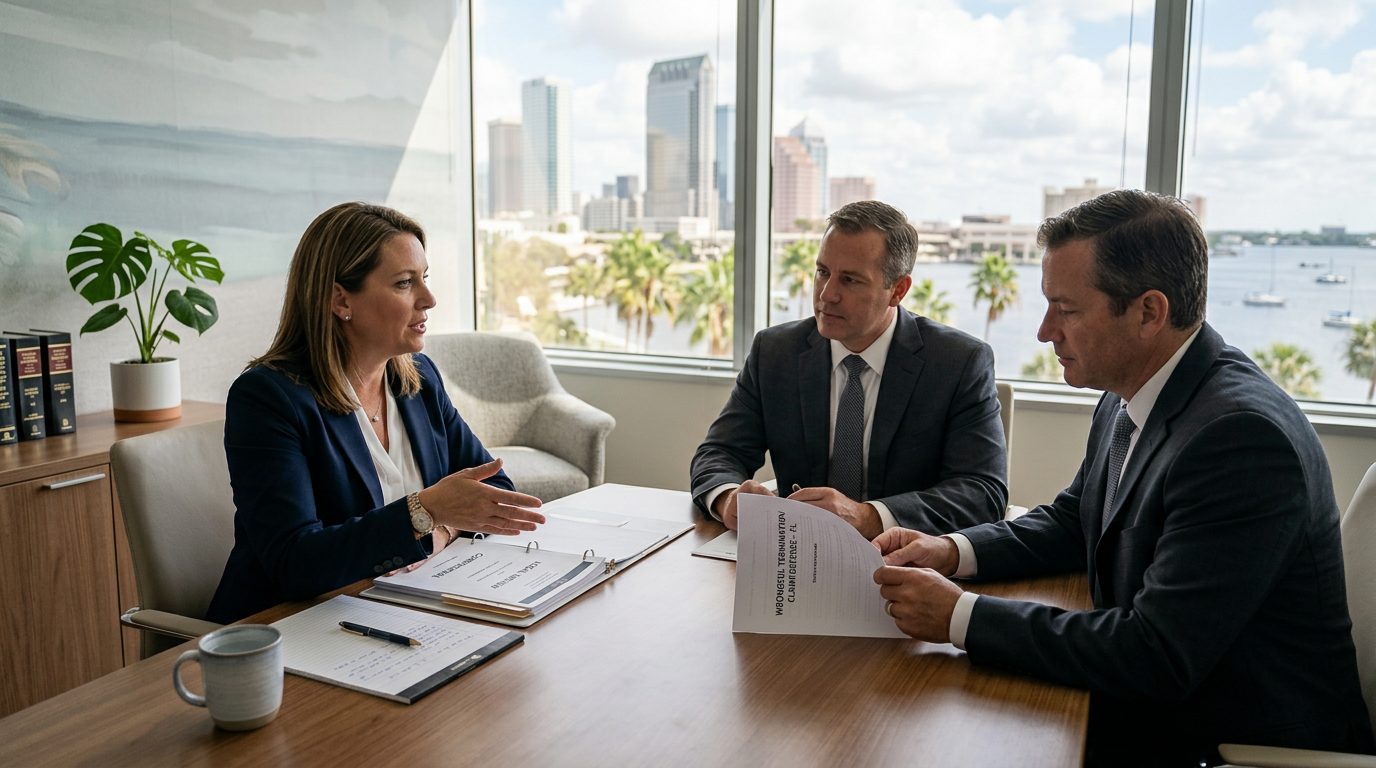
Employment Law for Employers | Coral Gables & Sunny Isles Beach
Wrongful Termination Claim Defense for Florida Employers
KEW Legal focuses on business law for owners and investors across Miami-Dade and South Florida. Our lawyers, led by Kristina E. Wilson, help employers respond to termination claims with clear documentation, careful analysis, and a plan built around the business.
By Kristina E. Wilson · Published October 25, 2026
A wrongful termination claim defense protects a Florida employer when a former worker says a firing was illegal. Florida lets most employers end at-will jobs for lawful reasons, but some firings break state or federal law. This page covers what a wrongful termination claim defense Florida employer matter involves, from the at-will rule to the first steps.
What Wrongful Termination Claim Defense Covers for Florida Employers
Defense work begins when a former employee says a termination broke the law. The claim can arrive in one of three forms:
- Demand letter: a written demand from the employee or the employee’s lawyer.
- Agency charge: a complaint filed with the Florida Commission on Human Relations or the U.S. Equal Employment Opportunity Commission (EEOC).
- Lawsuit: a case filed in state or federal court.
Each form has its own rules and timing. The first task is identifying which one you received.
This work is for owners, managers, and HR leaders in Miami-Dade, Broward County, and across South Florida. Many are dealing with it for a company they run, often right after a firing.
Kristina E. Wilson, the responsible lawyer for this page, and Natalie Martinez handle employment matters as part of the firm’s outside general counsel work.
If you just let an employee go, or a demand letter or agency notice just arrived, our team can review the deadlines and facts with you now. Talk it through with our team — the first consultation is free, confidential, and carries no obligation.

Florida’s At-Will Rule and the Exceptions Employees Claim
Florida is an at-will employment state. An employer can generally end a job for any reason, or no stated reason, unless the law forbids it. The Florida Supreme Court restated that rule in Gessner v. Southern Co. (2026).
An at-will worker can be fired at any time. The firing cannot be for a reason the law prohibits, such as retaliation or unlawful discrimination (Laguerre v. Palm Beach Newspapers).
Employees usually try to fit a claim into one of these exceptions:
- Discrimination based on race, sex, age, religion, pregnancy, national origin, handicap, or marital status, under the Fla. Stat. § 760.10.
- Retaliation for opposing an unlawful practice or taking part in a charge or investigation, under the same Fla. Stat. § 760.10.
- Whistleblower retaliation, under the Florida Private Whistleblower Act.
- Discharge over a valid workers’ compensation claim, under Fla. Stat. § 440.205.
An employee needs a statute or a contract to sue (Gessner v. Southern Co.). For whistleblower claims, the employee must show the practice was actually unlawful. Whether a whistleblower claim under the Private Whistleblower Act applies depends on the facts of each situation and the requirements of Fla. Stat. § 448.102.
Three facts usually shape whether a claim gains traction: the reason the employer gave, the timing of the firing, and how similar employees were treated. Shifting explanations can make a stated reason harder to defend. Whether any exception applies turns on the facts of each termination.
The Claims Employers Commonly Face in Florida
Each claim below has its own coverage threshold and deadline, so each one needs its own check.
- Florida Civil Rights Act. It covers employers with 15 or more employees for each working day in each of 20 or more calendar weeks in the current or preceding calendar year (Fla. Stat. § 760.02). A civil action must be commenced no later than 1 year after a reasonable-cause determination or an EEOC Notice of Right to Sue, whichever is earlier. If neither issues within 180 days of the complaint, the action may be commenced no later than 18 months after the complaint (Fla. Stat. § 760.11). Fla. Stat. § 760.11 reads: “The commencement of such action shall divest the commission of jurisdiction of the complaint, except that the commission may intervene in the civil action as a matter of right.”
- Florida Private Whistleblower Act. It covers employers with 10 or more employees (Fla. Stat. § 448.101). An employee may sue within the earlier of 2 years after discovering the action or 4 years after it was taken (Fla. Stat. § 448.103).
- Workers’ compensation retaliation. No employer may discharge, threaten to discharge, intimidate, or coerce an employee over a valid workers’ compensation claim or an attempt to claim compensation (Fla. Stat. § 440.205).
How the Defense Works: Steps and Timeline
For a wrongful termination claim defense Florida employer matter, the work usually moves through six steps. It starts with a confidential review.
- Intake. A confidential consultation covers the termination, the written complaint or charge, and the dates that apply.
- Preservation. Personnel files, emails, reviews, handbook versions, and witness notes are collected and protected, so nothing is lost.
- Fact review. The stated reason is checked against company records and against how comparable employees were treated.
- Response. A reply goes to the demand letter, or a position statement goes to the agency, with a clear account of the decision.
- Resolution. Early resolution or settlement is weighed alongside litigation, including mediation where it is available.
- Litigation, if needed. Discovery, depositions, motions, and trial preparation follow. Stage length varies with agency workload and court schedules, so no fixed timeline applies.
Several Florida deadlines run from different dates, and the earliest one can control. That is why the first review matters.
Common Questions Florida Employers Ask Before Responding
Three factors shape early decisions in these disputes: the records, the reason given at the time, and the proof of motive.
Can an employer win a wrongful termination suit?
Results turn on the documents, the stated reason, and the evidence of why the decision was made. No one can promise a result in advance.
Is it hard to claim emotional distress damages?
Under the Florida Civil Rights Act, a court may award compensatory damages, including mental anguish and loss of dignity (Fla. Stat. § 760.11). The court weighs the evidence in each case.
Is it worth defending or settling a claim?
Compare the cost of defense, the possible exposure, and the effect on daily operations. A court may also award reasonable attorney’s fees, court costs, and expenses to the prevailing party in a whistleblower case (Fla. Stat. § 448.104).
Why Florida Employers Work With KEW Legal
KEW Legal handles employment questions as part of outside general counsel work for business owners and investors across Miami-Dade and South Florida. A termination question can be reviewed alongside contracts, partnership disputes, and commercial leases when they are part of the same business picture. The employment work focuses on the employer side of workplace disputes. The firm’s offices are in Coral Gables and Sunny Isles Beach. Our first consultation is free, confidential, and carries no obligation to continue.
Not sure what your next step is?
Talk it through with our team — the first consultation is free, confidential, and carries no obligation.
Frequently Asked Questions
Does a Florida employer have to give a reason for firing someone?
Florida’s at-will rule generally lets an employer end a job without giving a reason. Any reason the employer does give should match its records.
What happens after an agency charge is filed?
The Florida Commission on Human Relations must decide within 180 days of the filing of the complaint whether there is reasonable cause to believe discrimination occurred. It must promptly notify the aggrieved person and the respondent of that decision, its date, and the options available (Fla. Stat. § 760.11).
Can a company respond to a demand letter without an agency filing?
A demand letter and an agency charge are separate steps, and each has its own timing. KEW Legal can review both with an employer.
What should an employer gather first?
Start with the personnel file, the termination documents, communications about the employee, and the handbook in effect at the time.
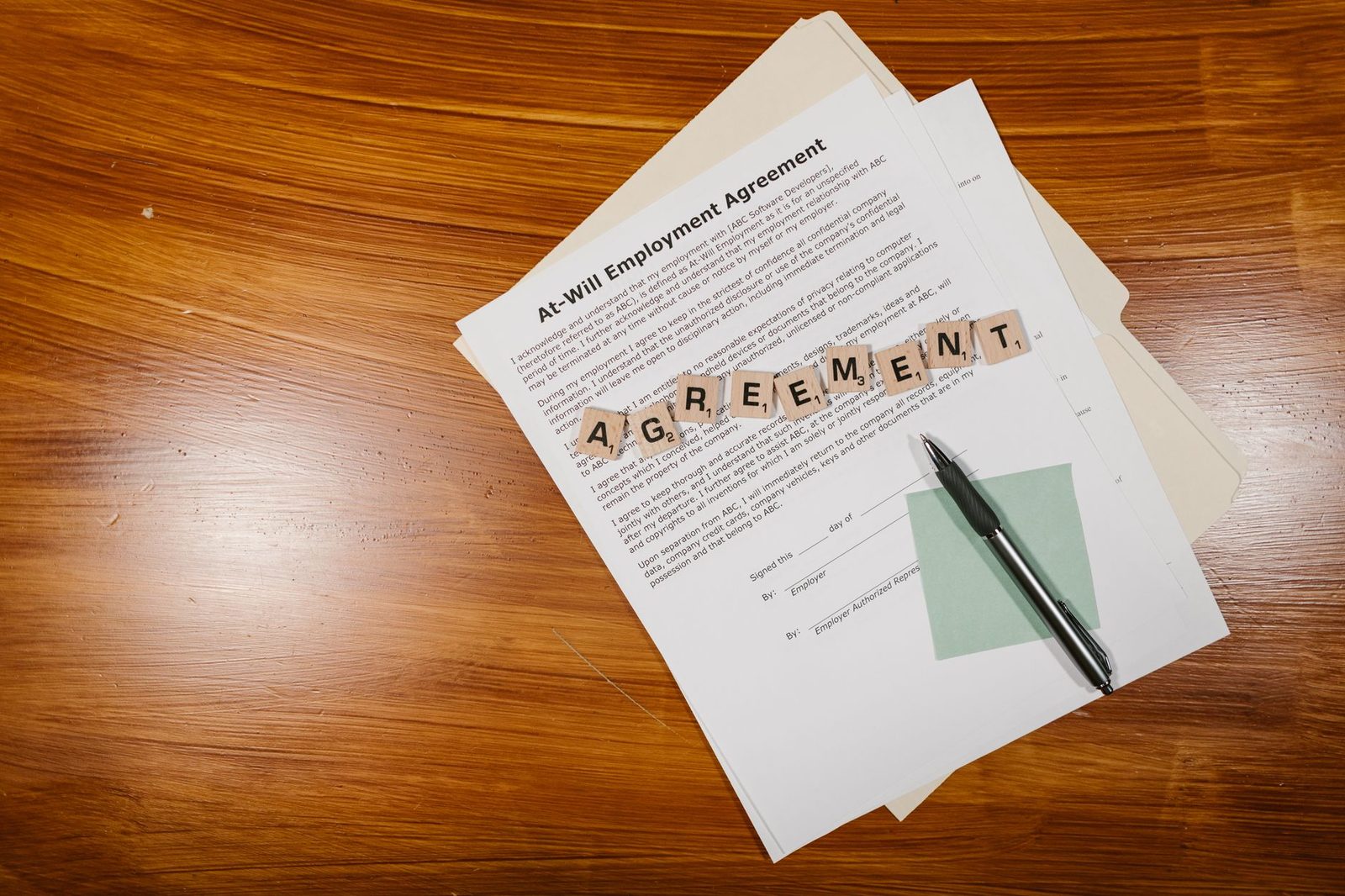
Talk Through Your Termination With KEW Legal
If you just let an employee go, or a demand letter or agency notice just arrived, you may be facing a wrongful termination claim defense Florida employer matter with deadlines already running. You don’t have to sort them out alone. Call 305-990-2300 or send us a message to set up a confidential first consultation.
How We Help Employers Respond to a Termination Claim
Review of the Record
We examine personnel files, policies, performance reviews, and the communications that led to the decision so the business understands what the record shows.
Defense Strategy
We evaluate the stated reason for the termination, the timing of events, and the evidence supporting the decision before recommending a course of action.
Clear Communication
We explain options in plain language and keep owners and managers informed at each stage of the matter.
Business-Focused Counsel
Our approach considers the company's operations, relationships, and reputation, not only the legal claim in front of it.
Act Early to Protect the Record
Once a termination claim or demand is raised, relevant emails, schedules, write-ups, and personnel files should be preserved. Contact us before making further statements about the employee or the claim.
Where Our Employer Clients Turn for Guidance
Pre-Termination Review
Before a difficult decision is carried out, we review the reasons, documentation, and process to help reduce avoidable risk for the business.
Responding to a Claim
When a former employee files a complaint or demand, we assess the allegations and help prepare a measured, organized response.
Settlement and Resolution
Where appropriate, we discuss resolution options that align with the company's goals, budget, and long-term relationships.
Policy and Handbook Updates
We help employers update policies and handbooks so that future employment decisions are better documented and easier to defend.
Speak With KEW Legal About Your Employment Matter. Our First Consultation Is Free, Confidential, and Without Obligation.
Related practice areas
Request a Consultation
Fill out the short form and we will take it from there.