

Florida Business Law | Coral Gables & Sunny Isles Beach
Training Repayment Agreements in Florida: Know the Line Before You Sign or Withhold
Here is how KEW Legal helps business owners sort them out.
By Kristina E. Wilson · Published November 10, 2026
If you’re an employer paying for a worker’s training, or a worker asked to pay that money back after leaving, you need to know where the legal line sits. Questions about asking an employee to repay training costs depend on the specific facts of each situation.
Short answer: can a Florida employer require repayment of training costs?
The first is whether the agreement is enforceable as a contract. The second is whether the employer may take the money out of wages, especially a final paycheck. Many disputes start when an employer treats a signed agreement as automatic permission to deduct from pay. Both questions must be answered.
Talk it through with our team — the first consultation is free, confidential, and carries no obligation.

What makes a training repayment agreement enforceable in Florida?
Enforceability starts with basic contract rules. A Florida contract, including an oral one, needs an offer, an acceptance, consideration, and essential terms stated with enough detail, as the St. Joe Corp. v. McIver opinion explains. For a training repayment agreement, the document should name the specific training, the costs covered, and how the repayment amount is calculated.
Courts also look at fairness. To refuse to enforce a term as unconscionable (unfairly one-sided), a Florida court must find both procedural unfairness (how the deal was made) and substantive unfairness (how harsh the terms are). Under Basulto v. Hialeah Automotive, both the procedural and substantive aspects of unconscionability must be present, although not necessarily to the same degree, and both should be evaluated interdependently rather than as independent elements. A vague clause or one buried in a long form may draw that challenge.
Handbook promises are another trap. Under Quaker Oats Co. v. Jewell, policy statements in an employee manual usually don’t create enforceable contract rights. The exception is language that clearly says the manual is a separate employment contract. If the repayment rule lives only in a handbook, it may be harder to enforce.
Whether a particular clause holds up depends on the facts, including the training, the amounts, the length of the repayment period, and how the agreement was presented to the worker.
How Florida minimum wage law limits deductions from pay
Florida’s minimum wage amendment requires employers to pay employees no less than the minimum wage for all hours worked in Florida, but only those individuals entitled to receive the federal minimum wage under the federal Fair Labor Standards Act, as amended, and its implementing regulations are eligible to receive the state minimum wage. Under that text, a repayment deduction can’t pull pay for any hour below that floor. The rule appears in Article X, Section 24 of the Florida Constitution. Section 448.110(3) incorporates sections and regulations of the federal Fair Labor Standards Act.
The state minimum wage adjusts each year for inflation: the Department of Commerce calculates the adjusted rate each September 30, and it takes effect the following January 1. The stakes for employers are real. A worker who prevails recovers the unpaid back wages plus an equal amount as liquidated damages (extra damages equal to the back pay), unless the employer proves by a preponderance of the evidence that it acted in good faith and had reasonable grounds for believing its act was not a violation; then the court may, in its sound discretion, award no liquidated damages or an amount not to exceed the unpaid minimum wages. The worker also gets reasonable attorney’s fees and costs. Section 448.110(8) refers to the limitations period specified in s. 95.11, Florida Statutes.
Deducting training costs from a final paycheck
A final paycheck is still wages. The minimum wage floor applies to the last pay period, so a training deduction can’t push those hours below the minimum wage. One common mistake is assuming the signature settles the question.
If a worker believes a deduction broke the minimum wage rule, Florida law requires written notice first. The notice must identify the minimum wage claimed, the work dates and hours, and the total unpaid wages through the notice date. The employer then has 15 calendar days to pay or resolve the claim, and the limitations period is paused during that window, under Fla. Stat. § 448.110. That same section makes it unlawful to retaliate against a worker for asserting these rights.
Fees can shift in these cases too. In an action for unpaid wages, the court may award the prevailing party costs and a reasonable attorney’s fee, under Fla. Stat. § 448.08.
Recovering a training balance that a paycheck deduction can’t cover usually means a written demand or a civil claim. Employers should keep the signed agreement, training invoices, completion dates, and a record of every deduction taken. Workers should keep pay stubs and written messages about the debt.
Drafting terms that hold up: scope, schedule and separation
Clear terms protect both sides. Define the training narrowly: the course or certification, the dates, and the costs the employer actually paid, such as tuition, fees, and required materials.
Consider a repayment schedule that declines over time or is prorated by how long the worker stayed after training. Spell out which separations trigger repayment. Florida’s at-will rule has limits. An at-will employee can be fired at any time, but not for a reason the law prohibits, such as retaliation or unlawful discrimination, as Laguerre v. Palm Beach Newspapers, Inc. explains.
Don’t try to shorten the time to sue in the agreement. A contract term that sets a shorter period than the statute allows is void, under Fla. Stat. § 95.03.
If the agreement has a fee clause, know the other side may recover fees too. When a contract lets one party recover fees for enforcing it, the court may also allow reasonable fees to the other party if that party prevails, under Fla. Stat. § 57.105.
Explain how and when the worker will be billed, and how the worker can dispute the amount. Finally, have the agreement checked against your actual payroll practice before anyone signs. A clause that reads well can still clash with how payroll runs.
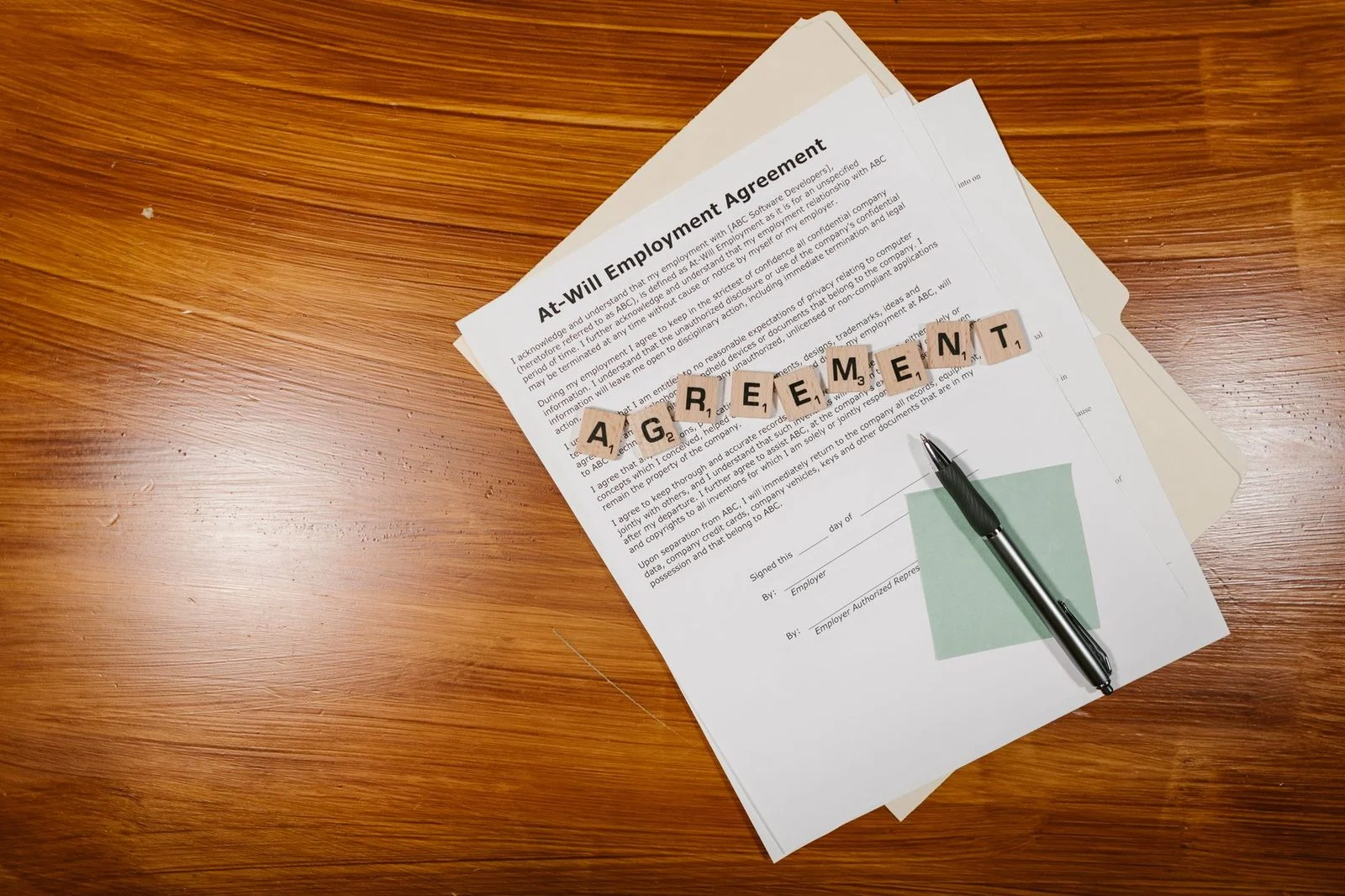
Talk through your training repayment agreement with KEW Legal
KEW Legal is a Florida business law firm with offices in Coral Gables and Sunny Isles Beach. The firm acts as outside general counsel for business owners and investors across Miami-Dade and South Florida, and it handles employee issues for employers. Kristina E. Wilson is the responsible lawyer for this page.
If you hold a signed training repayment agreement, or you were asked to repay training costs after finishing a paid program, the terms and the final paycheck are worth reviewing together. Call 305-990-2300 or send a message through the contact page. The first consultation is free, confidential, and comes with no obligation to continue.
How KEW Legal Supports Florida Employers
Agreement Review
We review training repayment language to see how it reads as a contract and how it fits your existing employment documents.
Payroll Deduction Questions
We look at whether a deduction from wages, including a final paycheck, is supported before any money is taken.
Outside General Counsel
We act as ongoing outside general counsel for business owners, so employment questions are handled alongside contracts, leases and partner issues.
Clear, Direct Advice
We explain your options in plain language so you can decide on a course of action with the facts in front of you.
Review Before You Deduct
Do not withhold training costs from a paycheck until the agreement, the wage records and the employee's separation terms have been reviewed together. Small differences in wording can change the outcome.
Questions to Ask Before You Rely on a Repayment Clause
Is the Agreement Enforceable?
Look at whether the terms are clear, signed and supported by the training actually provided.
What Does the Training Cost Cover?
Define which expenses are included, such as tuition, certification fees or travel, and which are not.
How Does the Money Get Repaid?
Clarify whether repayment is made directly, through payroll, or through a separate written plan.
What Happens When Employment Ends?
Separation terms, final paychecks and written notice all affect how a repayment question is resolved.
Have a Training Repayment Question? Talk With KEW Legal First.
Related practice areas
Request a Consultation
Fill out the short form and we will take it from there.