

Employment Law for Employers | Coral Gables
Employee arbitration agreements, drafted and reviewed with your business in mind
KEW Legal helps Miami-Dade employers and business owners draft, review, and roll out arbitration agreements for employees. Kristina E. Wilson leads the work from our Coral Gables office.
By Kristina E. Wilson · Published October 28, 2026
An employee arbitration agreement attorney in Florida reviews these documents before a dispute starts, so the employer can fix gaps while it still controls the paperwork. KEW Legal is a Florida business law firm with offices in Coral Gables and Sunny Isles Beach. It reviews employee agreements for owners and investors across Miami-Dade and South Florida, as part of outside general counsel work. Here is what that review covers and what to expect.
What an Employee Arbitration Agreement Review Is and Who It Is For
An employee arbitration agreement review is a written analysis of the arbitration clause and related staff documents. It is done for the employer before any dispute begins. It serves owners, managers, and HR leads of Florida businesses with employees in Miami-Dade, Broward, and nearby counties.
Common triggers include:
- A new hiring program that adds arbitration language to offer letters.
- A handbook update that mentions arbitration or dispute resolution.
- Growth to a larger workforce, using templates written for a smaller team.
- A demand letter that exposed a gap in the paperwork.
A review is document and planning work. It is separate from representing a party in a lawsuit or arbitration.
The Federal Arbitration Act says a written arbitration provision in a contract involving commerce is valid, irrevocable, and enforceable. The exceptions are grounds that exist for revoking any contract, or as otherwise provided in chapter 4 of the Act (9 U.S.C. § 2). Florida’s arbitration statute uses similar wording for written agreements (Fla. Stat. § 682.02).
If your employees signed arbitration clauses over several hiring cycles and you are unsure they still fit your business, we can talk through the paperwork with you. Talk it through with our team — the first consultation is free, confidential, and carries no obligation.
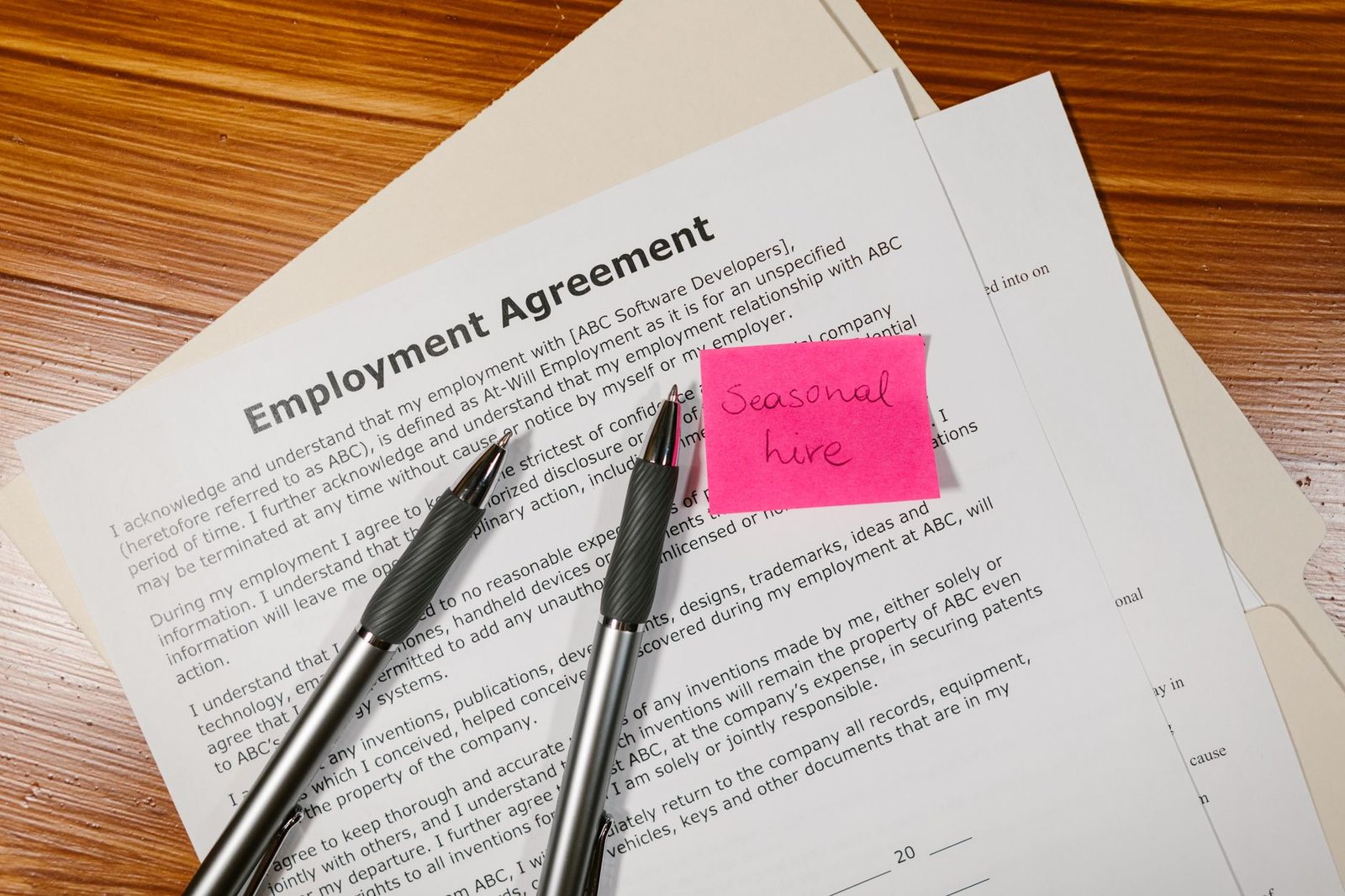
What the Review Examines in an Arbitration Clause
The review checks whether the clause covers the right claims, applies to both sides, and reads clearly enough to match what the business intends.
- Scope. Wage, discrimination, retaliation, harassment, and termination claims should be addressed on purpose. Florida law makes it unlawful for an employer to discriminate in pay or terms of work because of traits such as race, sex, or age (Fla. Stat. § 760.10).
- Sexual harassment and assault. Federal law lets the person alleging the conduct choose to bring the case in court. Then a predispute arbitration agreement is not valid or enforceable for that case (9 U.S.C. § 402).
- Formation. A contract, including an oral one, needs an offer, acceptance, consideration, and clearly stated essential terms (St. Joe Corp. v. McIver).
- Presentation. A court refusing to enforce a term as unconscionable must find both unfair process and unfair terms. They need not be present to the same degree (Basulto v. Hialeah Automotive).
- Class and collective waivers. Federal law defines a predispute joint-action waiver. It covers any term that waives the right to join a class or collective action over a future dispute (9 U.S.C. § 401).
- Costs. Arbitrator and filing fees should not undercut the clause’s purpose. In unpaid wage actions, a court may award the prevailing party costs and a reasonable attorney’s fee (Fla. Stat. § 448.08).
- Who decides. Florida’s unpaid-wage statute lets the court award the prevailing party in an action for unpaid wages costs of the action and a reasonable attorney’s fee. Under Fla. Stat. § 682.02, the court decides whether an agreement to arbitrate exists or a controversy is subject to it, while an arbitrator decides whether a condition precedent to arbitrability has been fulfilled and whether a contract containing a valid agreement to arbitrate is enforceable.
Other Employee Agreements Reviewed Alongside the Arbitration Clause
The arbitration clause rarely works alone, so the review also covers the documents around it.
- Offer letters and employment agreements. Check at-will language, job duties, and pay terms. A Florida appeals court has explained that an at-will employee may be discharged at any time, but not for a reason the law prohibits, such as retaliation or unlawful discrimination (Laguerre v. Palm Beach Newspapers).
- Non-compete terms. A court will not enforce a restrictive covenant unless it is in a writing signed by the person against whom enforcement is sought (Fla. Stat. § 542.335). The restriction must also be reasonable in time, area, and line of business.
- Injunction bonds. A violation of an enforceable covenant creates a presumption of irreparable injury, but no temporary injunction is entered unless the party seeking enforcement gives a proper bond, and a contract term waiving or limiting that bond is not enforced.
- Handbook policies. Florida courts generally do not treat handbook statements as enforceable contract rights. The exception is a manual with specific language that it is a separate employment contract (Quaker Oats Co. v. Jewell).
- Retaliation protections. Florida law bars an employer from taking retaliatory personnel action against an employee because the employee objected to, or refused to participate in, a practice that violates a law, rule, or regulation (Fla. Stat. § 448.102). The Florida Supreme Court has said the employee must show the practice is, in fact, a violation (Gessner v. Southern Co.).
- Confidentiality, non-solicitation, and separation terms. These should match each other and the rest of the file.
How the Review Process Works, Step by Step
The review runs in five steps, from a first conversation to a revised set of documents the business can roll out.
- Initial consultation. We identify the business, the workforce, and the documents in use.
- Document collection. You share current templates, signed copies where they exist, handbook versions, and onboarding steps.
- Written analysis. We identify enforceability risks, drafting gaps, inconsistencies, and how the agreements are presented and signed.
- Recommendations. You receive prioritized revisions, proposed clause language, and a rollout plan for new hires and current staff.
- Implementation support. We help with updated templates, acknowledgment procedures, and how to tell existing employees about changes.
Changes made partway through employment still need an offer, acceptance, and consideration. So the rollout matters as much as the wording. Timing depends on the facts: how many documents there are and how quickly records can be gathered.
Why Work With KEW Legal on Employer-Side Agreements
KEW Legal is a Florida business law firm that handles employer-side agreements as part of its outside general counsel work.
- Offices. The firm has offices in Coral Gables and Sunny Isles Beach. It serves business owners and investors across Miami-Dade and South Florida.
- One coordinated file. Employee documents are reviewed alongside the contracts, partnership terms, and commercial leases the business already has.
- Employer-side focus. The firm’s employment work covers drafting and reviewing agreements, advising on employee issues, and planning before claims arise.
- Timing. The review happens before a dispute, while the business still controls the paperwork.
- Lawyers. Kristina E. Wilson is the lawyer responsible for this page. Natalie Martinez is also one of the firm’s lawyers.
Our team coordinates document review, drafting, and follow-up. The business receives one consistent set of revised agreements.
Common Questions Employers Ask About Arbitration Agreements
Below are short answers to common questions about these agreements.
Can an employer require arbitration as a condition of employment in Florida?
Florida’s arbitration statute treats a written arbitration agreement as valid and enforceable, except on grounds that exist for revoking any contract (Fla. Stat. § 682.02). How the clause was presented and accepted still matters.
Do current employees have to sign a new arbitration agreement?
Adding a clause partway through employment raises acceptance and consideration questions. The review looks at how any change would be introduced and accepted.
What if a court finds the clause unenforceable?
The review looks for drafting and presentation features that invite that challenge. It does this while the business still controls the documents.
Does an arbitration clause stop employees from filing agency charges?
The review checks the carve-out and agency-charge language, so the clause matches what the law allows. For sexual harassment and sexual assault disputes, federal law lets the person alleging the conduct, or the named representative of a class or collective action alleging such conduct, choose court (9 U.S.C. § 402). 9 U.S.C. § 402 reads: “Notwithstanding any other provision of this title, at the election of the person alleging conduct constituting a sexual harassment dispute or sexual assault dispute, or the named representative of a class or in a collective action alleging such conduct, no predispute arbitration agreement or predispute joint-action waiver shall be valid or enforceable with respect to a case which is filed under Federal, Tribal, or State law and relates to the sexual assault dispute or the sexual harassment dispute.”
Is a handbook arbitration policy enough?
Florida courts generally need specific language showing the manual is a separate employment contract (Quaker Oats Co. v. Jewell). A standalone signed agreement is reviewed on its own terms.
How long does the review take, and what does it cost?
Timing varies with the number of documents and how quickly records come in. The first consultation is free, confidential, and carries no obligation to continue.
Not sure what your next step is?
Talk it through with our team — the first consultation is free, confidential, and carries no obligation.
Next Step: Review Your Employee Agreements Before a Dispute Forces the Issue
If your arbitration clauses or employee agreements have not been reviewed since they were first used, now is a practical time to check them. Perhaps you signed clauses over several hiring cycles, changed the handbook recently, or received a demand that made you question whether an agreement holds up. Those are the moments when the paperwork matters most, and when you still have room to fix it.
Contact KEW Legal or call 305-990-2300 to schedule a first consultation. The next step is a conversation about your workforce and documents, followed by collecting the agreements for written review.
This page is the responsibility of Kristina E. Wilson, with offices in Coral Gables and Sunny Isles Beach.
How we approach employee arbitration agreements
Clear, well-organized drafting
We write arbitration language that states the scope of covered disputes, the selection of the arbitrator, and the process in plain terms your employees can follow.
Review of the existing agreement
If your business already uses an arbitration clause, we review its wording, how it was presented, and how it fits with your current hiring and onboarding practices.
Rollout for current and new employees
We help you plan how agreements are introduced to new hires and existing staff, with attention to communication and documentation.
Advice on disputes as they arise
When an employment dispute comes up, we explain how your arbitration agreement may apply and what options your business has under it.
Before you roll out a new agreement
How an arbitration clause is written, presented, and accepted can affect whether it works the way your business intends. Review the wording and the rollout process before asking employees to sign.
Common questions employers bring to us
Can we require arbitration as a condition of employment?
We review whether your proposed agreement is structured and presented in a way that fits Florida law and your business goals.
Do current employees need to sign a new agreement?
The answer depends on your existing documents and how changes are introduced. We help you plan that transition carefully.
What should an arbitration clause cover?
We look at the types of claims included, how arbitrators are chosen, and how the clause sits alongside your handbook and other employment documents.
Can our existing agreement be updated?
We review current language and recommend revisions where the wording or process could create confusion for your business or your staff.
Talk with KEW Legal about your employee arbitration agreement. Your first consultation is free, confidential, and comes with no obligation to continue.
Related practice areas
Request a Consultation
Fill out the short form and we will take it from there.