

Employment Law for Employers | Coral Gables and Sunny Isles Beach
Employment Law Guidance for Miami Business Owners
KEW Legal advises employers across Miami-Dade and Broward County on workplace issues, with practical, confidential guidance. Your first consultation is free, confidential, and comes with no obligation to continue.
By Kristina E. Wilson · Published October 20, 2026
Can I get a free consultation with an employment lawyer in Miami? Yes. You can ask KEW Legal for a first consultation on an employment question, and this page explains what that meeting covers and how to prepare for it.
Yes, the first meeting is free: what the consultation is
KEW Legal offers a free first consultation, which is confidential and carries no obligation to continue (consulta inicial gratuita, confidencial y sin compromiso). Kristina E. Wilson is the lawyer responsible for this page. KEW Legal has offices in Coral Gables and Sunny Isles Beach. Our team, including office staff, handles scheduling and intake.
The first meeting is a conversation about the facts of your situation. It is not a promise that the firm will represent you. You can use it to decide your next step. Going further is your choice after the meeting.
If a termination decision or a wage question has you unsure whether to act now or wait, our team can talk it through with you at a first meeting. Talk it through with our team — the first consultation is free, confidential, and carries no obligation.
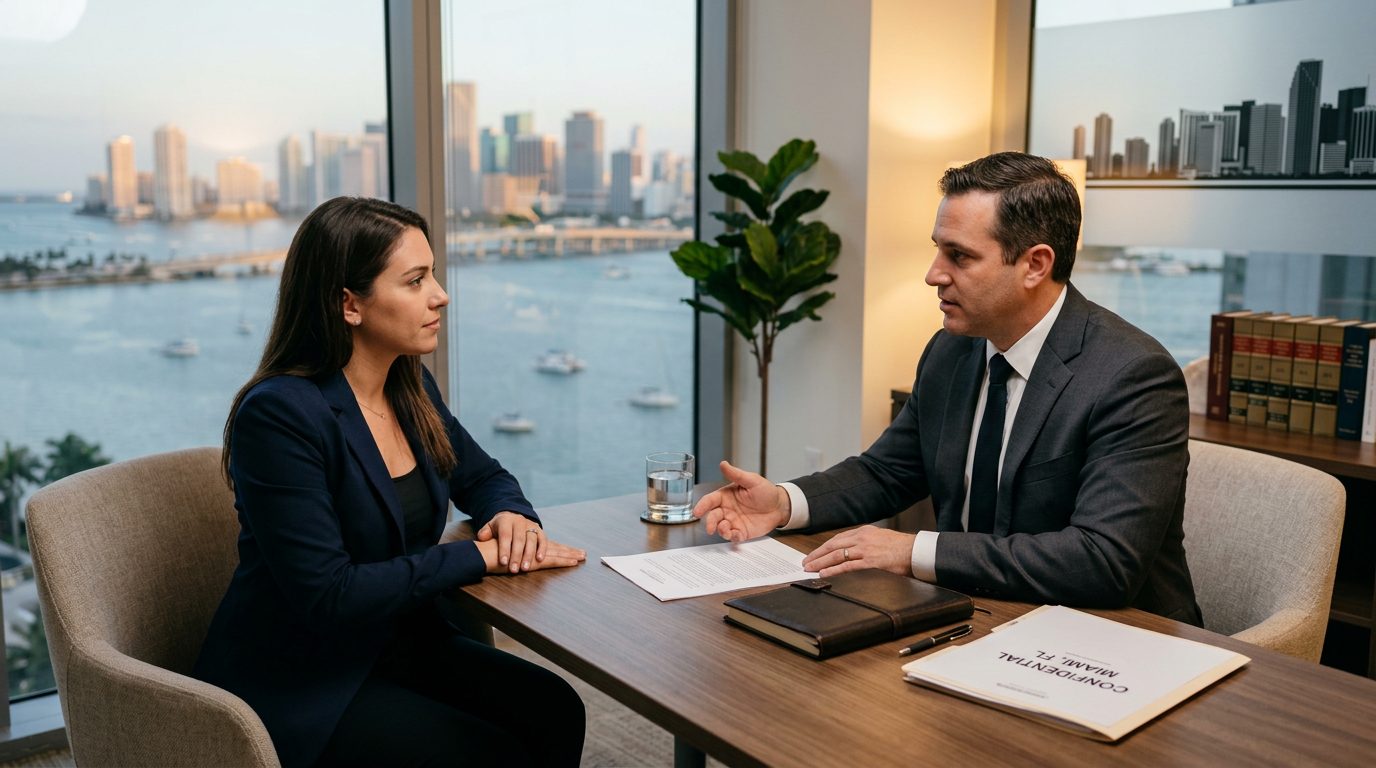
Why this question comes up in Miami workplaces
Employer questions usually start with one decision that must be made soon. That might be a termination someone wants to reconsider, a wage or overtime question, a harassment or discrimination complaint, or a resignation that may not have been voluntary.
Employers in Miami who have employment law questions can schedule a free initial consultation with KEW Legal. The consultation is confidential and carries no obligation to continue. Often they did not make the original decision, but now they must answer for it. Some want to understand their options before they act. Others need to know what to avoid while the issue is still open.
Miami-Dade workplaces often include staff who work in more than one language. A policy, a warning letter, or a text message can be read in different ways by different people. Clear, dated records make the facts easier to explain later.
What to gather before a first meeting
Bring the documents that show what was agreed, what was done, and when. Those records shape the meeting more than anything else you bring.
Start with these items:
- The offer letter or employment agreement
- The employee handbook and any policy the issue involves
- Pay records and time records for the period in question
- Any termination, warning, or discipline notice
- Written complaints, plus emails or texts about the decision
Next, write a short timeline. List each key date, who was involved, and what each person said or did. Write it while memories are fresh. Mark what you saw directly and what you heard from someone else.
Keep the originals as they are. Do not edit, delete, or re-save messages or records, even if they look messy. Changes can make the issue harder to explain later.
Finally, write down the questions you want answered. A short list keeps the meeting focused on the decision in front of you.
What an employment lawyer can cover in a first meeting
A first meeting can identify the issue, explain the general legal picture, and outline possible next steps. It is a working session, not a verdict.
The lawyer will usually sort the facts into categories. A wage question may fall under minimum wage or overtime rules. A termination may raise discrimination or retaliation questions. A handbook dispute may turn on what the policy actually says. Naming the issue early shows which records matter most.
The meeting can also cover timing. Some claims have short deadlines, and those deadlines can run from different events. Where a deadline may matter, the lawyer can point to it so you can act in time. The meeting can also cover what to avoid while the issue is open, such as retaliatory decisions or discussing the dispute with the employee without advice.
No lawyer can predict how a specific matter will end. The result depends on the documents, the witnesses, and the facts as they develop. A first meeting gives you a clearer starting point, not a forecast.
Florida and federal rules employers often need to understand
Florida and federal law both set rules for pay, discrimination, and records. Several can apply to the same workplace at the same time.
Under the Florida Civil Rights Act, an employer is a person with 15 or more employees for each working day in each of 20 or more calendar weeks in the current or preceding calendar year (Fla. Stat. § 760.02). Smaller employers may fall outside that definition, so headcount matters.
For covered employers, it is unlawful to discharge someone or discriminate in pay or terms of work because of protected traits such as race, sex, religion, or pregnancy. It is also unlawful for an employer, an employment agency, a joint labor-management committee, or a labor organization to retaliate against someone who opposes a practice which is an unlawful employment practice under this section, or who takes part in a complaint process (Fla. Stat. § 760.10).
A complaint with the Florida Commission on Human Relations must be filed within 365 days of the alleged violation. It may instead be filed with the federal Equal Employment Opportunity Commission or with any unit of government of the state which is a fair-employment-practice agency under 29 C.F.R. ss. 1601.70-1601.80 (Fla. Stat. § 760.11).
On wages, Florida’s minimum wage reaches $15.00 per hour on September 30, 2026. From September 30, 2027, it adjusts each year for inflation using the CPI-W, taking effect the following January 1 (Fla. Const. art. X, § 24).
Federal wage claims have their own deadlines. Employers facing a claim for unpaid minimum wages or overtime under the Fair Labor Standards Act should know that such an action generally must start within two years. A willful violation can allow three years (29 U.S.C. § 255). Employers must also keep records of wages, hours, and employment practices (29 U.S.C. § 211).
Pregnancy-related rules can also apply.
These are general rules. How they apply to your facts is the question a first meeting can help frame.
How a first meeting differs from ongoing representation
The first consultation is separate from any later work. Taking on a matter is a different step, and it is your choice after the meeting.
KEW Legal serves business owners and investors as outside general counsel. Employment matters for employers are one part of that broader work. You can read more on the employment law attorney for employers page, and see how the firm approaches the wider role on its outside general counsel for businesses page.
Some workplace issues overlap with other business questions. A resignation may involve an owner or partner, which can raise partnership dispute questions. A departure may also affect who runs the company and how ownership passes. In those cases, the first meeting can show which practice area fits, so you don’t spend time on the wrong question.
Not sure what your next step is?
Talk it through with our team — the first consultation is free, confidential, and carries no obligation.

Talk with KEW Legal about your employment question
If a termination decision, a wage question, or a complaint needs an answer before your next step, a first meeting can help you see your options clearly.
Common questions
Do I have to hire the firm after the meeting?
No. Going further is your choice after the first meeting.
What should I bring?
Bring the offer letter, the handbook, pay and time records, any notices, written complaints, and your dated timeline.
Does a first meeting decide the outcome?
No. It frames the issue and the next steps, and the result depends on how the facts develop.
If you are asking whether you can get a free consultation with an employment lawyer in Miami, the answer is yes. To schedule your first meeting, call 305-990-2300 or send us a message. For local context, see our Miami employment law page.
How KEW Legal Supports Employers
Clear Review of Your Records
We review offer letters, handbooks, policies, and pay records so you understand where your documents stand.
Careful, Practical Advice
We focus on protecting your business while helping you make workplace decisions with confidence.
Outside General Counsel
Our team works with business owners as ongoing outside counsel on employee questions as they come up.
Direct Communication
You will get straightforward answers about your options, with no legal jargon and no pressure.
Preventive Planning
We help you update policies and practices so that small issues do not become larger disputes.
Easy to Reach
Call 305-990-2300 or send us a message to schedule your free first consultation.
Gather Your Records Before the Meeting
Bring your offer letters, employee handbook, pay and time records, any written notices or complaints, and a dated timeline of what happened. Organized documents make the first consultation more useful.
Workplace Matters We Review for Employers
Policies and Handbooks
Review and update written policies so they reflect how your business actually operates.
Discipline and Termination Decisions
Talk through documentation, process, and risk before you act on a difficult employee matter.
Pay, Hours, and Timekeeping
Examine pay practices and time records to help keep your business organized and accountable.
Workplace Complaints
Get guidance on how to respond to internal complaints and how to document the steps you take.
Have a workplace question? Your first consultation is free and confidential, with no obligation to continue.
Related practice areas
- Employment Law for Florida Employers: Hiring, Firing, Pay and Claims Explained
- Partnership Dispute Lawyer in Coral Gables and Sunny Isles Beach | KEW Legal
Request a Consultation
Fill out the short form and we will take it from there.