

Employment Law for Employers · Coral Gables & Sunny Isles Beach
Employee Confidentiality Agreements Built for Your Business
Your customer lists, pricing, and internal processes are valuable. Here is how a well-drafted agreement can help you define what stays private and who must keep it that way.
By Kristina E. Wilson · Published November 6, 2026
You’re about to ask a new hire, a manager, or a departing employee to sign a confidentiality agreement. When an employee raises concerns about an employer’s practices, it is natural to wonder how Florida law applies.
A Florida employer can generally require a confidentiality agreement for employees that protects real business information. The agreement holds up best when it is written, names the information it covers, and gives the employee something of value in return.
This guide explains what makes these agreements enforceable, how they differ from non-competes, where the legal limits sit, and what happens after a breach.
Short Answer: Yes, When the Agreement Is Written, Specific and Supported
Yes, a Florida employer can generally require employees to sign a confidentiality agreement that protects genuine business information. Good practice rests on three conditions. The agreement is in writing. It identifies the kind of information it covers. The employee receives something of value for signing, such as a job offer, a raise, or a bonus.
Scope decides most disputes. A court looks at what the clause covers, how long it lasts, and whether it protects the business or simply stops the employee from earning a living. A narrow clause tied to real information is far easier to defend than one that reaches everything an employee learns on the job.
Florida’s restraint-of-trade statute, § 542.335, Florida Statutes, says a court will not enforce a restrictive covenant unless it is in a writing signed by the person against whom enforcement is sought. A signed writing is the safe starting point for any employee agreement.
Not sure what your next step is?
Talk it through with our team — the first consultation is free, confidential, and carries no obligation.

What Makes a Confidentiality Agreement Enforceable in Florida
A confidentiality agreement is enforceable when it is written, signed by the person against whom enforcement is sought, reasonable in time, area, and line of business, and reasonably necessary to protect a legitimate business interest, such as valuable confidential business information. The document should name the employer and the employee and carry a date. Both sides should keep a signed copy.
Specificity is where many agreements fail. A clause covering “all company information” invites a fight, because no one can tell what is off limits. A better clause names categories in plain terms, such as pricing models, client lists, or unreleased product plans.
Courts also look at fairness. A court may refuse to enforce a contract term that is unconscionable, meaning unfair both in how the deal was made and in what the term says. The Florida Supreme Court explained in Basulto v. Hialeah Automotive that both sides of that test must be present, though not to the same degree. A one-sided clause buried in new-hire paperwork carries more risk.
Handbooks need a note too. In Quaker Oats Co. v. Jewell, the Fifth District explained that policy statements in an employment manual do not create enforceable contract rights unless the manual says, in specific language, that it is a separate employment contract. A confidentiality rule placed only in a handbook may not bind the way a signed agreement does.
What Counts as Protectable Confidential Information
Protectable information is usually a trade secret, or other information the business works hard to keep private. Florida defines a trade secret as information that has independent economic value because others don’t generally know it. The owner must also make reasonable efforts to keep it secret. That definition is part of the Florida Uniform Trade Secrets Act, Florida Statutes sections 688.001 through 688.009.
Common examples include customer lists, pricing and margin data, supplier terms, unpublished financial results, product plans, formulas, and internal processes. These are the items a competitor would most want to learn.
Other things generally fall outside protection. The cited sections, which may be cited as the “Uniform Trade Secrets Act,” do not say whether an employee’s general skills, training, or industry knowledge belongs to the employee. An agreement that claims these items will look overreaching.
Labels and access controls matter. Marking documents as confidential, limiting who can open a folder, and tracking access all show the business made reasonable efforts to keep information secret. Those steps support the agreement’s terms.
Confidentiality Agreement Versus Non-Compete
A confidentiality agreement limits what an employee may disclose or use. A non-compete limits where the employee may work. The two are different tools, and mixing them creates confusion for both sides.
Non-compete covenants in Florida fall under § 542.335, Florida Statutes. That statute allows enforcement of restraints that are reasonable in time, area, and line of business. The party seeking enforcement must prove the restraint is reasonably necessary to protect a legitimate business interest. If the restraint is overbroad, a court must modify it and grant only the relief reasonably necessary.
Time limits matter: for a restrictive covenant against a former employee, agent, or independent contractor, and not associated with the sale of all or a part of a business or professional practice, not predicated upon the protection of trade secrets, a court shall presume reasonable in time any restraint 6 months or less in duration and unreasonable any restraint more than 2 years in duration. For a post-employment restraint based on trade secrets, the statute presumes a restraint of five years or less reasonable. It presumes a restraint of more than ten years unreasonable. Both presumptions can be rebutted.
A confidentiality clause written so broadly that it keeps someone out of the field can draw a challenge under this statute. Keep confidentiality terms focused on specific information. If you also want a non-compete, put it in its own clearly labeled agreement with its own limits.
Limits: Protected Reporting and Workplace Rights
A confidentiality agreement cannot be used to punish an employee for reporting a legal violation. Under § 448.102, Florida Statutes, an employer may not retaliate against an employee who provides information to, or testifies before, any appropriate governmental agency, person, or entity conducting an investigation, hearing, or inquiry into an alleged violation of a law, rule, or regulation by the employer. An employer also may not retaliate against an employee who objects to or refuses to join a practice that breaks a law, rule, or regulation. Fla. Stat. § 448.102(1), which covers disclosures to an appropriate governmental agency, reads: “However, this subsection does not apply unless the employee has, in writing, brought the activity, policy, or practice to the attention of a supervisor or the employer and has afforded the employer a reasonable opportunity to correct the activity, policy, or practice.” Fla. Stat. § 448.102(1) addresses disclosures made to an appropriate governmental agency under oath and in writing.
One condition matters for disclosures. Disclosing a violation to an agency, under oath and in writing, is protected only if the employee first brought the practice to the employer’s attention in writing and gave the employer a reasonable chance to fix it. Employers should know this rule before treating a disclosure as a breach.
The Florida Supreme Court’s decision is in Gessner v. Southern Co.. Under Gessner v. Southern Co., an employee bringing a retaliation claim under section 448.103 for a violation of section 448.102(3) must establish that the employer’s activity, policy, or practice the employee objected to is, by definition, in violation of law. Section 448.102(3) protects an employee who objects to, or refuses to participate in, an activity, policy, or practice of the employer which is in violation of a law, rule, or regulation. Fla. Stat. § 448.102(1), which covers disclosures to an appropriate governmental agency, reads: “However, this subsection does not apply unless the employee has, in writing, brought the activity, policy, or practice to the attention of a supervisor or the employer and has afforded the employer a reasonable opportunity to correct the activity, policy, or practice.”
How Breaches Are Enforced: Injunctions and Damages
When a breach happens, a court can order the employee to stop. Under § 688.003, Florida Statutes, actual or threatened misappropriation of a trade secret may be enjoined. In appropriate circumstances, a court can also order affirmative steps to protect a trade secret.
Money is available too. Under § 688.004, Florida Statutes, a complainant can recover actual loss and unjust enrichment caused by misappropriation, or a reasonable royalty. If the misappropriation was willful and malicious, the court may award exemplary damages of up to twice the regular award.
Deadlines matter. Under § 688.007, Florida Statutes, a misappropriation action must be brought within 3 years after the misappropriation is discovered, or should have been discovered with reasonable diligence. Employers should not sit on a suspected breach.
Documentation decides a lot. Keep records of what was protected, who had access, when each employee signed, and what was taken. Those records show the information was truly confidential and that the business protected it.
Not sure what your next step is?
Talk it through with our team — the first consultation is free, confidential, and carries no obligation.
Common Mistakes Employers Make With Employee NDAs
The most common mistake is using a generic template that doesn’t match what the business actually protects. A template written for one industry rarely fits another. Each clause should describe the information the company really guards.
Another mistake is asking existing employees to sign with nothing in return. Good practice is to pair the request with a clear benefit, such as a raise or bonus, so the exchange is easy to show later.
Overly long or broad terms cause trouble too. Duration and geographic reach should match the real business interest, since courts review a restraint’s reasonableness.
Employers also forget to update agreements when roles change. An employee who quits without notice and takes files is a common scenario. The signed agreement, access records, and exit steps all shape how fast the business can respond.
Finally, relying on a handbook alone is risky. As Quaker Oats Co. v. Jewell explains, a manual policy may not create enforceable contract rights. Put the core confidentiality terms in a signed agreement.
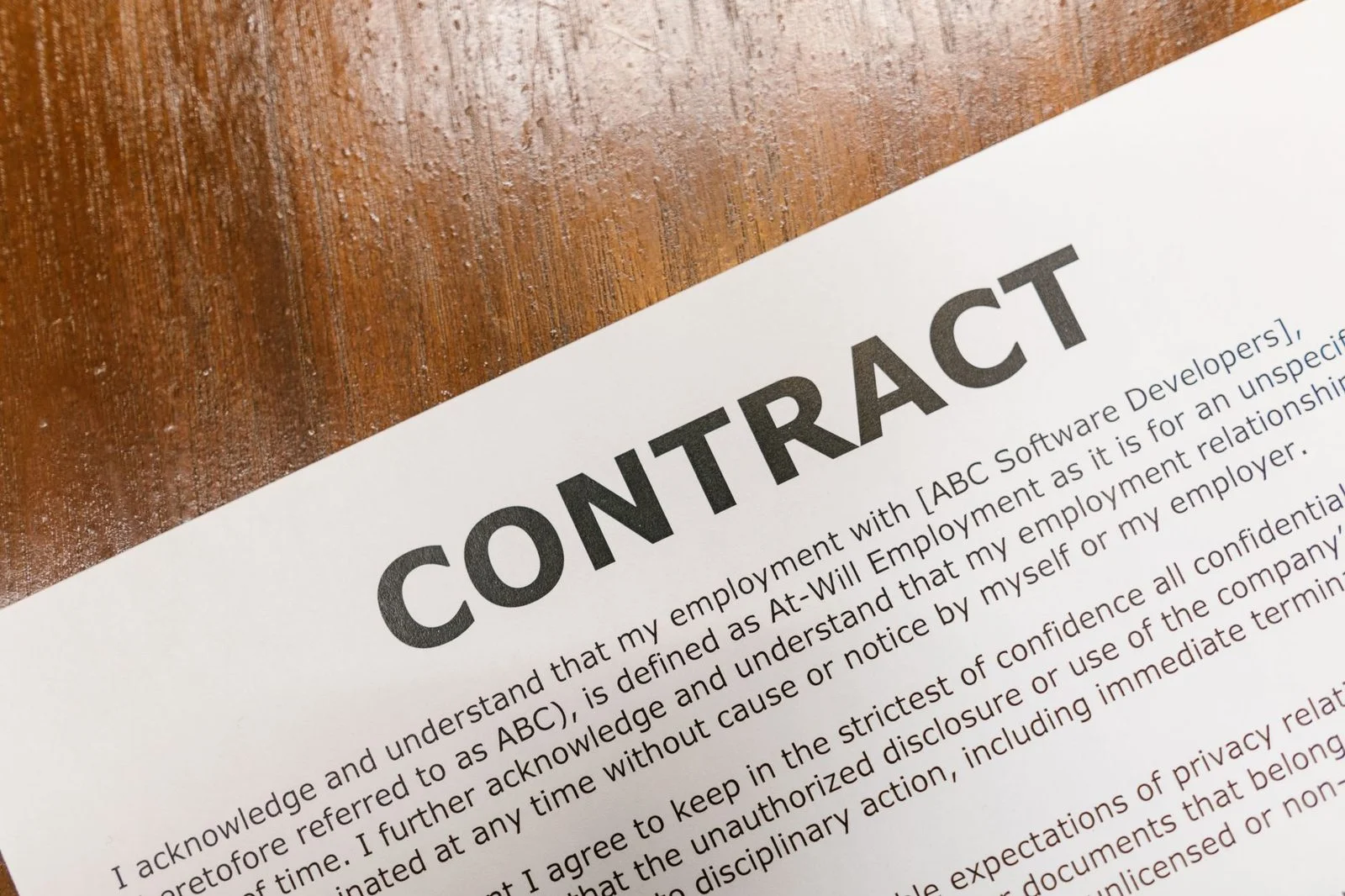
Talk With KEW Legal About Your Confidentiality Agreement
A confidentiality agreement is only as strong as its scope. If you’re an owner deciding what an NDA should cover for a new hire, or a manager facing a departing employee who may have taken client information, a careful review can clarify your options.
KEW Legal serves business owners and investors across Miami-Dade and South Florida from offices in Coral Gables and Sunny Isles Beach. Our team can review the agreement’s scope, its terms, and how it would be enforced. Our first consultation is free, confidential, and comes with no obligation to continue. For related issues, see Florida employer and employee legal problems. We also serve clients in Miami.
Can an employer make employees sign a non-disclosure agreement in Florida?
Yes, a Florida employer can generally require a written confidentiality agreement that protects real business information. The agreement should be signed and tied to specific information.
Is a confidentiality agreement enforceable in Florida if it has no time limit?
An open-ended term is harder to defend. Florida courts review whether a restraint is reasonable in time under § 542.335.
What is the difference between an NDA and a non-compete in Florida?
An NDA limits disclosing or using specific information. A non-compete limits working for a competitor or starting a competing business, and it is governed by § 542.335.
Can a Florida employer stop an employee from reporting a violation of law?
Florida law prohibits retaliation against employees who report violations to a government agency or object to an unlawful practice.
How long does a Florida company have to sue a former employee for misusing confidential information?
For trade secret misappropriation under Chapter 688, the action must be brought within 3 years after discovery, or after discovery should have occurred with reasonable diligence.
Responsible attorney: Kristina E. Wilson, KEW Legal, Coral Gables, Florida.
What we look at with you
Clear definitions
We identify which information belongs in the agreement, from financial data and client details to internal methods, so the terms match what your business actually protects.
Scope that fits the role
An office manager, a sales representative, and a software developer do not see the same information. We tailor obligations to each position.
Access and handling
Confidentiality terms work best alongside practical steps, such as limiting access and labeling sensitive files. We help you align the paperwork with operations.
Plain-language drafting
Agreements should be readable by the people who sign them. We write terms that are precise and easy to follow.
Onboarding and departures
We help you build signing steps into hiring and offboarding so that agreements are handled consistently.
Get agreements in place early
Confidentiality terms are most useful when they are signed before employees receive sensitive information. If your current forms are outdated or were never signed, ask us to review them now.
Common situations we handle
New hires
Build confidentiality terms into your offer and onboarding packet so protected information is covered from the start.
Current employees
Review existing workforce agreements and consider whether they still reflect your roles, systems, and information.
Departing employees
Plan exit steps that address returned materials, access credentials, and reminders of continuing obligations.
Vendors and contractors
Coordinate confidentiality with outside service providers who will see your data, pricing, or plans.
Talk with KEW Legal about your confidentiality agreements. Your first consultation is free, confidential, and without obligation.
Related practice areas
Request a Consultation
Fill out the short form and we will take it from there.