
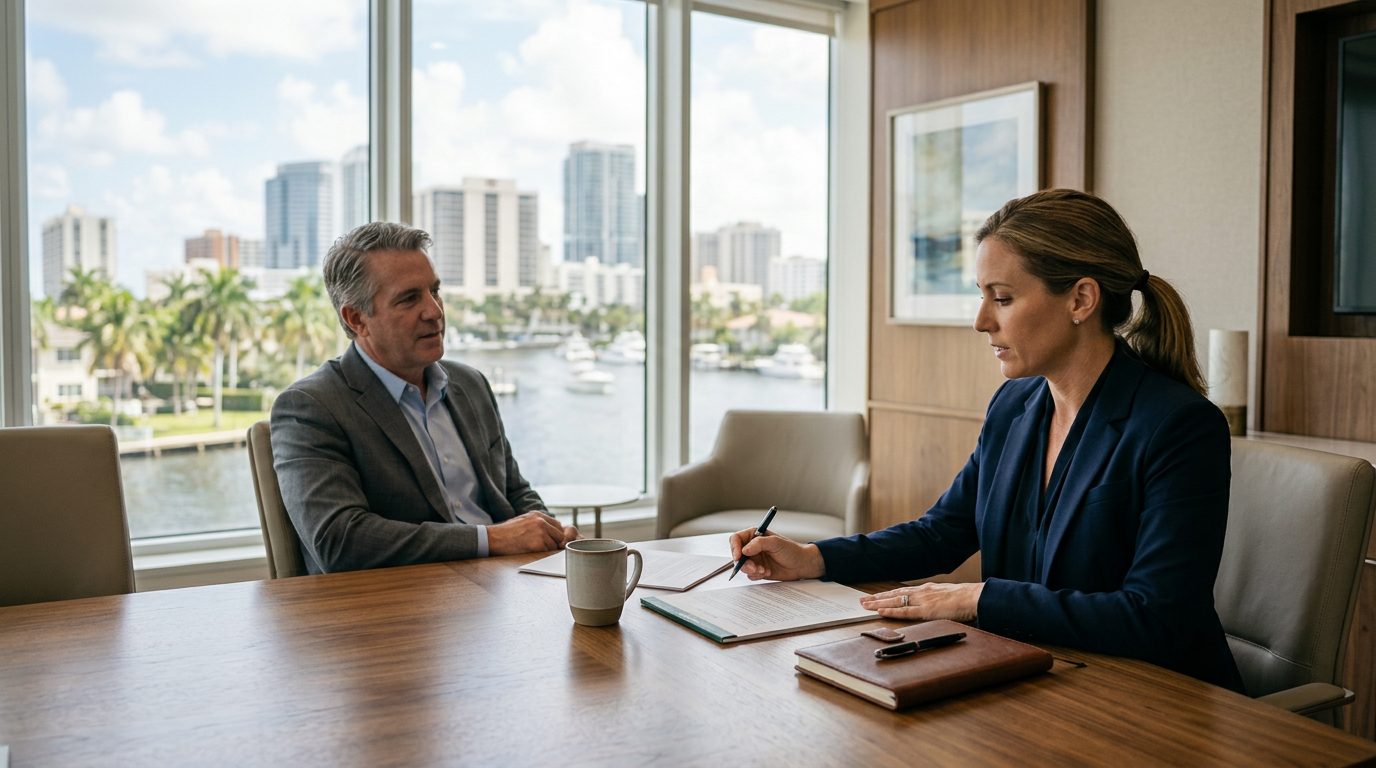
Employment Law for Employers | Fort Lauderdale and Broward County
Employment Counsel for Fort Lauderdale Employers
KEW Legal focuses on employment law for business owners. We help Broward County and Miami-Dade employers review workplace decisions, policies, and agreements, and respond to employee disputes and agency charges.
By Kristina E. Wilson · Published October 14, 2026
Fort Lauderdale employers usually look for an employment law attorney when one workplace decision could lead to a complaint, a lawsuit, or an agency charge. This guide covers the employer-side situations that prompt that call and the laws that often apply. It is general information, not legal advice, and your facts decide the answer. KEW Legal serves Broward County employers from its offices in Coral Gables and Sunny Isles Beach.
Employment Matters Fort Lauderdale Employers Bring to Counsel
Most employers call counsel when one decision carries legal risk. Common examples include:
- Ending the job of an employee who recently raised a complaint.
- Responding to an internal complaint about harassment, pay, or treatment.
- Answering a demand letter from a former worker’s lawyer.
- Handling a notice from a state or federal agency.
- Deciding how to pay overtime or classify a worker.
Outside general counsel works differently from a single one-time call. The attorney reviews routine policy questions and active disputes for the business. That way, counsel can weigh in before a small question becomes a large one.
Many owners wait until a letter arrives. By then, early choices may already be in writing. A reply sent in anger, a fast termination, or a sudden pay change can shape what comes next. Getting advice first leaves you more room to choose.
Not sure what your next step is?
Talk it through with our team — the first consultation is free, confidential, and carries no obligation.

Key Employment Laws Florida Employers Must Follow
Florida employers answer to both federal and state employment laws, and the rules often overlap. Federal law makes it unlawful for an employer to discriminate because of race, color, religion, sex, or national origin.
The Age Discrimination in Employment Act also bars retaliation. Federal equal pay rules sit in the Fair Labor Standards Act.
Florida’s civil rights law covers an employer with 15 or more employees for each working day in each of 20 or more calendar weeks in the current or preceding calendar year (Fla. Stat. § 760.02). Headcount matters, so count carefully.
Florida’s minimum wage reaches $15.00 per hour on September 30, 2026. After that, the rate adjusts for inflation each year, with each adjustment taking effect on September 30, beginning in 2027 (Fla. Const. art. X, § 24). Under Fla. Stat. § 448.095, private employers with 25 or more employees must use E-Verify to verify new hires. If E-Verify is unavailable for 3 business days, those employers must use Form I-9. Keep those records for at least 3 years (Fla. Stat. § 448.095).
For federal duties, the EEOC employer guidance describes anti-discrimination obligations for employers.
What an Employment Attorney Does for an Employer
An employment attorney for employers reviews decisions and documents before a dispute starts. The attorney also helps respond when one begins. Common work includes:
- Reviewing employee handbooks and written policies.
- Drafting or reviewing offer letters and confidentiality terms.
- Reviewing non-solicitation and non-compete agreements.
- Reviewing wage questions, such as whether a worker is exempt or non-exempt, or an employee or a contractor.
- Responding to demand letters.
- Preparing a response to an EEOC or Florida Commission on Human Relations charge.
Restrictive covenants need care. A Florida court will not enforce one unless it is in a writing signed by the person bound by it. A covenant that lacks a legitimate business interest is void and unenforceable (Fla. Stat. § 542.335).
Agency processes run on set timelines. Missing a date can hurt an employer’s position. Some matters, such as litigation, may be referred to or handled with another lawyer or firm. No result can be promised.
When Should an Employer Bring in a Lawyer?
An employer should consider counsel before any firing, discipline, or pay change tied to an employee complaint. Timing is the core issue. Key decision points include:
- Before ending the job of an employee who has complained.
- After receiving a charge notice from an agency.
- When a resignation, leave request, or accommodation request raises a legal question.
- Before changing a pay plan or an employee handbook.
Retaliation is a common risk. Florida law makes it unlawful to retaliate against anyone for exercising minimum wage rights, including filing a complaint (Fla. Stat. § 448.110). A decision made soon after a complaint can raise questions, so review it first.
Minimum wage claims move quickly. After notice, the employer has 15 calendar days to pay the unpaid wages or resolve the claim. The limitations period is paused during that window (Fla. Stat. § 448.110).
Ask counsel how to keep internal discussions organized. Emails and written notes can later matter, so plan what gets written and by whom.
Employment Counsel for Fort Lauderdale and Broward County Employers
Yes, KEW Legal serves Fort Lauderdale and Broward County employers from its offices in Coral Gables and Sunny Isles Beach. Broward and Miami-Dade share one labor market. Many workers live in one county and work in the other.
The rules in this guide apply the same way across South Florida. Florida’s minimum wage applies to all hours worked in Florida (Fla. Const. art. X, § 24). The practice serves business owners across Miami-Dade and South Florida, and it works on the business side of employment questions.
How Fees Are Structured for Employer Matters
The first consultation is free, confidential, and carries no obligation to continue. A consultation gives you a chance to describe the decision in front of you and ask how the firm approaches it.
This page does not describe fees or costs for any employer matter. Please ask the firm directly about fees and costs before you decide anything.
Not sure what your next step is?
Talk it through with our team — the first consultation is free, confidential, and carries no obligation.

Talk With Kristina E. Wilson About Your Employment Question
If a termination, complaint, or agency charge is on your desk, you don’t have to sort it out alone. Kristina E. Wilson is the attorney responsible for this page, and the practice focuses on employment counsel for employers. Use the contact page to schedule a consultation or send a message, or call 305-990-2300. Your first consultation is free, confidential, and carries no obligation to continue.
Frequently Asked Questions
What does an employment law attorney for employers do?
The attorney reviews workplace decisions, policies, and agreements. The attorney also helps respond to disputes and agency charges.
Does Florida’s civil rights law cover a small business?
It covers an employer with 15 or more employees for each working day in each of 20 or more calendar weeks in the current or preceding calendar year (Fla. Stat. § 760.02).
How long does an employer have to respond to a minimum wage claim?
After notice, the employer has 15 calendar days to pay the unpaid wages or resolve the claim (Fla. Stat. § 448.110).
Are non-compete agreements enforceable in Florida?
A court will not enforce a restrictive covenant unless it is in a signed writing and supported by a legitimate business interest.
How KEW Legal Works With Employers
Policies and Agreements
We review employee handbooks, offer letters, and agreements so the documents match how your business actually operates.
Workplace Decisions
Before you discipline, reassign, or terminate an employee, we help you think through the decision and the documentation behind it.
Employee Disputes
We help employers respond to internal complaints and demand letters with a clear, measured approach.
Agency Charges
When a charge is filed with a government agency, we help you prepare a response and organize the relevant records.
Act Before a Decision Becomes a Dispute
Employment decisions made in a hurry, or without written records, are harder to explain later. Talk with counsel before you terminate, discipline, or respond to a complaint.
Employment Matters We Handle for Employers
Handbooks and Written Policies
Drafting and updating policies on attendance, conduct, leave, and workplace conduct so they are clear and consistently applied.
Employee Agreements
Preparing and reviewing offer letters, confidentiality terms, and restrictive covenant agreements for your workforce.
Complaints and Agency Charges
Helping employers evaluate internal complaints and respond to charges filed with government agencies.
Outside General Counsel
Ongoing employment guidance as part of a broader outside general counsel relationship for your business.
Start With a Free, Confidential First Consultation
Related practice areas
Request a Consultation
Fill out the short form and we will take it from there.