

Employment Law for Employers · Coral Gables & Sunny Isles Beach
Build a Fair Workplace and Protect Your Florida Business
Practical guidance for business owners on hiring, workplace policies, and responding when an employee raises a concern.
By Kristina E. Wilson · Published November 8, 2026
If you’re asking whether your small business has to follow discrimination laws in Florida, here’s the short answer. If your business has employees, you may have to follow some of these rules. Which ones apply turns mainly on how many people you employ. Florida’s main civil rights law covers employers with 15 or more employees for each working day in each of 20 or more calendar weeks in the current or preceding calendar year. Florida’s equal pay law reaches employers with two or more employees, but not employers subject to the federal Fair Labor Standards Act of 1938, as amended. This page explains those size rules, the traits each law protects, and the early steps that matter when a concern comes up.
Short Answer: Headcount Decides Which Discrimination Laws Apply
Headcount decides which discrimination laws reach your business, and different laws use different counts. Florida’s Civil Rights Act defines an employer as a person employing 15 or more employees, counted over a set calendar period (Fla. Stat. § 760.02). Florida’s equal pay statute uses a lower line. An employer is any person who employs two or more employees, but the section does not apply to an employer subject to the federal Fair Labor Standards Act (Fla. Stat. § 448.07).
Florida’s equal pay statute covers employers who employ two or more employees, except employers subject to the federal Fair Labor Standards Act (Fla. Stat. § 448.07). Federal laws have their own coverage rules and protected traits. The U.S. EEOC’s employer guidance explains the federal duties employers carry.
When an employee problem starts, the first steps matter. Read our guide on what employers should do first. Kristina E. Wilson is the lawyer responsible for this page. KEW Legal has offices in Coral Gables and Sunny Isles Beach and serves business owners across Miami-Dade and South Florida.
Not sure what your next step is?
Talk it through with our team — the first consultation is free, confidential, and carries no obligation.

Federal Discrimination Laws and Their Size Rules
Federal discrimination laws also reach many Florida employers, and each one sets its own protected traits and size rules.
Other federal laws address traits such as age and disability. Because each law has its own employee count, the answer can differ from one law to the next.
The federal and Florida lists don’t match exactly. Start with the employee count, then check which traits each law protects.
The Florida Civil Rights Act: Who It Covers and Which Classes It Protects
The Florida Civil Rights Act of 1992 covers employers with 15 or more employees, counted for each working day in each of 20 or more calendar weeks in the current or preceding calendar year. Florida’s civil rights statute prohibits employment discrimination because of race, color, religion, sex, pregnancy, national origin, age, handicap, or marital status (Fla. Stat. § 760.10). It is unlawful for an employer to fire or refuse to hire someone because of those traits. It is also unlawful to treat someone differently in pay, terms, or conditions for the same reasons (Fla. Stat. § 760.10).
Job notices are covered too. An employer cannot publish an ad that shows a preference based on these traits.
Florida also has a separate rule for sickle-cell trait. No one may refuse employment or fire a person solely because the person has that trait (Fla. Stat. § 448.075).
Total punitive damages to one person may not exceed $100,000 (Fla. Stat. § 760.11).
Under the equal pay provision of § 448.07(2)(a), the work must need equal skill, effort, and responsibility, and it must be performed under similar working conditions. Fla. Stat. § 448.07 reads: “(2) DISCRIMINATION ON BASIS OF SEX PROHIBITED.— (a) No employer shall discriminate between employees on the basis of sex by paying wages to employees at a rate less than the rate at which he or she pays wages to employees of the opposite sex for equal work on jobs the performance of which requires equal skill, effort, and responsibility, and which are performed under similar working conditions, except when such payment is made pursuant to: 1.” Section 448.07(2)(a) lists certain reasons that can justify a difference in pay. The statute does not apply to employers covered by the federal Fair Labor Standards Act (Fla. Stat. § 448.07).
How Employees Are Counted Toward the Thresholds
Florida’s 15-employee line counts employees for each working day in 20 or more calendar weeks in the current or preceding calendar year. The count is not a single snapshot. A short spike in hiring may not be enough. A steady increase over many weeks may be.
Owners near a line should keep a weekly headcount log. The log should list everyone on the payroll, including part-time and seasonal staff. That way your records match who you actually employed each week.
A headcount log also helps you answer a later question. When a dispute comes up, you can show what the business had in each week. Without that record, the count is hard to reconstruct from memory.
Unfair Pay and Age-Based Treatment: Common Questions Employers Ask
Unfair pay questions usually start when two workers doing the same job receive different pay for a reason tied to a protected trait. One example is paying a woman less than a man for equal work under similar conditions (Fla. Stat. § 448.07). Florida’s equal pay statute, Fla. Stat. § 448.07, addresses discrimination based on sex in wages, requiring equal pay for equal work on jobs that require equal skill, effort, and responsibility and are performed under similar working conditions. Fla. Stat. § 448.07 reads: “(2) DISCRIMINATION ON BASIS OF SEX PROHIBITED.— (a) No employer shall discriminate between employees on the basis of sex by paying wages to employees at a rate less than the rate at which he or she pays wages to employees of the opposite sex for equal work on jobs the performance of which requires equal skill, effort, and responsibility, and which are performed under similar working conditions, except when such payment is made pursuant to: 1.” Pay differences based on race or national origin fall under a different provision, Fla. Stat. § 760.10(1)(a). A third is cutting pay after an employee discloses a pregnancy, a practice addressed by Fla. Stat. § 760.10(1)(a), which lists pregnancy among the protected traits for compensation and terms of employment, while Fla. Stat. § 448.07 addresses sex-based pay differences.
Age issues show up in ordinary places. Under Florida law, a job posting that signals a preference for younger applicants is a problem, because the Florida Civil Rights Act makes it unlawful to publish employment notices indicating a preference based on age (§ 760.10(6), Fla. Stat.); § 448.07 covers only sex-based pay discrimination. So can layoff choices that single out older workers. Comments about when someone should retire can raise the same question.
Many owners ask how hard it is to prove age discrimination. The answer turns on evidence. Courts look at what was said, how the decision was made, and whether the stated reason holds up. General information cannot predict how any particular claim will come out.
Does Florida’s 2026 Landscape Change the Answer?
A 2026 Florida Supreme Court decision adds a point about retaliation claims.
In Gessner v. Southern Co., decided May 28, 2026, the court addressed Florida’s private-sector Whistle-Blower’s Act.
Retaliation is a separate risk.
Rules and court decisions change over time. Before acting on a specific decision, confirm the current rule for that situation.
Not sure what your next step is?
Talk it through with our team — the first consultation is free, confidential, and carries no obligation.
Discrimination Concerns and the Filing Deadlines That Matter
A civil action under the Florida Civil Rights Act has its own limit. It must start no later than 1 year after the commission’s reasonable-cause determination or the EEOC’s Notice of Right to Sue, whichever is earlier. If neither issues within 180 days after the complaint, the action may start within 18 months after filing (Fla. Stat. § 760.11). Fla. Stat. § 760.11 reads: “The commencement of such action shall divest the commission of jurisdiction of the complaint, except that the commission may intervene in the civil action as a matter of right.”
Early steps matter. Preserve emails, schedules, performance reviews, and pay records. Avoid responses that could look like retaliation. Tie each decision to documented, job-related reasons.
Talks with the state commission also have limits. Statements made during its informal conciliation efforts cannot be used as evidence in a later civil case (Fla. Stat. § 760.11).
Deadlines depend on the facts of each situation. Timing can change how a matter should be handled.
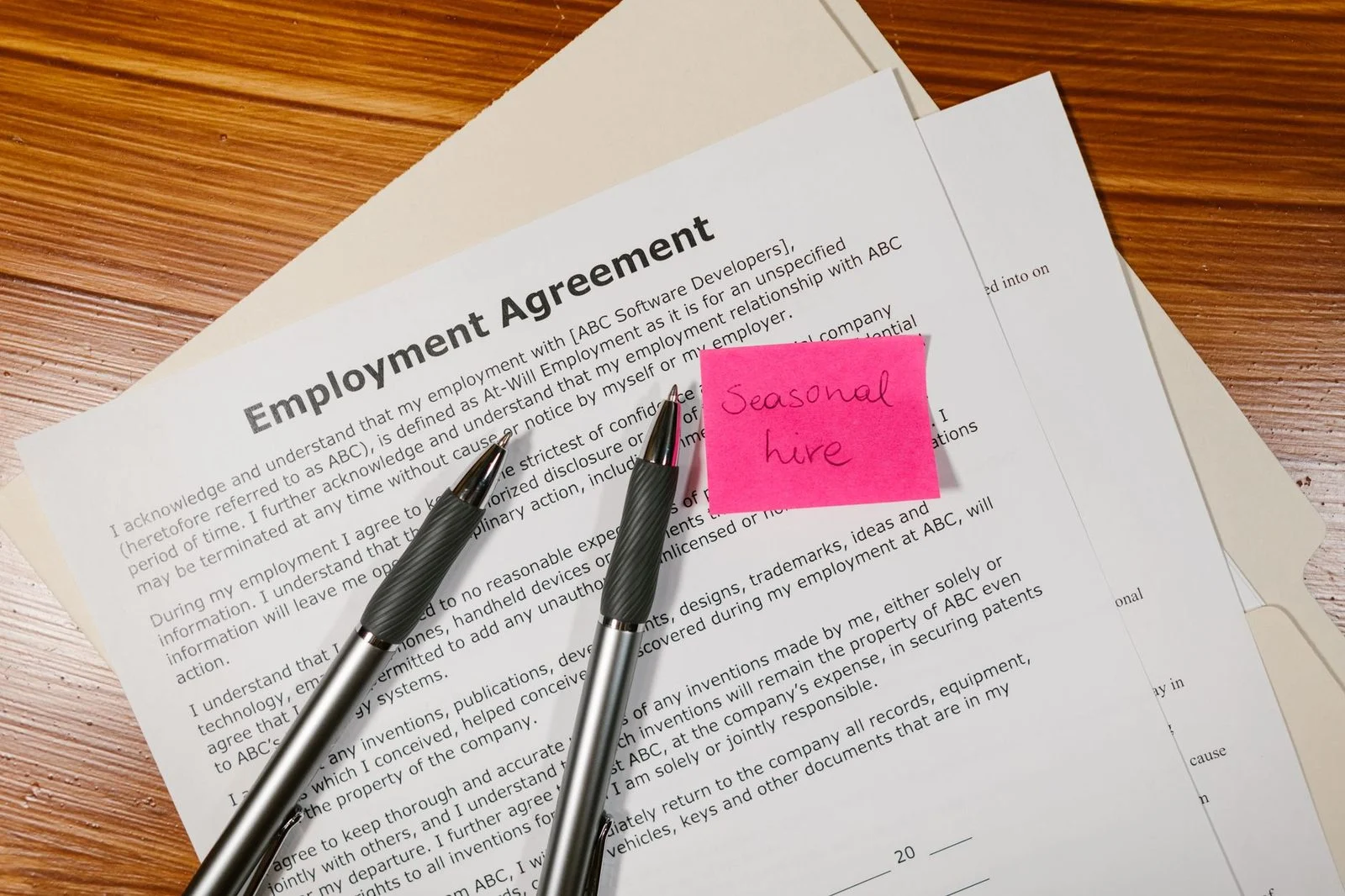
Next Step: Talk Through Your Headcount and the Situation in Front of You
Your headcount, the dates involved, and what was said or decided determine which rules reach your business. Here are answers to common questions.
Frequently asked questions
How many employees does a Florida business need before discrimination laws apply?
The Florida Civil Rights Act uses 15 or more employees, counted each working day across 20 or more calendar weeks. The equal pay statute applies to employers with two or more employees, except those subject to the federal Fair Labor Standards Act of 1938, as amended.
Can an employer fire an at-will employee in Florida?
An at-will employee can be let go at any time. The firing cannot be for a reason the law prohibits. Under Fla. Stat. § 760.11(5), in a civil action a court may issue an order prohibiting the discriminatory practice and providing affirmative relief, including back pay.
The Florida Civil Rights Act lists marital status among its protected traits.
Spanish-speaking owners can also read our Spanish guide to formal employee complaints.
If a worker has raised a concern, or a firing or pay decision is now being questioned, you may be the one deciding what happens next, often on short notice. Our first consultation is free, confidential, and without obligation to continue. Call 305-990-2300 or send us a message to talk through your headcount and dates.
How KEW Legal Supports Your Business
Policy Review
We review handbooks, hiring practices, and workplace policies so they reflect current Florida and federal requirements.
Outside General Counsel
Business owners and managers can bring employee questions to us as part of an ongoing advisory relationship.
Complaint Response
When a discrimination concern comes up, we help you assess the issue, document it, and plan a measured response.
Local Focus
KEW Legal works with businesses across Miami-Dade, Broward County, and South Florida from our Coral Gables and Sunny Isles Beach offices.
Review Your Practices Before a Problem Arises
Many employment disputes start with informal decisions about hiring, pay, or discipline that were never documented or reviewed. Talking with counsel about your practices early can help you avoid costly surprises.
Areas Where Owners Often Seek Guidance
Hiring and Job Postings
Interview questions, job advertisements, and screening criteria can create legal exposure if they are not reviewed carefully.
Pay and Promotion Decisions
Clear, consistent criteria for compensation and advancement help you explain decisions and reduce the risk of disputes.
Responding to Employee Complaints
A calm, documented process for investigating concerns protects both the employee and the business.
Termination and Separation
Reviewing the reasons, records, and timing of a separation before it happens helps you make defensible decisions.
Talk With KEW Legal About Your Workplace. Your first consultation is free, confidential, and carries no obligation to continue.
Related practice areas
Request a Consultation
Fill out the short form and we will take it from there.