

Employment Law for Employers | Coral Gables & Sunny Isles Beach
Offer Letters Drafted and Reviewed Before Your Candidate Says Yes
KEW Legal helps South Florida employers prepare offer letters that match the pay, classification, and start-date terms you have agreed to. Call 305-990-2300 for a free first consultation, which is confidential and carries no obligation to continue.
By Kristina E. Wilson · Published November 1, 2026
A Florida offer letter attorney reviews the offer letter and new hire packet before a candidate signs. KEW Legal does this for employers in Miami-Dade, Broward County, and across South Florida. The goal is simple: the written terms should match what your business plans to do.
What an Offer Letter and Onboarding Review Covers for Florida Employers
An offer letter review checks the terms a candidate will sign, along with the paperwork that comes with them. Owners and managers hiring a first employee, adding roles to a growing team, or reusing an old template often need one most.
An offer letter is a written record. It sets pay, title, start date, and conditions. Once a candidate accepts, those terms can be read as a contract. Contract disputes can turn on whether the parties reached agreement and whether the essential terms were clearly defined.
KEW Legal serves business owners and investors as outside general counsel. Employment review sits alongside the contracts, vendor agreements, and leases your business already handles. The firm has offices in Coral Gables and Sunny Isles Beach. Kristina E. Wilson is the responsible lawyer for this page.
If your next hire's offer letter is drafted, send it to us before it goes out, and we'll review the pay terms and onboarding forms with you. Talk it through with our team — the first consultation is free, confidential, and carries no obligation.
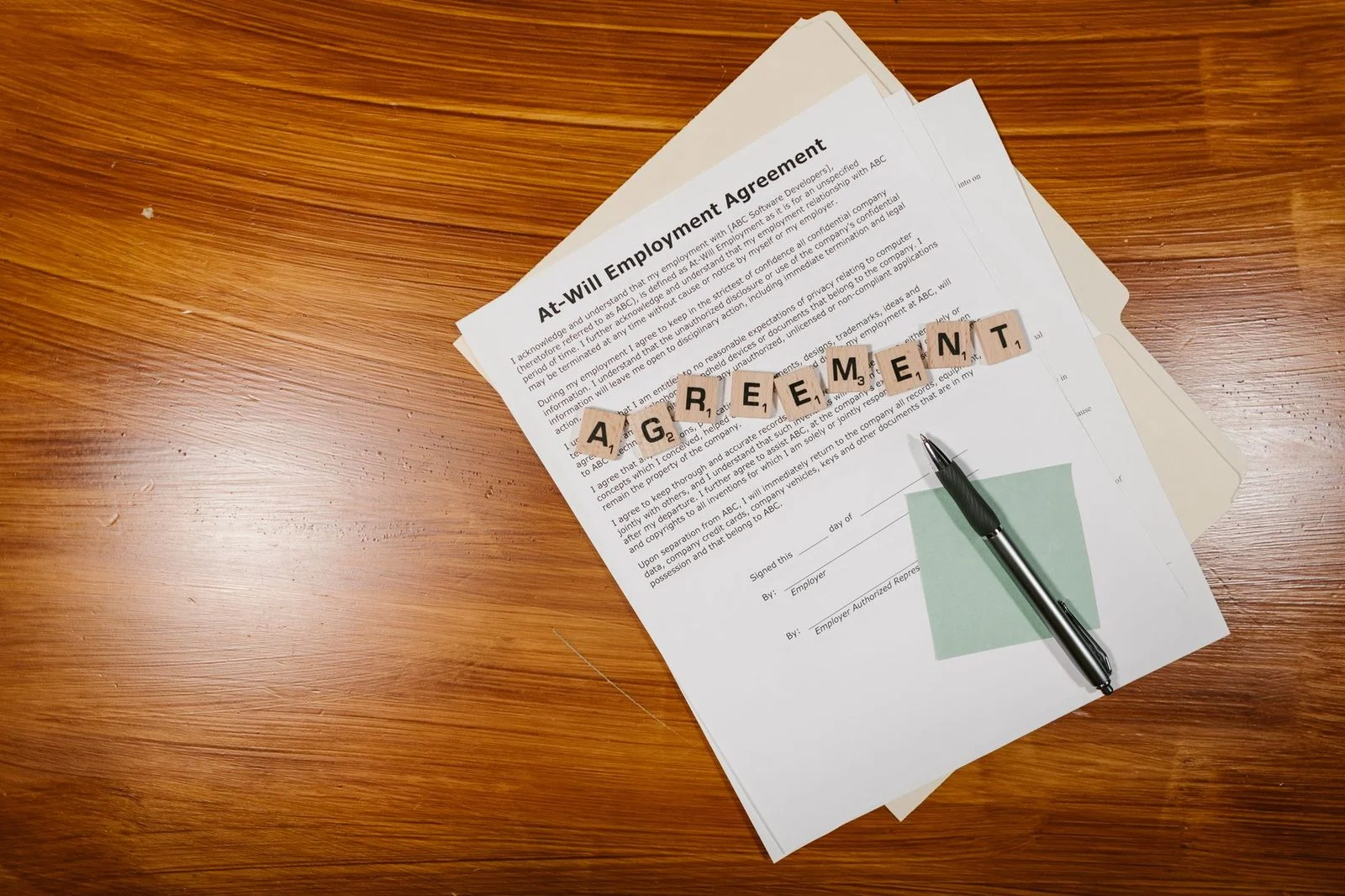
What the Review Includes
The review covers each term in the offer letter and the onboarding packet behind it.
- Title, duties, and pay. We check the pay rate, pay schedule, and whether the role is exempt or non-exempt. Our lawyers can review how a position is classified and paid before a problem arises.
- At-will language. Employment in Florida is generally at-will, so either side may end it, but the law bars an employer from acting on reasons such as retaliation or unlawful discrimination. We check that the letter does not promise continued employment.
- Start date and conditions. Background checks, Form I-9, E-Verify, and license requirements should be stated clearly, with what happens if one is not met.
- Delayed start and withdrawal terms. The letter should say what happens if a candidate postpones the start date or does not report.
- Confidentiality, invention assignment, and return of property.
- Restrictive covenants. Non-competition and non-solicitation clauses are reviewed before they are offered.
- Pay extras. Bonus, commission, benefits, and paid time off wording should be clear and should not overpromise.
- Onboarding items. Handbook acknowledgments, tax and payroll forms, and policy sign-offs such as device or social media use.
Florida-Specific Issues to Check Before a Candidate Signs
Florida adds state rules on pay, hiring checks, discrimination, and restrictive covenants that a generic template often misses.
- Minimum wage. Florida’s minimum wage is set under the Florida Constitution, Article X, Section 24 and adjusts over time. Check the rate in effect when the offer is made.
- Minimum wage poster. Under Fla. Stat. § 448.109, each employer who must pay the Florida minimum wage must display the poster prominently where those employees work.
- E-Verify timing. Under Fla. Stat. § 448.095, new employee eligibility must be verified within 3 business days after the employee first begins working for pay, and private employers with 25 or more employees must use the E-Verify system to do so. If E-Verify is unavailable for 3 business days after the new employee begins working for pay and the employer cannot access the system to verify the employee’s eligibility, the employer must use Form I-9 and document the unavailability.
- Discrimination rules. It is unlawful to refuse to hire, or to discriminate in pay or terms, based on protected traits. Federal employment laws impose separate duties on employers, and our lawyers can review how they apply to your workplace.
- Restrictive covenants. Under Fla. Stat. § 542.335, a court will not enforce the covenant unless it is in a writing signed by the person bound. The business must also show a legitimate business interest, such as trade secrets or valuable confidential information.
- Covered noncompetes. Fla. Stat. § 542.45 lists several conditions that must be met for a covered noncompete agreement to be fully enforceable according to its terms. Among them: the covered employee must have been advised, in writing, of the right to seek counsel before signing. The employee must also have received the proposed agreement at least 7 days before the offer of employment expires, or, for a current employee, at least 7 days before the offer to enter into the agreement expires. The employee must also acknowledge, in writing, that he or she will receive confidential information or customer relationships during the employment. Finally, the agreement must provide that the noncompete period is reduced day-for-day by any nonworking portion of the notice period under a covered garden leave agreement, if applicable.
- Consistency. The letter, handbook, and forms should describe the same terms.
How the Offer Letter and Onboarding Review Works
The review runs in five steps, from first call to final documents.
- Initial consultation. Share the role, the pay structure, and any template or draft offer. The first consultation is free, confidential, and carries no obligation to continue.
- Document collection. Gather the offer template, handbook sections, onboarding forms, and any offer already sent or promised.
- Issues list. Each term is reviewed.
- Drafting and revisions. Revised language is prepared, with a plain explanation of each change.
- Final use. The documents are finalized for candidates, and the business gets guidance on any offer already outstanding.
Timing depends on how many documents are reviewed and how quickly information comes back. A single offer letter usually moves faster than a full packet for several hires.
Why Businesses Work with KEW Legal on Employment Documents
KEW Legal reviews employer paperwork before it goes out, from the business’s side.
- Pre-signature focus. Changes are easiest before a candidate signs or starts, not after a dispute begins.
- Checklist tied to statutes. The review follows the cited Florida rules on E-Verify, minimum wage notices, discrimination coverage, and restrictive covenants.
- Consistency across documents. Whether a Florida employee handbook creates contract rights depends on the specific facts and the language of its policies, so the answer can vary from case to case. So the letter, handbook, and forms should be checked together.
- Outside general counsel context. Offer letter review fits with the other business matters the company already handles.
- Plain-language explanations. Owners and HR leads get the reason for each change and what it means for the next hire.
Our lawyers include Natalie Martinez, and Kristina E. Wilson is the responsible lawyer for this page. The firm serves business owners and investors across Miami-Dade and Broward County.
Common Questions About Offer Letter Review
Can we use a free online offer letter template?
A generic template may not reflect your pay, classification, and start-date terms, or Florida’s rules.
Do we need a review if the offer is already out?
Yes. A review can identify terms to clarify in a revised letter before the start date.
What if a candidate delays the start date?
The delayed-start and contingency wording controls your options. Check those terms before a problem arises.
Does a reviewed letter prevent employment claims?
No attorney can promise that. A careful review makes unclear terms and the written record more accurate.
Can you review paperwork for several hires?
Yes. Standard forms can be reviewed together, with notes for roles that have different terms.
Not sure what your next step is?
Talk it through with our team — the first consultation is free, confidential, and carries no obligation.
Send Us Your Offer Letter Before the Next Hire Starts
If a candidate is about to receive your offer, send the letter and onboarding packet to KEW Legal first. Call 305-990-2300 or send us a message to start your free, confidential first consultation, which carries no obligation to continue.
What We Review in Your Offer Letter
Compensation and Pay Terms
We check that salary or hourly rate, pay schedule, and bonus or commission language say what you intend and nothing more.
Worker Classification
We review whether the position is described accurately as employee or contractor and whether the letter's duties and terms fit that classification.
Start Date and Conditions
We confirm the start date, any conditions such as background checks or onboarding steps, and how those conditions are worded.
Restrictive and Confidentiality Terms
We look at any non-compete, non-solicitation, or confidentiality language so it is clear, consistent, and appropriate for the role.
Review the Letter Before It Goes Out
A generic online template may not reflect your pay structure, job classification, or start-date terms. Have an attorney review the final letter before you send it.
How an Offer Letter Review Works
1. Share the Draft
Send us the offer letter you plan to use, or describe the role, pay, and start date you have discussed with the candidate.
2. Identify Terms to Clarify
We point out wording that is unclear, inconsistent with your policies, or not aligned with the terms you have agreed to.
3. Revise Before the Start Date
We help you prepare a revised letter so the terms are settled before the candidate begins work.
Ask KEW Legal About Your Offer Letter
Related practice areas
- Employee Problems at a Florida Business: What Owners Should Do Before They Act
- Employee Social Media and Conduct Policy Review for Florida Employers
- Can a Florida Employer Deduct Money From an Employee’s Paycheck?
- Does Florida Require a Final Paycheck When an Employee Is Fired?
Request a Consultation
Fill out the short form and we will take it from there.