

Employment Law for Employers · Coral Gables & Sunny Isles Beach
Ending an Employee's Time Off Without Surprises
Accrued vacation, paid time off and final pay questions can turn costly when they are handled in a hurry. Here is how Florida employers can plan ahead.
By Kristina E. Wilson · Published November 11, 2026
You have an employee who is leaving, and they still have unused vacation or PTO. Do you have to pay it out?
Usually, the answer comes from your own paperwork.
Short Answer: Florida Law Generally Does Not Require a PTO Payout
The obligation, if there is one, usually comes from three places. It can come from a written PTO policy, an employment agreement, or a consistent practice your business has followed. Each one can promise a payout, limit it, or say nothing at all.
Many owners assume that because Florida doesn’t require payout, they can keep the money. That isn’t automatically true.
That’s why the first step is pulling the actual words. Two employees with the same job title can have different terms if their offer letters differ. Don’t work from memory.
If an employee is leaving and your PTO wording is unclear, we can review your policy with you before you decide what to pay. Talk it through with our team — the first consultation is free, confidential, and carries no obligation.
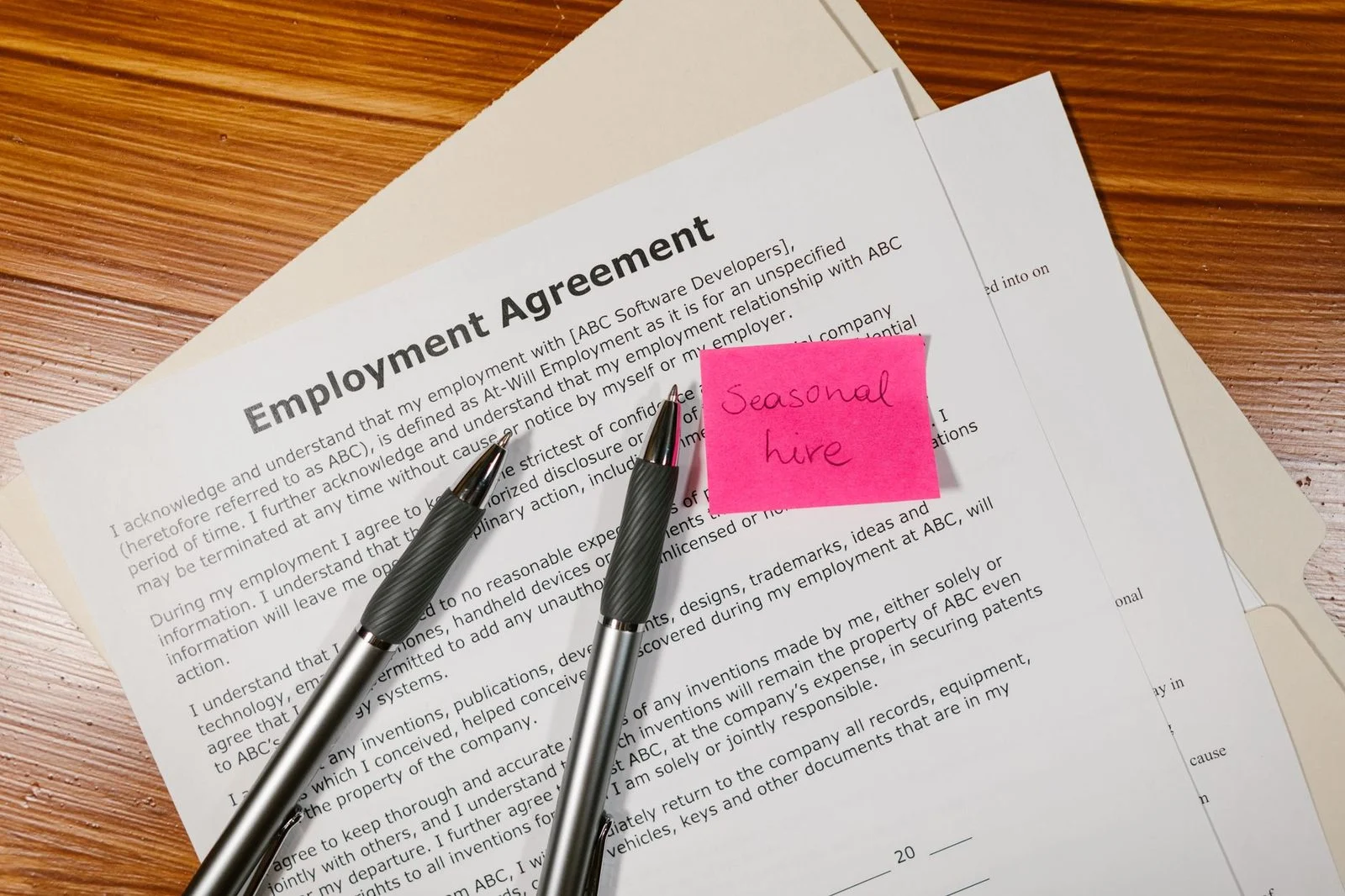
Why Your Written Policy or Employment Agreement Controls
Your written policy or agreement defines what the employee earned and what happens to it when employment ends.
A PTO policy, handbook section, or offer letter explains how time builds up and how it is used. It also explains what happens at separation. If there’s a dispute, that document is where it starts.
Florida courts have looked closely at handbook language.
That doesn’t mean a handbook can be ignored. Vague wording invites a dispute, even when the handbook alone may not be binding. A clear promise in a signed agreement leaves much less room for argument.
Keep signed handbook acknowledgments on file. They show the employee received the terms, which helps if the policy’s effect is ever questioned.
Can a Company Refuse to Pay Out PTO If an Employee Quits?
Whether you can withhold accrued PTO on resignation depends on what your written terms say about accrual, use, forfeiture, and payout.
In practice, policies usually fall into one of three groups. The first says accrued time is forfeited when an employee resigns. The second pays out only after a condition is met, such as an introductory period or proper notice. The third is silent.
Florida courts look at both how a deal was made and how unfair a contract term is when deciding whether to refuse to enforce it as unconscionable. Both procedural and substantive unconscionability must be present, although not necessarily to the same degree, and courts weigh them together rather than as independent elements.
How the term was presented matters. A forfeiture clause tucked into a long onboarding packet, with no explanation, is easier to challenge than one the employee reviewed and signed.
If you plan to rely on forfeiture, put it in plain words, in a document the employee signs.
How Forfeiture and Use-It-or-Lose-It Policies Work
A use-it-or-lose-it policy ends unused time at a set point, while forfeiture ends the time still on the books when employment ends.
Use-it-or-lose-it rules often cap a balance or expire unused time on a set date, such as the end of a calendar year. Employees can lose time while still working, long before any separation.
Forfeiture is different. It deals with accrued time at the end of employment. A policy can include both rules, and the two should be written separately so no one has to guess which applies.
Your policy should say when accrual stops, whether time carries over, and whether a cap applies. Vague expiration language invites argument. Plain examples in the policy help employees understand the rule.
How to Draft a PTO Policy That Covers Payout and Forfeiture
A clear PTO policy states the rules for accrual, carryover, forfeiture, and payout before anyone resigns or is let go.
Cover these terms in writing:
- The accrual rate, and when accrual starts
- The carryover limit and any cap
- The point at which unused time expires or is forfeited
- Whether payout applies on resignation, termination, or both
- The payout rate, or the method used to calculate the amount
- Who qualifies, including full-time versus part-time staff and any introductory period
- How the policy is shared and how employees acknowledge it
State the payout method plainly. Employees can’t check a number they can’t calculate from the policy.
Review the policy when you change pay practices, add a location, or switch how time is tracked. A policy written for one office can fall short when the business grows.
How to Check Your Current Policy Language
Start by searching every employment document for the words accrual, payout, forfeiture, separation, termination, and resignation.
Check the handbook, offer letters, signed agreements, and any PTO tracking system terms. Each document may use different words for the same idea. Read them side by side.
If two documents conflict, decide which one governs and write that down. Leaving it open invites argument later. Note the date each document took effect, since an older handbook may not match a newer offer letter.
Then compare your past separations with the written terms. If the business paid out time that the policy says is forfeited, departing employees may point to that practice. Inconsistent practice creates confusion.
Fix conflicts before the next separation, not during it.
Not sure what your next step is?
Talk it through with our team — the first consultation is free, confidential, and carries no obligation.
What to Consider When the Policy Is Silent
When your policy says nothing about payout, the answer isn’t automatically no.
The outcome depends on the facts. Look at any other written terms, the employee’s signed agreement, and how the business handled similar separations.
If an express written contract covers the same subject, a claim arising from that relationship may not support an unjust enrichment claim under Florida law. A signed written agreement on PTO can limit how an employee argues for payment on other grounds.
Silence also tends to start the argument. A business that decides quickly, without pulling documents, often has the harder conversation later.
If the employee worked at more than one location, which policy applies can get more involved. If you have questions about that issue, contact KEW Legal to discuss it. The initial consultation is free, confidential, and without obligation to continue.
Sick Leave, Salary, and Final Paycheck Timing
Sick leave follows the same rule: whether it is paid out at separation depends on the written policy or agreement.
Treat sick leave the way you treat PTO. Read the policy language first, then decide. Don’t assume sick time is paid just because vacation is.
Salaried employees are handled the same way. A salary doesn’t settle how PTO works, since the policy language still controls.
Wage claims carry their own rules. Under Fla. Stat. § 448.08, a court may award the prevailing party in an action for unpaid wages costs and a reasonable attorney’s fee. The award is up to the court, not automatic.
How long an employee has to sue depends on the type of claim. Many of Florida’s time limits for lawsuits, other than actions to recover real property, are set out in Fla. Stat. § 95.11.
For how the final paycheck fits with accrued-time questions, see our guide on final paychecks.

Talk With Kristina E. Wilson About Your PTO Policy
If an employee is leaving and your PTO wording is unclear, a policy review can show what the documents actually say before you decide what to pay.
Picture an employee giving notice. Your handbook says accrued time is forfeited, but the offer letter is silent, and you need to decide on the final payment this week.
PTO payout when an employee leaves in Florida
Can I keep accrued PTO if my policy says it is forfeited?
A clear forfeiture term can control, but Florida courts test both how it was presented and how one-sided it is.
Does an employee handbook create a promise to pay PTO?
Not automatically. Florida courts generally say a manual creates no contract rights unless it clearly states it is a separate employment contract.
Call 305-990-2300 or send us a message, and Kristina E. Wilson can review your PTO documents with you. Your first consultation is free, confidential, and without obligation to continue. KEW Legal has offices in Coral Gables and Sunny Isles Beach and works with business owners across Miami-Dade and South Florida.
Review your PTO policy before the last day
Pull your written PTO policy, handbook language and each employee's time records before a resignation or termination takes effect. Questions raised after the employee has left are harder to answer.
Why employers bring these questions to KEW Legal
Outside general counsel
We work with business owners and investors as ongoing counsel, so employment questions are reviewed alongside contracts, leases and partnership matters.
Policy and records review
We look at how your PTO policy and handbook were written and communicated, and how your time records line up with them.
Plain-language advice
We explain your options in terms you can use with payroll, HR and your management team.
Miami-Dade and Broward focus
Our offices in Coral Gables and Sunny Isles Beach serve employers across Miami-Dade County and South Florida.
What to gather before you call
Written PTO policy
Bring every version of the policy, plus any handbook sections or acknowledgment forms the employee signed.
Time and accrual records
Payroll exports showing accrued, used and remaining time help us see the full picture.
Separation details
Note whether the employee resigned or was terminated, and the date and reason the employment ended.
Communications
Emails, texts or letters about time off, balances or final pay give context to the policy.
Talk with KEW Legal about an employee's PTO before the separation is final
Related practice areas
Request a Consultation
Fill out the short form and we will take it from there.