
Employment Law for Employers · Coral Gables & Sunny Isles Beach
Employee Arbitration Agreements Drafted for Florida Employers
Clear, balanced terms built around your workforce, your policies, and the way your business actually runs.
By Kristina E. Wilson · Published November 10, 2026
Your business is hiring, and you want a dispute clause in your paperwork that will hold up. Good employee arbitration agreement drafting in Florida starts with knowing what a court checks. A written arbitration agreement sends covered workplace disputes to an arbitrator instead of a court. Florida law generally enforces these agreements, but the way the clause is written and presented decides whether it survives a challenge.
This page covers what the clause must say, the federal and Florida rules that shape it, and the drafting mistakes that invite challenges.
What an employee arbitration agreement is and who it fits
An employee arbitration agreement is a written contract in which an employer and an employee agree to resolve covered workplace disputes before an arbitrator. Florida’s arbitration statute treats a written agreement of this kind as valid and enforceable, except on a ground that exists to revoke any contract (Fla. Stat. § 682.02).
Employers usually add the clause at hiring. It often sits in an offer letter, an onboarding packet, a handbook, or a signed acknowledgment form.
It tends to fit employers with steady hiring, more than one location, or real exposure to wage, discrimination, or contract disputes. It is also a business choice with tradeoffs. Arbitration can change speed, cost, and privacy. Appeals are limited to the orders the statute lists (Fla. Stat. § 682.20). Our team can help you weigh those tradeoffs for your workforce.
If you're updating offer letters or a handbook and aren't sure your arbitration clause will hold up, our team is glad to review it with you. Talk it through with our team — the first consultation is free, confidential, and carries no obligation.
What a Florida-enforceable agreement needs to cover
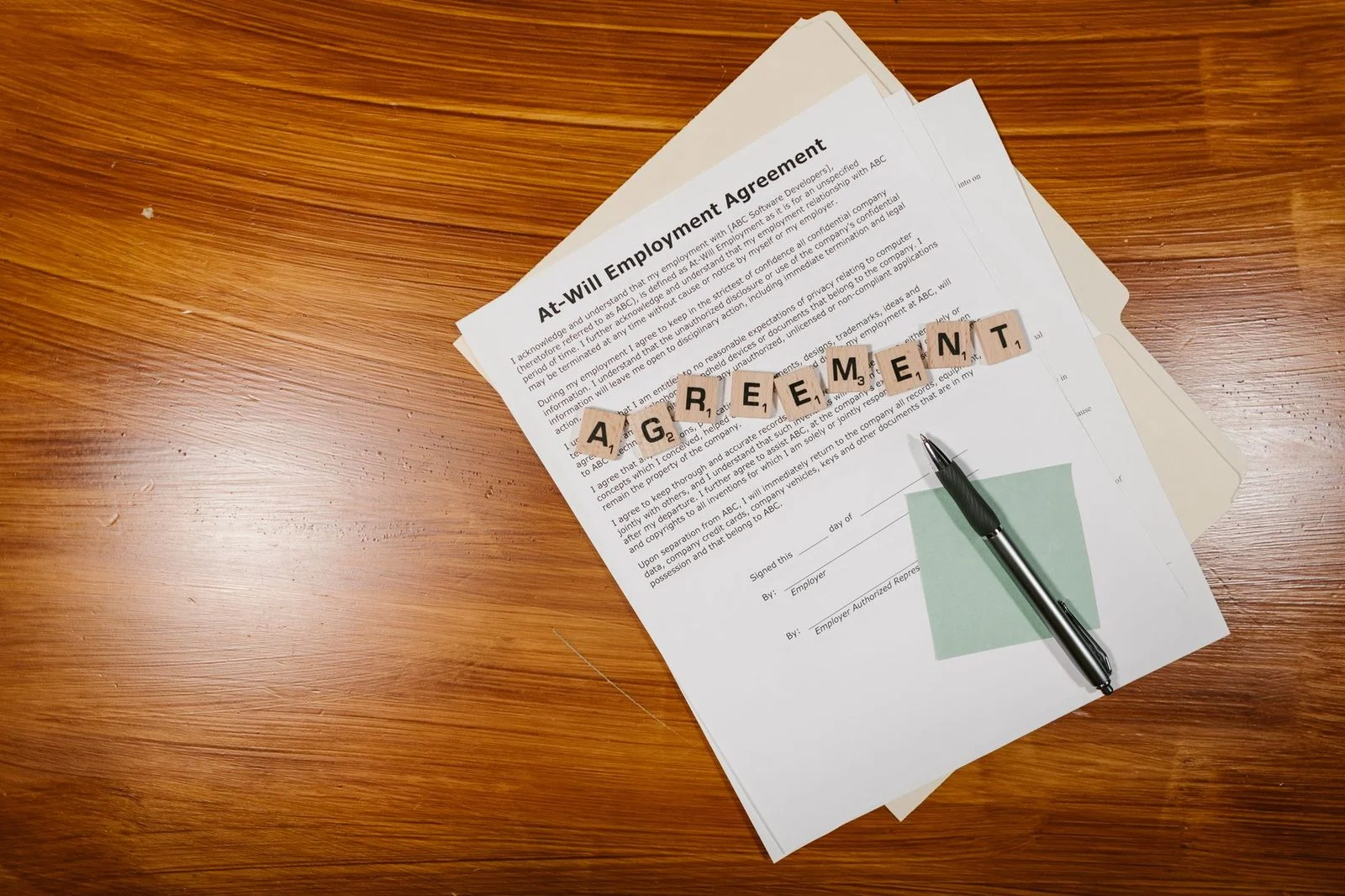
A clause that holds up states its scope, binds both sides, and shows the employee agreed to it as a separate contract. Each piece answers a question a court may ask.
- Scope. List the claims covered, such as discrimination, wage, contract, and tort claims. Name any claims that stay in court. Vague scope invites a fight over what the clause reaches.
- Mutual terms. Both are judged together, so one-sided terms carry extra risk (Basulto v. Hialeah Automotive).
- Separate, signed assent. A handbook policy usually does not create a contract on its own. Put arbitration in a standalone agreement, or add that language and a signature.
- Basic contract elements. The clause must meet ordinary contract rules: an offer, acceptance, consideration, and essential terms stated clearly (St. Joe Corp. v. McIver).
- Rules, forum, arbitrator, and fees. Name the arbitration rules, the location, how the arbitrator is chosen, and who pays the costs. Silence on fees can price the employee out of the process.
Finally, say in plain words that the employee gives up a jury trial in court.
Federal and Florida law set limits you must draft around
Federal and Florida law both enforce written arbitration agreements. Both also give courts tools to send disputes to arbitration.
- Federal law makes a written arbitration provision in a contract involving interstate commerce valid and enforceable, except on grounds that exist to revoke any contract (9 U.S.C. § 2).
- If a federal suit involves an issue that must go to arbitration, the court must pause the trial until arbitration happens, if the party asking is not in default (9 U.S.C. § 3).
- In Florida, if a party opposes a motion to compel, the court decides the issue summarily. It orders arbitration unless no enforceable agreement exists, and it cannot refuse because the claim lacks merit (Fla. Stat. § 682.03).
- Florida’s Arbitration Code, Chapter 682 of the Florida Statutes, sets the state framework for arbitration and court enforcement.
The clause also sits on top of workplace rules. Florida makes it unlawful for an employer to discharge or refuse to hire someone because of race, sex, religion, age, handicap, or other listed traits (Fla. Stat. § 760.10). An at-will employee can be let go at any time, but not for a reason the law prohibits, such as retaliation or unlawful discrimination (Laguerre v. Palm Beach Newspapers).
How the drafting and rollout work, step by step
The work runs in five steps. Timing depends on how many documents need changes.
- Intake call. We review your offer letters, handbook, onboarding packet, and any existing agreements.
- Workforce map. We match your locations, roles, and likely claim types to the scope and carve-out decisions.
- Draft. We write the clause and its supporting terms in plain English, with clear signature or acknowledgment language.
- Rollout plan. We set out how new hires and current staff receive the document and sign it.
- Records. You store each signed copy, so you can produce it if the clause is challenged.
Common drafting problems that invite challenges
Most challenges trace back to how the clause was presented or how one-sided its terms are.
- Buried terms. A clause hidden in a long handbook, with no separate signature, is easy to attack.
- Missing fee terms. Silence on who pays arbitration costs can make the process too expensive for the employee.
- Mismatched wording. If the offer letter, handbook, and standalone agreement say different things, essential terms become unclear (St. Joe Corp. v. McIver).
- Stale language. A clause written before a leadership change, a new location, or a new hiring process may stop matching how the business runs.
Why KEW Legal for this work
KEW Legal is a Florida business law firm with offices in Coral Gables and Sunny Isles Beach. It serves business owners and investors across Miami-Dade and South Florida. Employment law for employers is one of its practice areas.
Kristina E. Wilson is the responsible lawyer for this page. The firm’s lawyers include Kristina E. Wilson and Natalie Martinez.
- Review against your other documents. Our lawyers also handle outside general counsel, contracts, commercial leases, and partnership disputes. We can check the arbitration clause against your vendor agreements and partnership terms.
- One team on drafting and records. Our team handles drafting, rollout, and document storage together. The agreement then matches how your business actually hires.
Not sure what your next step is?
Talk it through with our team — the first consultation is free, confidential, and carries no obligation.
Frequently asked questions
Can an employer require arbitration as a condition of hiring in Florida?
Florida generally enforces a written arbitration agreement, except on grounds that exist to revoke any contract. The clause still has to be clear, mutual, and properly presented.
Does an arbitration clause stop a discrimination claim?
The clause sets where a claim is heard. Florida’s civil rights law still makes it an unlawful employment practice for an employer, employment agency, labor organization, or joint labor-management committee to discriminate on listed grounds (Fla. Stat. § 760.10).
Can current employees be asked to sign a new agreement?
A new agreement for current staff still needs basic contract elements, including an offer, acceptance, and consideration. Plan the rollout carefully so each employee gets clear notice and a real signing step.
Who pays the arbitration fees?
You decide how fees are split, and you should spell it out. Clear fee terms keep the costs from putting arbitration out of reach for the employee.
How long does a party have to challenge an award?
Florida generally requires a motion to vacate within 90 days after notice of the award (Fla. Stat. § 682.13). The window can differ when the award was procured by fraud or other undue means.
Talk with KEW Legal about your onboarding documents
If you’re about to update offer letters, a handbook, or an onboarding packet, a short call can help you decide whether the dispute clause is ready. Call 305-990-2300 or send us a message. Our first consultation is free, confidential, and carries no obligation to continue.
What KEW Legal brings to your arbitration agreement
Plain-language drafting
We write agreements that employees can read and understand, which helps the terms hold up when they are reviewed.
Attention to enforceability
Our drafting addresses the clarity, mutuality, and presentation issues that courts often examine in Florida.
Built for your workforce
Agreements are tailored to your roles, locations, and the types of claims your business is most likely to face.
Ongoing guidance
As your handbook, hiring practices, and the law change, we help you update your agreements and onboarding steps.
Handle the rollout with care
An arbitration clause that is unclear, one-sided, or buried in a stack of onboarding papers invites a challenge. Have the agreement reviewed before it goes into new-hire packets or your existing workforce.
How we draft your agreement
1. Review your current documents
We look at your handbook, offer letters, existing agreements, and how hiring and dispute practices work day to day.
2. Draft tailored terms
We prepare a written agreement with clear scope, fair procedures, and language matched to your business and workforce.
3. Present it properly
We advise on how the agreement is introduced, signed, and documented so the process is transparent to employees.
4. Keep it current
We recommend periodic reviews and updates whenever your policies, roles, or applicable law change.
Ready to put a sound arbitration agreement in place?
Start with a free, confidential first consultation, with no obligation to continue.
Related practice areas
Request a Consultation
Fill out the short form and we will take it from there.