

Employment Law for Employers | Coral Gables & Sunny Isles Beach
Florida Noncompete Agreements: What Business Owners Need to Know
Find out how a noncompete is put together, what owners should look for before asking an employee to sign one, and where agreements tend to cause trouble later.
By Kristina E. Wilson · Published November 27, 2026
If you’ve been handed a noncompete to sign, or you learned that a former partner or employee is bound by one, you want a clear answer. Upon application by a covered employer, a Florida court must preliminarily enjoin a covered employee who maintains a primary place of work in this state from providing services to any business, entity, or individual other than the covered employer during the noncompete period, and may modify or dissolve that injunction only if the employee establishes certain facts by clear and convincing evidence. It must be in a signed writing, and whether it can be enforced depends on the statute that governs it, including whether it is a covered noncompete under Fla. Stat. § 542.45.
What is a noncompete agreement under Florida law?
A noncompete is a restrictive covenant that limits what a person may do during or after a working or business relationship. It might bar joining a competitor or running a rival business within a set area and time. Florida’s general rules for these agreements are in Fla. Stat. § 542.335.
Three kinds of clauses are easy to mix up. A noncompete limits the work itself. A nonsolicitation clause limits contact with customers or staff. A confidentiality clause limits sharing private information. Each restricts different conduct, so each needs its own review.
The FTC’s 2024 nationwide noncompete rule never took effect. A federal court set it aside on August 20, 2024, in Ryan, LLC v. FTC. For a Florida agreement, the state statutes are the rules to check.
Not sure what your next step is?
Talk it through with our team — the first consultation is free, confidential, and carries no obligation.

Does a Florida noncompete have to be in writing and signed?
Yes. A Florida court shall not enforce a restrictive covenant unless it is set forth in a writing signed by the person against whom enforcement is sought, under Fla. Stat. § 542.335.
A verbal promise does not meet this rule. Neither does a draft nobody signed. Start with the signature page, because that is where the analysis begins.
Employers often place restrictions in a handbook. Under Florida case law, handbook policy statements do not create enforceable contract rights unless they contain specific language showing an explicit mutual agreement that the manual is a separate employment contract, as Quaker Oats Co. v. Jewell explains. A common mistake is assuming a handbook page works like a signed covenant. Read the exact wording of each document you were given.
What counts as a legitimate business interest?
The person seeking enforcement must plead and prove at least one legitimate business interest. The statute lists categories that a legitimate business interest includes, but is not limited to:
- Trade secrets.
- Valuable confidential business or professional information that is not a trade secret.
- Substantial relationships with specific prospective or existing customers, patients, or clients.
- Customer goodwill tied to an ongoing business or professional practice, by way of a trade name, trademark, service mark, or trade dress, a specific geographic location, or a specific marketing or trade area.
- Extraordinary training.
Any restrictive covenant without a legitimate business interest behind it is void and unenforceable, per Fla. Stat. § 542.335.
The restriction has to be reasonably necessary to protect one of these interests. It cannot exist only to limit competition. Imagine a company with a private pricing spreadsheet and long-standing client relationships in one county. Those facts could fit the confidential-information and customer-goodwill categories. A clause barring a former manager from any job in the industry statewide, with no tie to those interests, would be harder to justify.
Is the time and area of a noncompete reasonable?
A noncompete’s time, area, and line of business must be reasonable, and no broader than needed to protect the business interest. The person seeking enforcement must prove the restraint is reasonably necessary. If they make that showing, the other side must prove the restraint is overbroad, overlong, or otherwise not reasonably necessary.
The statute also sets time presumptions. For a postterm restraint based on protecting trade secrets, a restraint of 5 years or less is presumed reasonable in time, and one of more than 10 years is presumed unreasonable. These presumptions are rebuttable. Covenants against former employees follow separate presumptions under the same statute.
Whether a particular time or area is reasonable depends on the facts. Look at the business interest first, then at how far the clause reaches past it.
What can a court do with an overbroad noncompete?
If a noncompete protects a legitimate business interest but reaches too far, a Florida court shall modify it. The court grants only the relief reasonably necessary to protect that interest, under Fla. Stat. § 542.335.
The statute also governs how a court reads the clause. A court construes a restrictive covenant in favor of reasonable protection for the legitimate interests the party established. It does not apply a rule requiring narrow reading against the restraint or against the drafter.
Public policy is a narrower path. A court may not refuse enforcement of an otherwise enforceable restrictive covenant on public-policy grounds unless it states that policy specifically and finds it substantially outweighs the need to protect the business interest. A clause with no legitimate interest behind it is void, so the first question is still what interest the other side can prove.
How do the CHOICE Act and sale-of-business covenants change the rules?
Florida’s CHOICE Act, the Florida Contracts Honoring Opportunity, Investment, Confidentiality, and Economic Growth Act, is a separate framework under § 542.41. A covered employee earns, or is reasonably expected to earn, a salary greater than twice the annual mean wage of the county in this state in which the covered employer has its principal place of business, or, if that place is not in Florida, the county in this state where the employee resides, under § 542.43. The term does not include a person classified as a health care practitioner as defined in s. 456.001. A covered noncompete may run up to 4 years, within a geographic area the agreement defines.
The Act also requires written steps. The employee must be advised in writing of the right to seek counsel, and must acknowledge in writing receiving confidential information or customer relationships. It applies to a covered employee whose primary place of work is in Florida, and to a covered employer whose principal place of business is in Florida when the agreement is expressly governed by Florida law. Under § 542.45, an agreement that does not meet these definitions is governed by § 542.335.
A covenant given by a seller in a sale of a business falls under different provisions. Section 542.335 treats covenants tied to the sale of business assets or an LLC membership separately from employee covenants. Buyers and sellers should confirm which framework applies before relying on any time limit.
Not sure what your next step is?
Talk it through with our team — the first consultation is free, confidential, and carries no obligation.
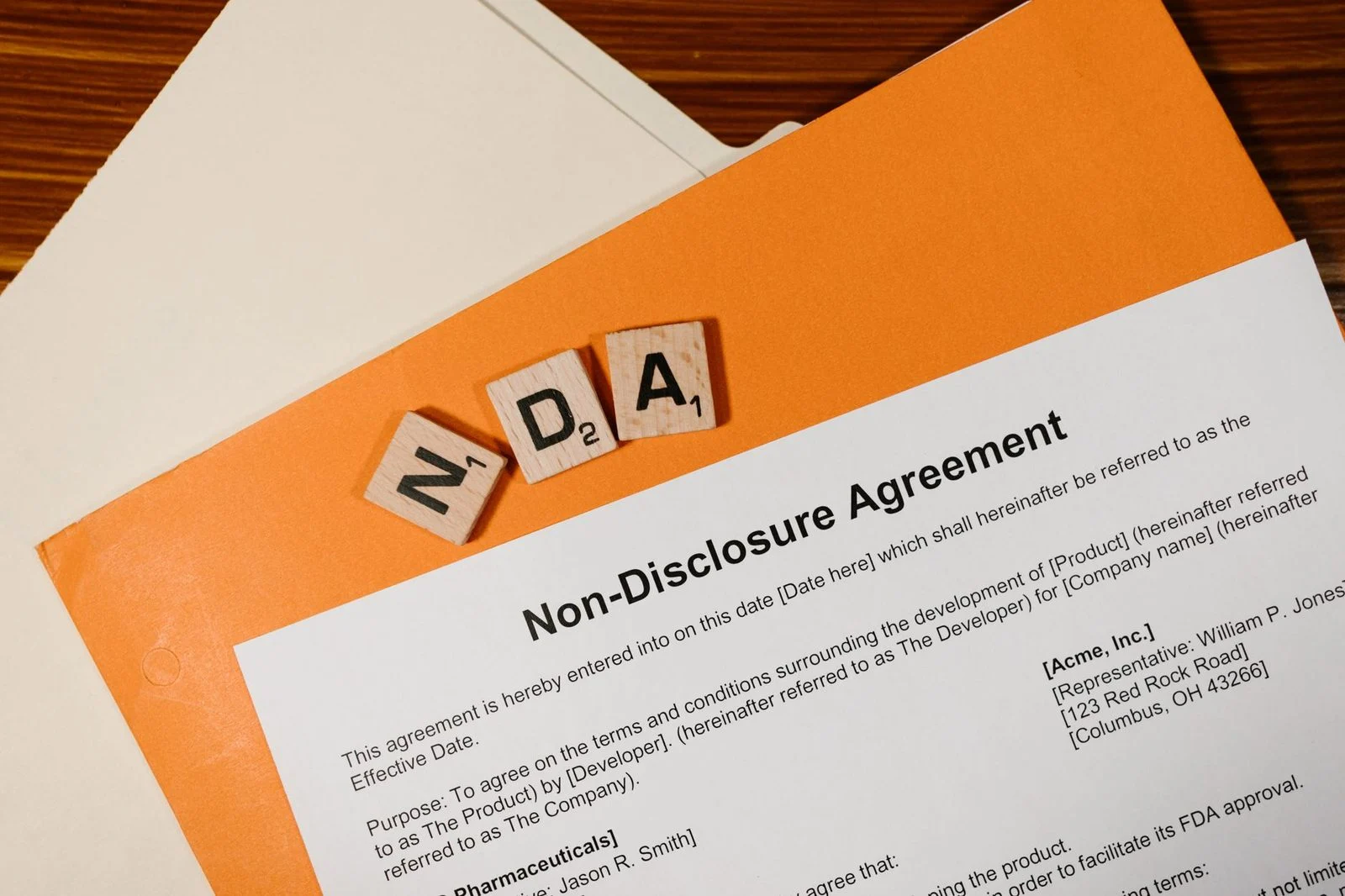
Talk with KEW Legal about your noncompete question
A Florida court looks at the signed writing, the legitimate business interest, and whether the restraint is reasonably necessary, and it must also consider the effect of enforcement upon the public health, safety, and welfare. Which framework applies depends on the agreement’s terms and the employee’s pay. If you’re holding a noncompete you didn’t expect, or you’re worried about a former partner or employee bound by one, this is a stressful and time-sensitive spot.
Quick answers
Are noncompete agreements enforceable in Florida?
Some are. A court enforces one only when it meets the statute’s conditions.
Does a Florida noncompete have to be in writing?
Yes. It must be in a writing signed by the person against whom enforcement is sought.
Can a Florida court change an overbroad noncompete?
Yes, if it protects a legitimate business interest. The court modifies it to what is reasonably necessary.
The initial consultation is free, confidential, and carries no obligation to continue. KEW Legal has offices in Coral Gables and Sunny Isles Beach. Kristina E. Wilson is the responsible lawyer for this page. Call 305-990-2300 or send us a message to talk through your agreement.
How We Help Employers With Noncompetes
Agreement Review
We read the language of your noncompete and the surrounding employment documents to see how the restrictions fit your business.
Employee Agreements
We help employers prepare, update, and roll out agreements for staff, managers, and other key people.
Outside General Counsel
Our attorneys stay involved as your business counsel, so questions about restrictive covenants come to a lawyer who already knows your company.
Review Before You Require a Signature
A noncompete that looks routine on paper can create problems when it is enforced. Have the agreement reviewed before an employee signs it, not after a dispute begins.
Questions Business Owners Often Bring to Us
Can we use the same agreement for everyone?
Roles, responsibilities, and access to information vary, so a single form often does not fit every position.
What if an employee has already left?
We review the signed agreement, the reason for the departure, and the company's options before deciding on a next step.
Should we change an existing agreement?
Updating a noncompete can affect how it is viewed later, so changes should be planned with counsel in advance.
How does this affect a sale or succession?
Restrictive covenants often carry over into a business acquisition or ownership transfer, and they should be addressed in that planning.
Talk With KEW Legal About Your Noncompete Questions. The First Consultation Is Free, Confidential, and Carries No Obligation to Continue.
Related practice areas
Request a Consultation
Fill out the short form and we will take it from there.